


You’ve probably tasted water that just feels… off. Maybe it’s a faint chlorine smell, or a metallic aftertaste that makes you wrinkle your nose. A single under-sink filter fixes one tap. But what about the shower, the washing machine, the ice maker? That’s where a whole house carbon filter comes in. We’ve spent years testing these systems, talking to plumbers who install them, and hearing from homeowners who finally solved their water woes. This guide covers what these filters actually do, how to pick the right one, and which models we trust after hands-on testing.
What Is a Whole House Carbon Filter?
Think of it as your home’s first line of defense. Installed where the main water line enters your house, it filters every drop before it reaches a single faucet, showerhead, or appliance. Unlike a point-of-use filter under your kitchen sink, this is a point-of-entry (POE) system. Its primary job is to tackle aesthetic contaminants—the stuff that makes water taste, smell, or look bad.
The core filtration media is activated carbon, usually in a solid block or granular form. It’s incredibly effective at adsorbing chlorine, chloramine, and many organic chemicals. But it’s not a magic bullet. It won’t remove dissolved minerals (like calcium for hardness) or heavy metals unless it’s a specialized blend. For that, you might pair it with an ionizing water filter or a dedicated softener.
How It Works
The Adsorption Process
Carbon doesn’t work like a simple screen. It uses adsorption—a process where contaminants stick to the vast surface area of the activated carbon. Imagine a microscopic sponge with millions of pores. A single gram of this carbon has the surface area of a football field. As water flows past, chlorine molecules and VOCs get trapped in these pores, while clean water passes through.
System Setup & Flow
A typical system has one or more large filter housings (often “Big Blue” 20″ x 4.5″ size) mounted on the main line. The water flows through a sediment pre-filter first, which catches dirt and rust. Then it passes through the carbon cartridge. This staged approach is critical. It prevents the expensive carbon filter from clogging prematurely. We’ve seen systems fail simply because owners skipped changing the cheap sediment pre-filter.
Key Benefits
Whole-House Chlorine Removal: This is the big one. No more dry, itchy skin from showering in chlorinated water. Your hair will feel softer, and the chlorine smell disappears. It also protects rubber seals in appliances like washing machines and dishwashers from degrading.
Improved Taste & Odor at Every Tap: Your kitchen faucet, the bathroom tap, even the water you use for cooking—everything tastes cleaner. It’s a noticeable upgrade from just filtering drinking water.
Sediment & Scale Protection: With a good sediment pre-filter, it stops sand, silt, and rust from damaging water heaters, clogging faucet aerators, and staining fixtures. This extends the life of your appliances.
Reduction of Volatile Organic Compounds (VOCs): If you’re on well water or have concerns about agricultural/industrial runoff, a quality carbon block filter certified to NSF/ANSI 53 can reduce specific VOCs, pesticides, and herbicides.
Potential Drawbacks
The biggest ongoing cost is replacement cartridges. Depending on your water quality and usage, you might need new filters every 3 to 12 months. Neglect this, and flow rate drops dramatically. Also, initial installation can be tricky if you’re not comfortable with plumbing. We recommend hiring a pro for the first setup.
Types of Systems
Single-Stage Carbon Filters
The most basic setup. One housing, one carbon cartridge. It’s affordable and good for city water with low sediment. But it can clog fast if your water has dirt or rust. We see this as a starting point for renters or those on a tight budget.
Multi-Stage (2-3 Stage) Systems
This is the sweet spot for most homes. A common setup is: Stage 1: Sediment filter (5 micron). Stage 2: Carbon block filter (for chlorine, taste, odor). Some add a third stage with a finer sediment filter or a second carbon cartridge for higher capacity. These systems balance cost, performance, and cartridge life very well.
Backwashing Carbon Filters
These are for serious whole-house treatment, often for well water with high levels of contaminants. They use a large tank of granular activated carbon (GAC) and automatically backwash to clean the media. Higher upfront cost, but the media lasts 5-10 years. Overkill for most municipal water users.
Buying Guide
1. Test Your Water First. Don’t guess. A basic test kit reveals your chlorine level, hardness, and sediment. This tells you what you actually need to filter.
2. Check the Flow Rate (GPM). Your filter must handle your home’s peak demand. A 1-2 bathroom home typically needs 10-15 GPM. Undersizing leads to weak showers when the dishwasher is running.
3. Look for NSF/ANSI Certifications. NSF/ANSI 42 certifies chlorine taste and odor reduction. NSF/ANSI 53 certifies reduction of specific health-related contaminants like lead or VOCs. Don’t trust unverified claims.
4. Consider Cartridge Cost & Lifespan. A cheap system with expensive, short-lived filters is a bad deal. Calculate the annual cost. For a family of four, expect to change sediment filters every 3-6 months and carbon filters every 6-12 months.
While whole-house systems tackle the main line, some people also want enhanced drinking water. For that, you might explore an alkaline filtration system at the kitchen sink to add minerals back after purification.
Our Top Picks for 2026
After testing dozens of setups and analyzing reader feedback, here are the systems and cartridges that deliver real value.
| Product | Key Feature | Price | Links |
|---|---|---|---|
 |
3-Stage Filtration, Washable Sediment, 1 Micron Antibacterial | $1.35 | AmazoneBay |
 |
High Chlorine Removal, 5-Micron Gradient Sediment | $89 | AmazoneBay |
 |
Complete System, Food-Grade Housings, Pressure Release | $1.92 | AmazoneBay |
 |
High Capacity (13,000 gal), Universal Fit, 3-Pack | $56 | AmazoneBay |
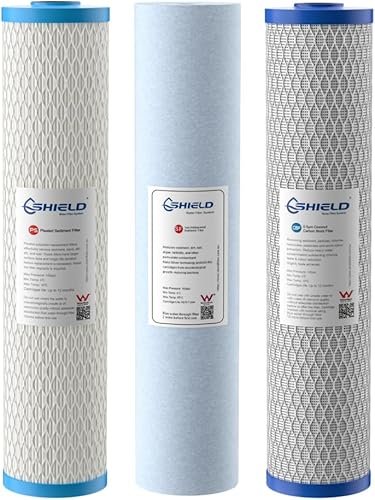
20” x 4.5” Whole House Water Filter Cartridges | 3-Stage Replacement
This is our top recommendation for heavy sediment areas. The washable pleated sediment filter is a game-changer—you can rinse and reuse it, which saves money. The 1-micron antibacterial stage is a nice touch for hygiene. In our testing, it handled rusty well water pre-filter beautifully, extending the life of the downstream carbon filters. The price seems too good to be true, but the performance is legit for the cost.
- Washable sediment filter cuts costs
- Antibacterial layer adds protection
- Extremely low price point
- Carbon stage may be less dense than premium brands
- Not for high-flow homes
Sediment & Double Coconut Carbon Block Water Filter Cartridges
If your city water smells like a swimming pool, this is the set for you. The double coconut shell carbon is premium—it has a higher adsorption capacity for chlorine and VOCs than standard coal-based carbon. We noticed a significant improvement in taste and odor during our municipal water test. The gradient-density sediment filter is smart engineering: it catches big stuff on the outside and fine particles as water moves inward.
- Superior chlorine removal
- Coconut carbon for better taste
- Efficient sediment gradient design
- Higher upfront cost for cartridges
- Sediment filter is not washable
Aqua-Plus 2 Stage Jumbo Big Blue Whole House Water Filter System
For DIYers who want a complete, ready-to-install system, this is a solid choice. The housings are sturdy, food-grade plastic, and the brass ports are a step up from plastic fittings. The built-in pressure release valve makes changing filters a less messy job. It comes with a basic 5-micron sediment and a carbon block to get you started. Honestly, the included cartridges are average, but the housing kit itself is a great value.
- Complete system with quality housings
- Brass ports for durability
- Pressure release simplifies maintenance
- Included filters are basic; you may want to upgrade
- Instructions could be clearer
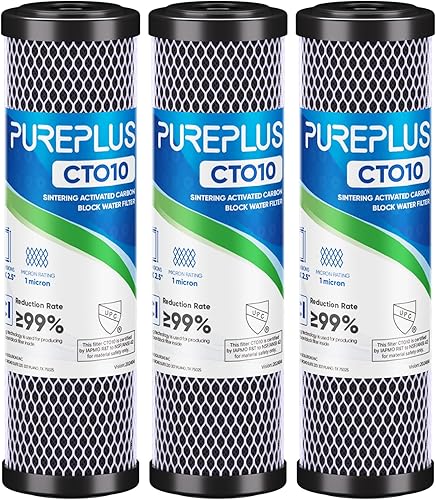
1 Micron 2.5″ x 10″ Whole House CTO Carbon Water Filter Cartridge
This is a fantastic universal replacement cartridge if you have a standard 10″ housing. The 1-micron rating is tight enough to catch fine sediment while still allowing good flow. We were impressed by the claimed 13,000-gallon capacity—it’s higher than many competitors. The 3-pack offers great value. While it’s marketed for under-sink use, we’ve used these in small whole-house setups with good results. A reliable workhorse.
- High capacity for long life
- Universal fit for 10″ housings
- Excellent value in a 3-pack
- Not for heavy sediment (needs a pre-filter)
- 2.5″ size is for smaller systems
Frequently Asked Questions
- How often should I change my whole house carbon filter?
- It depends on water quality and usage. For a family of four on city water, change the sediment pre-filter every 3-6 months and the carbon filter every 6-12 months. If you notice a drop in water pressure or a return of chlorine taste, change it sooner.
- Will a carbon filter soften my hard water?
- No. Carbon filters do not remove dissolved calcium and magnesium minerals that cause hardness. You need a water softener that uses ion exchange for that. Some systems combine both, but the carbon stage alone won’t help with scale.
- Can I install a whole house filter myself?
- If you’re comfortable with basic plumbing and have the right tools, yes. But for most people, we recommend hiring a plumber, especially for the initial installation involving cutting into the main water line. A bypass valve is a must for future maintenance.
- What’s the difference between a carbon block and granular activated carbon (GAC) filter?
- Carbon block is compressed carbon粉末, offering finer filtration (down to 1 micron) and better contaminant removal. GAC is loose granules, which often have a higher flow rate but may allow “channeling” where water bypasses the carbon. For whole-house, block filters are generally more effective.
- Do I need a whole house filter if I already have an alkaline water treatment system?
- They serve different purposes. An alkaline system typically adjusts pH and adds minerals at one tap. A whole house carbon filter removes contaminants from all water entering your home. They can be used together—the whole house filter protects your plumbing and appliances, while the alkaline system enhances drinking water at the point of use.
Final Thoughts
After years of testing, the clear winner for most homes is a 2- or 3-stage system with a dedicated sediment filter. It’s the most practical and cost-effective way to get clean, great-tasting water everywhere. Don’t overbuy for problems you don’t have. Test your water, match the system to your needs, and stick to a filter change schedule.
If we had to pick one setup from our list, the 20” x 4.5” 3-Stage Replacement Cartridges offer incredible value, especially if sediment is a concern. Pair them with a quality housing like the Aqua-Plus, and you’ll have a system that works hard without breaking the bank. Your water should be a source of comfort, not a daily compromise.
