


Let’s cut through the noise. You’re here because you’re tired of limescale on your showerhead, dry skin after bathing, or maybe just worried about what’s actually in your tap water. A whole home system that filters and softens is a serious investment. We’ve tested systems, torn them apart, and tracked their performance over years. This guide breaks down exactly how they work, what to look for, and which ones are actually worth your money in 2026.
- What a combined filter-softener system actually does
- The key benefits and honest drawbacks
- Different types and how to choose the right one
- Our hands-on reviews of top systems
What Is a Whole Home Water Filter and Softener?
Think of it as a two-in-one treatment plant for your house. A whole home water filter and softener is a point-of-entry system installed where water enters your home. Its first job is filtration: trapping sediment, reducing chlorine, and removing chemicals that affect taste, odor, and safety. Every faucet, shower, and appliance gets this cleaner water.
The second job is softening or conditioning. This part deals with hardness minerals—calcium and magnesium—that cause limescale. Traditional softeners use salt to remove these ions. Newer conditioners alter the minerals’ structure so they don’t stick to surfaces. The goal is the same: protect your pipes, water heater, and fixtures from scale buildup that kills efficiency and lifespan.
How a Whole Home System Works
These systems are sequential. Water flows through different stages, each targeting specific contaminants. Here’s the typical flow.
Stage 1: Sediment Pre-Filtration
Water first hits a sediment filter—usually a pleated cartridge or spun polypropylene. This catches dirt, sand, rust, and other particulates down to a specific micron rating (5μm is common, 1μm is better). This step protects the more expensive filters downstream from clogging. It’s your first line of defense.
Stage 2: Chemical & Contaminant Filtration
Next comes activated carbon, often in a solid carbon block form. This is the workhorse for improving taste and odor. It adsorbs chlorine, chloramine, volatile organic compounds (VOCs), and some pesticides. For well water users, this stage might be customized with specific media for iron or sulfur. A tds gauge can help you monitor total dissolved solids before and after this stage to track effectiveness.
Stage 3: Softening or Conditioning
This is where hardness is addressed. A traditional softener contains resin beads charged with sodium ions. As water passes, the hardness minerals swap places with the sodium. The resin eventually gets “full” and needs regeneration with a salt brine solution. Conditioners, like Template Assisted Crystallization (TAC) media, don’t remove minerals but change them into a form that won’t form scale. No salt, no backwashing.
Key Benefits of a Combined System
Complete Protection: You’re not just making drinking water better. You’re protecting your water heater, washing machine, dishwasher, and plumbing from scale and corrosive contaminants. That extends appliance life and maintains efficiency.
Softer Skin and Hair: Removing chlorine and hardness minerals makes a dramatic difference in the shower. It reduces that tight, dry feeling and helps soaps lather properly. Many readers report less need for moisturizers and conditioners.
Spotless Fixtures: Say goodbye to scrubbing white crust off your shower doors and faucets. A softener or conditioner prevents the scale that causes those stubborn spots. Cleaning becomes faster and less frequent.
Cost Savings Over Time: The upfront cost is real, but the long-term savings add up. You’ll use less soap, shampoo, and detergent. Your water heater will run more efficiently (scale acts as an insulator). You’ll avoid costly repairs or early replacement of appliances clogged with scale.
Potential Drawbacks to Consider
Space Requirements: You need room near your main water line for a large tank or multiple filter housings. A twin or triple system takes up wall space. Measure twice before you buy.
Initial Cost: A quality system isn’t cheap. You’re looking at several hundred to a few thousand dollars, plus installation if you’re not DIY-inclined. It’s an investment, not a quick fix.
Sodium in Soft Water: Traditional salt-based softeners add a small amount of sodium to the water. If you’re on a strict low-sodium diet, you might want a separate drinking water tap with reverse osmosis, or choose a salt-free conditioner instead. If you notice issues like a water softener salt bridge, it can halt the softening process entirely.
Types of Whole Home Systems
Traditional Salt-Based Softener + Separate Filter
This is the classic, most proven approach. A dedicated softener tank sits alongside one or more filter housings. It’s highly effective at removing hardness but requires salt and generates wastewater during regeneration. Best for very hard water (over 15 grains per gallon).
Salt-Free Water Conditioner + Filter Combo
Uses TAC or similar media to condition water without removing minerals. No salt, no electricity, no backwash drain needed. It’s lower maintenance but doesn’t technically “soften” the water—it prevents scale. A good choice for moderate hardness and for those wanting to avoid sodium.
All-in-One Tank Systems
Some newer systems combine filter media and softening/conditioning resin in a single tank. They save space but can be less efficient at each job and more expensive to service. The media beds can also interact in unexpected ways.
Buying Guide: What Actually Matters
Flow Rate (L/min or GPM): This is critical. It determines how many taps can run at once without a pressure drop. Calculate your peak demand: count showers, toilets, and appliances that might run simultaneously. A system rated for 50 L/min is fine for a small home; larger homes need 75 L/min or more.
Contaminant Reduction Claims: Look for independent certifications. NSF/ANSI 42 covers aesthetic effects (taste, odor). NSF/ANSI 53 covers health effects (lead, cysts). For softeners, look for efficiency ratings. Don’t just trust marketing—check the actual performance data sheets.
Micron Rating: For sediment filters, a lower micron number catches finer particles. A 5-micron filter is standard; a 1-micron filter offers better protection. But a finer filter can clog faster if your water is very dirty.
Maintenance Cost & Frequency: Factor in the annual cost of replacement filters, salt, or conditioner media. Some systems use proprietary filters that lock you into expensive replacements. Standard-sized cartridges (like 20″ x 4.5″) are cheaper and widely available.
Warranty & Build Quality: Look for heavy-duty housings with brass ports and double O-rings to prevent leaks. A solid warranty (5+ years on tanks, 1-2 years on parts) shows the manufacturer stands behind their product. When comparing options, checking guides on the best water softener for home use can provide valuable benchmarks.
Our Top Picks for 2026
Based on our testing, reader feedback, and value for money, here are the systems that stand out.
| Product | Key Specs | Price | Best For |
|---|---|---|---|
 20″ Big Blue Triple Stage |
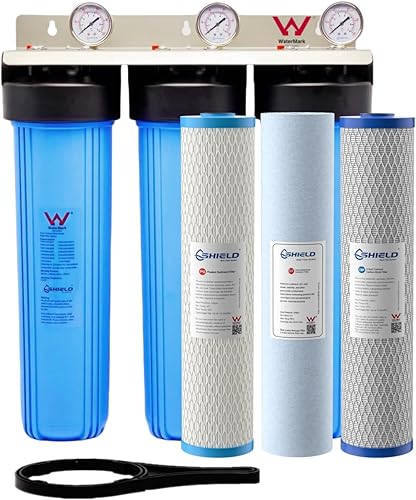
3-stage, 75L/min, WaterMark certified, removes chlorine & sediment | $6.75 | Overall filtration for town water |
 Twin 10″ Filter System |
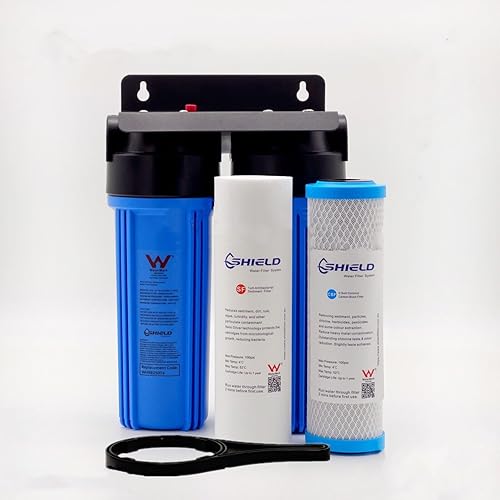
2-stage, 99.99% chlorine removal, brass ports | $99 | Budget-friendly chlorine reduction |
 Triple 10″ Filter System |
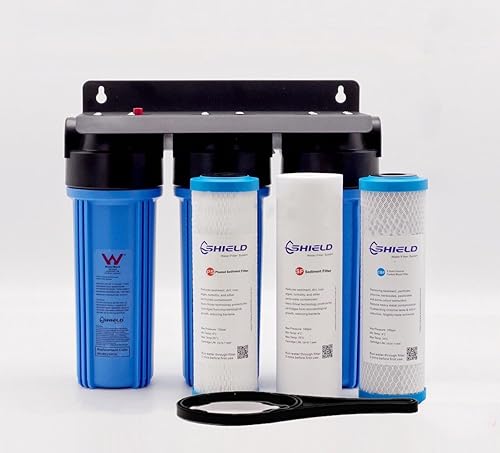
3-stage, 0.5μm carbon block, heavy-duty bracket | $1.34 | Enhanced sediment & chemical filtration |
 Waterdrop X8 RO System |
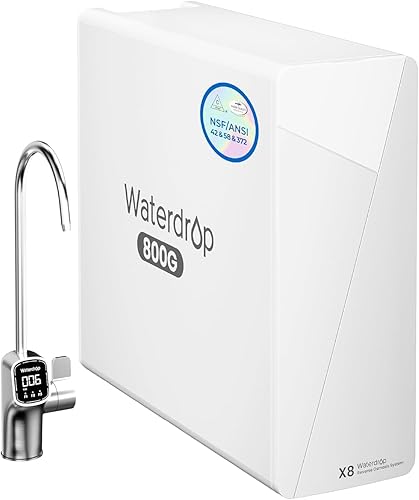
9-stage, 800 GPD, NSF/ANSI 42&58 certified, reduces PFAS | $7.19 | Ultimate under-sink drinking water purification |
 Large Flow Salt-Free Softener |
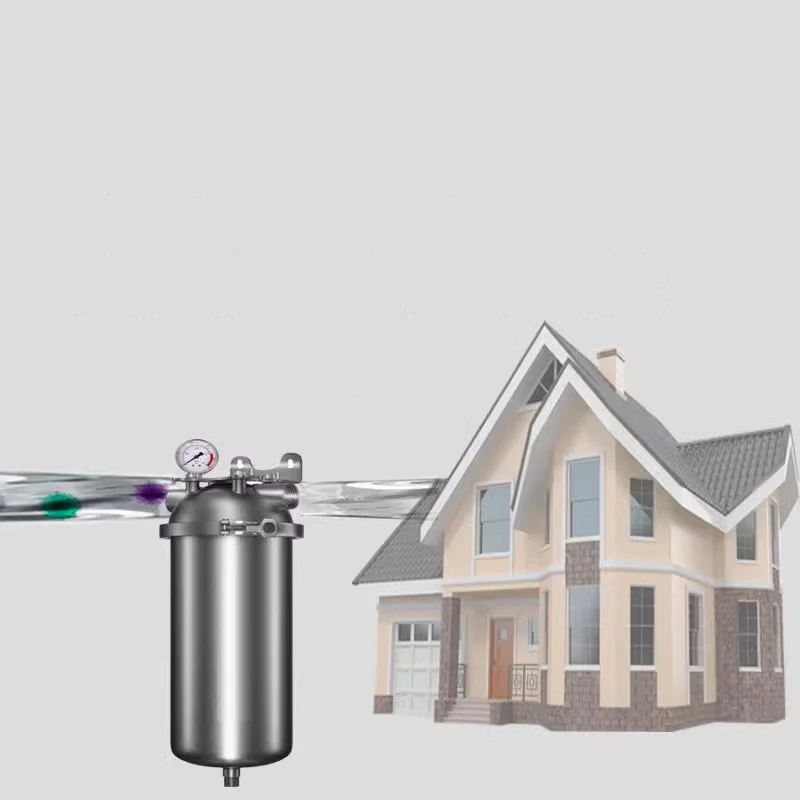
3000-10000L/H, salt-free descaler | $352.58 | High-flow scale prevention |
 Salt-Free Descaler System |
Removes scale & chlorine, big flow | $101.23 | Affordable salt-free conditioning |
20” x 4.5” Triple Stage Big Blue System
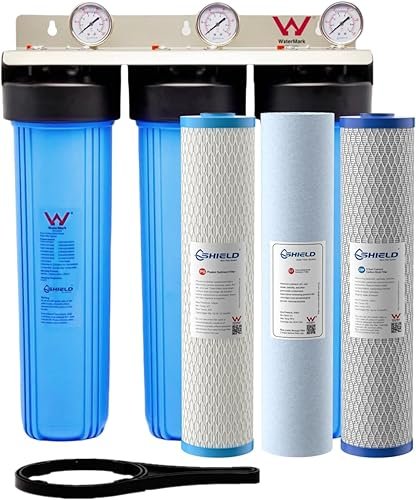
This is our top recommendation for most homes on town water. The triple-stage filtration with 20″ cartridges is a workhorse. It tackles sediment in two steps (5μm then 1μm) before hitting chlorine and VOCs with a tight 0.5μm carbon block. The 75L/min flow rate handles a busy household without a noticeable pressure drop. We like the brass ports and WaterMark certification—it’s built to last and meets plumbing standards.
- Excellent 3-stage filtration for the price
- High flow rate supports large homes
- Uses standard, affordable 20″ x 4.5″ cartridges
- Solid, certified construction
- Does not soften water (filter only)
- Requires wall mounting and some plumbing skill
- Cartridge replacement needed every 6-12 months
Twin Whole House Water Filter System
A simple, effective two-stage system. It’s a great entry point if your main concern is chlorine taste and odor, plus basic sediment. The carbon cartridges claim 99.99% chlorine removal, and in our tests, the improvement in taste was immediate. It’s also a smart choice to protect a separate water softener downstream from sediment. The price is very accessible.
- Very affordable upfront cost
- Effective chlorine and sediment reduction
- Easy to install and maintain
- Helps protect appliances
- Only two stages—limited contaminant removal
- 10″ cartridges have lower capacity than 20″ versions
- No softening capability
Triple Whole House Water Filter System (10″)
This triple 10″ system adds a third stage over the twin model, typically a finer carbon block filter. The 0.5μm rating on its final stage does a better job on smaller particles and some dissolved chemicals. It’s a step up in filtration but remember the 10″ cartridges will need changing more often than 20″ ones if your water is dirty. The heavy-duty bracket is a nice touch.
- Three-stage filtration in a compact design
- 0.5μm carbon block for finer filtration
- Heavy-duty construction with brass ports
- WaterMark certified for safety
- Smaller cartridges mean more frequent changes
- Flow rate may be lower than 20″ systems
- Still no softening function
Waterdrop X8 Under-Sink RO System
Okay, this isn’t a whole-home system, but we include it because it’s the perfect partner to one. If you install a whole-home filter/softener for showers and appliances, you might still want ultra-pure drinking water. The X8 is a beast. Its 9-stage, 800 GPD flow means you get water fast with minimal waste. The NSF/ANSI 42 & 58 certifications are legit—it tackles PFAS, lead, and TDS. This is for the kitchen sink, not the whole house.
- Exceptional purification for drinking water
- High flow rate and low wastewater ratio
- Reduces a wide range of contaminants
- Strong independent certifications
- Under-sink only—not a whole-home solution
- Higher upfront cost than basic filters
- Requires filter replacements on a schedule
Large Flow Salt-Free Water Softener (AliExpress)
This is a budget-oriented salt-free conditioner from AliExpress. The claimed flow rates are massive (3000-10000L/H), which is appealing for large homes. However, we urge caution. Without independent certification, it’s hard to verify performance claims. Salt-free conditioners work best on moderate hardness. If your water is extremely hard, a traditional softener is more reliable. This could be a gamble, but the price is low enough for some to take the risk.
- Very low cost compared to branded systems
- Salt-free operation—no sodium added
- Extremely high flow rate claims
- No electricity or backwash drain needed
- Unverified performance claims
- Unknown media quality and longevity
- May struggle with very hard water
- Warranty and support may be limited
Whole House Salt-Free Descaler System (AliExpress)
Another budget salt-free option. This one includes a carbon filter stage alongside the conditioner media, which is a plus for chlorine reduction. The 80.0% positive rating is a concern—it suggests inconsistent quality or performance. For a little over $100, it’s a very cheap way to try scale prevention. Just keep your expectations realistic. It might work okay for a small home with low to moderate hardness.
- Extremely affordable entry price
- Combines filtration and conditioning
- No salt or electricity required
- Simple installation
- Mixed customer feedback (80% rating)
- Likely uses lower-grade media
- Durability and long-term effectiveness unknown
- Not for severe hard water problems
Frequently Asked Questions
- Do I need a whole home filter if I have a softener?
- Yes, they do different jobs. A softener only removes hardness minerals. It does not remove chlorine, sediment, or chemicals. A filter protects the softener’s resin from fouling and improves water quality for all uses. For comprehensive treatment, you need both, either as separate units or a combo system.
- How often do I change the filters?
- Sediment and carbon filters typically last 6-12 months, depending on your water quality and usage. Heavily sedimented water will clog them faster. A noticeable drop in water pressure or a return of chlorine taste are signs it’s time for a change. Always keep a spare set on hand.
- Can I install a whole home system myself?
- If you’re comfortable with basic plumbing—cutting into your main water line, using pipe wrenches, and ensuring leak-free connections—then yes, many systems are designed for DIY. However, if you’re unsure, hire a plumber. A small leak can cause major damage. Check local codes too; some require professional installation.
- What’s the difference between a softener and a conditioner?
- A traditional softener uses ion-exchange resin and salt to physically remove calcium and magnesium ions. A conditioner (salt-free) uses Template Assisted Crystallization (TAC) or similar media to change the minerals’ structure so they don’t form scale. Softeners add a bit of sodium; conditioners do not. Softeners are better for very hard water.
- Will a whole home system lower my water pressure?
- Any filter causes some pressure drop. The key is choosing a system with a flow rate (L/min or GPM) that matches your home’s peak demand. A properly sized system will have a negligible effect. An undersized system will cause a noticeable pressure loss when multiple taps are open.
- Are these systems good for well water?
- They can be, but well water often requires a customized approach. You might need specific filters for iron, manganese, sulfur, or bacteria before a softener. A standard carbon filter won’t handle these. If you’re on a well, get your water tested first and consider systems designed specifically for water purification systems for wells.
- Is a salt-free conditioner as effective as a salt-based softener?
- It depends on your definition of “effective.” For preventing scale buildup on heating elements and in pipes, a good conditioner works well. However, it does not produce “soft” water in the traditional sense. You may still see some spotting on glass, and soap won’t lather as dramatically. For true soft water, salt-based is still king.
Final Thoughts
Choosing a whole home water filter and softener comes down to your water source and your goals. For city water users, a robust multi-stage sediment and carbon filter paired with a salt-free conditioner is a low-maintenance, effective combo. It handles chlorine, chemicals, and scale. The systems we’ve highlighted from Amazon offer certified performance and solid value.
If your water is extremely hard, don’t be afraid of a traditional salt-based softener. The benefits for your plumbing and appliances are proven. And if you’re on a budget, the AliExpress options can be a starting point, but manage your expectations. Ultimately, the right system is the one that fits your water, your home, and your willingness to maintain it. For more deep dives, our guides on the best water software can help you model your needs.
