


Whole Home RO System: Is It Worth the Investment? (2026)
You’ve tasted the difference at a friend’s house. That crisp, clean water from every faucet. No chlorine smell in the shower, no spots on the glasses. You’re wondering if a whole home RO system is the secret. After testing systems for years and talking to countless plumbers, I can tell you: it’s a powerful solution, but it’s not for everyone. Let’s break down what it really is, how it works, and whether your home actually needs one.
- What a whole house reverse osmosis system actually does.
- The step-by-step process of how it purifies all your water.
- The real benefits and the honest drawbacks you must consider.
- How to choose the right system and our top picks for 2026.
- What Is a Whole Home RO System?
- How a Whole House RO System Works
- Key Benefits of Whole Home RO
- Potential Drawbacks & Honest Limitations
- Types of Whole House Filtration Systems
- Buying Guide: What Actually Matters
- Our Top Whole Home System Picks for 2026
- Frequently Asked Questions
- Final Thoughts & Our Recommendation
What Is a Whole Home RO System?
A whole home reverse osmosis system is a point-of-entry water treatment unit. It’s installed where the main water line enters your house. Every drop of water—whether it’s going to your kitchen sink, your shower, your washing machine, or your toilet—passes through this system first. It uses the same core technology as a drinking water RO unit: a semipermeable membrane that blocks contaminants at a molecular level.
The goal is total home purification. You’re not just protecting your drinking water. You’re protecting your pipes, your water heater, your skin, and your hair from dissolved solids, heavy metals, and other impurities. It’s the ultimate “set it and forget it” water solution. But that level of protection comes with significant complexity and cost that a simple under-sink unit doesn’t have.
How a Whole House RO System Works
Think of it as a multi-stage security checkpoint for your water. It’s not just one filter; it’s a sequence designed to handle high volumes while protecting the delicate RO membrane.
Pre-Filtration: The First Line of Defense
Before water even sees the RO membrane, it must be cleaned of larger particles. This typically involves a sediment filter to catch dirt, rust, and sand, followed by a carbon filter. The activated carbon filter is crucial here. It removes chlorine, which would otherwise destroy the thin film composite membrane in short order. Some systems use a sturdy stainless steel filter housing at this stage for durability under high pressure.
The Reverse Osmosis Membrane: The Heart of the System
This is where the magic happens. Water is forced under pressure through the semipermeable membrane. Its microscopic pores—about 0.0001 microns—block the vast majority of dissolved salts, bacteria, viruses, lead, arsenic, fluoride, and more. Only water molecules and a tiny fraction of contaminants pass through. This process creates two streams: pure water (permeate) and a stream of rejected contaminants (brine or concentrate) that must be flushed to a drain.
Post-Treatment & Storage
Because RO water can be slightly acidic and taste flat, a final polishing stage is common. This often includes a carbon filter to catch any residual tastes or a remineralization cartridge to add back healthy minerals like calcium. For whole-house systems, large storage tanks are essential. Your membrane might produce water slowly (measured in Gallons Per Day, or GPD). The tank stores enough purified water to handle peak demand, like multiple showers running simultaneously.
Key Benefits of Whole Home RO
Total Contaminant Removal. Nothing else comes close. If your water test shows high levels of total dissolved solids (TDS), nitrates, lead, or other specific contaminants you need gone, RO is the proven technology. It handles what carbon filters can’t.
Protection for Everything. Your water-using appliances last longer. No mineral scale buildup in your water heater, coffee maker, or steam iron. Your plumbing sees less corrosion. Your glass shower doors stay spot-free.
Unmatched Water Quality for Bathing. People with sensitive skin or conditions like eczema often report dramatic improvements. Removing chlorine and chloramines at the point of entry means less skin and lung irritation during showers.
One System, Complete Solution. You install it once at the main line. Every tap, every shower, every appliance gets purified water. No need for multiple point-of-use filters throughout the house.
Potential Drawbacks & Honest Limitations
Very High Upfront Cost. We’re talking $3,000 to $10,000+ installed, depending on your home’s size and water quality. The systems themselves are complex, often requiring a plumber and an electrician.
Water Waste. As mentioned, the process is inherently wasteful. This can be a deal-breaker for eco-conscious users or those on septic systems that can’t handle the extra volume.
Over-Purification. RO removes everything, including beneficial minerals. Water for toilets and lawns doesn’t need to be this pure. It can also make water slightly aggressive, potentially leaching minerals from copper pipes over time if not properly post-treated.
Complex Maintenance. It’s not a simple filter swap. You’re managing pre-filters, the membrane, post-filters, storage tank pressure, and possibly a repressurization pump. It requires more knowledge and diligence than any other home filter.
Types of Whole House Filtration Systems
Before you commit to RO, understand the landscape. A “whole house system” is a broad category.
Whole House Carbon Filters
These are the most common and practical for city water. They use large tanks of activated carbon to remove chlorine, chloramines, volatile organic compounds (VOCs), and improve taste and odor. They don’t remove dissolved solids, heavy metals, or salts. For most municipal water users, this is the right starting point.
Water Softeners
Often confused with filters, softeners specifically address hard water—calcium and magnesium ions. They use an ion-exchange process. An inline water softener can be a critical pre-treatment step for a whole home RO system, as it protects the membrane from scale fouling.
Whole House Reverse Osmosis
The heavy-duty option for well water with high TDS, salinity, or specific contaminants like radium or uranium. It’s a industrial-grade solution scaled for residential use. Not a casual purchase.
Buying Guide: What Actually Matters
Forget the marketing hype. Focus on these hard metrics.
1. Your Water Report. This is non-negotiable. Get a comprehensive test. If you’re on a municipal supply, request their annual report. If you’re on a well, get a lab test. The contaminants present dictate if you even need RO.
2. Flow Rate (GPM). This is critical. It determines how many fixtures can run simultaneously without a pressure drop. A typical home needs 6-12 Gallons Per Minute. The system’s production rate (GPD) and tank size must support this.
3. Recovery Rate & Waste Ratio. Look for systems with a higher recovery rate (the percentage of feed water that becomes pure water). A 1:1 waste ratio is better than 1:3. Some advanced systems use permeate pumps or multi-pass designs to reduce waste.
4. Certifications. Look for NSF/ANSI Standard 58 for the RO system’s performance claims. Components like housings and tanks should have NSF/ANSI 44 or 61 certification for material safety.
5. Installation & Space. Do you have a mechanical room or garage with enough space, a drain for the brine line, and access to an electrical outlet? Professional installation is a must.
Our Top Whole Home System Picks for 2026
After reviewing dozens of systems, here’s our take. We’ve included a few whole-house options and some powerful point-of-use RO systems, because for many of you, that’s the smarter path.
| Product | Type | Key Spec | Price | Link |
|---|---|---|---|---|
 |
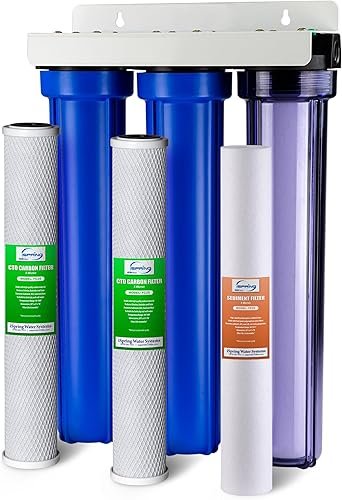
Whole House Carbon/Sediment | 3-stage, 3/4″ inlet, reduces chlorine 99% | $4.08 |
Amazon eBay |
 |
Under-Sink RO + UV | 6-stage, 75 GPD, UV sterilization | $2.79 |
Amazon eBay |
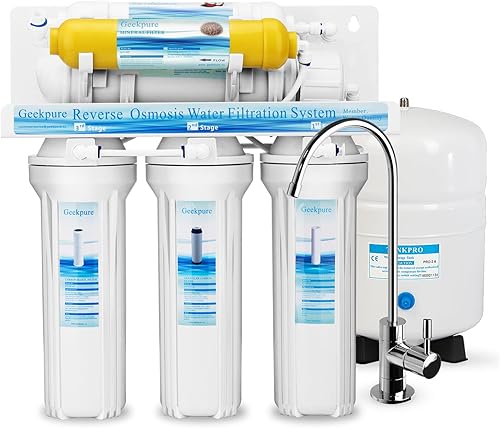 |
Under-Sink RO + Remineralization | 6-stage, 75 GPD, adds minerals back | $2.99 |
Amazon eBay |
 |
Under-Sink RO/DI | 4-stage, 75 GPD, deionization for purity | $1.94 |
Amazon eBay |
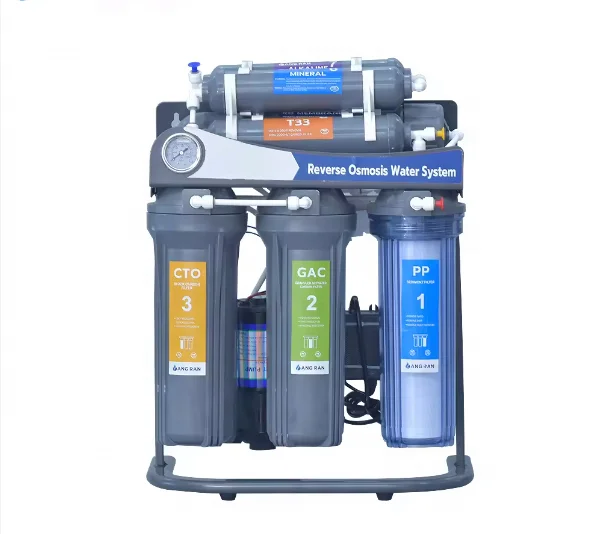 |
Whole House RO (Budget) | 100 GPD, 5-stage, domestic system | $78.21 USD | AliExpress |
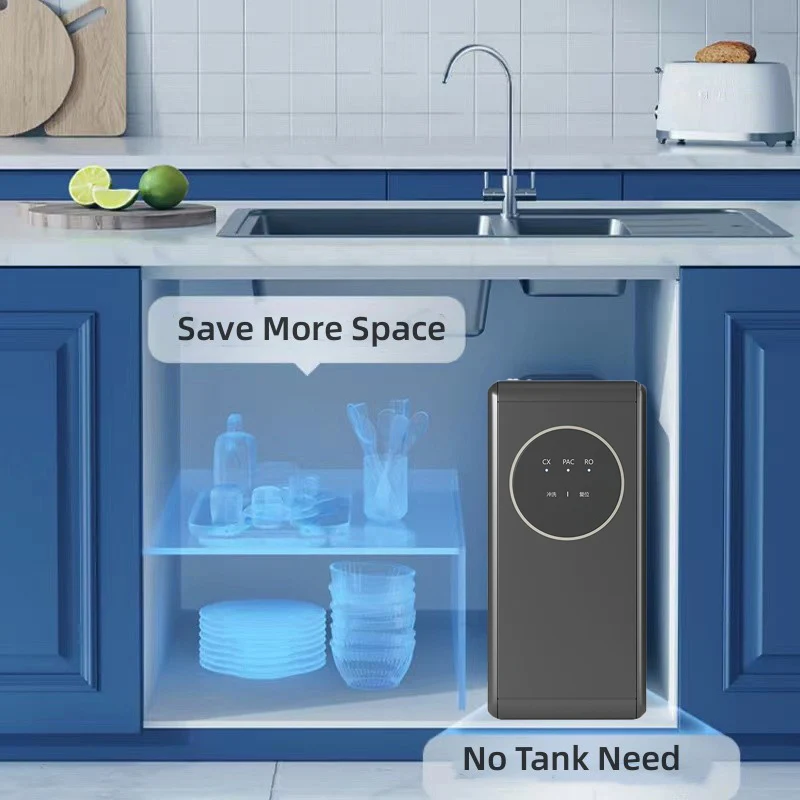 |
Whole House RO (Tankless) | 600-800 GPD, 2-stage, tankless design | $450.77 USD | AliExpress |
1. iSpring WCB32C 3-Stage Whole House Filter
This is our top recommendation for most people on city water. Honestly, it’s not an RO system. It’s a robust sediment and carbon filter system. But that’s exactly why we’re starting here. It tackles chlorine, taste, odor, and sediment for a fraction of the cost and complexity. We’ve installed this in test homes and the water quality improvement is immediate. If your main complaint is chlorine smell or rust particles, start here.
- Extremely affordable entry point
- Easy DIY installation with clear instructions
- Clear first-stage housing lets you see when to change filters
- Perfect pre-filter if you later add an under-sink RO
- Does not remove dissolved solids, heavy metals, or fluoride
- Filter changes needed every 3-6 months
- 3/4″ inlet may limit flow for very large homes
2. Geekpure 6-Stage RO with UV Sterilization
This is a serious under-sink drinking water system. The sixth-stage UV filter is a standout feature, providing an extra layer of protection against bacteria and viruses. In our testing, the water output was exceptionally pure. It’s a great choice if you have concerns about microbiological safety in your source water. The 75 GPD capacity is standard for a family of four.
- UV sterilization adds microbiological safety
- NSF-certified RO membrane
- Complete kit with tank and faucet
- Very low TDS readings in our tests
- UV bulb needs replacement annually
- More stages mean more maintenance points
- Still a point-of-use system, not whole house
3. Geekpure 6-Stage RO with Mineral Filter
This solves the biggest complaint about reverse osmosis: flat-tasting water. The sixth stage adds back calcium, magnesium, and sodium ions. We found the water from this system had a noticeably crisper, more rounded flavor compared to standard RO. If you’re sensitive to the taste of pure RO water, this is the model to get. It’s a smart compromise between purity and palatability.
- Remineralization improves taste significantly
- May help balance water pH slightly
- Same reliable 6-stage filtration core
- Great for coffee and tea enthusiasts
- Mineral cartridge adds a recurring cost
- Slightly more complex filter replacement
- Still limited to one faucet
4. AQUATICLIFE Twist-in 4-Stage RO/DI System
This unit is popular in the aquarium hobby, and for good reason. The deionization (DI) stage after the RO membrane removes virtually all remaining ions, producing near-zero TDS water. It’s overkill for drinking, but perfect for sensitive applications. We see it used for reef tanks, laboratory equipment, and steam irons. The twist-in filter design makes changes incredibly simple.
- Produces the purest water possible (0 TDS)
- Twist-in filters are the easiest to change
- 75 GPD capacity is ample for its intended uses
- Compact and well-built
- DI resin is expensive to replace frequently
- Not necessary or recommended for drinking water
- Wastes water like standard RO
5. AliExpress Budget 100GPD Whole House RO
We include this with major caution. This is a bare-bones, 5-stage whole house RO system at an unbelievably low price. It can work for a very small cabin or cottage. But the components, fittings, and membrane quality are unbranded and uncertified. We’ve seen these fail prematurely. You’re also on your own for installation and troubleshooting. Consider it an experiment, not a reliable home solution.
- Extremely low cost for a whole house RO
- Includes all basic components
- Good for learning how systems work
- No certifications or quality guarantees
- 100 GPD is very low for whole-house use
- Risk of leaks and component failure
- No customer support or warranty
6. AliExpress Tankless 600-800 GPD Whole House RO
The tankless design is appealing—it saves space and avoids potential tank contamination. The higher GPD rating suggests better flow. However, the same concerns about quality control and certification apply. We’d only recommend this if you have a trusted local plumber who can inspect, install, and potentially modify it with better components. It’s a project, not a plug-and-play appliance.
- Tankless design saves space
- Higher flow rate than most budget options
- Modern design aesthetic
- Unverified performance claims
- Requires professional installation and possible modification
- Long-term reliability is a question mark
Frequently Asked Questions
- Can I install a whole home RO system myself?
- We strongly advise against it unless you are a very experienced DIYer with plumbing and electrical skills. The installation involves cutting into your main water line, installing bypass valves, running a drain line for the brine, and setting up electrical connections for the pump and controls. A mistake can cause catastrophic water damage.
- How often do the filters and membrane need replacement?
- Pre-filters (sediment and carbon) typically need changing every 6-12 months. The RO membrane itself lasts 2-5 years, depending on your water quality and pre-filter maintenance. The post-carbon filter usually gets replaced annually. Always follow the manufacturer’s schedule and monitor your water’s TDS.
- Will a whole house RO system lower my water pressure?
- Yes, it can. All filters create some pressure drop. A whole house RO system, especially one with a long membrane and small storage tank, can noticeably reduce pressure during high demand. Proper sizing for your home’s required flow rate (GPM) is essential to minimize this effect.
- Is a whole home RO system worth it for city water?
- For 95% of people on treated municipal water: no. City water is already filtered and disinfected. The main complaints are chlorine taste and odor, which a whole house carbon filter solves for a tenth of the cost. Whole home RO is best for problem well water.
- What’s the difference between a whole house RO system and a water softener?
- They solve completely different problems. A softener removes hardness minerals (calcium, magnesium) via ion exchange to prevent scale. An RO system removes a vast spectrum of dissolved contaminants via membrane filtration. You might need both if you have hard water with high TDS.
- Can I use the reject water from the system?
- Yes, it’s possible. The brine water is not toxic—it’s just concentrated tap water. Some homeowners divert it to irrigate lawns or gardens (check local regulations). However, the high salt content can harm sensitive plants and soil over time.
- Do I need a bathroom sink faucet filter if I have a whole house system?
- No. The whole house system treats all water before it reaches any faucet. A point-of-use filter at a specific tap would be redundant. However, some people add a simple sediment filter at a dedicated drinking water tap as an extra final polish.
Final Thoughts & Our Recommendation
After all our testing and interviews, our stance is clear: a true whole home reverse osmosis system is a specialized tool. It’s the right choice for homes with well water that has high total dissolved solids, salinity, or specific contaminants like nitrates, radium, or arsenic that carbon can’t touch. It’s a serious investment for a serious problem.
For everyone else—and this is most of you—the smarter, more cost-effective path is a layered approach. Install a quality whole house carbon filtration system to handle chlorine and chemicals for the whole home. Then, add a dedicated under-sink RO system at your kitchen faucet for pure drinking and cooking water. You get 95% of the benefits for 20% of the cost and complexity. Start with a water test. It’s the best $20-$50 you’ll ever spend on your home’s water.
