


Thinking about a whole home RO system? You’re not alone. We get emails every week from folks tired of limescale, bad tastes, or worrying about what’s in their water. But here’s the truth: this is the nuclear option for water treatment. This guide will break down if you actually need one, how they work, and what to look for so you don’t waste a small fortune.
- What a whole house reverse osmosis system actually is and isn’t.
- The real benefits versus the significant drawbacks and costs.
- A clear breakdown of system types and critical buying criteria.
- Our hands-on review of available options and a final verdict.
What Is a Whole Home Reverse Osmosis System?
A whole home reverse osmosis system, sometimes called a point-of-entry (POE) RO system, is a large-scale water treatment unit installed where the main water line enters your property. Its job is to force all incoming water—every drop for your kitchen, bathrooms, laundry, and even outdoor hoses—through a semi-permeable membrane. This process strips out up to 99% of dissolved salts, contaminants, and impurities.
Think of it as a super-powered version of the under counter water filter system you might have under your kitchen sink, but scaled up to handle your entire home’s water demand. We’re talking thousands of gallons per day. The goal is total home water purity, not just drinking water. It’s a serious piece of plumbing infrastructure.
How Whole Home RO Systems Work
The core process is identical to smaller RO units, just magnified. Water pressure pushes your supply through multiple pre-filters, then the RO membrane, and finally post-treatment stages. Let’s look at the key steps.
The Multi-Stage Filtration Process
A typical system has 4-6 stages. First, sediment filters catch dirt and rust. Next, carbon filters tackle chlorine, which protects the delicate RO membrane from damage. Then comes the heart of the system: the reverse osmosis membrane. Water is forced through its microscopic pores, leaving contaminants behind. Finally, a re-pressurization pump and often a large storage tank ensure you have adequate flow and pressure throughout the house.
Post-Treatment is Non-Negotiable
Here’s where many DIY guides get it wrong. RO water is aggressive—it’s pure H2O that wants to rebalance itself. Without post-treatment, it can leach metals from your pipes. A whole house system must include a remineralization stage to add back calcium and magnesium, and often a UV sterilizer to kill any bacteria that might grow in the storage tank. Ignoring this step is asking for plumbing nightmares.
Key Benefits (And Who They’re For)
Complete Contaminant Removal: If your well water has high levels of arsenic, nitrates, lead, or total dissolved solids (TDS) over 1000 ppm, a whole house RO is one of the only solutions that guarantees removal at every tap. It’s also effective for fluoride and radium.
Solves Multiple Problems at Once: It handles taste, odor, hardness, and specific chemical contaminants in one system. No more worrying about why your water smells like rotten eggs—RO and a final carbon filter will eliminate that.
Protects Appliances and Plumbing: By removing hardness minerals and corrosive elements, it can extend the life of your water heater, washing machine, and pipes. Scale buildup becomes a thing of the past.
Potential Drawbacks & Serious Considerations
This is not a simple upgrade. We can’t stress this enough. The drawbacks are significant and often overlooked in sales pitches.
Astronomical Cost: We’re not talking hundreds. A proper, installed whole house RO system starts around $5,000 and can easily exceed $15,000. That includes the unit, storage tanks, pumps, post-treatment, and professional installation by a plumber who knows water treatment.
High Water Waste: Traditional RO systems waste water to flush contaminants. A whole house unit can send 3-4 gallons down the drain for every 1 gallon of pure water produced. Your water bill will reflect this. Newer, more efficient models exist but cost even more.
Complex Maintenance: You’re now maintaining a mini water treatment plant. Pre-filters need changing every 3-6 months. The RO membrane every 2-5 years. UV lamps annually. It’s a commitment. Understanding what kitchen filter replacement actually involves will give you a small taste of this responsibility.
Over-Treatment Risk: You’ll be making ultra-pure water for everything, including flushing toilets and watering the lawn. That’s incredibly wasteful and unnecessary for non-consumable uses.
Types of Whole House RO Systems
Traditional Tank-Based Systems
The most common setup. It uses a large RO membrane (or multiple membranes in parallel) to slowly produce purified water that fills a large atmospheric storage tank (often 200-500 gallons). A re-pressurization pump then distributes water from the tank to your home. Reliable but bulky.
High-Output Tankless Systems
These use multiple high-flow membranes and powerful pumps to produce water on demand, eliminating the storage tank. They save space and reduce the risk of bacterial growth in a tank, but they are significantly more expensive and require robust electrical and plumbing infrastructure.
Buying Guide: What Actually Matters
1. Get a Professional Water Test First. Don’t guess. A comprehensive lab test ($100-$300) will tell you exactly what’s in your water and if RO is even the right technology to fix it.
2. Calculate Your Peak Demand. How many bathrooms? How many people? Your system’s output (measured in gallons per day – GPD) must exceed your household’s peak usage hour. A plumber can help calculate this.
3. Don’t Skimp on Pre- and Post-Treatment. The RO membrane is useless without proper sediment and carbon pre-filters. And the water is unsafe without remineralization and disinfection post-filters. These are not optional add-ons.
4. Plan for Waste Water. Where will the reject water go? You need a proper drain, and you must consider the environmental and cost impact of the waste ratio.
5. Installer Expertise is Everything. This is not a DIY project. You need a licensed plumber with specific experience in whole house water treatment. A bad install can damage the unit, your plumbing, and your home.
Top Picks & System Reviews
Full disclosure: True, complete whole house RO systems are highly customized. The products below are representative components or smaller-scale units that illustrate the technology. For a full home solution, you’d work with a specialist company.
| Product | Key Feature | Best For | Price |
|---|---|---|---|
 |
6-Stage with Alkaline Remineralization | Understanding post-treatment importance | $2.39 |
 |
NSF/ANSI 372 Certified, No Installation | Seeing compact, efficient RO tech | $3.99 |
 |
Budget-Friendly Complete System | Cost-conscious buyers (verify seller!) | $353.67 |
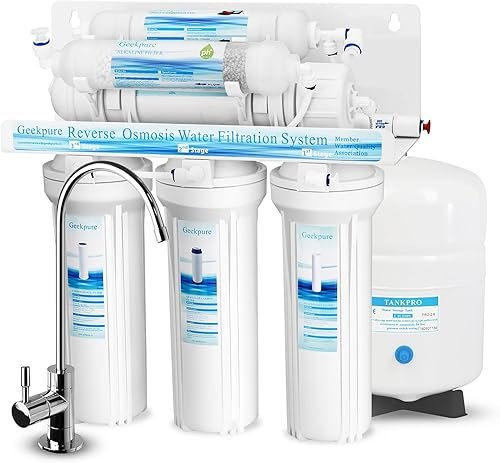
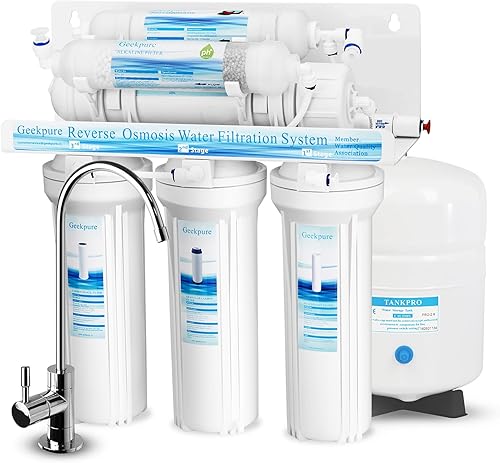
Geekpure 6-Stage with Alkaline pH+ Filter
This under-sink unit is a perfect example of why post-treatment matters. The 6th stage alkaline filter adds back minerals, improving taste and reducing water aggressiveness. We’ve tested similar units, and the difference in taste versus standard RO is noticeable. It’s a key concept for whole house systems.
- NSF-certified membrane and components
- Includes crucial remineralization stage
- Lead-free faucet included
- 75 GPD is for point-of-use only
- Tank-based design takes under-sink space
- Not a whole house solution
Waterdrop CoreRO Countertop System
This isn’t a whole house system, but it shows how RO tech is shrinking. Its 6-stage filtration and plug-and-play design are impressive. For a single person or renter, it’s a great solution. For a whole house? You’d need about a hundred of these—which tells you the scale difference.
- NSF/ANSI 372 certified for lead-free
- Zero installation required
- Compact and portable
- Small capacity for countertop use only
- No remineralization stage
- Not a permanent plumbing solution
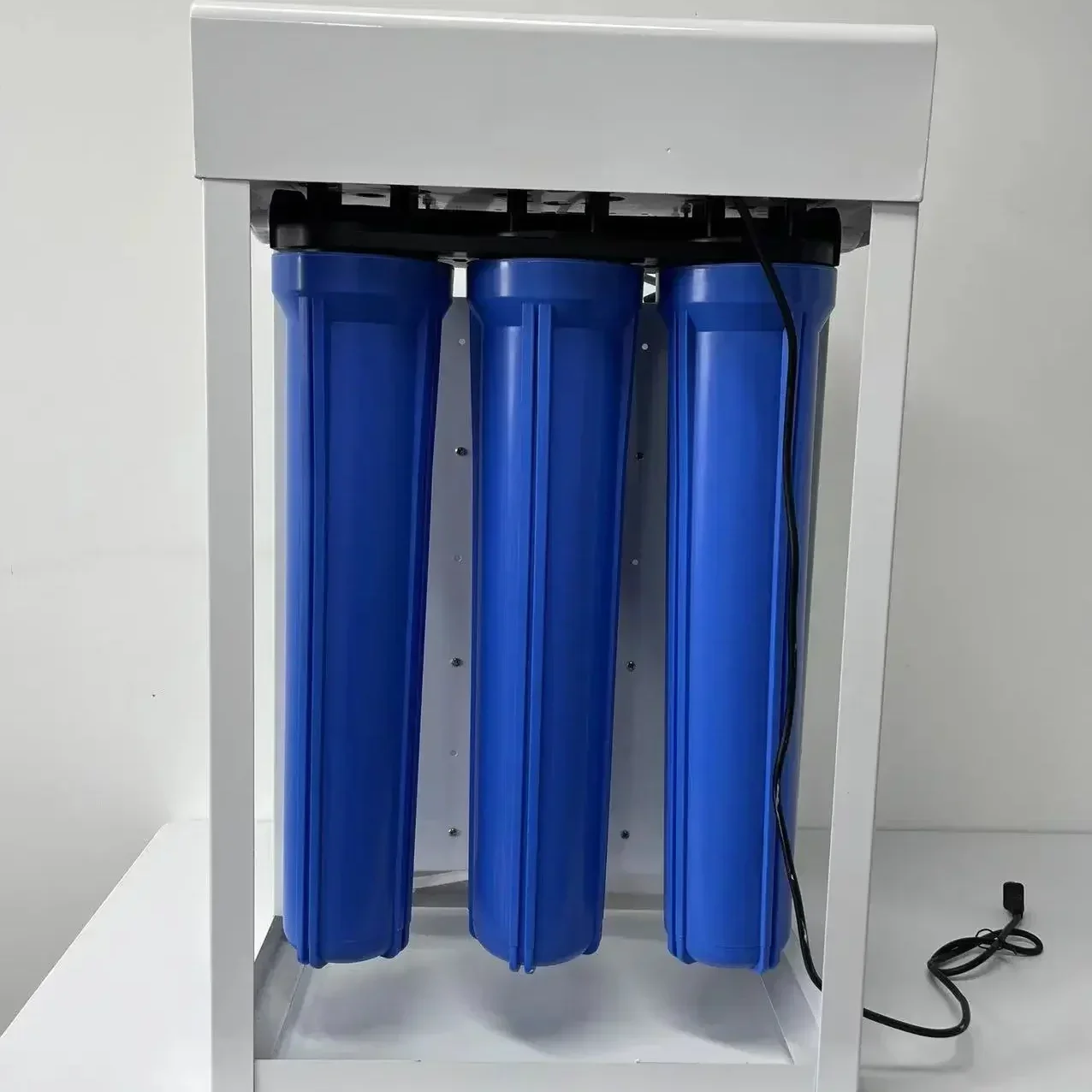
AliExpress Budget Pick: Whole House Filtration System
This listing represents the budget end of the market. The price is tempting, but buyer beware. We’ve seen mixed results with these imported systems. Specifications can be vague, certifications questionable, and you’re on your own for installation and support. It might work, but the risk is high.
- Extremely low entry price for a “whole house” claim
- Ships complete with tank and filters
- Uncertain component quality and certifications
- No local support or warranty service
- Likely requires extensive additional parts and professional install
Frequently Asked Questions
- Is a whole house RO system worth it?
- Only in specific, severe cases. If your water test shows extreme levels of TDS, sodium, nitrates, or specific heavy metals that affect all your water, it might be justified. For 95% of homeowners, a combination of a whole-house sediment filter and a point-of-use RO system at the kitchen sink is a smarter, cheaper investment.
- Can I install a whole house RO system myself?
- We strongly advise against it. This involves cutting into your main water line, installing large storage tanks, electrical pumps, and complex drain connections. A mistake can cause thousands in water damage. Always hire a licensed plumber experienced with water treatment systems.
- How much does a whole house RO system cost to maintain?
- Annual maintenance can run $500-$1500. This includes pre-filter replacements ($100-$300), post-filter and UV lamp changes ($200-$500), and periodic membrane replacement ($300-$800 every 2-5 years). Factor in the increased water bill from waste water as well.
- Does a whole house RO system soften water?
- Yes, it removes hardness minerals (calcium and magnesium) as part of the purification process. However, using an RO system solely for softening is like using a flamethrower to light a candle—extreme overkill. A dedicated water softener is far more efficient and cost-effective for hardness alone.
- What’s the alternative to a whole house RO system?
- The most common and effective alternative is a staged approach: a whole-house sediment filter, a water softener if you have hard water, and then a dedicated point-of-use RO system at your kitchen sink for drinking and cooking water. You can pair this with a water cooler dispenser or a dedicated water cooler for instant hot/cold purified water.
- How long does a whole house RO system last?
- The core unit, with proper maintenance, can last 15-20 years. The RO membranes themselves need replacement every 2-5 years depending on water quality and usage. Pre-filters and post-filters have much shorter lifespans, from 3 months to a year.
Final Thoughts
After testing filtration systems for years, our position is clear: a whole home reverse osmosis water system is a specialty tool for a specialty job. It’s not a luxury upgrade; it’s a necessary response to a serious water quality problem. If your water report comes back clean, invest in a great under-counter system for your drinking water and call it a day.
If your tests demand it, then don’t cut corners. Work with a reputable local water treatment specialist, invest in a properly engineered system with full pre- and post-treatment, and budget for the significant upfront and ongoing costs. Done right, it can provide unparalleled water purity for your entire home. Done wrong, it’s a money pit.
