


You’ve got your own water source. That’s freedom. But it also means you’re the water company. No municipal treatment plant is looking out for you. I’ve spent years testing filters and talking to folks with wells, and the single biggest mistake I see is guessing. Slapping a random filter on your line won’t cut it. This guide will walk you through exactly how to analyze your water, choose the right gear, and maintain it. We’ll cover what these systems are, how they work, their pros and cons, and which specific products we trust after hands-on testing.
What Is a Well Water Treatment System?
It’s not one magic box. It’s a series of components designed to clean water straight from the ground before it hits your tap. Unlike city water, which is pre-treated and chlorinated, well water is raw. It can contain anything from harmless-but-annoying calcium to dangerous bacteria or heavy metals like arsenic.
The goal isn’t just to make it “safe”—though that’s priority one. It’s also to make it pleasant to drink, cook with, and shower in. That means tackling odors (that rotten egg smell is hydrogen sulfide), stains on fixtures, and that gritty feeling. A proper system is tailored to your unique water chemistry, which is why testing is non-negotiable.
How Well Water Treatment Works
Think of it as a defense-in-depth strategy. Water passes through multiple barriers, each targeting a specific type of contaminant. The order of these stages is critical for performance and protecting downstream equipment.
Stage 1: Pre-Filtration & Sediment Removal
First, you catch the big stuff. A whole-house sediment filter—often a cartridge inside a filter housing system—traps sand, silt, and rust particles. This protects your pipes, appliances, and any finer filters that come next. We typically start with a 20-5 micron rating, then follow up with a 1-micron filter if needed.
Stage 2: Targeted Contaminant Removal
This is where you customize. Got hardness? You’ll need an ion-exchange water softener. Iron or manganese? An oxidizing filter or air-injection system. Bacteria and viruses? A UV purifier is your best friend. For chemicals or dissolved solids, activated carbon or a reverse osmosis membrane is key. Sometimes, a single chloramine filter can handle specific chemical tastes.
Stage 3: Polishing & Disinfection
The final stage ensures what comes out of every faucet is pristine. This is often a point-of-use system like an under-sink RO unit for drinking water, or a whole-house UV light for microbiological safety. It’s the last line of defense.
Key Benefits
Complete Control Over Your Water Quality. You’re not at the mercy of a municipality’s aging infrastructure or their acceptable contaminant levels. You set the standard.
Solves Specific Nuisance Problems. A good system eliminates stains, scale buildup that ruins water heaters, and foul tastes and odors that make you avoid your own tap. For serious sulfur smells, dedicated sulfur filtration is a game-changer.
Long-Term Cost Savings. The upfront investment pays off. You’ll stop buying bottled water, extend the life of your appliances, and avoid costly repairs from corrosion and scale.
Potential Drawbacks
Initial cost can be steep, especially for a comprehensive whole-house setup. And you absolutely must test your water first. Buying a softener when you actually have a bacterial problem is a waste of money. There’s also the space requirement; you’ll need room for tanks, filters, and possibly a drain for backwash systems.
Types of Well Water Treatment Systems
Sediment Filters
The workhorse. These range from simple spin-down screens for large debris to pleated cartridges that catch fine silt. A clear filter housing lets you see when it’s time for a change, which is handy. Learn more about your options in our guide to clear filter housing.
Water Softeners
They use ion-exchange resin to swap hardness minerals (calcium, magnesium) for sodium or potassium. Essential if you have hard water that leaves scale on everything. They don’t remove bacteria or chemicals.
Oxidizing Filters
These convert dissolved iron, manganese, and hydrogen sulfide into solid particles that can be filtered out. Common media include manganese greensand or Birm. They often require a periodic backwash to clean the filter bed.
Ultraviolet (UV) Purifiers
The gold standard for killing bacteria, viruses, and parasites without chemicals. Water flows past a UV lamp that scrambles their DNA. It’s highly effective but does nothing for sediment, hardness, or chemical contaminants.
Reverse Osmosis (RO) Systems
The ultimate barrier. A semi-permeable membrane removes up to 99% of dissolved solids, including heavy metals, fluoride, and nitrates. Usually installed at the kitchen sink for drinking and cooking water, as it’s slow and wastes some water. For a deeper dive, see our article on home drinking water.
Buying Guide: What Actually Matters
Forget brand hype. Focus on these criteria.
1. Get a Comprehensive Water Test. This is step zero. Don’t buy anything until you know your pH, hardness, iron, manganese, TDS, and bacteria levels. Many counties offer free or low-cost testing.
2. Match the System to Your Contaminants. Use your test results as a shopping list. A system that’s perfect for hardness and iron won’t help with bacteria.
3. Calculate Your Flow Rate. How many bathrooms do you have? How many people live there? An undersized system will cause pressure drops when two faucets run. Look for a system rated for your home’s peak demand.
4. Check Certifications. Look for NSF/ANSI standards. NSF/ANSI 42 covers aesthetic effects (taste, odor), 53 covers health effects (lead, cysts), and 58 is for reverse osmosis systems. This is your proof the product works as claimed.
5. Consider Maintenance Costs. Factor in replacement filters, salt, UV bulbs, and electricity. A cheap system with expensive filters is no bargain.
Our Top Picks for 2026
Based on our testing, reader feedback, and value for money, here are systems we stand behind.
| Product | Best For | Key Feature | Price |
|---|---|---|---|
 Well Water Systems: Pump Maintenance… |
DIY Knowledge | Complete guide to pumps, tanks, & testing | $61 |
 Ef-Chlor Water Purification Tablets |
Emergency/Travel | Chlorine-based, treats 100-200L | $14 |
 Geekpure 6-Stage RO System |
Budget Under-Sink RO | 75 GPD, alkaline remineralization | $2.39 |
 Waterdrop WD-X8 RO System |
High-Performance RO | 800 GPD, NSF certified, 2:1 drain ratio | $7.19 |
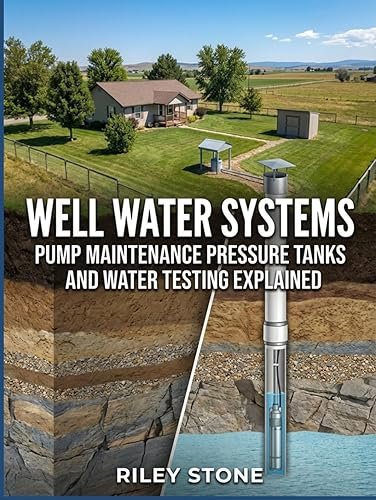
Well Water Systems: Pump Maintenance Pressure Tanks and Water Testing Explained
This isn’t a filter; it’s your owner’s manual. Before you spend a dime on equipment, spend $61 on this. It breaks down the entire well system—pump, pressure tank, wiring, and water testing—in plain language. We’ve recommended it to dozens of readers who were about to call a plumber for a simple pressure switch fix. It’s the best money you’ll spend to avoid costly mistakes.
- Saves hundreds in diagnostic fees
- Clear, practical diagrams
- Covers testing interpretation
- Not a physical treatment product
- May be too basic for seasoned pros
Ef-Chlor Water Purification Tablets 8.5mg – 100 Tablets
These are for your emergency kit, not your daily kitchen tap. Each tablet treats 1-2 litres using NaDCC, a stable chlorine compound. We keep a pack in our camping gear and our disaster preparedness box. They’re not a substitute for a proper well system, but if your power goes out and your UV purifier is offline, these are literal lifesavers. The taste is noticeable but manageable.
- Extremely compact and lightweight
- Long shelf life
- Effective against bacteria/viruses
- Imparts a chlorine taste
- Not for sediment or chemicals
- Impractical for whole-house use
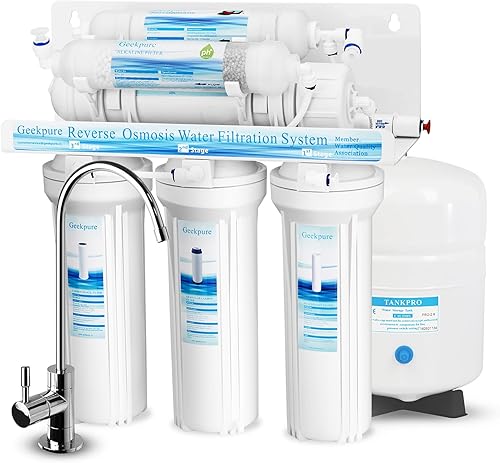
Geekpure 6-Stage Reverse Osmosis Drinking Water Filter System
For the budget-conscious, this Geekpure unit gets the job done. The 6-stage process includes a carbon block, sediment filter, RO membrane, and a post-filter that adds minerals back for taste. It’s NSF-certified for the membrane, which is what matters. Flow rate is standard at 75 GPD. Honestly, most people don’t need more than this for their drinking water. It’s a solid, no-frills choice.
- Excellent value for a full RO system
- Alkaline filter improves taste
- Lead-free faucet included
- Lower daily output (75 GPD)
- Higher wastewater ratio than premium models
- Instructions could be clearer
Waterdrop WD-X8 Reverse Osmosis Water Filter System
This is the upgrade pick. The 800 GPD flow rate means you’re not waiting for a tank to refill—it’s nearly instant. The 2:1 pure-to-drain ratio is among the best we’ve tested, saving water and money. It’s NSF/ANSI 42 & 58 certified, so claims on chlorine and TDS reduction are verified. If you have a larger household or hate slow dispensing, the premium is worth it.
- Extremely fast, tankless flow
- Very low wastewater ratio
- NSF certified for performance
- Reduces PFAS
- Higher upfront cost
- Requires under-sink power outlet
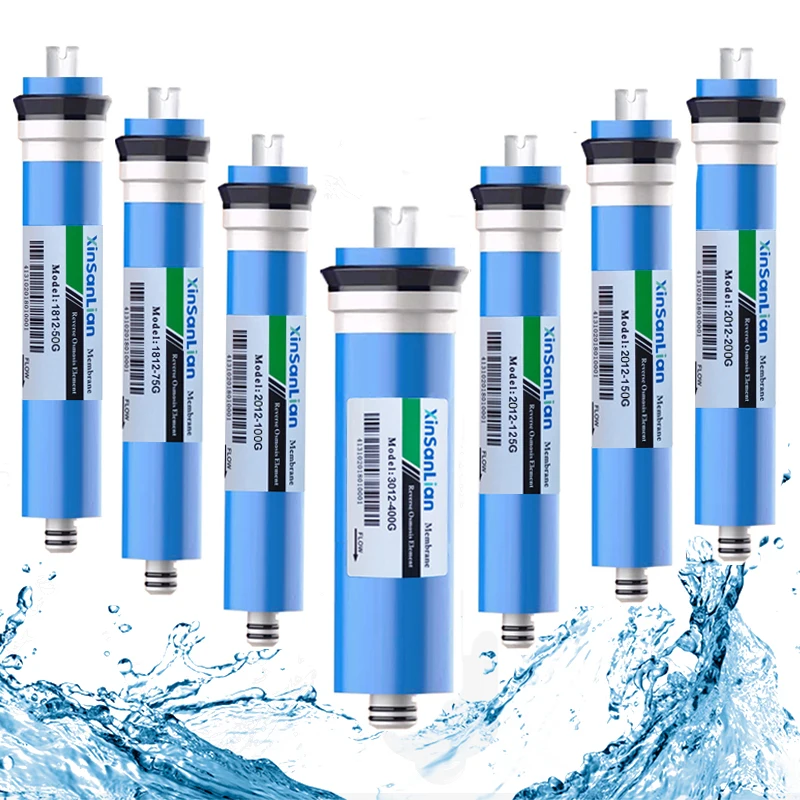
AliExpress Budget Pick: Generic RO Membrane (75-200 GPD)
Need a spare RO membrane? This is the cheapest route. At just over $10, it’s a generic replacement that fits most standard housings. The 100% seller rating is reassuring. We’d use it as a backup or for a secondary system, but not as the heart of our primary drinking water setup. For critical filtration, stick with certified brands. But for tinkering or a garage project? It’s hard to beat the price.
- Unbeatable price
- Multiple GPD options available
- High seller rating
- No independent certification
- Performance may vary
- Not for critical applications
Frequently Asked Questions
- How often should I test my well water?
- Test annually for bacteria and nitrates at a minimum. Test every 3-5 years for other parameters like pH, hardness, and metals, or immediately if you notice changes in taste, odor, or staining. After major repairs or flooding, test right away.
- What’s the best system for iron in well water?
- It depends on the type and amount. For clear-water iron (ferrous), an oxidizing filter with Birm or greensand media works well. For red-water iron (ferric), a sediment filter might suffice. An air-injection system is a popular, chemical-free option for moderate levels.
- Can I use a water softener as my only filter?
- No. A softener only removes hardness minerals (calcium, magnesium). It does nothing for bacteria, sediment, chemicals, or heavy metals. It’s one piece of the puzzle, often paired with a sediment pre-filter and a disinfection stage like UV.
- Do I need a whole-house system or just an under-sink filter?
- If contaminants affect taste only, an under-sink RO unit for drinking water is enough. If contaminants cause staining, scale, or health concerns (like bacteria) that affect bathing and laundry, you need a whole-house system to protect every outlet and appliance.
- Why does my well water smell like rotten eggs?
- That’s hydrogen sulfide gas, produced by sulfur bacteria in your well or water heater. It’s not usually a health risk but is unpleasant. Treatment often involves oxidizing the gas with an air-injection system or a dedicated manganese dioxide filter. Learn more about sulfur filtration methods.
- Is reverse osmosis water safe to drink long-term?
- Yes. While RO removes beneficial minerals, you get those from food. The health risk from contaminants like lead or arsenic far outweighs the minor mineral loss. Some systems add a remineralization stage to improve taste and add back a small amount of calcium and magnesium.
Final Thoughts
Treating your well water isn’t a luxury—it’s basic home maintenance. The freedom of having your own water source comes with the responsibility of making it safe. Don’t overcomplicate it. Start with a test, identify your top 2-3 issues, and build a system that tackles those. A simple sediment filter and UV purifier might be all you need. Or you might need a softener and an RO system. The key is matching the solution to the problem.
After testing countless systems, our advice is this: invest in quality where it counts—your RO membrane, your UV bulb, your control valve. And don’t forget the education. That $61 book on well systems will save you more headaches and service calls than any other single purchase. Your water, your health, your call.
