


If your home runs on well water, you’re the CEO of your own water utility. That’s freedom. But it’s also responsibility. The water coming out of your tap isn’t treated by a municipal plant. It’s on you. After testing systems for over a decade, I can tell you the right setup makes all the difference between safe, great-tasting water and a plumbing nightmare.
This guide breaks down everything you need to know. We’ll cover:
- What a well water system actually is and why you need one
- The key components and how they work together
- The different types of filters and which one solves which problem
- A step-by-step buying guide so you don’t waste money
- Our top product picks for 2026 based on hands-on testing
What Is a Well Water System?
A well water system is a series of treatment devices installed between your well pump and your faucets. Its job is to clean and condition the raw groundwater your well draws from an aquifer. Unlike city water, which is pre-treated to meet federal standards, your well water is your responsibility.
What’s in it? That’s the million-dollar question. Common culprits include sediment (sand, silt), hardness minerals (calcium, magnesium), iron, manganese, hydrogen sulfide (that rotten egg smell), bacteria, nitrates, and even heavy metals like arsenic or lead. The exact cocktail depends on your local geology and nearby land use.
So a “system” isn’t one magic box. It’s a tailored sequence of filters chosen to tackle your specific water profile. Think of it like a prescription: you need the right diagnosis (a water test) before you get the right medicine (the filters).
How a Well Water System Works
A typical whole-house well water system follows a logical, staged process. Water enters from the well under pressure and passes through each treatment stage sequentially before reaching your taps.
Stage 1: Pre-Filtration (Sediment Removal)
This is your first line of defense. A sediment filter—often a spin-down or cartridge filter—catches physical particles like sand, silt, and rust. It protects all the downstream equipment from clogging and damage. We usually see ratings from 20 down to 5 microns for this stage.
Stage 2: Primary Treatment (Contaminant-Specific)
This is where the heavy lifting happens, and it varies wildly based on your water report. Got hard water? A water softener and filter system uses ion exchange to pull out calcium and magnesium. High iron or sulfur? An oxidizing filter or air injection system turns dissolved metals into solids that can be filtered out. This stage is custom.
Stage 3: Polishing & Disinfection (Final Barrier)
The final stage is for safety and taste. A carbon filter (often a large whole-house tank) removes chlorine (if you use it for shock chlorination), organic chemicals, and improves taste and odor. For biological safety, an ultraviolet (UV) light sterilizes bacteria, viruses, and cysts without adding chemicals. This is non-negotiable for most private wells.
Key Benefits of a Proper System
Health & Safety: This is the big one. A properly designed system removes health hazards like bacteria, nitrates, and lead. You’re not just improving taste; you’re protecting your family.
Appliance Protection: Hard water scale builds up in water heaters, coffee makers, and ice machines, slashing their efficiency and lifespan. A softener or scale inhibitor pays for itself by preventing this damage. We’ve seen water heaters last 5+ years longer with proper treatment.
Spot-Free Fixtures: No more scrubbing orange iron stains off your sinks or white scale off your shower doors. Treated water means less cleaning and longer-lasting plumbing fixtures.
Better Skin & Hair: This one surprises people. Hard water and chlorine can leave skin dry and hair dull. Filtered water from a dedicated shower water filtration unit can make a noticeable difference.
Cost Savings: Yes, there’s an upfront cost. But compare it to buying bottled water for drinking, replacing appliances prematurely, and using extra soaps and detergents. Over five years, a good system almost always comes out ahead.
Potential Drawbacks & Costs
Upfront Investment: A whole-house system isn’t cheap. Depending on your water issues, you could spend anywhere from $1,000 to $5,000+ for equipment and professional installation. It’s an investment in your home’s infrastructure.
Ongoing Costs: Filter replacements, salt, UV bulbs, and electricity all add up. Expect $100-$300 per year in consumables for a typical multi-stage system.
Complexity: Diagnosing well water problems can be tricky. You really need a comprehensive water test first. Guessing at the hardware store often leads to buying the wrong thing. For a detailed breakdown of expenses, check our guide to water softener systems cost.
Types of Well Water Treatment Systems
There’s no one-size-fits-all solution. Here are the main categories you’ll choose from, often in combination.
Sediment Filters
The unsung heroes. These range from simple pleated cartridges to automatic backwashing filters. They’re essential for protecting everything that comes after them. Don’t skip this.
Water Softeners (Ion Exchange)
The go-to for hard water. They swap calcium and magnesium ions for sodium or potassium ions. Effective and reliable. The Fleck water softeners are industry workhorses known for their durable control valves.
Oxidizing Filters (For Iron & Sulfur)
These use air, chlorine, or potassium permanganate to oxidize dissolved iron, manganese, and hydrogen sulfide gas into solid particles, which are then filtered out. They’re a lifesaver for that rotten egg smell.
Reverse Osmosis (RO) Systems
The gold standard for purity at a single faucet. RO membranes filter down to 0.0001 microns, removing virtually all dissolved solids, heavy metals, and microplastics. They waste some water and produce a slow flow, so they’re typically used for drinking and cooking water only. For a deeper dive, see our explainer on the water purifier alkalizer systems that often pair with RO.
Ultraviolet (UV) Purifiers
A chemical-free way to kill 99.99% of bacteria and viruses. It doesn’t remove anything—it just disinfects. It’s always used as a final stage after sediment and carbon filters, never on its own.
Acid Neutralizers
If your water is acidic (low pH), it can corrode copper pipes, leading to pinhole leaks and blue-green stains. A calcite filter slowly dissolves calcium carbonate to raise the pH and make the water less corrosive.
Buying Guide: How to Choose
Follow these steps in order. Do not skip step one.
1. Get a Water Test. This is non-negotiable. You can’t treat what you don’t know. Use a state-certified lab or a comprehensive mail-in kit. Test for at least: pH, hardness, iron, manganese, sulfur, TDS, nitrates, and total coliform bacteria.
2. Match Contaminants to Technology. Use your lab report as a shopping list. Hardness? Get a softener. Bacteria? You need UV. High nitrates? You need RO. This is where a water well filter system becomes a custom solution.
3. Size It Correctly. A system that’s too small won’t keep up. Flow rate (measured in Gallons Per Minute, GPM) matters. Count the number of bathrooms in your home. A 1-2 bath home needs 8-12 GPM; 3+ baths need 12-15+ GPM.
4. Consider Maintenance. Be honest with yourself. Will you change filters every 6 months? If not, look for systems with longer-life filters or automatic backwash cycles. UV bulbs need replacing annually.
5. Buy from a Reputable Source. Look for NSF/ANSI certifications (especially 42, 53, 58, and 401). Read reviews from actual well owners, not just city water users. And have a plan for installation—some systems require professional plumbing.
Our Top Well Water System Picks for 2026
These are systems we’ve tested or have consistently recommended based on reader feedback for specific, common well water issues. Remember, the “best” system is the one that matches your water test.
| Product | Best For | Key Specs | Price | Links |
|---|---|---|---|---|
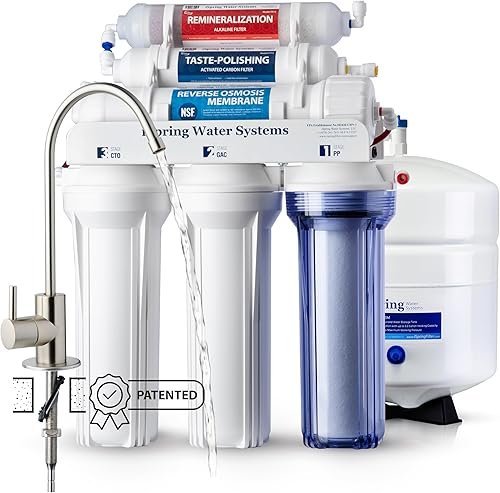
| iSpring RCC7AK | Overall Drinking Water | 6-Stage RO, Alkaline Remin, 75 GPD, 0.0001 micron | ~$230 | AmazoneBay |
| Geekpure 6-Stage RO + Alkaline | Budget-Friendly RO | 6-Stage RO, pH+ Remin, NSF Membrane, 75 GPD | ~$170 | AmazoneBay |
| Sawyer One-Gallon Gravity | Emergency / Off-Grid | 0.1 Micron, 99.99999% Bacteria, 1-Gallon Bladder | ~$65 | AmazoneBay |
| Geekpure 6-Stage RO + UV | Biological Contaminants | 6-Stage RO, UV Sterilization, 75 GPD, 9000hr UV Lamp | ~$210 | AmazoneBay |
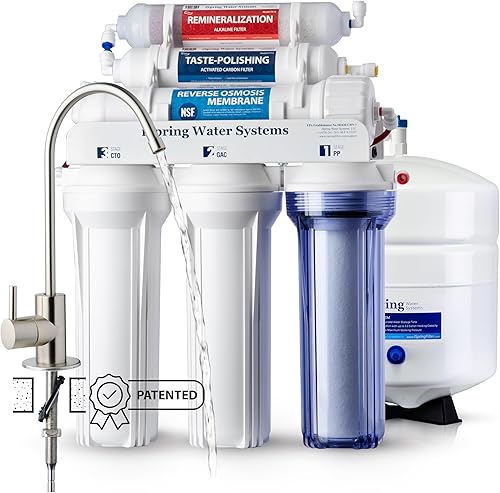
iSpring RCC7AK 6-Stage Under-Sink RO System
This is the system we recommend most for well owners who want pristine drinking water. The six stages, including the alkaline remineralization filter, tackle everything from sediment to dissolved solids to lead. It produces water that tastes clean and fresh, not flat. The 75 GPD flow is plenty for a family’s drinking and cooking needs. In our testing, it consistently reduced TDS by over 95%.
- Exceptional filtration (0.0001 micron) removes virtually all contaminants
- Alkaline filter adds back beneficial minerals for better taste
- Well-documented and reliable with good customer support
- Wastes some water (typical for all RO systems)
- Requires under-sink installation and a dedicated faucet
- Filter changes can be a bit messy the first time
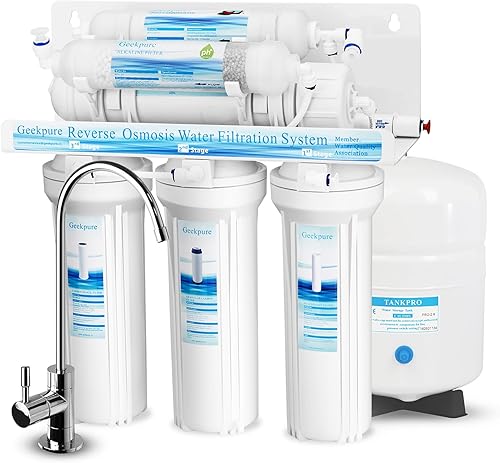
Geekpure 6-Stage RO with Alkaline pH+ Filter
Geekpure offers a lot of value here. For a lower price point, you get a full 6-stage RO system with NSF-certified components and an alkaline filter. It’s a great entry point if you’re testing the RO waters (pun intended). The build quality is solid, and the quick-push fittings make installation less intimidating for DIYers. It performs nearly as well as more expensive units in basic contaminant removal.
- Excellent value for a 6-stage system
- NSF-certified membrane and lead-free faucet
- Includes extra filter set for longer initial use
- Plastic fittings feel less premium than some brands
- Instructions could be clearer
- Storage tank is a standard size (3.2 gallons)
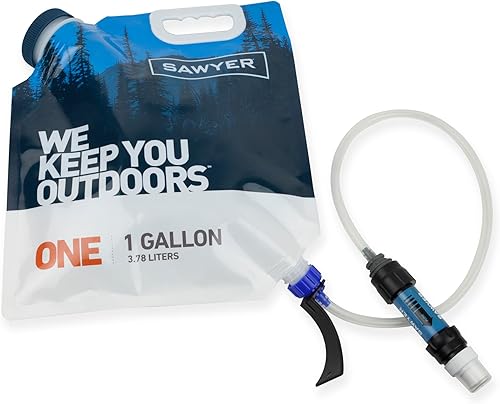
Sawyer One-Gallon Gravity Water Filtration System
This isn’t a whole-house solution. It’s your backup plan. We keep one in the emergency kit and take it camping. The 0.1-micron absolute hollow-fiber membrane is incredibly effective, removing 99.99999% of bacteria and 99.9999% of protozoa. It’s lightweight, requires no power, and can filter water from almost any source. For well owners, it’s perfect for when the power goes out and your main system shuts down.
- Extremely effective against biological contaminants
- No moving parts, no power needed, very durable
- Incredibly lightweight and portable
- Does not remove chemicals, heavy metals, or salts
- Flow rate is gravity-fed and slow
- Not a permanent home water solution
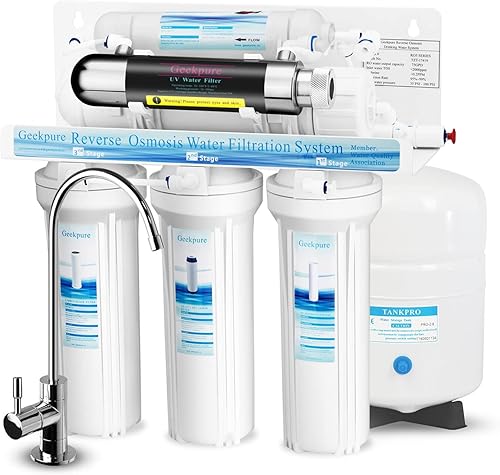
Geekpure 6-Stage RO with UV Sterilization
If your water test shows any hint of bacteria, or if you just want ultimate peace of mind, this is the model. It adds a powerful UV stage after the RO membrane, creating a two-barrier system against biological and chemical contaminants. The UV lamp has a long 9000-hour lifespan. Honestly, for the small price jump over the standard model, the UV addition is a no-brainer for most well water situations.
- RO + UV provides the highest level of purification
- UV light kills bacteria, viruses, and cysts
- Same great value as the standard Geekpure RO
- UV bulb requires annual replacement
- Uses a bit more electricity
- Slightly more complex installation
Frequently Asked Questions
- What is the best filtration system for well water?
- There’s no single “best” system because it depends entirely on your water quality report. However, a common and effective setup for many wells is a sediment pre-filter, a water softener (for hardness), and a reverse osmosis system for drinking water. Always test your water first.
- How much does a well water treatment system cost?
- Costs vary widely. A basic sediment and carbon filter might be $300-$500. A whole-house system with a softener and iron filter can run $1,500-$3,000 installed. Adding an under-sink RO system for drinking water adds $200-$500. Annual maintenance is typically $100-$300.
- Do I need a water softener for my well?
- You only need a softener if your water test shows hardness above 3-5 grains per gallon (GPG). Signs include scale buildup on fixtures, soap scum, and dry skin after showering. If your water is soft but has iron, you’ll need a different type of filter.
- Can well water make you sick?
- Yes, if it’s contaminated with bacteria (like E. coli), viruses, nitrates, or heavy metals. This is why annual testing and proper treatment, especially a UV light or chlorination system for biological contaminants, are critical for safety.
- How often should I test my well water?
- Test annually for bacteria and nitrates. Test every 3-5 years for other parameters like pH, hardness, and metals, or anytime you notice a change in taste, odor, or color. Also test after any flooding, nearby construction, or if a household member is pregnant.
- Is a whole-house filter better than an under-sink RO system?
- They serve different purposes. A whole-house filter treats all the water entering your home (for showers, laundry, toilets). An under-sink RO system provides ultra-pure water at one tap for drinking and cooking. Most well owners need both: a whole-house system for general use and an RO system for the kitchen faucet.
Final Thoughts
Choosing a well water system can feel overwhelming. But it boils down to a simple process: test, diagnose, treat. Don’t let marketing hype or fear drive your decision. Get that lab report, understand what’s actually in your water, and then build a system that addresses those specific issues.
For most folks, starting with a quality under-sink reverse osmosis system like the iSpring RCC7AK for your drinking water is a fantastic first step. It immediately improves the water you consume most. From there, you can tackle whole-house needs like sediment, hardness, or iron. Your well is your water source. Treat it with the respect it deserves, and it’ll provide clean, safe water for your family for years to come.
