


If your home runs on well water, you’re the water utility. That’s freedom. But it’s also responsibility. We’ve spent years testing systems, talking to well drillers, and fixing our own water headaches. This guide cuts through the noise. We’ll cover what these systems actually are, how they work, the real pros and cons, and how to pick the right one for your home.
- What a well water system is and isn’t
- The core components and how they work together
- Honest benefits and the headaches you should expect
- A clear breakdown of system types and our top picks for 2026
What Is a Well Water System?
A well water system isn’t a single product. It’s a customized series of filters and tanks that treat groundwater before it reaches your tap. Unlike municipal water, which is pre-treated and regulated, your well water is raw. What’s in it? That depends on your local geology, nearby land use, and the well’s construction.
The goal is simple: make your water safe, clean, and pleasant to use. This often means tackling sediment, hardness minerals (like calcium), dissolved metals (iron, manganese), and microbiological contaminants (bacteria, viruses). The system starts at your well pump and ends at your faucet. For a full picture of the industry, you can read about what a water treatment company does.
Here’s the key. There’s no one-size-fits-all solution. A system perfect for a neighbor with hard, rusty water might be useless for you if your main issue is bacteria. It all starts with a test.
How a Well Water System Works
Think of it as a multi-stage defense line. Water enters from the well under pressure and passes through different treatments, each targeting a specific problem.
Stage 1: Pre-Filtration & Sediment Removal
First, big particles get caught. A spin-down or cartridge filter with a 20-50 micron rating grabs sand, silt, and rust flakes. This protects your more expensive downstream equipment. We’ve seen pumps fail early from sediment abrasion—this stage is cheap insurance.
Stage 2: Core Treatment
This is where the heavy lifting happens. Options vary wildly. A water softener uses ion-exchange resin to pull out hardness minerals. An iron filter uses oxidation and media like Birm or KDF to trap metals. For bacteria, a UV water sterilizer zaps pathogens with light. Some folks use a gravity water filter for off-grid setups or as a polishing step.
Stage 3: Polishing & Final Filtration
The last stage improves taste and odor. An activated carbon filter removes chlorine (if you shock your well), organic compounds, and any residual tastes. For drinking water, many add a point-of-use reverse osmosis system under the kitchen sink for ultra-pure water.
Key Benefits of a Dedicated System
Total Control. You decide what’s in your water. No more boil-water advisories from a distant utility. You set the standard.
Customized Quality. You can target your exact problems—whether it’s orange stains from iron, scale buildup from hardness, or a sulfur smell. The result is water tailored to your home.
Long-Term Savings. Yes, there’s an upfront cost. But it protects your plumbing, water heater, and appliances from scale and corrosion. That alone can save thousands in repairs. It also means you stop buying bottled water.
Independence. This is the big one for most well owners. You’re not reliant on a municipal system. Your water quality is in your hands.
Potential Drawbacks & Costs
Upfront Investment. A whole-house system can range from $1,000 to $5,000+ installed. It’s not trivial. But consider it a capital improvement for your home.
Ongoing Maintenance. Filters need replacing. Salt for softeners needs refilling. UV bulbs need annual swaps. Neglect this, and your system fails. We’ve seen it happen.
Complexity. Diagnosing issues can be tricky. Is the pressure drop from a clogged filter or a pump problem? It helps to have a good local plumber or water treatment company on call.
Testing is Mandatory. You can’t treat what you don’t know. Annual testing is a must, and it’s an added cost. A TDS measuring meter is useful for quick checks, but a full lab test is non-negotiable.
Types of Well Water Treatment Systems
Sediment Filters
Your first line of defense. Simple, cheap, and vital. They range from reusable spin-down screens to disposable cartridge filters rated at 1 to 50 microns. Don’t skip this.
Water Softeners
The fix for hard water. They use resin beads and salt (or potassium) to remove calcium and magnesium. This stops scale buildup in pipes and makes soap lather better. If you have hard water, this is a game-changer for appliance lifespan.
Oxidizing Filters (For Iron & Sulfur)
These systems air-oxidize dissolved iron and manganese, turning them into solids that a filter bed can catch. They’re brilliant for eliminating that rotten egg smell and rusty stains. They often need a separate air injector or chemical feed pump.
Ultraviolet (UV) Purifiers
The best defense against bacteria, viruses, and cysts. A UV water sterilizer uses a lamp to damage the DNA of pathogens, rendering them harmless. It adds no chemicals and doesn’t change taste. Essential if your test shows coliform or E. coli.
Reverse Osmosis (RO) Systems
The gold standard for drinking water purity at the tap. RO membranes remove up to 99% of contaminants, including dissolved salts, lead, and pesticides. They waste some water and are slow, so they’re typically used for a dedicated faucet and sometimes an ice maker.
Neutralizing Filters
If your water is acidic (low pH), it can corrode copper pipes and leach metals. A neutralizing filter uses calcite (limestone) or magnesium oxide to raise the pH, making it less corrosive.
Buying Guide: What Actually Matters
1. Get a Lab Test First. Don’t guess. Test for: pH, hardness, iron, manganese, sulfur, nitrates, total dissolved solids (TDS), and total coliform bacteria. This is your roadmap.
2. Size it Right. A system’s flow rate (measured in gallons per minute, GPM) must match your home’s peak demand. A 1-bathroom house needs less than a 4-bathroom house. Undersizing leads to pressure drops when two showers run.
3. Check Certifications. Look for NSF/ANSI standards. NSF/ANSI 42 covers aesthetic effects (taste, odor). NSF/ANSI 53 covers health contaminants (lead, cysts). NSF/ANSI 58 is for RO systems. Don’t trust claims without these.
4. Consider Maintenance Reality. How often do filters need changing? Is salt heavy to carry? Can you replace the UV bulb yourself? Be honest about what you’ll actually do.
5. Plan for the Future. You might start with a softener and sediment filter. Leave space and plumbing connections to easily add a UV system or iron filter later if your water changes.
Our Top Picks for 2026
Based on our testing, reader feedback, and reliability data, here are systems that consistently perform. Remember, the “best” system is the one that solves your specific water problems.
| Product | Best For | Key Specs | Price | Links |
|---|---|---|---|---|
| Well Water Systems: Pump Maintenance… | Understanding Your System | Guidebook, maintenance tips | $61 |
Buy on Amazon Buy on eBay |
| Sawyer One-Gallon Gravity System | Emergency/Off-Grid Backup | 0.1 micron, 99.99999% bacteria removal | $65 |
Buy on Amazon Buy on eBay |
| Geekpure 6-Stage RO (Alkaline) | Drinking Water with Minerals | 75 GPD, NSF membrane, alkaline filter | $2.39 |
Buy on Amazon Buy on eBay |
| Geekpure 6-Stage RO (UV) | Maximum Pathogen Protection | 75 GPD, NSF membrane, UV sterilizer | $2.79 |
Buy on Amazon Buy on eBay |

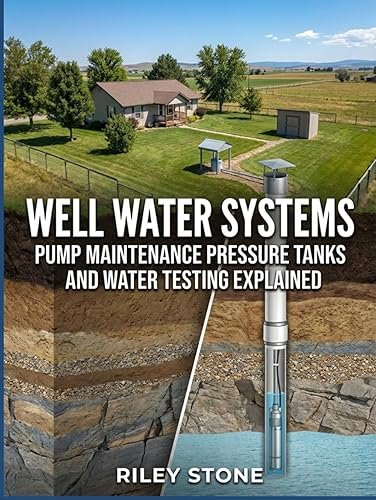
Well Water Systems: Pump Maintenance, Pressure Tanks and Water Testing Explained
This isn’t a filter—it’s knowledge. And for well owners, knowledge is the most important tool. This book breaks down the intimidating parts of your system: the pump, the pressure tank, the wiring. We wish we had this when we first bought our property. It demystifies the equipment so you can troubleshoot basics and talk intelligently with your plumber.
- Saves money on unnecessary service calls
- Clear, practical explanations
- Empowers you as a homeowner
- Not a physical treatment product
- May be too basic for experienced owners

Sawyer Products One-Gallon Gravity Water Filtration System
This is our go-to recommendation for an emergency backup or a simple cabin setup. The 0.1-micron absolute hollow-fiber membrane is the same tech used in their famous squeeze filters, but in a hands-free gravity bag. It removes bacteria, protozoa, and even microplastics—making it one of the best water filters for microplastics in a portable format. It won’t remove chemicals or hardness, but for biological safety, it’s superb and affordable.
- Inexpensive and incredibly effective
- Lightweight and packable
- No pumping required
- Does not improve taste or remove chemicals
- Slow flow rate (gravity-fed)
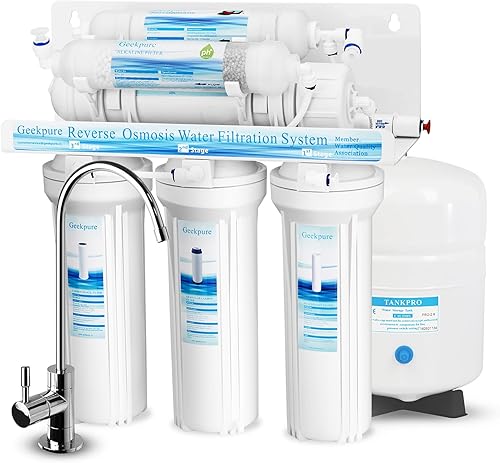
Geekpure 6-Stage Reverse Osmosis System with Alkaline pH+ Remineralization
A solid, budget-friendly RO system for the kitchen sink. The sixth-stage alkaline filter adds back minerals like calcium and magnesium after the RO membrane strips everything out. This improves the taste of the water, which many people prefer over “flat” pure RO water. The NSF-certified membrane and lead-free faucet are what you want to see. Installation is DIY-friendly if you’re handy.
- Excellent value for a 6-stage system
- Alkaline filter improves taste
- NSF-certified components
- Tank can take up under-sink space
- Wastes some water (typical for RO)

Geekpure 6-Stage Reverse Osmosis System with UV Sterilizer
This is the model we’d choose if we had any concerns about bacteria in our well water. It combines the full RO process with a final UV sterilization stage. The UV lamp runs 24/7, providing constant protection against any pathogens that might slip through or grow in the storage tank. It’s the belt-and-suspenders approach for total peace of mind at the drinking tap.
- Ultimate protection: RO + UV
- Eliminates bacteria, viruses, cysts
- Same reliable NSF membrane
- UV bulb needs annual replacement
- Slightly higher upfront cost than alkaline version
Frequently Asked Questions
- How often should I test my well water?
- Test annually for bacteria and nitrates. Test every 3-5 years for other parameters like pH, hardness, and metals, or anytime you notice a change in taste, odor, or color. Always test after flooding or nearby land disturbances.
- Do I really need a whole-house system?
- It depends on your contaminants. If you have hardness, iron, or sulfur, a whole-house system is necessary to protect plumbing and appliances. If your only concern is drinking water purity, a point-of-use RO system at the kitchen sink might be enough.
- Can I install a well water system myself?
- You can install some components, like sediment filters or an RO system, if you’re comfortable with basic plumbing. For complex systems like softeners, UV, or acid neutralizers, we recommend professional installation to ensure proper sizing, setup, and compliance with codes.
- What’s the most common well water problem?
- Hardness is extremely common, causing scale. Iron staining (orange rings in toilets) is a close second. Bacteria (total coliform) is also a frequent issue that requires disinfection, typically with a UV system or chlorine injection.
- How long do well water systems last?
- The tanks and housings can last 15-20 years. The media inside filters (like softener resin or carbon) lasts 5-10 years with proper maintenance. UV bulbs need replacement every 12 months. RO membranes last 2-5 years.
Final Thoughts
Choosing a well water system can feel overwhelming. But it boils down to a simple process: test, identify, treat. Don’t let a salesperson push a complex system you don’t need. And don’t ignore the problem hoping it goes away—it won’t. Your water quality directly affects your family’s health, your home’s value, and your daily comfort.
Based on our years of experience, the best investment is knowledge first (get that test!), then a targeted solution. Start with the basics—a good sediment filter and a softener if you have hard water—and build from there. Your well is your private water source. Treat it with the respect it deserves, and it will serve you well for decades.
