


Well Water Softener Systems: A Practical Guide for 2026
If you’re on well water, you’ve probably noticed the signs: crusty white scale on your faucets, soap that won’t lather, or maybe even a faint metallic taste. A dedicated well water softener isn’t a luxury—it’s often a necessity for protecting your plumbing and improving water quality. We’ve tested systems, interviewed plumbers, and dealt with our own well water headaches for years. This guide covers what actually works, what to avoid, and how to choose the right system for your home.
- What a well water softener actually does differently than a standard unit
- The key benefits (and honest drawbacks) you should expect
- How to choose the right size and type based on your water test
- Our hands-on review of top systems for 2026
What Is a Well Water Softener?
A well water softener is an ion-exchange system designed to tackle the high levels of hardness minerals—primarily calcium and magnesium—found in groundwater. Unlike municipal water, which is treated at a plant, your well water comes straight from the ground with whatever minerals it picks up along the way. That means you’re often dealing with hardness levels that can be two, three, or even ten times higher than city water.
The single biggest mistake we see is people buying a standard softener without considering their well’s unique profile. Well water can also contain iron, manganese, or sediment that will foul a conventional softener’s resin bed in short order. A true well water system has features to handle these extra challenges—like a specialized iron filter or a more robust backwash cycle.
Think of it this way: a standard softener is like a raincoat. A well water softener is a raincoat with a built-in hood, sealed seams, and waterproof pockets. It’s built for a tougher job.
How a Well Water Softener Works
The core process is ion exchange. Hard water flows through a tank filled with resin beads coated in sodium ions. The calcium and magnesium ions in your water are more strongly attracted to the resin, so they stick to it, displacing the sodium ions which then flow out into your home’s water supply. Eventually, the resin gets saturated with hardness minerals.
The Regeneration Cycle
That’s when the “cleaning” or regeneration cycle kicks in. A brine solution (from the salt tank) is flushed through the resin tank. The high concentration of sodium in the brine knocks the calcium and magnesium off the resin beads and washes them down the drain. The resin is then rinsed and ready to soften more water. This usually happens automatically in the middle of the night.
The Pre-Filtration Imperative
Here’s a critical step many overlook. If your well water has sediment or high levels of iron, you need a sediment removal system or an iron filter before the softener. Without it, your softener’s resin will get clogged and fouled, destroying its efficiency and lifespan. We always recommend a full water test before buying any equipment.
Key Benefits
Protects Your Plumbing and Appliances. Scale buildup from hard water is the number one killer of water heaters, dishwashers, and coffee makers. A softener stops scale at the source, which can extend the life of your appliances by years. We’ve seen heating elements caked with an inch of scale—it’s not pretty.
Better Cleaning, Less Soap. Soft water allows soap to lather properly. You’ll use less detergent, shampoo, and laundry soap. Your clothes will feel softer, and you’ll告别those stubborn soap scum rings in the bathtub.
Improved Skin and Hair Feel. Many people report less dry, itchy skin and more manageable hair after installing a softener. Hard water minerals can leave a film on your skin that disrupts its natural moisture barrier.
Potential Drawbacks
The regeneration cycle uses water and salt, and discharges a briny wastewater that needs a proper drain. In areas with water scarcity or strict septic system regulations, this is a real factor to plan for. Finally, the upfront cost for a quality whole-house system is significant, though we believe it pays for itself in appliance longevity and soap savings.
Types of Well Water Softener Systems
Traditional Salt-Based Ion Exchange
This is the proven workhorse. Best for high hardness levels (over 10 GPG) and households that want guaranteed soft water. Requires a brine tank and regular salt. Look for units with a high-efficiency regeneration cycle to save on salt and water.
Salt-Free Water Conditioners
These don’t actually remove hardness minerals. Instead, they use a template-assisted crystallization (TAC) process to change the minerals’ structure so they don’t stick to surfaces as scale. They’re low maintenance but less effective on very hard water. If you’re curious, we have a full breakdown on water softener not using salt systems.
Dual-Tank Systems
For large households or very hard water. One tank is softening while the other is regenerating, so you never run out of soft water. They cost more and take up more space but are the ultimate solution for high demand.
Portable/Compact Units
Great for RVs, small homes, or as a point-of-use solution. We’ve tested a few, like the Filterelated model below. They use the same ion-exchange principle but on a smaller scale. They’re not for whole-house use but have their place.
Buying Guide: What Actually Matters
1. Get Your Water Tested First. Don’t guess. Measure your hardness in Grains per Gallon (GPG) or Parts per Million (PPM). Test for iron and manganese too. A cheap test kit can give you a baseline.
2. Size It Right. Capacity is measured in grains. A 32,000-grain unit is common for a family of four. Calculate your daily water usage (about 80 gallons per person) multiplied by your hardness level. Undersizing means constant regeneration, which wastes salt and water.
3. Check the Flow Rate. Measured in Gallons Per Minute (GPM). Ensure the system can handle your home’s peak demand—like when two showers and the dishwasher are running. A drop in water pressure during regeneration is a sign of an undersized system.
4. Look for NSF/ANSI 44 Certification. This is the standard for cation exchange water softeners. It verifies performance claims and structural integrity. Don’t buy a unit without it.
5. Consider Your Drain and Electrical Access. The system needs a nearby drain for the regeneration discharge and a standard electrical outlet for the control valve.
Our Top Picks for 2026
| Product | Key Specs | Best For | Links |
|---|---|---|---|
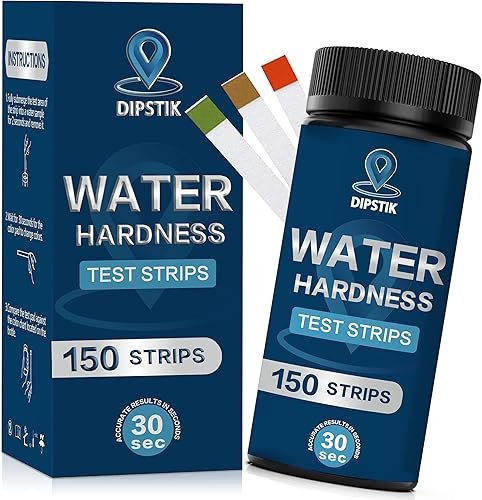
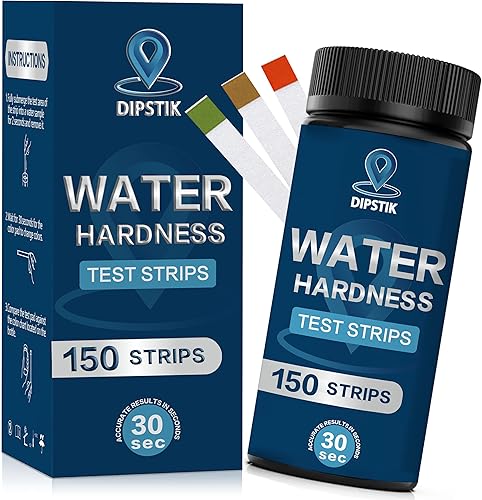 Water Hardness Test Kit |
150 strips, 0-425 PPM / 0-25 GPG, 15-second results | Essential first step before buying any system |
Buy on Amazon Buy on eBay |
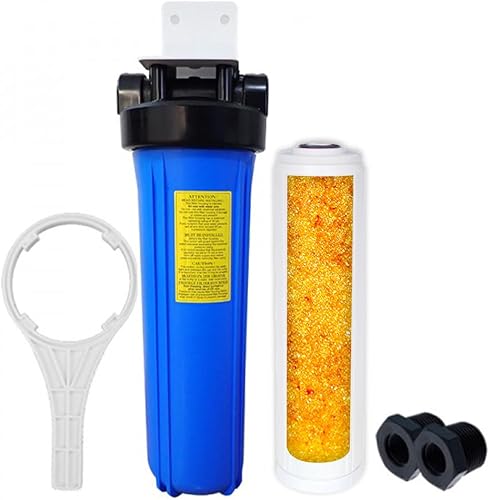 Whole House Water Softener Filtration System 20×4.5 |
Targets heavy metals, PFAS, nitrates, and more | Well water with multiple contaminant concerns |
Buy on Amazon Buy on eBay |
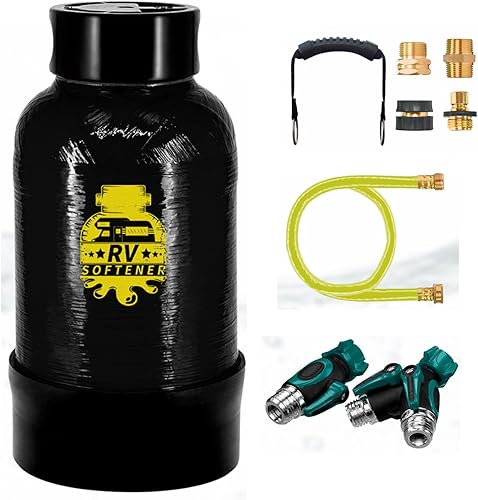 Filterelated RV Water Softener -16000 Grain |
16,000 grain capacity, portable, 3/4″ brass fittings | RVs, boats, mobile car washes, small cabins |
Buy on Amazon Buy on eBay |
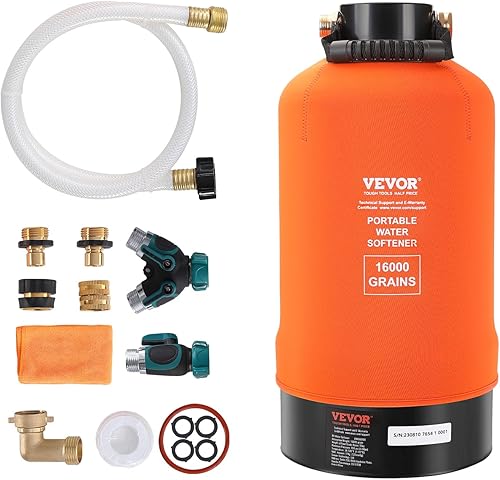 VEVOR RV Water Softener, 16,000 Grain |
16,000 grain, includes 42″ hose, brass fittings | Budget-friendly portable option |
Buy on Amazon Buy on eBay |
Product Reviews
Water Hardness Test Kit – 150 Strips
Before you spend hundreds on a softener, spend $14 on this. Seriously. We use these strips on every job. The color chart is clear, and the results in 15 seconds are reliable enough for a solid baseline. It won’t replace a lab test for iron or bacteria, but for hardness? It’s spot on. The bottle of 150 strips will last you for years of annual checks.
- Extremely easy to use and read
- Fast 15-second results
- Great value with 150 strips
- Only tests total hardness, not specific minerals
- Not a substitute for a full lab analysis
Whole House Water Softener Filtration System 20×4.5
This is an interesting hybrid. It’s not just a softener; it’s a broad-spectrum filter cartridge system that targets a scary list of well water contaminants: heavy metals, PFAS, nitrates, and even uranium. If your water test comes back with multiple red flags beyond just hardness, this is the kind of multi-barrier approach we recommend. It’s more of a point-of-entry filter that addresses softening as part of a broader solution.
- Addresses a wide range of contaminants
- Good for complex well water issues
- Cartridge-based system can be customized
- Not a traditional salt-based softener
- Cartridge replacement costs can add up
Filterelated RV Water Softener – 16000 Grain
We took this little unit on a month-long road test. It’s legitimately portable. The 16,000-grain capacity is enough for a couple or small family for a weekend trip before it needs regenerating with a box of salt. The brass fittings feel solid, and setup is a breeze. It won’t handle a whole house, but for an RV, a tiny home, or even a single bathroom hookup at a cabin, it’s a game-changer.
- Truly portable and easy to set up
- Effective for its intended scale
- Quality brass fittings
- Limited capacity—not for whole-house use
- Manual regeneration required
VEVOR RV Water Softener, 16,000 Grain
VEVOR’s offering is very similar to the Filterelated but often comes in a bit cheaper and includes a 42-inch hose. In our testing, performance was on par. The build quality is good for the price point. If you’re looking for the most affordable entry into portable water softening, this is it. Just don’t expect it to soften water for a 3-bedroom house.
- Excellent value for a portable unit
- Includes necessary hose for connection
- Solid performance for RV/small space use
- Instructions could be clearer
- Plastic fittings feel less premium than brass
Budget & Alternative Picks
For those on a tight budget or looking for specific components:
- 10L/5L Cold Water Bottle Dispenser – While not a softener, this AliExpress dispenser ($19.51) can be part of a manual drinking water station if you’re hauling softened or filtered water.
- RO Membrane for Home Water Purifier – If you’re pairing your softener with a reverse osmosis system for drinking water, you’ll need a good membrane. This RO membrane ($27.28) has perfect ratings and comes in various GPD ratings.
Frequently Asked Questions
- Can I use a water softener with my septic system?
- Yes, but with caution. The brine discharge from regeneration can affect the bacterial balance in your septic tank. Modern high-efficiency softeners use less water and salt per regeneration, which helps. Check local regulations, as some areas have specific rules. Always discharge the brine line to a proper drain, not directly into your septic tank if possible.
- How often do I need to add salt?
- It depends on your water hardness, usage, and the system’s efficiency. For a family of four with moderately hard water, expect to add a 40-pound bag of salt every 4-8 weeks. Check the brine tank monthly at first to establish your pattern. Never let the salt level drop below the water level.
- Will a water softener remove iron from my well water?
- A standard softener can remove small amounts of clear-water iron (ferrous iron), typically under 2-3 PPM. However, using a softener as an iron filter will quickly foul the resin. For higher iron levels, or if you have red/rusty water (ferric iron), you need a dedicated iron filter before the softener. A proper water test will tell you what you have.
- Do I need a separate drinking water filter if I have a softener?
- Most experts, including us, recommend it. Softening adds sodium to your water. For drinking and cooking, a reverse osmosis system under the sink is the gold standard. It removes the added sodium and a wide range of other potential contaminants. Some people also just dislike the “slippery” feel of soft water for drinking.
- What’s the difference between a water softener and a water conditioner?
- A softener (ion exchange) removes hardness minerals and adds sodium. A conditioner (like TAC) doesn’t remove anything; it changes the minerals’ form to prevent scale. Conditioners require no salt or electricity but may not be as effective in very hard water. The choice depends on your hardness level and whether you need the “feel” of soft water.
- Can I install a well water softener myself?
- If you’re handy with plumbing, yes. It involves cutting into your main water line, installing bypass valves, and connecting the drain and electrical. The hardest part is often lifting the resin tank. Many people hire a plumber for the initial install ($200-$500) and then handle salt refills and basic maintenance themselves. Always follow local plumbing codes.
Final Thoughts
Choosing a well water softener isn’t about buying the biggest or most expensive unit. It’s about matching the system to your specific water chemistry and household needs. Start with a test. Seriously. That $15 kit could save you from a $1,500 mistake.
For most households dealing with standard hard well water, a traditional salt-based softener with NSF/ANSI 44 certification is the most reliable solution. If your water has other issues—iron, bacteria, chemicals—you’ll need a multi-stage approach, potentially combining a softener with other filtration methods. Don’t be afraid to consult a local water treatment professional for a full analysis. Your pipes, appliances, and skin will thank you.
