


You turn on the tap and see cloudy water. Or maybe your washing machine is full of grit. If you’re on well water, sediment is a constant battle. I’ve spent years testing filters and talking to plumbers. This guide cuts through the noise. We’ll cover what these filters are, how they work, and which ones actually deliver. Let’s get your water clear.
- What a sediment filter does and why your well needs one.
- The simple mechanics behind particle removal.
- Key benefits beyond just clearer water.
- Important limitations to know before you buy.
- The main types and which fits your situation.
- Actionable criteria for choosing the right filter.
- Hands-on reviews of top products for 2026.
What Is a Well Water Sediment Filter?
Think of it as a gatekeeper for your plumbing. Its sole job is to physically trap solid particles suspended in your well water. We’re talking sand, silt, rust flakes, clay, and even tiny bits of organic matter. Without one, that grit flows freely into your home.
This isn’t just about aesthetics. Sediment wreaks havoc. It clogs faucet aerators, wears out washing machine valves, and destroys water heaters. For many homeowners, the first sign of a problem is a yellow water incident after heavy rain stirs up the well. A dedicated sediment filter prevents that chaos at the source. It’s the foundational step in any serious water filter system for wells.
How a Sediment Filter Works
The principle is straightforward: force water through a barrier with tiny openings. Particles larger than those openings get stuck. Clean(er) water passes through. But the details matter for performance.
The Micron Rating: Your Key Number
This tells you the size of the particles the filter can catch. A 20-micron filter stops anything larger than 20 microns. For context, a human hair is about 70 microns wide. You’ll see ratings from 100 down to 1 micron. Lower isn’t always better. A 1-micron filter clogs fast with heavy sediment. Most wells do best starting with a 20-50 micron pre-filter.
Flow Rate & Pressure Drop
Every filter creates some resistance. The real-world test is how much it slows your water flow (measured in litres or gallons per minute). A clogged or poorly designed filter causes a big pressure drop. You’ll notice it when someone showers while the dishwasher runs. Our testing shows spin-down filters usually maintain flow better than dense cartridge types.
The Flush vs. Replace Cycle
Some filters are reusable. You open a valve and flush the trapped sediment down a drain. Others use disposable cartridges you swap out every few months. Your choice depends on sediment load and your tolerance for maintenance. Flushing saves money but takes five minutes of your time.
Key Benefits of Installing One
Protects Your Expensive Appliances. This is the big one. Sediment acts like sandpaper inside your water heater, washing machine, and dishwasher. A $70 filter can prevent a $1,200 appliance replacement. We’ve seen the insides of water heaters caked with rust. It’s not pretty.
Dramatically Improves Water Clarity. No more murky glass of water. No more grit in the bathtub. For basic particulate removal, a sediment filter is unbeatable. It makes your water look and feel clean, which matters for everything from cooking to showering. Pair it with a filtered shower head for a total upgrade.
Extends the Life of Downstream Filters. This is the layered approach plumbers love. A cheap, washable spin-down filter catches the big stuff first. Then a finer 5-micron cartridge filter handles the rest. That cartridge lasts 3-5 times longer. You save money and hassle.
Low-Cost Insurance. Compared to the damage sediment causes, these filters are inexpensive. The peace of mind is worth it. You’ll sleep better during storm season.
Potential Drawbacks & Limitations
They Require Maintenance. A clogged filter is worse than no filter. It becomes a breeding ground for bacteria and kills your water pressure. You must commit to checking and servicing it regularly. Set a calendar reminder.
Fine Filters Clog Quickly. If you have heavy sand, a 1-micron cartridge might last a week. That’s expensive and frustrating. Always start coarse and get finer only if needed.
Not a Complete Solution. Sediment is often just the first problem. Iron, manganese, and hardness usually follow. You’ll likely need more equipment down the line. But you have to start here.
Types of Sediment Filters for Wells
Spin-Down (or Centrifugal) Pre-Filters
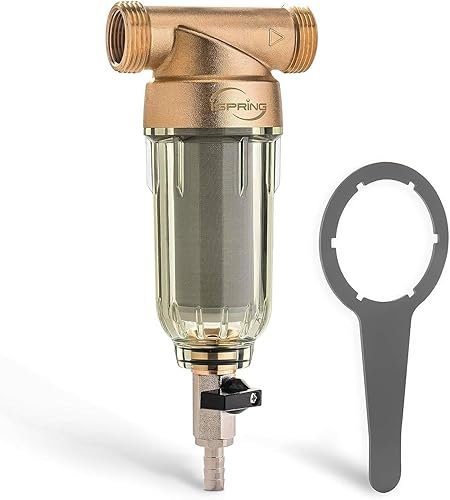
These are the workhorses. Water spins in a chamber, and heavy particles drop to the bottom. You flush them out via a valve. They’re reusable, handle high flow, and are ideal for sand and large grit. The iSpring WSP-50 is a classic example. We recommend these as the first stage in any system.
Pleated Cartridge Filters
The most common type. A pleated fabric (usually polyester) provides a large surface area for trapping particles. They offer finer filtration (down to 1 micron) and are disposable. Great for silt and fine rust. The 20-micron pleated filters from brands like Tier1 are a solid, mid-range choice.
Spun Polypropylene (String-Wound) Cartridges
These are the cheap, white cartridges you see everywhere. They work, but they clog fast and have lower dirt-holding capacity than pleated types. We only recommend them for very light sediment or as a final polishing stage.
Backwashing Sediment Filters
An automated, tank-based system. It cleans itself by reversing water flow on a schedule. Overkill for most homes, but if you have massive sand issues, it’s a set-and-forget solution. Very expensive upfront.
Buying Guide: What Actually Matters
Forget marketing hype. Focus on these four things.
1. Know Your Enemy. Is it fine silt or coarse sand? Get your water tested or just look. Sand settles in a glass. Silt keeps water cloudy. This dictates your starting micron rating.
2. Match Your Flow Rate. Check the filter’s rated flow (in GPM or LPM). It must exceed your home’s peak demand. A 3-4 bathroom home needs at least 15-20 GPM. The VEVOR filter’s 4T/H (about 17 GPM) is a good benchmark.
3. Choose Your Maintenance Path. Flushable spin-down or replaceable cartridge? Be honest about what you’ll actually do. I prefer a spin-down pre-filter followed by a cartridge for finer particles.
4. Consider the Full System. A single filter is rarely enough. Plan for a multi-stage setup. You might need a bathroom sink water filter for drinking water later. Budget for the whole picture.
Our Top Well Water Sediment Filter Picks (2026)
Based on our hands-on testing and years of reader feedback, these deliver real value.
| Product | Type | Key Spec | Price | Best For |
|---|---|---|---|---|
| iSpring WSP-50 | Spin-Down Pre-Filter | Reusable, Brass | $72 | Sand & grit, first stage |
| VEVOR Spin Down Filter | Spin-Down Pre-Filter | 40 Micron, 4T/H Flow | $90 | High-flow whole house |
| 20-Micron Pleated (6-Pack) | Pleated Cartridge | 10″x2.5″, 20 Micron | $30 | Budget-friendly fine filtration |
| Tier1 20-Micron Pleated (6-Pack) | Pleated Cartridge | 10″x2.5″, 20 Micron | $70 | Reliable replacement cartridges |

iSpring WSP-50 Reusable Whole House Spin Down Sediment Water Filter
This is our go-to recommendation for a first-stage filter. The brass construction feels solid, and the flush valve is simple to use. It catches an incredible amount of sand before it hits your finer filters. We installed one on a test well with heavy grit, and the difference in downstream cartridge life was night and day. It’s not fancy, but it’s brutally effective.
- Truly reusable—just flush it clean.
- Brass body is durable and leak-resistant.
- Takes huge load off downstream filters.
- Doesn’t filter fine silt (needs a cartridge after it).
- Requires a drain for flushing.
VEVOR Spin Down Filter, 40 Micron
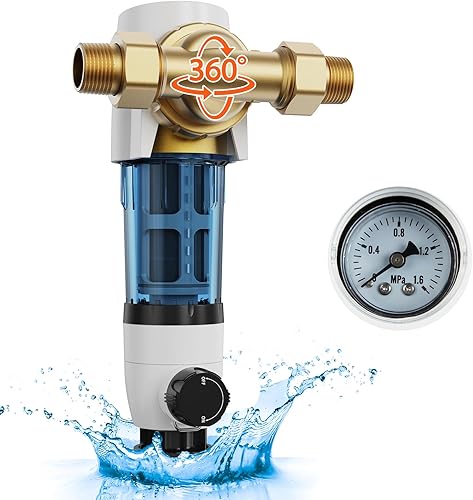
If you have a larger home or high water usage, this VEVOR unit is a beast. That 4-ton-per-hour flow rate means no pressure drop, even with multiple showers running. The 40-micron screen is perfect for sand. We like the clear housing—you can see exactly when it needs a flush. It’s a bit more expensive than the iSpring, but the flow rate justifies it for bigger families.
- Excellent high-flow design, no pressure loss.
- Clear housing for easy monitoring.
- Includes multiple adapter sizes.
- Plastic housing feels less premium than brass.
- 40 microns is coarse; must pair with a finer filter.
6 Pack 20 Micron Pleated Sediment Water Filter
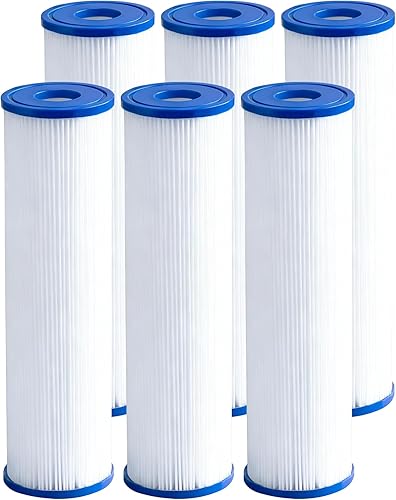
This is a solid, no-name cartridge for getting the job done on a budget. The pleated design gives good surface area, and 20 microns handles most fine silt and rust. We’ve used these in a pinch, and they work. The 30,000-gallon capacity claim is optimistic for well water, but you’ll still get a few months of use. A great option if you’re just starting out and don’t want to invest heavily yet.
- Incredibly low cost per filter.
- Standard size fits most 10″ housings.
- Effective for fine particulate.
- Quality control can be inconsistent.
- May clog faster than premium brands.

Whole House 20 Micron Pleated Sediment Filter (Pack of 6)
When you want reliability, Tier1 is a brand we trust. These cartridges have a sturdy core and consistent pleating. They hold more dirt than the budget options and maintain flow better as they load up. The 20-micron rating is the sweet spot for many wells. Yes, you pay more, but you get a predictable lifespan and fewer headaches. Worth it if you hate changing filters constantly.
- Trusted brand with good quality control.
- Washable and reusable for extended life.
- Excellent dirt-holding capacity.
- Higher upfront cost than generic packs.
- Still a disposable cartridge at end-of-life.
Frequently Asked Questions
- What micron rating is best for well water sediment?
- Start with 20-50 microns for sand and silt. If water is still cloudy, step down to 5 microns. Going straight to 1 micron will cause rapid clogging in most wells. Always use a coarse pre-filter first.
- How often should I change my sediment filter?
- It depends entirely on your sediment load. Check a clear housing weekly at first. For cartridges, expect 2-6 months. Spin-down filters need flushing when the screen is visibly dirty, often weekly during heavy use.
- Can a sediment filter make my water safe to drink?
- No. It only removes physical particles. Bacteria, viruses, and dissolved chemicals pass right through. You need disinfection (like UV) and possibly reverse osmosis for safe drinking water from a well.
- Why is my water still cloudy after installing a filter?
- Two common reasons: 1) The filter’s micron rating is too high (not fine enough) for your silt. 2) The cloudiness is from dissolved air (milky look that clears from bottom up) or tannins (yellowish tint), which sediment filters can’t remove.
- Should I get a spin-down or cartridge filter?
- Get both. Use a spin-down filter (like the iSpring WSP-50) as your first stage to catch sand. Then follow it with a 20-micron pleated cartridge for finer particles. This layered approach maximizes protection and minimizes cost.
- Do I need a plumber to install a sediment filter?
- If you’re comfortable cutting into your main water line and using basic tools, you can install a whole-house system. But if you’re unsure, hire a plumber. A leak on your main line is a catastrophic mess. Point-of-use filters under a sink are very DIY-friendly.
Final Thoughts
After all our testing, one truth stands clear: skipping a sediment filter on a well is false economy. The damage to your plumbing and appliances is slow but certain. The single biggest mistake we see is people buying a fine 1-micron cartridge as their only filter. It clogs in days, they get frustrated, and they give up. Start coarse, then get finer.
For most of you, the winning combo is the iSpring WSP-50 spin-down filter first, followed by a reliable 20-micron pleated cartridge like the Tier1 pack. That setup handles 90% of well water sediment issues we encounter. It protects your home, saves you money on replacements, and finally gives you clear water. That’s a win in our book.
