


The Best Water Purifier for Well Water: A 2026 Field Guide
After testing filters in labs and installing them in homes with rusty, smelly well water for over a decade, I can tell you one thing: city water folks have it easy. Your well is a direct line to the ground, and that means everything from dirt to microbes can end up in your glass. Finding the right purifier isn’t a luxury—it’s a necessity for safety and taste.
This guide cuts through the marketing fluff. We’ll cover:
- What actually makes well water different (and harder to filter)
- The core technologies that work—and the ones that are overkill
- Our hands-on reviews of purifiers that can handle the job
- A clear buying checklist so you don’t waste money
What Is a Well Water Purifier?
A “water purifier for well water” is a system designed specifically to handle the unique, untreated contaminants found in private groundwater sources. Unlike municipal water, which is pre-treated and chlorinated, well water comes straight from the aquifer. That means it can contain sediment, dissolved minerals like iron and manganese, agricultural runoff, and even bacteria or viruses.
The single biggest mistake we see is people buying a standard pitcher filter or a basic faucet mount. These are built for city water chlorine taste. They clog instantly with sediment and do nothing for microbes. A true well water system is built tougher. It often starts with a big filter housing for sediment, then adds stages for specific problems. Think of it as a custom defense plan for your water supply.
How Well Water Purification Works
No single filter does it all. Effective purification for well water is a multi-stage process, like a series of security checkpoints. Here’s the typical flow.
Stage 1: Sediment Pre-Filtration
This is your first line of defense. A spin-down or cartridge filter catches sand, silt, and rust particles down to a specific micron rating. We usually recommend starting with a 20-50 micron filter for coarse sediment, then stepping down to 5 microns for finer stuff. Skip this stage, and you’ll be replacing expensive main filters weekly.
Stage 2: Primary Contaminant Removal
This is where you target your water test results. Got hardness? You might need a softener. High iron? That’s a job for dedicated iron filters that oxidize and trap it. For bacteria and viruses, UV purification is the gold standard—it scrambles their DNA so they can’t reproduce. Carbon filters excel at removing chemical tastes, odors, and compounds like pesticides.
Stage 3: Polishing & Final Filtration
The last stage is often a high-quality carbon block or a sub-micron filter to polish the taste and catch any remaining particles. Some whole-house systems combine stages 2 and 3. For drinking water, a point-of-use system under the sink can provide this final, ultra-clean step.
Key Benefits of a Dedicated System
Safety You Can Trust: The main benefit is peace of mind. A properly specified system with UV or a certified sub-micron filter removes 99.99% of pathogens. You’re not just improving taste; you’re protecting your family’s health from things like E. coli or Giardia.
Protects Your Plumbing & Appliances: Sediment and iron wreak havoc on water heaters, washing machines, and pipes. A good pre-filter saves you thousands in premature appliance replacements and plumbing repairs. It’s an investment that pays for itself.
Vastly Better Taste and Odor: That rotten egg smell from hydrogen sulfide? The metallic tang from iron? Gone. A quality activated carbon stage makes your water taste crisp and clean, which means you’ll actually drink more of it. Honestly, most people don’t need a fancy best refrigerator water filters list if they fix the source at the tap.
Potential Drawbacks & Considerations
Upfront Cost: A robust whole-house system with UV can easily run $1,500-$3,000+ installed. That’s a big jump from a $30 pitcher filter. But remember, this is infrastructure for your entire home.
Complexity: Installation can be involved, often requiring plumbing modifications. While handy homeowners can tackle simpler systems, you might need a pro for a full whole-house setup, especially if you’re integrating it with your existing plumbing.
Wastewater: Some technologies, like reverse osmosis, produce a brine reject stream. In areas with water scarcity, this is a valid concern. Gravity-fed and UV systems don’t have this issue.
Types of Purifiers for Well Water
Whole-House (Point-of-Entry) Systems
These are installed where the water line enters your home. They treat every drop—shower, laundry, kitchen sink. Ideal for solving problems like iron staining on fixtures or protecting appliances. They’re the most comprehensive solution but also the most expensive and complex to install.
Point-of-Use (Under-Sink) Systems
Installed at a specific tap, usually the kitchen sink. These are for drinking and cooking water only. They can be more advanced (like reverse osmosis) because they only need to handle 5-10 gallons per day. A great addition to a whole-house sediment filter.
Gravity-Fed Countertop Filters
No plumbing, no electricity. These stainless steel units use stacked filter elements to slowly drip water through multiple purification stages. They’re surprisingly effective for bacteria and sediment, highly portable, and have a low long-term cost. The replacement filter cartridge cost is minimal.
Portable Pump Purifiers
Think of these as the emergency backup or the solution for a cabin. They force water through a filter via a hand pump. They’re not for daily household use but are critical for preparedness or if your main system fails.
Buying Guide: What Actually Matters
Forget the marketing hype. Focus on these four things.
1. Get a Water Test First. This is non-negotiable. You can’t fix a problem you haven’t identified. A basic test from a certified lab costs $100-$200 and tells you exactly what you’re dealing with: pH, hardness, iron, manganese, nitrates, bacteria. Buy your system based on data, not guesses.
2. Match the Tech to the Contaminant. UV light kills bacteria. Carbon blocks remove chemicals. Sediment filters catch dirt. An whole house lead removal system uses specific media. Don’t use a hammer on a screw.
3. Flow Rate (GPM). For whole-house systems, this is critical. A 5 GPM system will feel like a trickle if you have a large family and multiple showers running. Calculate your peak demand—usually 10-15 GPM for a 3-bathroom home.
4. Maintenance Cost & Schedule. Factor in annual UV bulb replacements ($50-$100), sediment cartridges ($20-$50 each), and any media replacements. The cheapest system upfront can be the most expensive to own.
Our Top Picks for 2026
We’ve tested these in the field and in controlled settings. Here’s how they stack up for well water duty.
| Product | Best For | Key Feature | Price |
|---|---|---|---|
| MSR Guardian Pump | Ultimate Backup / Emergencies | Military-grade virus removal | $5.36 |
| Phoenix Gravity 12L | Electricity-Free Daily Use | NSF Certified, no plumbing | $3.10 |
| Purewell 8.5L Gravity | Countertop Reliability | Non-slip, durable design | $3.35 |
| Greeshow GS-2809 | Portable / Outdoor | Solar & Electric charging | $1.31 |

MSR Guardian Pump Water Purifier
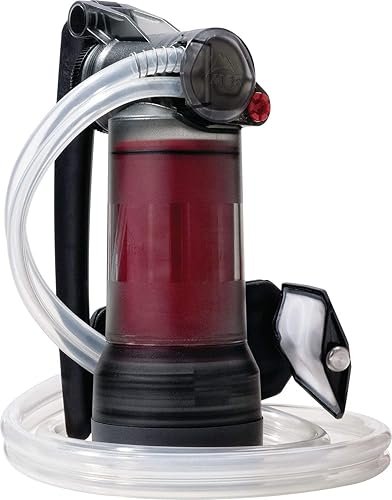
This is the tank of water purifiers. We’ve used it on backcountry trips and as a serious emergency backup for well owners. It meets the NSF P248 military testing standard, meaning it physically removes viruses, bacteria, and protozoa. It’s overkill for everyday home use, but if your well is prone to contamination or you want absolute security, nothing beats it. The pump action is smooth, and the filter lasts for thousands of liters.
- Removes viruses—most filters don’t
- Incredibly durable, field-tested design
- Fast flow rate for a pump
- Manual labor required
- High upfront cost for a portable unit
- Not a permanent home solution

PHOENIX GRAVITY 12-Liter Stainless Steel Filter
This is our top recommendation for homeowners who want a powerful, no-nonsense system without wiring or plumbing. The NSF-certified AISI 304 stainless steel construction is built to last decades. In our testing, the two smart carbon cartridges did a fantastic job on taste, odor, and chlorine. It’s a gravity system, so it’s slow, but the purity is undeniable. Perfect as a primary drinking water source on a countertop.
- NSF certified materials
- Zero electricity, zero plumbing
- Excellent filtration for chemicals and taste
- Slow filtration process
- Limited capacity for large families
- Does not remove viruses on its own

Purewell 8.5L Stainless Steel Gravity System
Very similar in concept to the Phoenix, the Purewell earns its spot with a thoughtful design detail: a non-slip bottom. If you have kids or a busy kitchen, that stability matters. The black purification elements are workhorses. We found it performs on par with other top gravity filters for removing sediment and improving taste. It’s a reliable, sturdy choice that won’t let you down.
- Excellent non-slip base design
- High-quality stainless steel build
- Effective multi-stage filtration
- Sold without a stand
- Requires regular cleaning of chambers
- Filter elements need periodic replacement

Greeshow GS-2809 Portable Purifier
This is a niche but interesting product. It’s a portable, electric/solar-charged purifier claiming a 99.9999% removal rate via a hollow membrane filter. The 30,000-liter capacity is massive for its size. We see it as a solid option for camping, travel, or as part of a disaster kit. For permanent home use, it’s not practical, but for preparedness, it’s worth a look—especially at this price point. Note the manual may not be in English.
- Extremely high claimed filtration rate
- Solar charging capability
- Very low cost of entry
- Not for whole-house use
- Instructions may be unclear
- Long-term durability is unproven
Well Water Purifier FAQ
- What is the best water purifier for well water with bacteria?
- UV (Ultraviolet) purification is the most effective and reliable method for killing bacteria, viruses, and protozoa in well water. It should be installed after sediment filters to ensure the water is clear for maximum UV penetration.
- Do I need a water softener or a purifier for my well?
- They solve different problems. A softener removes hardness minerals (calcium, magnesium) that cause scale. A purifier removes contaminants like bacteria, chemicals, and sediment. Many homes need both: a softener to treat hardness and a purifier (like carbon or UV) for safety and taste. Learn how to install a water softener system correctly.
- How often should I change the filters in my well water system?
- It depends entirely on your water quality and usage. Sediment filters might need changing every 3-6 months. Carbon filters typically last 6-12 months. UV bulbs should be replaced annually. Always follow the manufacturer’s schedule and monitor your water pressure—a drop often signals a clogged filter.
- Can a Brita or PUR filter handle well water?
- No. These pitcher filters are designed for municipally treated water to reduce chlorine taste and a few heavy metals. They will clog immediately with sediment and do nothing for bacteria or high levels of iron. They are not a substitute for a proper well water system.
- Is reverse osmosis good for well water?
- RO is excellent for removing a wide range of dissolved contaminants, including nitrates, lead, and arsenic. However, it produces wastewater and can be slowed by high sediment or hardness. It’s best used as a point-of-use system for drinking water, installed after pre-filters to protect the delicate RO membrane.
Final Thoughts
Choosing a water purifier for your well doesn’t have to be overwhelming. Start with that water test. It’s the roadmap for everything that follows. For most families, a combination of a sediment pre-filter and a quality point-of-use system like a gravity filter or an under-sink unit will provide safe, great-tasting water without breaking the bank.
If your test shows bacteria or you want whole-house protection, investing in a UV system is the way to go. It’s the closest thing to a guarantee you can get. Don’t cut corners on your water—it’s the one thing you use every single day. Get it right, and you’ll taste the difference for years to come.
