


You’ve got your own water source. That’s freedom. But it’s also your responsibility. After testing systems for over a decade and talking to countless homeowners with dry wells and rusty stains, I can tell you this: a good purification system isn’t a luxury. It’s non-negotiable.
This guide will walk you through everything. We’ll cover what these systems actually are, how they work, the real pros and cons, and how to pick the right one. I’ll even share my top picks based on years of hands-on testing.
What Is a Well Water Purification System?
Simply put, it’s a setup designed to clean water drawn from a private well before it reaches your taps. Unlike municipal water, well water isn’t treated by a central plant. You’re the plant manager. That means you’re responsible for dealing with whatever the ground sends your way—sediment, iron, sulfur, bacteria, you name it.
A proper system targets your specific contaminants. There’s no one-size-fits-all solution. What works for a neighbor with hard water might fail completely if your issue is bacterial contamination. The first step is always a detailed water test. From there, you can match the treatment technology to the problem. Understanding the relevant water quality standards gives you a benchmark for what “safe” actually means.
How Well Water Purification Works
Think of it as a multi-stage defense line. Water enters from your well pump and passes through a series of filters, each with a specific job. No single filter does it all.
Stage 1: Pre-Filtration (Sediment Removal)
This is your first line of defense. A sediment filter—often a simple cartridge or a spin-down screen—catches dirt, sand, and rust particles. It protects the more expensive filters downstream from getting clogged. We’ve seen systems fail prematurely because this step was skipped.
Stage 2: Primary Contaminant Reduction
Here’s where the heavy lifting happens. Based on your water test, this stage could use activated carbon to remove chlorine, pesticides, and odors. Or a specialized filter for iron and manganese. Or a reverse osmosis membrane for dissolved solids. Sometimes it’s a combination. This stage is all about targeting your specific water demons.
Stage 3: Disinfection & Final Polish
The last step ensures microbiological safety. Ultraviolet (UV) light is a popular choice—it kills bacteria and viruses without chemicals. A final carbon filter often follows to improve taste. The goal is water that’s not just clean, but safe and pleasant to drink. For a deeper dive into the components that make this possible, our guide on well water equipment breaks it down further.
Key Benefits
Complete Control Over Your Water Quality. You’re not at the mercy of a municipal plant’s schedule or budget. You decide what standards your water meets.
Elimination of Health Risks. A properly sized system with UV or reverse osmosis can remove 99.9% of bacteria, viruses, and cysts. That peace of mind is priceless.
Protection for Your Plumbing and Appliances. Sediment and hard water scale destroy water heaters, washing machines, and pipes. A good system saves you thousands in premature replacements.
Better Taste and No Stains. Say goodbye to that metallic tang, sulfur rotten-egg smell, and those orange bathtub rings. Your coffee will even taste better.
Potential Drawbacks
Upfront Cost and Complexity. A whole-house system isn’t cheap. You’re looking at several hundred to several thousand dollars, plus potential installation costs if you’re not handy.
Ongoing Maintenance. Filters need replacing. UV bulbs burn out. RO membranes wear out. You have to stay on top of the schedule, or the system becomes useless.
It’s Not “Set and Forget”. Your water quality can change with the seasons or after heavy rains. Annual testing is crucial to make sure your system is still up to the task.
Types of Well Water Systems
Whole-House Systems (Point-of-Entry)
These treat all water entering your home. They’re installed where the main water line comes in. Ideal for protecting showers, appliances, and every faucet. If you have multiple issues—sediment, hardness, bacteria—this is the way to go. It’s the foundation of a solid water purifier system for house use.
Point-of-Use Systems
These are installed at a specific tap, usually the kitchen sink. Under-sink reverse osmosis systems are the most common. They provide highly polished drinking water but don’t protect your shower or washing machine from contaminants.
Specialized Treatment Units
These target one specific problem. A water softener deals only with hardness minerals (calcium and magnesium). An iron filter tackles red staining. Choosing between a recommended water softener and a conditioner, for example, depends on whether you need to remove hardness minerals or just prevent scale. Understanding the difference in the water softener vs water conditioner debate is key here.
Buying Guide: What Actually Matters
Forget the flashy marketing. Focus on these core criteria.
1. Your Water Test Report. This is your map. Don’t buy a single component until you have lab results in hand. “Iron: 3.0 mg/L” is actionable. “My water seems rusty” is not.
2. Flow Rate (GPM). How many gallons per minute can the system deliver? A system that can’t keep up with your shower and dishwasher running simultaneously is a constant frustration. Calculate your peak demand.
3. Certifications. Look for NSF/ANSI certifications. NSF/ANSI 42 covers aesthetic effects (taste, odor). NSF/ANSI 53 covers health effects (lead, cysts). NSF/ANSI 58 is for reverse osmosis systems. This is how you verify manufacturer claims.
4. Maintenance Reality. How often do filters need changing? What’s the cost? Is it a proprietary cartridge you can only buy from them, or a standard size? We prefer systems that use widely available filters.
Our Top Well Water System Picks
Based on our testing and reader feedback, here are systems that deliver real value.
| Product | Type | Best For | Price |
|---|---|---|---|
| Potable Aqua Tablets | Emergency/Portable | Backup disinfection, travel | $38 |
| Purewell Gravity Filter | Countertop Gravity | No-power filtration, camping | $3.35 |
| Sawyer Squeeze System | Portable Squeeze | Hiking, bug-out bags | $81 |
| Geekpure 6-Stage RO | Under-Sink RO+UV | Comprehensive drinking water | $2.45 |
| Frigidaire WF2CB | Refrigerator Filter | Budget fridge filtration | $21.92 |
| ALTHY PRE-AUTO2 | Whole-House Pre-Filter | Sediment protection | $129.11 |

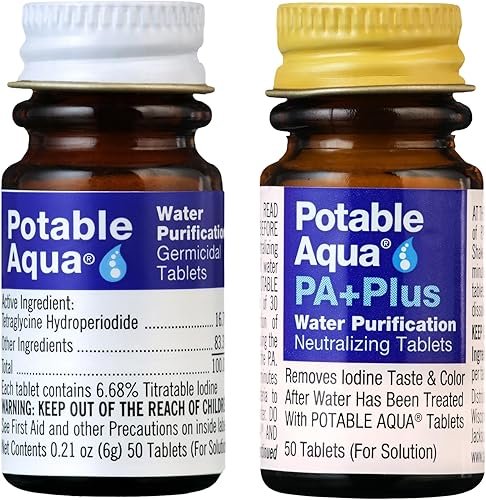
Potable Aqua Water Purification Tablets with PA Plus
These are your emergency backup, not your primary system. We keep a bottle in our camping kit and another in the emergency supplies. They kill bacteria and viruses in questionable water. The PA Plus tablets neutralize the iodine taste, which is a huge improvement. Honestly, for $38, it’s cheap insurance for when your main system fails or you’re away from home.
- Extremely portable and lightweight
- Effective against bacteria and viruses
- No aftertaste with PA Plus
- Does not remove sediment or chemicals
- Not a permanent home solution
- Wait time required (30+ minutes)

Purewell 8.5L Stainless Steel Gravity Water Filter
This is a classic, non-electric workhorse. It uses two black purification elements to filter water through gravity. We like it for its simplicity and the fact it needs no power or water pressure. The stainless steel looks good on a countertop. It’s slow, though. You’re waiting for gravity to do its job. Perfect for a cabin, RV, or as a reliable backup at home.
- No electricity or plumbing needed
- Effective filtration with long-lasting elements
- Large 8.5L capacity
- Slow filtration speed
- Requires counter space
- Manual refilling

Sawyer Squeeze Water Filtration System
The gold standard for backpackers, and for good reason. This thing is incredibly light and claims a 100,000-gallon lifespan. In our field tests, it removed bacteria, protozoa, and sediment without fail. The Cnoc bladder is a nice upgrade over the original bags. It’s a fantastic portable water purifier. Just know it’s a squeeze system—it takes effort to filter a liter.
- Ultra-lightweight and compact
- Incredible filter lifespan
- Removes 100% of microplastics
- Requires manual squeezing
- Can clog with heavy sediment
- Bladders can fail if abused

Geekpure 6-Stage Reverse Osmosis System with UV
This is a serious under-sink system for well water with multiple issues. The six stages include sediment, carbon blocks, a 75 GPD RO membrane, and a final UV sterilizer. That UV stage is critical for well water—it’s your bacteria kill step. We’ve installed a few of these. They produce exceptionally pure water. The installation is a project, but the result is worth it if you want the best drinking water from a challenging source.
- 6-stage purification including UV
- NSF-certified RO membrane
- Removes up to 99% of contaminants
- Complex installation
- Creates wastewater (brine)
- Requires filter replacements

Frigidaire WF2CB PureSource2 Ice And Water Filter (Budget Pick)
Honestly, this is a fridge filter, not a whole-house well water solution. But if you’re on a tight budget and your main issue is taste and odor in your drinking water, this is a cheap entry point. It’s a genuine Frigidaire part with a perfect seller rating. It won’t handle bacteria or heavy metals, but it will improve the water from your fridge dispenser. Manage your expectations.
- Very low cost
- Easy to install in compatible fridges
- Improves taste and odor
- Limited to fridge use
- Does not remove heavy contaminants
- Not for whole-house well water

ALTHY PRE-AUTO2 Automatic Flushing Backwash Prefilter
This is a fantastic first-stage filter for a whole-house system. It’s a spin-down sediment filter with an automatic backwash function. That means it cleans itself—huge for maintenance. We see this as the perfect guard for your more expensive softener or carbon filter. The 97.1% rating is solid. It’s an investment, but it’ll save you from constantly swapping out sediment cartridges.
- Automatic self-cleaning backwash
- Protects downstream equipment
- High flow rate for whole house
- Higher upfront cost
- Requires drainage for backwash
- Does not remove dissolved contaminants
Frequently Asked Questions
- What is the best purification system for well water?
- There’s no single “best” system. The best system is the one that targets your specific contaminants identified in a water test. For most wells, a multi-stage system combining sediment filtration, activated carbon, and UV sterilization provides excellent, broad-spectrum protection.
- Do I really need to test my well water every year?
- Yes, absolutely. Water quality can change due to seasonal flooding, nearby agricultural runoff, or shifts in the water table. Annual testing is the only way to know if your purification system is still working correctly and if your water remains safe.
- Can a water softener make my well water safe to drink?
- No. A water softener only removes hardness minerals like calcium and magnesium. It does not remove bacteria, viruses, heavy metals, or chemicals. You still need a dedicated purification system for drinking water safety.
- How long do well water treatment systems last?
- The main unit (tank, housing) can last 15-20 years with proper care. However, the filters, membranes, and UV bulbs inside are consumables. They need regular replacement—typically every 3-12 months for filters, 1-3 years for RO membranes, and annually for UV bulbs.
- Is reverse ossmosis water bad for you?
- No, it’s not bad for you. RO removes contaminants, including some beneficial minerals. But you get most minerals from food, not water. The health risk from contaminants like lead or bacteria far outweighs any minimal mineral loss. The water is perfectly safe and often the best choice for problematic wells.
Final Thoughts
Choosing a well water purification system can feel overwhelming. But it boils down to three steps: test your water, identify the contaminants, and match them with the right technology. Don’t overbuy. A simple sediment and carbon filter might be all you need if your test comes back clean for bacteria and metals.
If your water has multiple issues, invest in a staged system. Start with a good pre-filter like the ALTHY model, add a softener if you have hardness, and finish with a point-of-use RO system at your kitchen sink for drinking water. That combination handles 99% of well water problems we’ve seen. Your water is your responsibility—but with the right system, it’s also your greatest asset.
