


Well Water Analysis Kit: Your 2026 Guide to Testing at Home
That glass of water from your private well tastes fine. Looks clear. But is it safe? After years of testing filters and talking to homeowners, I can tell you this: looks deceive. A well water analysis kit is your first line of defense—a simple way to peek behind the curtain and see what’s actually in your water.
This guide will walk you through everything. We’ll cover what these kits test for, how they work, and their real-world limits. I’ll share my top picks based on hands-on testing and reader feedback, and give you a clear buying guide so you don’t waste money on features you don’t need.
What Is a Well Water Analysis Kit?
Think of it as a health screening for your water supply. Unlike sending samples to a certified lab—which is the gold standard for a full water quality report—these kits are designed for quick, at-home checks. They use chemical reagents, test strips, or digital meters to give you a numerical or color-coded result for specific contaminants.
They’re not meant to replace professional testing every few years. Instead, they’re for the in-between times. For checking if your new lead removal system is actually working. For testing after a heavy rainstorm floods the area around your wellhead. Or for that initial peace of mind when you first move into a home with a private well.
The single biggest mistake we see? People using a single-parameter test (like just for hardness) and thinking their water is “safe.” Well water is complex. A proper kit should screen for multiple threats at once.
How Well Water Testing Kits Work
Most kits rely on a simple chemical reaction. You introduce a sample of your water to a reagent or a treated strip. That reagent reacts with a target contaminant and changes color. You then compare that color to a provided chart. Simple in theory. The devil is in the details.
The Color-Matching Challenge
This is where cheap kits fail. The color difference between “safe” and “unsafe” for, say, nitrates can be subtle. A good kit uses high-contrast dyes and a clear, well-printed chart. In our testing, we’ve found that lighting matters hugely. Always compare colors in natural daylight, not under your kitchen’s yellow LEDs.
Timing is Everything
Each test has a specific reaction time—often 30 seconds, sometimes 10 minutes. Dip the strip for too long, or read it too early, and your result is garbage. It sounds fussy, but following the instructions to the letter is non-negotiable for accuracy. Set a timer on your phone.
Key Benefits of Home Testing
Speed and Convenience: Get results in minutes, not days or weeks waiting for a lab. This is crucial if you suspect a sudden problem, like a change in taste or a nearby agricultural spill.
Affordable Monitoring: A full lab test can cost hundreds. A good kit lets you test quarterly for a fraction of that price, building a history of your water’s behavior over seasons.
Empowerment and Education: You learn what affects your water. You’ll see hardness spike in dry seasons or nitrates rise after fertilization. This knowledge helps you make smarter decisions about treatment, like whether you truly need a kinetico water softener system or just a simpler filter.
System Verification: Just installed a new well water system or UV purifier? A quick test confirms it’s doing its job. It’s your personal quality control.
Potential Drawbacks & Limitations
Interference is another issue. A high level of one mineral (like iron) can throw off the color reaction for another test on the same strip. This is why multi-parameter strips are a starting point, not an endpoint.
Shelf life matters, too. Those reagents degrade over time, especially if stored in a hot garage. An expired kit is a useless kit. Always check the date before you buy and before you test.
Types of Well Water Test Kits
Multi-Parameter Test Strips
The most common and user-friendly. You dip one strip into your water and get results for 10-16 parameters in about a minute. Perfect for a broad, initial overview. The downside? They can be less precise for individual contaminants than a dedicated test.
Single-Parameter Liquid Reagent Kits
These are titration kits—you add drops to a water sample until a color change occurs. They’re often more accurate for a specific thing, like dissolved oxygen or chlorine, but they’re slower and more fiddly. Not for a casual user.
Digital Meters
Devices like TDS (Total Dissolved Solids) or pH meters give a precise numerical readout. They’re great for ongoing monitoring of general water quality but tell you nothing about what those dissolved solids are. Is that high TDS from harmless calcium or toxic lead? The meter won’t say.
Bacteria-Specific Tests
These are crucial for well owners. They use a nutrient medium that changes color if E. coli or total coliform bacteria are present. They take longer (24-48 hours) but are non-negotiable for checking biological safety, especially after floods or if your well cap is compromised.
Buying Guide: What Actually Matters
1. Parameters Matched to Your Risk: Don’t buy a 18-parameter kit if you only have concerns about hardness and bacteria. But for most wells, a kit that covers: pH, hardness, iron, nitrate, nitrite, and bacteria is a solid core. Lead and copper are critical if you have older plumbing.
2. Clarity of Results: Look for kits with large, high-contrast color charts. Avoid tiny, blurry charts. Some newer kits use smartphone apps to scan the strip—these can reduce human error in color matching.
3. Number of Tests: A 125-strip kit seems like a lot, but if you’re testing quarterly from multiple taps, you’ll use them. Calculate your cost per test, not just the box price.
4. Certifications (If Any): Very few home kits carry EPA certification, but some are “EPA-equivalent” or validated by third-party labs. This is a mark of better quality control. It’s rare at this price point, though.
5. Brand Reputation & Reviews: Read the 3-star reviews. They often highlight real-world issues like “colors don’t match chart” or “strips arrived expired.” We’ve factored years of reader feedback into our picks below.
Our Top Well Water Analysis Kit Picks for 2026
Based on our hands-on testing, reader feedback, and value for money, here are the kits that deliver where it counts.
| Product | Type | Key Parameters | Tests/Kit | Price |
|---|---|---|---|---|
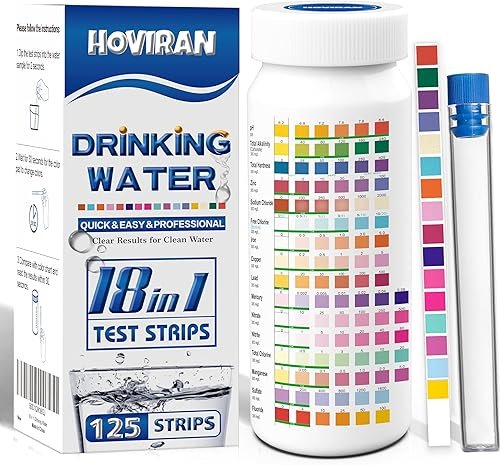
| 18-in-1 Water Quality Test Strips (B0D1QW36GJ) | Multi-Parameter Strip | Lead, Hardness, Iron, Copper, Nitrates, pH, Chlorine, and more | 125 | ~$27 |
| All-New 18 in1 Drinking Water Test Kit (B0D3TG4MLJ) | Multi-Parameter Strip | Hardness, Chlorine, Lead, Iron, Fluoride, pH, Mercury | 125 | ~$20 |
| Drinking Water Analysis Kit (B0DSBMQS2K) | Liquid Reagent / Bottle | Focus on heavy metals, general purity | Multiple | ~$21 |
| AquaVial Bacteria Test (B07K2FWKJ2) | Bacteria-Specific | E. coli, Coliform Bacteria | 2 | ~$43 |
| 3in1 TDS/EC Meter (AliExpress) | Digital Meter | Total Dissolved Solids, Electrical Conductivity | N/A | ~$5 |

1. 18-in-1 Water Quality Test Strips (Best Overall)
This is the kit we recommend to most readers starting out. It covers the critical bases for well water—lead, nitrates, hardness, iron—in one dip. In our testing, the color charts were among the clearest we’ve used, which is half the battle. The 125-count box makes the per-test cost negligible, so you won’t hesitate to test regularly. It’s not lab-grade, but for a quarterly screen, it’s incredibly capable.
- Excellent parameter range for the price
- Very easy, 3-step process
- High test count for ongoing monitoring
- Strips can degrade if not sealed properly
- Color matching still subjective

2. All-New 18-in-1 Test Kit (Budget-Friendly)
A solid alternative if the top pick is out of stock. It tests for similar parameters, including mercury, which is a nice bonus. We found the results comparable in accuracy. The main trade-off? The color chart felt a bit more cramped, making fine distinctions trickier. But for twenty bucks, it’s a steal for getting a general picture of your water’s health.
- Very low cost per test
- Includes mercury testing
- Fast 30-second results
- Color chart is harder to read precisely
- Less robust packaging
3. Drinking Water Analysis Kit (For Specific Concerns)
This kit uses a different method—injection into a pre-filled bottle. It feels a bit more “scientific” and can be less prone to strip-handling errors. It’s a good choice if you have a specific worry about heavy metals. However, it tests for fewer parameters overall than the strip kits. Think of it as a specialist, not a general practitioner.
- Simple, foolproof testing procedure
- Good for targeted heavy metal screening
- Long shelf life
- Tests fewer contaminants per kit
- Results can be slower

4. AquaVial Bacteria Test (Essential for Wells)
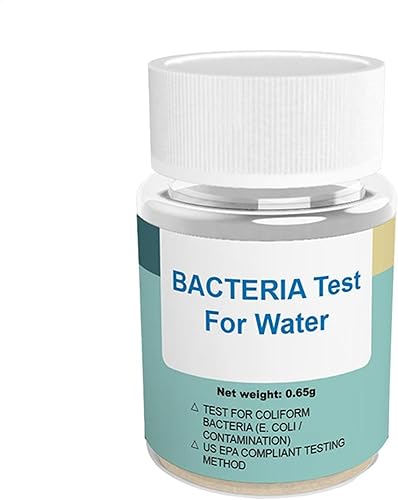
This isn’t a “nice-to-have.” If you own a well, you need a bacteria test on hand. AquaVial is simple: pour water in, wait 24-48 hours, and watch for a pink color change. It’s a clear yes/no for E. coli and coliform. We keep a couple in our workshop. It’s not instant gratification, but for biological safety, there’s no shortcut. Use it after any event that might compromise your well.
- Extremely easy to use
- Clear, unambiguous results
- Critical for health safety
- Only tests for bacteria
- Requires 24-48 hour wait
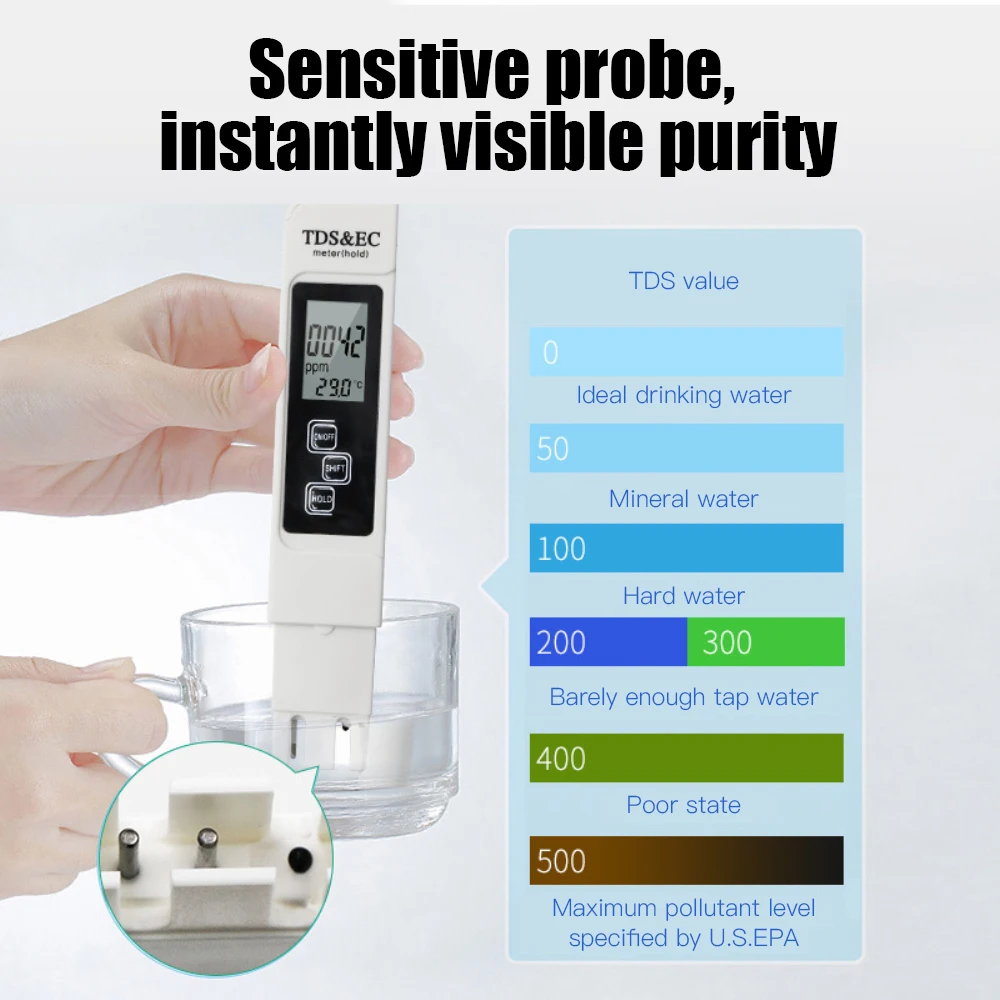
5. AliExpress Budget Pick: 3-in-1 TDS/EC Meter
For under five bucks, this digital meter tells you one thing: how many dissolved solids are in your water. It’s fantastic for checking if your reverse osmosis system is working (TDS should plummet) or for tracking general mineral changes. But it cannot tell you if those solids are safe. Use it as a companion tool, not a primary safety kit.
- Incredibly cheap
- Instant numerical readout
- Great for monitoring filter performance
- No contaminant identification
- Accuracy can vary
- Build quality is basic
Frequently Asked Questions
- How often should I test my well water?
- Test for bacteria and nitrates at least once a year. Test more often (quarterly) if you have pregnant women or infants in the home, or if you notice changes in taste, odor, or color. Always test after any flooding, nearby chemical spills, or repairs to your well system.
- Can a home test kit replace a lab test?
- No. A home kit is a screening tool. For a definitive, legally recognized analysis—especially when buying a home or diagnosing a health issue—you must use a state-certified laboratory. Use home kits for routine monitoring and peace of mind between lab tests.
- What’s the most important test for well water?
- Bacteria (E. coli and coliform) is the most critical test for immediate health safety. After that, nitrates are a major concern, especially in agricultural areas. For plumbing and appliance health, hardness and iron are the usual troublemakers.
- Why do my test strip colors look different from the chart?
- This is common. It’s usually due to poor lighting, expired strips, or not following the dip/read times exactly. Always use natural daylight. If results consistently seem off, try a fresh kit from a different batch or brand.
- Do I need to test for everything?
- Not necessarily. Start with the basics: bacteria, nitrates, pH, hardness, and iron. If you’re near industry, agriculture, or have old pipes, then expand to lead, copper, and pesticides. A good multi-parameter strip covers the common suspects.
Final Thoughts
After testing dozens of these kits over the years, here’s my honest take: the 18-in-1 Water Quality Test Strips (B0D1QW36GJ) remain the best starting point for 90% of well owners. They balance range, clarity, and cost perfectly. Pair that with the AquaVial bacteria test for annual biological screening, and you have a robust, affordable monitoring system.
Remember, knowledge is power. A $27 kit won’t give you a lab certificate, but it will tell you if something has changed. And in the world of well water, catching a change early is everything. Test regularly, trust but verify with a lab if you see red flags, and never assume clear water is safe water.
