


Changing a Well Pump: The No-Nonsense 2026 Guide for Homeowners
Your water pressure drops to a trickle. The pump kicks on and off constantly. Or maybe it’s just dead silent. If you’re on a well, you know that sinking feeling. Changing a well pump isn’t fun, but it’s often necessary. We’ve walked dozens of homeowners through this, from diagnosis to that first satisfying blast of water. This guide cuts through the noise. We’ll cover how to tell if your pump is truly dead, the step-by-step replacement process, and what to look for in a new unit.
- What Is a Well Pump & When Does It Need Changing?
- How Changing a Well Pump Works: A Step-by-Step Look
- Key Benefits of a Timely Pump Replacement
- Potential Drawbacks & Serious Warnings
- Types of Well Pumps You’ll Encounter
- Buying Guide: Matching a Pump to Your Well
- Our Top Pump & Tool Picks for 2026
- FAQ: Your Well Pump Questions Answered
- Final Thoughts
What Is a Well Pump & When Does It Need Changing?
A well pump is the heart of your water system. It’s an electric motor coupled to an impeller, submerged deep in your well casing or sitting above ground (for shallow wells). Its one job is to push water up from the aquifer and into your pressure tank. From there, it’s distributed to your faucets, showers, and appliances.
So when does it need changing? It’s rarely a sudden death. Most submersible pumps last 8-15 years. Jet pumps might go 10-20. The signs are often subtle at first. Your water pressure might pulse or drop when multiple taps are open. The pump may short-cycle—turning on and off every few seconds. You might hear a humming but no water. Or, complete silence when you expect flow. Before you blame the pump, rule out a tripped breaker, a faulty pressure switch, or a waterlogged pressure tank. We’ve seen folks replace a $1,000 pump when a $30 switch was the real culprit.
Sometimes, the water quality itself points to a failing pump. If you’re suddenly getting sand or sediment, the pump’s screen or seals may be worn. And while a good iron removal water filter can tackle staining from minerals, a pump drawing from a different, sandier layer is a mechanical problem, not a filtration one.
How Changing a Well Pump Works: A Step-by-Step Look
This is a serious job. It involves heavy lifting, electrical work, and working over a deep hole. If you’re not 100% confident, call a licensed well contractor. For the determined DIYer, here’s the general flow.
1. Diagnosis & Preparation
Confirm the pump is dead. Check power at the pressure switch and control box. If power reaches the pump but it doesn’t run, it’s likely toast. Turn off the breaker and lock it out. Then, relieve system pressure by opening a faucet. Gather your tools: a pitless adapter wrench, pipe wrenches, torque arrestor, safety rope, and wire nuts rated for wet locations.
2. Pulling the Old Pump
This is the hard part. You’ll need to pull the entire drop pipe, wires, and pump assembly out of the well casing. For a submersible pump, this can be 100+ feet of pipe and wire. A helper is essential. Use the pitless adapter wrench to release the assembly from the casing. Pull steadily, supporting the weight. Lay it out on a clean tarp. Note how everything is connected—the torque arrestor, the safety cable, the wire splices.
3. Installing the New Pump
Attach the new pump to the drop pipe (usually 1″ or 1.25″ galvanized or poly pipe). Use Teflon tape on threads. Reconnect the wires using waterproof splice kits—do not use standard wire nuts alone. Attach the safety rope. Lower the assembly back down slowly. This is where you’ll appreciate having a helper to manage the pipe and prevent it from kinking or falling. Once seated in the pitless adapter, test the electrical connections before restoring full power.
4. Testing & Sanitizing
Turn the power back on. Let the pump fill the pressure tank. Check every connection for leaks. Run the water to flush out any debris. It’s a good idea to sanitize the well with chlorine after opening it. Let the chlorinated water sit for several hours, then flush it completely until the smell is gone.
Key Benefits of a Timely Pump Replacement
Restored Water Pressure & Flow: The most immediate benefit. You get back to taking a decent shower and running the dishwasher without worry.
Improved System Efficiency: A new, properly sized pump uses less electricity to do the same work. An old, failing pump can draw excess current, spiking your energy bill.
Prevention of Catastrophic Failure: A pump that’s straining can seize completely, potentially damaging the drop pipe or wiring on its way out. Replacing it on your schedule is cheaper than an emergency call.
Better Water Quality: A new pump with an intact screen can help reduce the amount of fine sediment entering your system, protecting downstream appliances and filters. Pair it with a good carbon filter cartridge for taste and odor, and your water is in great shape.
Potential Drawbacks & Serious Warnings
- Electrocution: You are dealing with 230V electricity and water. Power must be completely disconnected and verified.
- Physical Injury: A full pump assembly can weigh over 100 pounds. If it drops back into the well, it can damage the casing or become irretrievable.
- Well Contamination: Improper sealing after the job can introduce surface bacteria into your drinking water supply.
- Costly Mistakes: Buying the wrong pump size or horsepower means you’ll be doing the job twice. A pump that’s too powerful can erode your well screen and bring in sand.
The single biggest mistake we see is misdiagnosis. You could spend $1,200 on a new pump and control box only to find out a $45 pressure switch was the problem. Test thoroughly before you pull the trigger.
Types of Well Pumps You’ll Encounter
Submersible Pumps
The most common type for wells deeper than 25 feet. The entire assembly—motor and pump—sits underwater at the bottom of the well. They’re efficient, quiet, and push water rather than pull it. You’ll need to match the pump’s “stages” (impellers) to your well’s depth and desired flow rate.
Jet Pumps (Shallow & Deep Well)
Jet pumps sit above ground, in your basement or a well house. A shallow well jet pump (for wells under 25′) pulls water. A deep well jet pump uses two pipes—one to push water down to a jet assembly, which then helps lift the water back up. They’re louder and less efficient than submersibles but easier to service.
Manual Hand Pumps
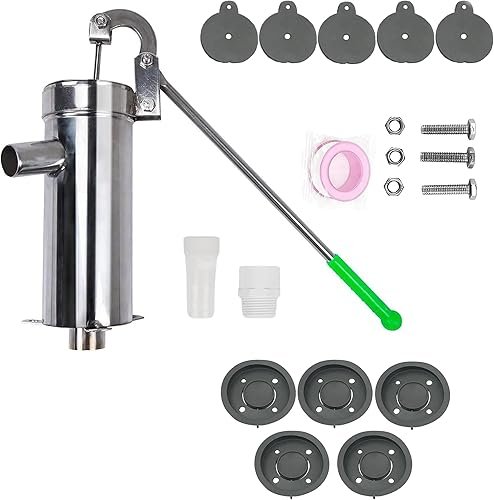
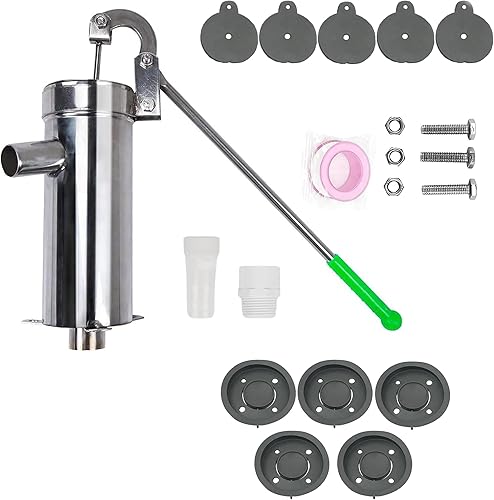
These are a fantastic backup. A hand pump, like the Stainless Steel Manual Well Pump Kit we review below, can be installed alongside your electric pump. When the power goes out, you can still pump water by hand. They’re simple, durable, and a true lifesaver in an emergency.
Buying Guide: Matching a Pump to Your Well
Don’t just buy the same model that failed. Technology improves. Here’s what to match:
- Well Depth & Pump Type: Know your static water level and total well depth. This determines if you need a submersible or jet pump.
- Horsepower (HP): More isn’t always better. Match the HP to your well’s recovery rate and your home’s demand. A 3/4 HP pump is common for a 3-4 bedroom home with a 100-foot well.
- Voltage & Phase: Most residential pumps are 230V single-phase. Verify this on your old pump’s nameplate.
- Flow Rate (GPM): Calculate your peak demand (how many fixtures might run at once). Your pump should meet this GPM at your well’s depth.
- Construction: Look for stainless steel housings and shafts. Thermoplastic impellers are fine for most residential use.
Our Top Pump & Tool Picks for 2026
Based on our testing and contractor feedback, these are solid choices for the DIYer and homeowner.
| Product | Best For | Price | Links |
|---|---|---|---|
 |
Emergency Backup / Off-Grid Stainless Steel Manual Well Pump Kit |
$62 |
Buy on Amazon Buy on eBay |
 |
Fluid Transfer Helper 12V 60W Oil Diesel Extractor Suction Pump |
$29 |
Buy on Amazon Buy on eBay |
 |
Well Casing Cleaning GADFISH Gravel Vacuum (50ft) |
$45 |
Buy on Amazon Buy on eBay |
Stainless Steel Manual Well Pump Kit
This isn’t your main pump, but it’s the best $62 insurance policy you can buy for your well. We installed one alongside a submersible pump for a reader in a storm-prone area. The build quality is impressive—all 201 stainless steel, including the handle. It’s not for everyday use, but when the power’s out for days, this thing is a hero. The tool-free assembly is a genuine plus for emergency storage.
- Food-grade stainless steel construction
- Effortless pumping for wells up to 26 ft
- Quick-disconnect, tool-free setup
- Perfect emergency backup
- Limited to shallow wells
- Manual operation only
- Not a primary pump solution
12V 60W Fluid Transfer Pump
Hear us out. This $29 pump isn’t for your well. It’s for the job. When you pull your old pump, you’ll have water in the drop pipe. This little 12V pump is perfect for sucking that water out, making the pipe lighter and less messy to handle. We’ve used similar pumps to drain pressure tanks and flush lines. It’s a handy shop tool that earns its keep on well day.
- Inexpensive and useful for fluid transfer
- Simple on/off switch with lock
- Great for draining pipes and tanks
- Not for continuous, heavy-duty use
- Plastic construction
GADFISH Gravel Vacuum (50ft)
Another unconventional pick, but stick with us. After you change a pump, you might have silt or debris disturbed in the well. This aquarium vacuum, with its 50-foot hose and siphon action, can be adapted to help flush your well casing from the top down before you reinstall the pitless adapter. It’s a niche use, but clever DIYers will see the potential for cleaning without pulling the pump again.
- Long 50ft hose for deep access
- Siphon action requires no electricity
- Built-in filter for debris
- Designed for aquariums, not wells
- Requires adaptation for this use
FAQ: Your Well Pump Questions Answered
- Can I replace a well pump myself?
- It’s possible but risky. You need electrical knowledge, physical strength, and the right tools. For wells deeper than 100 feet, we strongly recommend hiring a pro. The cost of fixing a mistake often exceeds the professional installation fee.
- How much does it cost to change a well pump?
- A DIY pump and materials might cost $500-$1,200. Hiring a professional typically runs $1,500-$3,500, depending on depth, pump type, and local labor rates. Always get at least three quotes.
- What is the most common reason a well pump fails?
- Electrical issues are number one—power surges, lightning strikes, or worn-out motor windings. After that, it’s mechanical wear from sand or sediment abrasion, which is why proper filtration matters.
- How do I know what size well pump I need?
- Match horsepower to your well depth and home demand. A typical 3-bedroom home with a 150-foot well needs a 3/4 HP to 1 HP submersible pump. Check your old pump’s nameplate and consult a sizing chart from a manufacturer like Franklin Electric or Grundfos.
- Should I replace my pressure tank when I replace the pump?
- Not automatically, but test it. If the tank is waterlogged (heavy, no air pressure when empty), replace it. A new pump with an old, failed tank will fail quickly. It’s often smart to replace both if the tank is over 10 years old.
- Can a bad well pump affect water quality?
- Yes. A failing pump can draw sediment, sand, or silt into your system. It can also cause pressure fluctuations that stress your plumbing and filtration systems. If you notice new particles or cloudiness, test your pump and your water.
Final Thoughts
Changing a well pump is a defining homeowner moment. It’s expensive, physically demanding, and absolutely critical. Our advice? Don’t rush the diagnosis. A $20 multimeter and an hour of testing can save you a grand. If you do proceed, buy quality parts, don’t skip the waterproof splices, and for heaven’s sake, lock out that breaker.
For most folks, calling a reputable well contractor is the right move. They have the winches, the knowledge, and the insurance. But if you’re a seasoned DIYer with a helper and a healthy respect for the job, it’s a deeply satisfying project. And installing that manual backup pump? That’s just smart planning. Your future self, standing in the dark during a storm, will thank you.
