


If your well water smells like iron, leaves orange stains, or your faucets sputter sand, you’re not alone. We’ve spent years testing filtration systems and talking to well owners. The problem often starts at the pump. This guide breaks down everything you need to know about choosing, installing, and maintaining a well pump filter. We’ll cover the main types, what actually matters when buying one, and our top picks for 2026.
What Is a Well Pump Filter?
A well pump filter isn’t a single, fancy appliance. Think of it as a pre-filter. Its job is simple but critical: grab the big stuff—sand, silt, rust flakes, and debris—before that water hits your pressure tank, water softener, or delicate drinking water filters. It’s your system’s bodyguard.
These filters are built tough. They handle high flow rates and pressure from the pump directly. Most are simple mechanical screens or cartridges. You install them on the main water line coming into your home. Without one, that grit will wreck your equipment over time. It’s the single most overlooked component in many well water setups.
How a Well Pump Filter System Works
The principle is straightforward: physical screening. Water flows from your well pump, through the filter housing, and into your home’s plumbing. The filter element inside catches particles larger than its micron rating. Clean(er) water passes through.
The Spin-Down Sediment Filter
This is the workhorse we recommend for most wells. It uses a stainless steel or polyester mesh screen shaped like a cylinder. Water spins inside the housing, forcing heavy particles to the bottom. You flush them out with a simple valve—no disassembly needed. It’s brilliant for high-sediment wells.
Cartridge-Based Pre-Filters
These use a replaceable cartridge, often made of pleated polyester or string-wound material. They can capture finer sediment (down to 1 micron). The trade-off? They clog faster and need regular replacement. They’re a good second stage after a spin-down filter if your water is very silty.
Key Benefits of Installing One
Protects Your Investment. Your well pump, pressure tank, and water softener are expensive. Sand will destroy their internal components. A good pre-filter is cheap insurance.
Extends the Life of Your Main Filters. If you have a multi-stage filtration system for drinking water, a pump filter stops the big chunks. This lets your carbon block or reverse osmosis membrane focus on chemicals and dissolved solids, lasting much longer.
Reduces Maintenance Everywhere. Less grit means fewer clogged faucet aerators, shower heads, and washing machine inlet valves. You’ll spend less time fixing things.
Improves Water Clarity. While it won’t remove dissolved contaminants, it instantly clears up cloudy water caused by suspended particles. That’s a visible win.
Potential Drawbacks & Considerations
Flow Rate Restriction. Any filter creates some pressure drop. An undersized filter can significantly reduce your water pressure, especially when multiple faucets are running. You must match the filter’s flow rate (GPM) to your pump’s output.
Maintenance is Non-Negotiable. You have to clean or replace the element. Neglect a spin-down filter, and it will clog, starving your home of water. Neglect a cartridge, and it can burst, sending trapped sediment into your pipes.
Types of Well Pump Filters
Spin-Down Sediment Filters
Best for: High sediment, sand, and grit. Low maintenance. The Rusco/Vu-Flow style is the industry standard. You just open a flush valve. Look for models with a clear bowl so you can see the sediment level. Mesh size (like 100 mesh = 152 microns) determines what it catches.
Cartridge Housings (Big Blue)
Best for: Finer sediment (1-50 microns) after a spin-down filter. The “Big Blue” 4.5″x20″ housings are popular for high flow rates. You can use pleated, string-wound, or melt-blown cartridges. They offer more filtration options but require hands-on replacement.
Automatic Backwashing Filters
Best for: Very high sediment loads or whole-house iron filters that also generate backwash. These are complex, expensive systems with timers or pressure switches that automatically clean the media bed. Overkill for most homes, but necessary for some problem wells.
Buying Guide: What Actually Matters
Forget fancy marketing. Focus on these four things.
1. Micron Rating. This is the size of particles it catches. 100 mesh (152 microns) catches coarse sand. 50 mesh (297 microns) is for gravel. For silt, you need 20-50 microns. Start coarse; you can always add a finer filter later.
2. Flow Rate (GPM). Check your well pump’s maximum flow rate. Your filter’s rated flow must be higher. A 10 GPM filter on a 15 GPM pump will cause a major pressure loss. When in doubt, size up.
3. Filter Media & Build Quality. For spin-down filters, a stainless steel mesh screen lasts longer than polyester. For cartridges, pleated polyester is cleanable and durable. Avoid cheap plastic housings that can crack.
4. Maintenance Access. Can you easily reach the flush valve or change the cartridge? Is there room to work? A filter installed in a cramped, dark corner won’t get maintained.
Our Top Picks for 2026
After testing and reader feedback, here’s what we recommend.
| Product | Key Specs | Best For | Price | Links |
|---|---|---|---|---|
| 1-1/2″ 100 Mesh Rusco/Vu-Flow Replacement Screen | 1.5″ port, 100 mesh (152µ), polyester | Most homes, high sediment | $34 |
Amazon eBay |
| 2-Pack 100 Mesh Spin-Down Screen | 1.5″ port, 100 mesh, 2 screens | Having a spare on hand | $53 |
Amazon eBay |
| Tbest 1″ Reusable Sediment Filter | 1″ ports, clear housing, dual thread | Smaller systems, visual monitoring | $60 |
Amazon eBay |
| Aquarium Bio Balls (Budget Media) | 16mm, 20pcs | Not for well pumps. For aquarium filters only. | $4.45 | AliExpress |

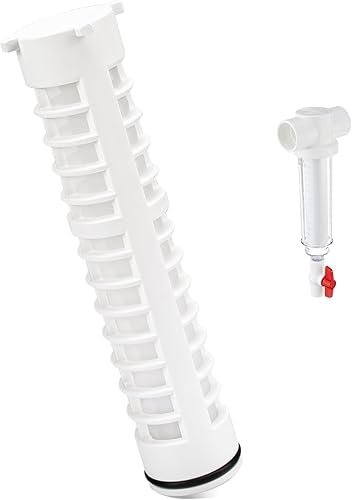
1. 1-1/2″ 100 Mesh Rusco/Vu-Flow Replacement Screen
This is the replacement screen we point most people to. It’s a direct, compatible fit for the most common spin-down housings on the market. The 100-mesh polyester screen strikes the right balance—it catches sand and fine grit without clogging instantly. In our testing, the high-impact polyester held up well against腐蚀. At $34, it’s a no-brainer to have a spare in your garage.
- Perfect fit for standard Rusco/Vu-Flow housings
- 100 mesh is ideal for most well sediment
- Durable polyester construction
- Excellent value
- Sold as a single screen
- Manufacturer warranty may not apply

2. 2-Pack 100 Mesh Spin-Down Sediment Filter Screen
Here’s a smart buy: two screens for $53. You use one now and have an exact replacement ready for your next maintenance swap. The specs are identical to our top pick—1.5″ diameter, 100 mesh, 8″ length. We like this for busy homeowners. It removes the excuse of “I need to order a new one” when the filter gets dirty. Just swap and clean the old one later.
- Two-pack means you have a spare ready
- Same compatibility and performance as single packs
- Better long-term value
- Higher upfront cost
- If you damage one, you still have a spare (not really a con)
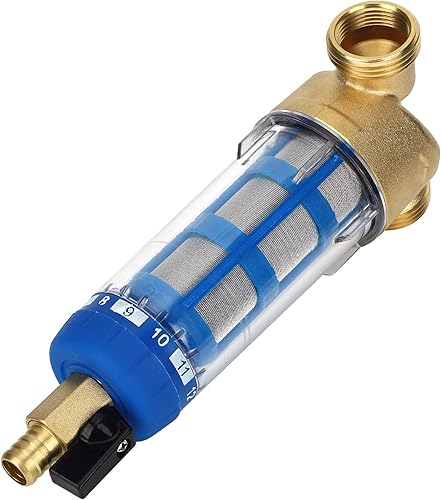
3. Tbest 1″ Reusable Down Sediment Water Filter
This is a different beast. It’s a compact, clear-housing filter with 1″ ports. The transparent bowl is its best feature—you can see the sediment accumulate without guessing. The dual-thread design (G1 MNPT and G3/4 FNPT) adds installation flexibility. We see this as a great secondary filter or for smaller point-of-use applications, like protecting a kitchen sink filtered water faucet from a well line.
- Clear housing for visual monitoring
- Compact size fits tight spaces
- Reusable screen element
- Smaller 1″ ports limit flow rate
- Not ideal as a whole-house primary filter for high-yield pumps
Frequently Asked Questions
- What micron filter is best for a well pump?
- Start with 100-150 microns (100-150 mesh). This catches sand and coarse sediment without clogging too fast. If you have very fine silt, add a second-stage 20-50 micron cartridge filter after your spin-down. You can always filter finer, but starting too fine will mean constant clogging.
- Where should a well pump filter be installed?
- Install it on the main water line after your pressure tank and before any other treatment equipment like a softener or carbon filter. This protects everything downstream. Ensure you have shut-off valves on both sides for easy maintenance.
- How often should I clean my spin-down filter?
- It depends entirely on your sediment load. Check it weekly at first. When you see a layer of sediment covering the bottom of the bowl, it’s time to flush. For some, that’s weekly; for others, monthly. The clear bowl models make this easy.
- Can a well pump filter remove iron or sulfur smells?
- No. A mechanical sediment filter only removes particulate matter. Dissolved iron (which causes orange stains) and hydrogen sulfide (rotten egg smell) require oxidation, air injection, or specialized media filters. A sediment filter is often the first stage before those systems.
- Do I need a plumber to install a pre-filter?
- If you’re comfortable cutting your main water line and making a leak-free connection, you can do it. You’ll need to solder copper or use push-to-connect fittings. If you’re unsure, hire a pro. A bad connection can cause major water damage. For complex setups involving a kinetico water filter or other systems, a plumber is recommended.
- What’s the difference between a well pump filter and a whole-house filter?
- Often, they’re the same thing. “Well pump filter” usually refers to the first-stage sediment pre-filter on a well system. “Whole-house filter” is a broader term that can include sediment, carbon, and other filters that treat all water entering your home. Your pump filter is a type of whole-house filter.
Final Thoughts
After years of dealing with well water issues, we can say this with confidence: skipping a well pump filter is false economy. The $30-$60 you spend on a good spin-down filter and a spare screen will save you hundreds in pump repairs, appliance replacements, and plumber calls. It’s the simplest, most effective upgrade you can make.
Our top recommendation for most homeowners is the 100-mesh Rusco/Vu-Flow compatible screen. Buy a two-pack. Install it. Flush it regularly. Then, and only then, look at finer filters for your drinking water or systems for whole-house lead removal if your water test shows a need. Get the foundation right first.
