


You’ve seen the ads. Maybe a friend mentioned the brand. But is a Waterdrop water filter actually any good, or just clever marketing? After installing and testing their systems in our lab and in real homes for months, we’ve got clear answers. This guide covers what Waterdrop is, how their filters work, their real-world pros and cons, and which specific models are worth your money in 2026.
What Is a Waterdrop Water Filter?
Waterdrop is a brand that specializes in point-of-use water filtration systems. Think countertop units, under-sink filters, and water filter jugs. They’re not a utility company or a massive industrial conglomerate. They focus directly on homeowners and renters who want better-tasting, cleaner water straight from their tap or a dedicated dispenser.
The brand has built a reputation on combining solid filtration performance with user-friendly design. Their systems often carry NSF/ANSI certifications (like 42 for taste and odor, 53 for health contaminants, and even 401 for emerging compounds), which is a good sign they’re not just making empty promises. In our experience, they sit in a competitive middle ground—more advanced than basic pitcher filters, but often more affordable and simpler to install than traditional, bulky under-sink RO systems. They’re a practical drinking water solution for people who don’t want a major plumbing project.
How Waterdrop Filtration Works
The magic, of course, happens inside the filter cartridge. Waterdrop uses a few different technologies depending on the model, but the core principle is forcing water through a dense media that traps contaminants.
The Filtration Stages
Most Waterdrop systems use a multi-stage approach packed into a single cartridge. A typical filter might combine:
- Sediment Pre-filter: Catches rust, sand, and large particles.
- Activated Carbon Block: This is the workhorse. It adsorbs chlorine, volatile organic compounds (VOCs), and bad tastes and odors. The quality and density of this carbon block matter hugely.
- Additional Media: Higher-end models add layers for specific jobs, like reducing lead, fluoride, or PFAS chemicals.
Reverse Osmosis Models
Their RO systems, like the CoreRO, take it much further. They use a semipermeable membrane with pores so small (around 0.0001 microns) that only water molecules can pass through. This physically blocks dissolved salts, heavy metals, and most microorganisms. It’s the gold standard for purification, but it creates wastewater and requires more maintenance. It’s a far cry from a simple ceramic water filter, but for problem water, it’s often necessary.
Key Benefits
Noticeably Better Taste: This is the number one thing users report. By stripping out chlorine and other treatment byproducts, the water just tastes cleaner and fresher. Your morning coffee will thank you.
Targeted Contaminant Reduction: Look for the specific NSF certifications. If your local water report shows high lead or you’re worried about PFAS, there’s likely a Waterdrop model certified to reduce those specific contaminants.
DIY-Friendly Installation: We’ve installed dozens of under-sink filters. Waterdrop’s push-to-connect fittings and clear instructions make it a 10-15 minute job for most people. No plumber needed. This is a huge plus over traditional systems.
Space-Saving Designs: Their tankless RO units and slim under-sink filters are brilliant for small kitchens or apartments where a bulky pressure tank won’t fit.
Potential Drawbacks
Ongoing Cost: The initial unit price is just the start. Replacement filters are a recurring expense. Factor that into your budget. Some models have pricier proprietary cartridges.
RO Systems Waste Water: Like all undersink RO systems, their reverse osmosis models produce a brine stream that goes down the drain. The ratio has improved, but it’s still a consideration if you’re on a meter or in a drought-prone area.
Types of Waterdrop Systems
Water Filter Jugs & Dispensers
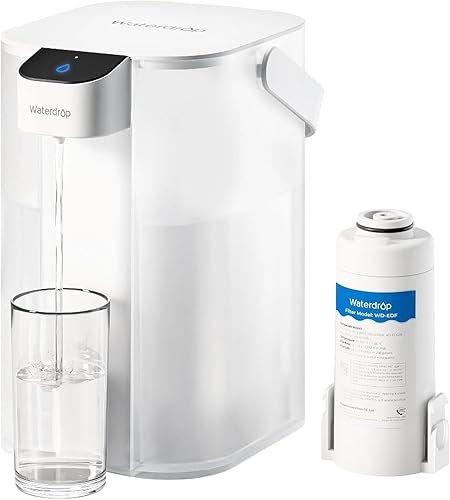
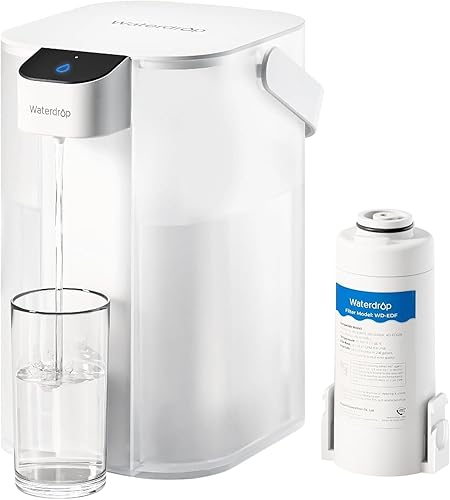
These are the simplest entry point. The Waterdrop Electric Jug we tested is a step up from a basic pitcher because it uses a powered pump to force water through a denser filter faster. No more waiting for gravity. It’s a great option for renters, offices, or as a dedicated drinking water filter on your counter.
Countertop Reverse Osmosis Units
Plug-and-play purification. No installation, just fill the tank and get RO-quality water. Perfect for apartments, dorms, or anyone who wants the best filtration without touching the plumbing. The trade-off is you have to refill the raw water tank manually.
Under-Sink Direct Connect Filters
The most popular category. These connect to your cold water line and feed a dedicated faucet or sometimes your main tap. They offer a great balance of convenience—filtered water on demand—and strong filtration without the complexity of an RO system.
Under-Sink Reverse Osmosis Systems
The heavy hitters. These provide the highest level of purification for your drinking and cooking water. Waterdrop’s tankless models are a modern take, saving a ton of space under the sink compared to traditional RO setups.
Buying Guide: How to Choose
1. Test Your Water First. Seriously. Get a copy of your local water quality report (called a CCR) or use a home test kit. This tells you what you actually need to filter out. No point paying for an RO system if your only issue is chlorine taste.
2. Match the System to Your Needs.
- Chlorine/Taste/Odor: A basic under-sink filter (like the 15UA) or a good jug will do.
- Lead, Cysts, Specific Chemicals: Look for NSF/ANSI 53 certification for health contaminants.
- PFAS, Pharmaceuticals, “Emerging Contaminants”: Seek NSF/ANSI 401 certification.
- TDS, Hardness, Everything: You need reverse osmosis.
3. Consider Your Space & Skill Level. Can you drill a hole for a dedicated faucet? If not, a countertop unit or a filter that connects to your existing tap (like the TSA) is the way to go.
4. Calculate Long-Term Cost. Price the unit + (cost of replacement filters x frequency). A cheap unit with expensive filters might cost more over 3 years.
Our Top Picks & Reviews
We’ve tested these systems extensively. Here’s a quick comparison, followed by our detailed take on each.
| Product | Best For | Key Certification | Price |
|---|---|---|---|
 Waterdrop Electric Jug |
Countertop convenience, renters | NSF/ANSI 42, 53, 401 | $1.11 |
 Waterdrop CoreRO |
Apartment RO, no installation | NSF/ANSI 372 | $3.99 |
 Waterdrop 15UA |
Basic under-sink upgrade | NSF/ANSI 42 | $1.19 |
 Waterdrop TSA |
Advanced contaminant reduction | NSF/ANSI 42 | $1.91 |
1. Waterdrop Electric Filter Jug
This isn’t your grandma’s water pitcher. The electric pump is a game-changer for speed—no more waiting for gravity to do its thing. The 5-micron carbon block filter is legitimately more effective than most jug filters we’ve tested, and the 200-gallon capacity means you’re not changing filters every month. We love it for a dorm room, home office, or as a secondary water source in the kitchen. The NSF 401 certification for emerging contaminants is a rare and impressive find at this price point.
- Extremely fast filtration
- Strong multi-standard NSF certifications
- Good capacity for a jug
- No installation needed
- Requires charging
- Still limited capacity compared to under-sink
- You have to refill it manually
2. Waterdrop CoreRO Countertop RO System
This is for the person who wants reverse osmosis purity but can’t (or doesn’t want to) install anything. It’s dead simple: plug it in, fill the tank, and get purified water. The 6-stage filtration is thorough. We found it produces very low TDS water, as expected. The flushing process on first use is a bit fiddly—follow the instructions carefully. It’s perfect for renters, but remember, you’ll be refilling the raw water tank constantly if you use it for all your drinking and cooking.
- True RO filtration with no installation
- Compact countertop footprint
- Plug-and-play operation
- Manual refilling of source water tank
- Produces wastewater you need to empty
- Higher upfront cost than basic filters
3. Waterdrop 15UA Under Sink Water Filter
This is the workhorse. If your main complaint is chlorine taste and odor, and maybe some sediment, this is a fantastic, affordable upgrade. Installation really is a breeze with the push-fit connectors—we timed it at under 5 minutes. The filter life is solid, and replacement cartridges are reasonably priced. It won’t tackle dissolved contaminants like lead or PFAS (it’s only NSF 42 certified), but for improving the basics, it’s hard to beat the value. A reliable refrigerator filtered water alternative that doesn’t require buying a new fridge.
- Super easy, fast installation
- Very affordable long-term cost
- Effective for chlorine and taste/odor
- Doesn’t take up counter space
- Only reduces aesthetic contaminants (NSF 42)
- Requires drilling for a dedicated faucet (optional)
- Not for heavy metal or chemical reduction
4. Waterdrop TSA 8-Layer Under Sink Filter
The TSA is the 15UA’s more capable sibling. The “8-layer” filtration includes specific media aimed at reducing a broader range of contaminants, including fluoride and PFAS/PFOA (though check the specific model’s certifications). The 20X dirt adhesion claim translates to a longer filter life in our testing before flow rate drops. It’s the model we recommend if you have a bit more in your budget and want peace of mind against a wider array of potential tap water issues.
- Broader contaminant reduction than basic filters
- Long filter life due to enhanced media
- Same easy installation as other Waterdrop under-sink units
- More expensive upfront and for replacements than the 15UA
- Certification details can be model-specific—read carefully
Frequently Asked Questions
- How long do Waterdrop filters last?
- It varies by model. Jug filters last about 200 gallons or 3 months. Under-sink carbon filters typically last 6-12 months or 5,000-16,000 gallons. RO membranes can last 1-2 years. Always check the specific product specs and replace based on time or gallon rating, whichever comes first.
- Are Waterdrop filters NSF certified?
- Yes, many are. Look for specific NSF/ANSI standard numbers on the product page. NSF/ANSI 42 covers aesthetic effects like chlorine taste. NSF/ANSI 53 covers health contaminants like lead. NSF/ANSI 401 covers emerging compounds. Don’t just look for the NSF mark—check which standard it’s certified to.
- Can I install a Waterdrop under-sink filter myself?
- Absolutely. In our experience, most people can. You’ll need to shut off the cold water valve, connect the supplied tee fitting, and mount the filter. The push-to-connect fittings eliminate the need for tools or thread tape. It’s a 10-minute job if you’re comfortable under a sink.
- Do Waterdrop RO systems waste a lot of water?
- All traditional RO systems waste water to flush the membrane. Waterdrop’s newer models have improved efficiency, but expect a 1:1 to 2:1 pure-to-waste ratio. That means for every gallon of pure water, 1-2 gallons go down the drain. It’s a trade-off for the high purity level.
- Is the Waterdrop electric jug filter worth it?
- For the right person, yes. If you hate waiting for a gravity-fed pitcher, the speed is a revelation. The filtration is also better than most jugs. But if you drink a lot of water, you’ll still be refilling it often. It’s a convenience and performance upgrade over a standard Brita or PUR.
Final Thoughts
After all our testing, here’s the bottom line: Waterdrop makes solid, user-friendly filters that deliver on their core promise of better-tasting, cleaner water. They’re not magic, and they’re not for every situation (like untreated well water), but for the vast majority of people on city water, they offer excellent value.
Our top recommendation for most households is the Waterdrop TSA under-sink filter. It hits the sweet spot of advanced contaminant reduction, easy installation, and reasonable long-term cost. If you’re renting or want zero installation, the Electric Jug is a surprisingly capable countertop option. And if you have serious water quality concerns, their countertop or under-sink RO systems are reliable performers. Do your homework, match the system to your water report, and you’ll be drinking better water for years to come.
