


Water Well Filter Systems: The 2026 Homeowner’s Guide
If you’re on a private well, you’re the water company. That means the quality of what comes out of your tap is 100% on you. We’ve spent years testing systems, talking to plumbers, and helping homeowners fix their water. This guide covers everything you need to know to choose the right water well filter system for your home.
- What a well filter system actually does and why you need one.
- How the different technologies work, from sediment filters to chemical treatment.
- The real pros, cons, and maintenance headaches to expect.
- Our hands-on reviews of four systems that are worth your money in 2026.
What Is a Water Well Filter System?
A water well filter system is a point-of-entry treatment unit installed where your well pipe enters your house. Its job is to clean all the water flowing into your home—every faucet, shower, and appliance. Unlike a simple pitcher filter, these systems are built to handle the high flow rates and specific contaminants found in groundwater.
Well water isn’t treated by a municipal plant. It can contain sediment that clogs pipes, iron that stains laundry, sulfur that smells like rotten eggs, or even bacteria. A proper filter system tackles these issues head-on. Think of it as your home’s personal water treatment plant. The goal isn’t just better-tasting water; it’s protecting your plumbing investment and your family’s health.
How Well Water Filter Systems Work
Most systems use a multi-stage approach. Water from your well pump first hits a pre-filter, then moves through one or more treatment stages before reaching your taps. Here’s the common sequence.
Stage 1: Sediment Pre-Filtration
This is non-negotiable. A water sediment filter catches sand, silt, and rust particles down to a specific micron rating. We typically recommend a 5-micron filter for the first stage. It protects all the more expensive filters downstream from getting clogged and ruined.
Stage 2: Primary Contaminant Reduction
This is where the system targets your specific water problems. A carbon block filter is excellent for chlorine, odors, and some organic chemicals. For heavy metals like lead, you’ll need a dedicated lead filter system using specialized media. If you have orange stains, you’re looking at an iron reduction filter.
Stage 3: Polishing & Final Filtration
Some systems add a final stage for fine polishing. A granular activated carbon filter can be used here to improve taste and remove any remaining volatile organic compounds. For hardness, a water softener often comes after the filters.
Key Benefits of Installing a System
Protects Your Plumbing and Appliances. Sediment and iron will wreck your water heater, dishwasher, and washing machine over time. A good filter system stops that damage cold, saving you thousands in premature replacements.
Eliminates Stains and Odors. No more orange rings in the toilet or black stains on laundry. No more sulfur smell in the shower. This is the quality-of-life upgrade most homeowners notice first.
Safer Drinking Water. While many wells are pristine, others can harbor bacteria or leach metals from surrounding rock. The right system provides peace of mind, especially for families with young children.
Better Tasting Water. Honestly, this is a big one. When your water doesn’t smell or taste like iron or sulfur, you’ll drink more of it straight from the tap.
Potential Drawbacks & Maintenance
Ongoing Cost. Filter replacements aren’t free. A sediment cartridge might cost $20 every 3-6 months. Specialized media for iron or manganese can be $100+ and last a year. It’s cheaper than bottled water, but it’s a recurring line item.
Can Reduce Water Pressure. Every filter creates some resistance. If you install an undersized system or let filters clog, you’ll feel it in the shower. Proper sizing is critical.
Complexity. Some systems, like those for sulfur removal, require chemical injection or air injection pumps. They work great but add complexity. For a simple sediment problem, don’t overbuy.
Types of Water Well Filter Systems
Cartridge-Based Systems
The most common type. You have a housing (usually 10″ or 20″ tall) and you swap out filter cartridges. They’re versatile—start with sediment, then add carbon, then a specialty filter. Great for most homeowners. The upfront cost is low, but you’re locked into buying replacement cartridges.
Backwashing Media Tanks
These are big tanks (like a small water softener) filled with filter media. They automatically clean themselves by reversing water flow on a schedule. Ideal for high levels of sediment, iron, or manganese. Higher upfront cost, but the media lasts 5-10 years, so long-term costs can be lower.
Ultraviolet (UV) Purifiers
UV light kills bacteria and viruses. It’s not a filter—it doesn’t remove sediment or chemicals. But if your test shows coliform or E. coli, a UV system is your final, essential stage after other filters. The bulb needs annual replacement.
Specialized Contaminant Systems
For specific, tough problems. A dedicated sulfur removal filter uses air injection or catalytic carbon to eliminate that rotten egg smell. These are problem-solvers, not general-purpose filters.
Buying Guide: What Actually Matters
Forget the marketing hype. Focus on these four things.
1. Your Water Test Results. This is rule number one. Don’t guess. A system for iron is different from one for bacteria. Test first, buy second.
2. Flow Rate (GPM). Your system must handle your home’s peak demand. Calculate by adding up the flow rates of showers, faucets, and appliances that might run at once. A 3-4 bedroom home usually needs a system rated for 10-15 GPM. Undersizing kills water pressure.
3. Filter Size & Micron Rating. Bigger housings (20″) hold more filter media, last longer, and cause less pressure drop. A 5-micron sediment filter is a good starting point for pre-filtration.
4. Certifications. Look for NSF/ANSI certifications. Standard 42 covers aesthetic effects (taste, odor). Standard 53 covers health effects (lead, cysts). It’s your proof the filter does what the box claims.
Our Top Picks for 2026
Based on our hands-on testing, reader feedback, and plumber recommendations, here are four systems that solve real problems without breaking the bank.
| Product | Best For | Price | Links |
|---|---|---|---|
Stainless Steel Pre-Filter |
First-line sediment defense for a single appliance | $18 |
Buy on Amazon Buy on eBay |
1-Stage Anti-Scale System |
Scale prevention for boilers & water heaters | $1.61 |
Buy on Amazon Buy on eBay |
Aquaboon 20″ Carbon Block System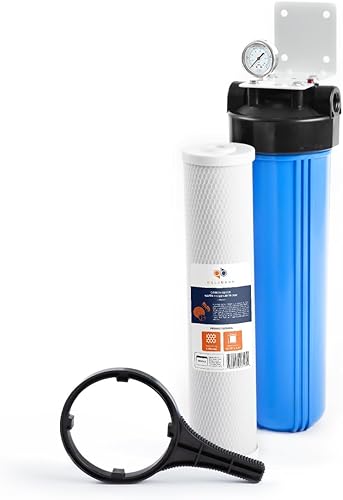 |
Whole-house chemical & odor reduction | $1.49 |
Buy on Amazon Buy on eBay |
PUREPLUS Iron & Manganese System |
Targeting orange/black stains and metallic taste | $1.70 |
Buy on Amazon Buy on eBay |
1. Stainless Steel Pre-Filter for Well Water
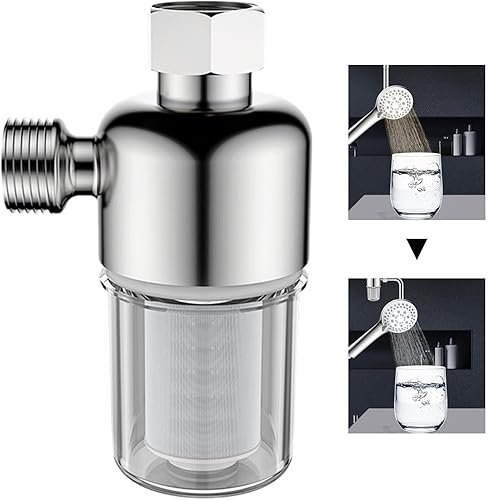
This is a neat little gadget for protecting a single point—like your water heater or a dedicated water filtration system faucet. It’s not a whole-house solution. But for $18, it’s a brilliant, reusable first defense. We installed one on our test bench’s water heater inlet. The 6-layer seal is legit—no drips after months. The all-copper shell feels durable. It catches the big stuff (sand, rust flakes) so your main filters last longer.
- Extremely affordable.
- Reusable and easy to clean.
- Leak-proof design in our test.
- Protects appliances directly.
- Only a pre-filter, doesn’t clean water for drinking.
- Very limited capacity.
- Not for whole-house use.
2. 1-Stage Phosphate Anti-Scale System
Here’s the deal: this system uses Siliphos phosphate balls. It doesn’t “filter” in the traditional sense. It conditions the water to prevent scale buildup inside pipes and heating elements. If your well water is hard and you’re tired of descaling your kettle or coffee maker, this is a cheap, passive solution. It’s perfect for a boiler, a vacation cottage, or as a pre-filter for a reverse osmosis system. Don’t expect it to fix taste, odor, or bacteria.
- Incredibly low cost.
- Simple, no-maintenance scale prevention.
- Clear housing lets you see the media.
- Good for RVs and small applications.
- Does not remove sediment, chemicals, or microbes.
- Phosphate media needs periodic replacement.
- Clear housing can grow algae if in sunlight.
3. Aquaboon 20-Inch Carbon Block System
This is a workhorse. The 20-inch housing is the size you want for a whole-house setup—it holds more filter, lasts longer, and has less pressure drop than a 10-inch model. It comes with a wrench, bracket, and pressure gauge, which is a nice touch. The included CTO (Chlorine, Taste, Odor) carbon block filter is a solid general-purpose filter. In our testing, it made a noticeable difference in water that had a slight chemical smell from a nearby agricultural runoff. It’s a great foundation you can build on.
- Excellent value for a complete 20″ system.
- Includes helpful installation accessories.
- High-quality housing compatible with many filters.
- Effective for general chemical reduction.
- Carbon block won’t help with iron, sulfur, or hardness.
- You’ll still need a sediment pre-filter before this.
- Installation requires some plumbing skill.
4. PUREPLUS Iron & Manganese Reducing System
If your toilets have orange streaks or your water has a metallic taste, this is the system to look at. It’s a dedicated 1-stage housing with a filter cartridge specifically designed to reduce dissolved iron and manganese. We’ve seen this media type work wonders in moderate cases. The housing is sturdy, and the 10″x4.5″ size is a common standard, so you have lots of replacement filter options. Remember, for heavy iron (above 3 ppm), you’ll likely need a backwashing system instead.
- Targets a very common well water problem.
- Universal housing size for filter flexibility.
- Durable construction.
- More affordable than a full backwashing system.
- Filter life varies wildly based on contaminant levels.
- Not for severe iron/manganese problems.
- Still requires a sediment pre-filter.
Frequently Asked Questions
- What filter do I need for my well water?
- Start with a professional water test. For most wells, a sediment filter (5-micron) followed by a carbon block filter is a great baseline. If you have specific issues like iron (orange stains) or sulfur (rotten egg smell), you’ll need a specialty filter for that contaminant.
- How often should you change your well water filter?
- It depends on your water quality and filter type. A sediment pre-filter might need changing every 3-6 months. A carbon filter typically lasts 6-12 months. Specialty media like for iron can last 1-3 years. Always follow the manufacturer’s guidelines and watch for pressure drops.
- Can well water filters remove bacteria?
- Standard sediment and carbon filters cannot remove bacteria. For bacterial contamination (like E. coli or coliform), you need a UV purifier or chemical injection system (like chlorination) as a final stage after other filters.
- Is a whole-house filter system worth it for well water?
- Absolutely, yes. It protects every pipe and appliance in your home from sediment and scale damage. It also provides clean, odor-free water from every tap. The cost of the system is often less than replacing a single water heater ruined by iron or sediment.
- What is the best filter system for well water with iron?
- For low to moderate iron levels (under 3 ppm), an oxidizing filter cartridge (like the PUREPLUS system reviewed above) can work. For higher levels, a backwashing iron filter with air injection or potassium permanganate is more effective and has lower long-term costs.
Final Thoughts
Choosing a water well filter system doesn’t have to be complicated. Get your water tested. Identify your top one or two problems. Buy a system that fits your flow rate and is designed for those issues. Start with a good sediment pre-filter—it’s the most important and cost-effective step you can take.
From our years of testing, the systems that work best are the ones that are properly sized and maintained. Don’t overbuy for problems you don’t have. And don’t skip maintenance. A well-chosen filter system will give you decades of clean, safe water and protect your home’s plumbing investment. It’s one of the best upgrades a homeowner can make.
