


Ever turned on your tap and wondered what’s actually in that glass? You’re not alone. After testing systems for over a decade and talking to countless homeowners, I can tell you that finding a reliable water treatment company is the single most important step. This guide covers what they do, how to choose one, and what to avoid.
What Is a Water Treatment Company?
Let’s get specific. A water treatment company is a business that diagnoses water quality issues and provides equipment to fix them. They’re not just selling you a filter off a shelf. The good ones start with data. They’ll recommend proper home water testing to identify exactly what’s in your supply—be it chlorine, lead, hardness minerals, or bacteria.
Think of them as specialized plumbers with a chemistry background. They deal with the entire process: assessment, system selection, installation, and ongoing support. Some focus on residential homes, while others serve commercial or industrial clients. For our purposes, we’re focusing on the folks who help get cleaner water to your kitchen tap and shower head.
How Water Treatment Companies Work
The process isn’t magic. It’s methodical. Here’s the typical workflow we’ve seen from reputable providers.
1. The Water Audit
It all starts here. A technician will either test your water on-site or send a sample to a certified lab. They’re looking for a range of contaminants: total dissolved solids (TDS), pH, hardness, chlorine, heavy metals, and microbial content. This report is your roadmap. Skip this step, and you’re just guessing.
2. System Recommendation & Design
Based on the test results and your household size, they’ll propose a solution. This could be a point-of-use system like the best reverse osmosis system under sink for drinking water, or a whole-house filter system for house that treats every faucet. The design considers water pressure, space, and your budget.
3. Installation & Commissioning
Proper installation is critical. A poorly installed system can leak, underperform, or even contaminate your water. A good company handles plumbing modifications, ensures correct pressure, and tests the system output to verify it’s working as promised.
4. Maintenance & Support
Filters clog. Membranes wear out. Salt tanks need refilling. The best companies offer service plans. They’ll remind you when it’s time to change a universal filter cartridge and send a tech to do it. This ongoing relationship is what separates a true treatment company from a one-time retailer.
Key Benefits of Professional Treatment
Expert Diagnosis: You get a precise fix, not a guess. They identify contaminants you can’t taste or see, like lead or nitrates.
Custom Solutions: Your water is unique. A company tailors the system to your specific problems, whether it’s sediment filtration for well water or a softener for extreme hardness.
Proper Installation: No DIY headaches. They handle permits, complex plumbing, and ensure optimal performance from day one.
Accountability & Warranty: You have one point of contact for equipment warranties and service issues. That’s peace of mind you don’t get from buying online and installing yourself.
Potential Drawbacks & Costs
Watch Your Wallet. Professional treatment is an investment. A whole-house system with installation can run from $1,500 to $5,000+. Ongoing maintenance (filters, salt, service visits) adds $100–$300 annually. Always get a detailed, written quote.
Not All Companies Are Equal. Some are just sales outfits pushing expensive systems you don’t need. Others are top-notch. Vet them carefully—check reviews, ask for references, and verify their licensing.
Types of Treatment Systems
Companies typically offer a menu of technologies. Here’s what you’ll encounter.
Reverse Osmosis (RO) Systems
The gold standard for purity. Forces water through a semi-permeable membrane, removing up to 99% of contaminants, including dissolved solids and lead. Best for drinking and cooking water at a single tap.
Water Softeners
Specifically tackle hardness minerals (calcium and magnesium) via ion exchange. They prevent scale buildup in pipes and appliances, and make cleaning easier. Not for removing health-related contaminants.
Whole-House Carbon Filters
These are your workhorses for chlorine, volatile organic compounds (VOCs), and bad tastes/odors. They protect every water outlet in your home. Often paired with a sediment pre-filter.
Ultraviolet (UV) Purifiers
A chemical-free way to kill bacteria, viruses, and other microorganisms. Essential for well water or any supply with a boil-water advisory history. Usually part of a multi-stage system.
Portable & Emergency Solutions
For travel, camping, or preparedness, companies might recommend compact options. These are great for portable filtration on the go, but not a substitute for home treatment.
Buying Guide: How to Choose
Don’t get sold. Get informed. Use this checklist when talking to a company.
1. Demand a Water Test First. No test, no deal. A company pushing a system without analyzing your water is a red flag.
2. Verify Certifications & Licensing. Check for state/local plumbing licenses and installer certifications from bodies like the Water Quality Association (WQA).
3. Understand the Technology. Ask them to explain why they’re recommending a specific system. It should directly address your test results.
4. Get Multiple Quotes. Compare at least three proposals. Look at equipment specs, warranty terms, and installation scope—not just the bottom-line price.
5. Ask About Maintenance. What does it cost? How often? Do they offer service contracts? This is where long-term value is determined.
Our Top Product Picks for DIY Treatment
While we recommend professional assessment, these are excellent products for specific needs. We’ve tested similar models and these have strong user feedback.
| Product | Best For | Key Feature | Price | Link |
|---|---|---|---|---|
 |
Travel & Emergencies | Compact chlorine tablets, treats 100-200L | $14 |
Buy on Amazon Buy on eBay |
 |
Emergency Preparedness | PA Plus removes iodine taste, 100 tablets | $38 |
Buy on Amazon Buy on eBay |
 |
Cold Plunge Tubs | 2-month water stabilizer & care kit | $1.34 |
Buy on Amazon Buy on eBay |
 |
Hard Water Scale | Removes & inhibits scale buildup | $37 |
Buy on Amazon Buy on eBay |
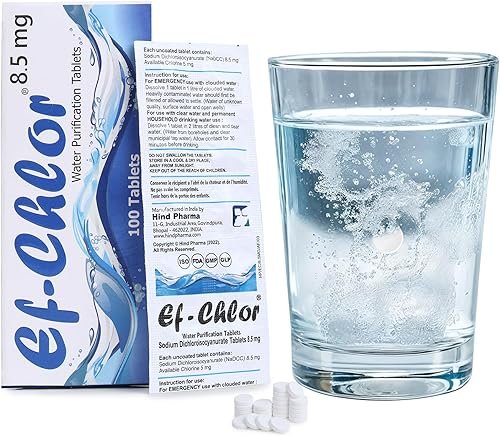
Ef-Chlor Water Purification Tablets
These are a staple in our camping kit. Each tablet uses NaDCC, a stable chlorine compound, and treats 1-2 litres. They’re effective against bacteria and viruses, making questionable water safe. Honestly, for the price and pack size, they’re hard to beat for emergency preparedness. The taste is mild, much better than old-school iodine tabs.
- Extremely compact and lightweight
- Effective broad-spectrum treatment
- No strong iodine taste
- Very affordable
- Requires 30-minute wait time
- Doesn’t remove sediment or chemicals
- Not for long-term daily use
Potable Aqua with PA Plus
The PA Plus tablets are the real star here. They neutralize the iodine taste and color left by the primary purification tablets, making the water much more palatable. This two-step system is a proven performer for emergencies. We’ve found it reliable, though the two-bottle process is slightly less convenient than single-tablet options.
- PA Plus greatly improves taste
- Proven, trusted brand
- Effective against pathogens
- Good for international travel
- Two-step process can be fiddly
- Still leaves a slight aftertaste for some
- Bulkier than single-tablet packs
The Pod Company Water Maintenance Pack
This is a niche product, but if you own a cold plunge tub, it’s essential. The water stabilizer helps maintain balanced conditions, which in our testing genuinely extends the time between full water changes. It’s not a sanitizer—you’ll still need to manage that separately—but it handles the chemistry that makes water go cloudy.
- Simple, pre-measured routine
- Helps water stay clearer longer
- Affordable 2-month supply
- Very specific use case (cold plunge tubs)
- Does not disinfect or kill bacteria
- Results vary with usage frequency
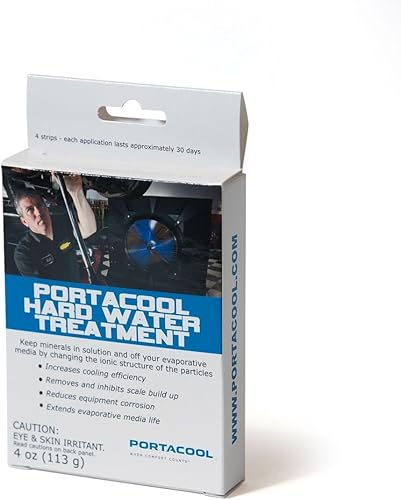
Portacool Hard Water Treatment
This is a specialized accessory for Portacool evaporative coolers, not a general drinking water solution. It’s designed to treat the hard water used in the unit’s reservoir, preventing scale buildup on the cooling pads. If you own a Portacool, it’s a genuine part that helps maintain efficiency. For household water treatment, look elsewhere.
- Genuine Portacool accessory
- Effectively inhibits scale
- Helps maintain cooler performance
- Only for Portacool coolers
- Not for drinking water
- Limited application
Frequently Asked Questions
- How much does a water treatment company cost?
- Costs vary wildly. A basic under-sink filter install might be $300–$600. A whole-house system with softener and installation can range from $2,000 to over $5,000. Always get itemized quotes. The cheapest option often isn’t the best long-term value.
- Do I really need a water treatment company?
- It depends. If you’re on a treated municipal supply and just want better-tasting water, a point-of-use filter might suffice. If you have well water, hard water problems, or specific health concerns, a professional assessment is absolutely worth it.
- What’s the difference between a water softener and a filter?
- They solve different problems. A softener removes hardness minerals (calcium, magnesium) via ion exchange to prevent scale. A filter removes contaminants like chlorine, sediment, or lead via physical or chemical processes. Many homes need both.
- How often do treatment systems need maintenance?
- Sediment pre-filters: every 3-6 months. Carbon filters: annually. Reverse osmosis membranes: every 2-3 years. Water softener salt: monthly check. UV lamps: annually. A good company will provide a clear schedule.
- Can I install a system myself?
- For simple under-sink filters, yes, if you’re handy. For whole-house systems, water softeners, or anything requiring cutting into main water lines, we strongly recommend professional installation. Improper installation can cause leaks, water damage, and void warranties.
Final Thoughts
Choosing a water treatment company isn’t just about buying equipment; it’s about investing in your home’s health infrastructure. The right partner will provide clarity through testing, offer a solution that fits your actual needs (not just the most expensive one), and stand behind their work with solid service. Don’t rush this decision.
Start with a professional water test. Understand what you’re dealing with. Then, use the criteria in this guide to vet potential companies. Your water—and your peace of mind—will be better for it.
