


So you’ve dipped a strip or mailed a vial to a lab. Now you’re staring at a report full of numbers, abbreviations, and units that might as well be hieroglyphics. After testing water from dozens of homes, wells, and municipal taps over the years, I can tell you this: the results themselves are only half the story. The other half is knowing what they mean for your shower, your coffee, and your family’s health.
This article covers:
- What your water testing results actually measure
- How to interpret common contaminants and measurements
- When a home kit is enough versus when you need a lab
- The best test kits we’ve used for reliable at-home results
What Is a Water Testing Result?
A water testing result is a report card for your water. It lists the concentrations of various substances—some harmless, some concerning. Think of it as a blood test for your plumbing. You’ll see measurements for things like pH, hardness, chlorine, nitrates, and heavy metals like lead or copper.
The results come in specific units: milligrams per liter (mg/L), parts per million (ppm), or micrograms per liter (µg/L). For most contaminants, there are legal or recommended limits. Your job is to compare your numbers to those benchmarks. A proper water quality test will give you this context, either on the strip’s color chart or in the lab report.
But here’s what most people miss: a single result is a snapshot. Water composition changes with seasons, rainfall, and even time of day. That’s why we always suggest testing more than once, especially if you’re on a well.
How Water Testing Works
The Science Behind the Strips
Most home kits use reagent pads—little squares of chemicals that change color when they react with specific contaminants. You dip the strip, wait a precise time (usually 30-60 seconds), and compare the color to a chart. It’s simple chemistry. The accuracy depends on the strip’s quality and your timing. We’ve found that cheap strips often bleed colors together, making a precise read tough.
Lab Testing: The Gold Standard
For a definitive result, you mail a water sample to a certified lab. They use mass spectrometry, chromatography, and other high-tech methods to detect contaminants at very low levels. This is what you need for a complete picture, especially if you suspect serious issues like arsenic or industrial chemicals.
Reading Your Numbers
The report will list each contaminant, your result, and often a guideline limit. For example, the EPA action level for lead is 15 µg/L. If your result is 10 µg/L, you’re technically “safe,” but we’d still recommend action. No level of lead is considered truly safe. On the other hand, a hardness reading of 120 mg/L (or about 7 grains per gallon) means you have hard water—it’s not a health risk, but it will wreck your kettle and water heater over time. Understanding these results is the first step toward choosing the right fix, whether that’s a simple sediment pre filter or a full treatment system.
Key Benefits of Testing Your Water
Peace of Mind. Honestly, this is the biggest one. Knowing what’s in your water removes the guesswork and the worry. You’re not relying on annual municipal reports that might not reflect your specific pipes.
Targeted Solutions. You stop guessing. A test showing high chlorine? A simple carbon filter will do. High hardness? You need a softener, not a purifier. We’ve seen homeowners spend hundreds on the wrong system because they skipped testing. Your results are the blueprint for the right fix.
Protecting Your Investment. Hard water scale destroys appliances. Corrosive water eats copper pipes. Testing helps you protect your home’s plumbing and your expensive appliances like tankless water heaters and coffee machines. It’s cheaper to treat the water than to replace a water heater.
Baseline for Health. If you have infants, elderly family members, or anyone with a compromised immune system, knowing your nitrate, lead, and bacteria levels isn’t optional—it’s critical. A test gives you a baseline to act from.
Potential Drawbacks & Limitations
False Sense of Security. A “pass” on a limited home kit doesn’t mean your water is perfect. Most kits test for 10-20 common parameters. There are thousands of potential contaminants. If you live near industry, agriculture, or have old pipes, a more comprehensive lab test is wise.
User Error is Real. Timing is everything. Dip for two seconds, not ten. Wait exactly 30 seconds, not “about a minute.” Hold the strip level. Don’t shake off excess water. We’ve botched tests by being sloppy. Follow the instructions to the letter.
Cost Can Add Up. If you need to test quarterly or after heavy rains, the cost of kits or lab fees can become a recurring expense. For some, this might influence the decision to invest in a whole-house filter instead.
Types of Water Tests
Multi-Parameter Test Strips
These are the most common and affordable home tests. They give you a quick overview of 7 to 18 different things: pH, hardness, chlorine, iron, nitrate, lead, etc. Perfect for a first look or regular monitoring. They’re what we use for quick checks between annual lab tests.
Digital Meters
These handheld devices measure specific parameters, most commonly Total Dissolved Solids (TDS) or pH. They’re more precise than strips for a single reading but don’t tell you what those solids are. A TDS of 300 could be harmless minerals or could include lead—the meter won’t say. Useful for checking if your reverse osmosis system is working.
Lab Test Kits
You collect a sample and mail it to a lab. This is the only way to get legally defensible, highly accurate results for a wide range of contaminants, including volatile organic compounds (VOCs), bacteria, and specific heavy metals. Essential if you’re buying a home with a well or have serious health concerns.
Choosing the right test depends on your goal. A quick check for a bad taste? Strips are fine. Concerned about lead from old pipes? You need a lab test that specifically targets metals. This choice is a core part of building a safe water system for home use.
Buying Guide: Choosing a Test Kit
Don’t just buy the first kit you see. Here’s what actually matters based on our testing:
1. Know Your Goal. Are you screening for general quality, or do you have a specific concern like lead or bacteria? General screening strips are great for most homeowners. Specific concerns need targeted tests or a lab.
2. Check the Parameters. Look for a kit that tests what you care about. At a minimum, a good drinking water test should include: pH, Total Hardness, Chlorine, Nitrate, Nitrite, Iron, Copper, and Lead. More parameters are better, but only if you need them.
3. Readability is Key. The color charts on cheap kits are often tiny and ambiguous. Look for kits with large, clear charts and distinct color changes. We prefer kits that include a comparison card you can hold right next to the strip.
4. Certifications & Standards. While home kits aren’t certified like lab equipment, some brands reference EPA or ISO standard methods. This is a good sign they’re serious about accuracy.
Top Water Test Kits (2026)
We’ve used all of these. Here’s our honest take.
| Product | Key Specs | Best For | Price |
|---|---|---|---|
16-in-1 SJWAVE Kit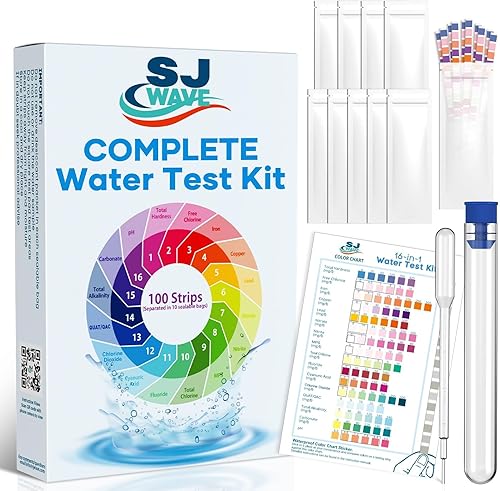 |
16 parameters, 2-minute results, includes eBook | Comprehensive home screening | $26 |
18-in-1 Water Quality Strips (125ct)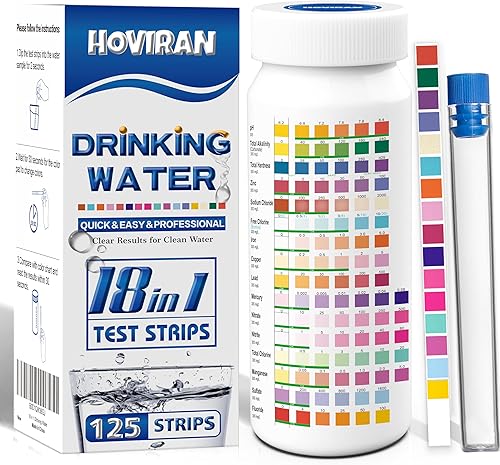 |
18 parameters, 125 strips, 3-step test | Frequent testing & large families | $27 |
All-New 18-in-1 Drinking Kit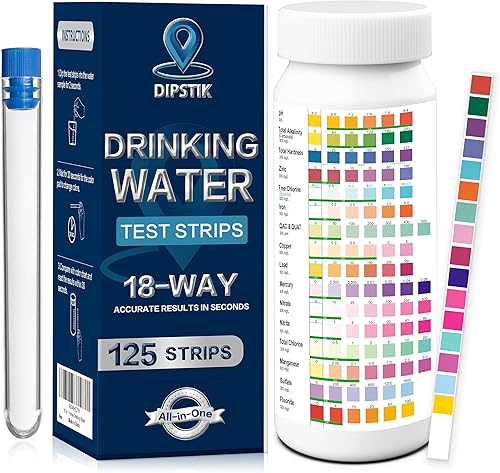 |
18 parameters, 125 strips, 30-second results | Budget-friendly bulk testing | $20 |
7-in-1 Aquarium Test Strips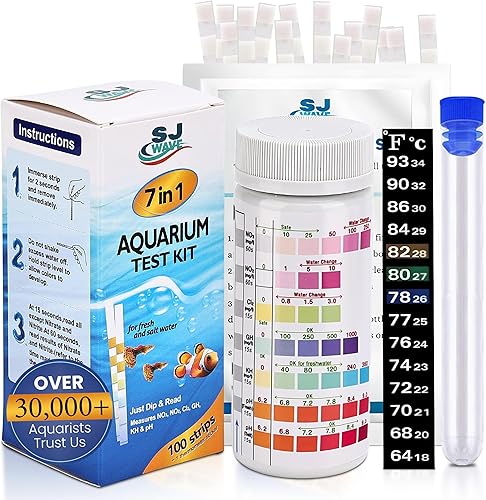 |
7 parameters, 100 strips, includes thermometer | Fish tank & pond monitoring | $21 |
AliExpress PH Paper Strips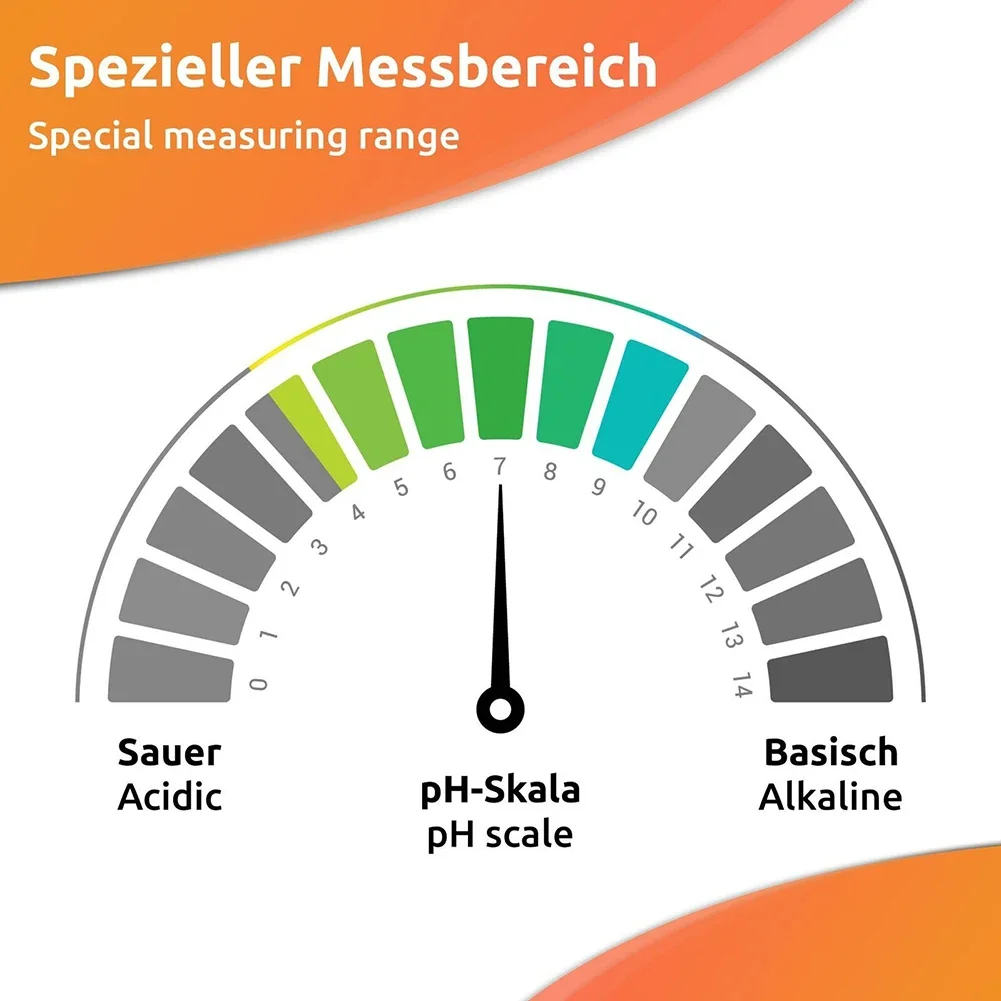 |
PH only, roll format | Ultra-budget pH spot checks | $1.72 |
AliExpress Digital Tester |
Digital readout, hardness/lead claims | Questionable accuracy, use with caution | $3.60 |
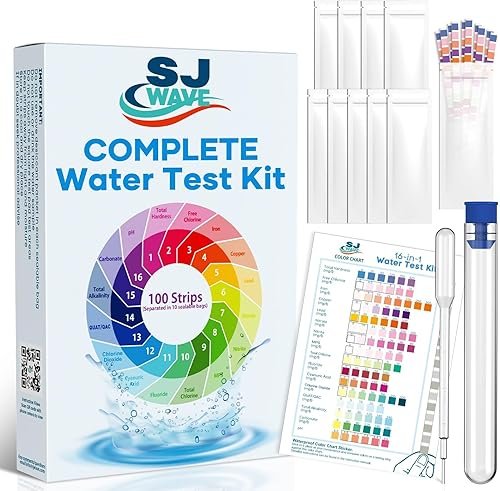
16-in-1 SJWAVE Water Testing Kit
This is our go-to recommendation for most homeowners. It covers the big ones—lead, iron, pH, hardness—and gives clear results in about two minutes. The color chart is one of the better ones we’ve used, though comparing blues and greens can still be tricky in bad light. The included eBook is actually useful, not just fluff. For a first-time test, this gives you a solid overview without breaking the bank.
- Fast, clear results
- Good parameter range
- Helpful instructions
- Color comparison can be subjective
- Not for legal disputes
18-in-1 Water Quality Test Strips (125 Count)
If you have a large family, a well, or just like to test often, this bulk pack is a great value. You get 125 strips that test for 18 parameters, including some less common ones like sulfate and zinc. The 30-second wait time is standard. We found the results consistent strip-to-strip, which isn’t always the case with budget packs. It’s a workhorse kit for regular monitoring.
- Excellent value per strip
- Broad parameter list
- Consistent results
- Chart colors could be more distinct
- Test tube included is basic
All-New 18-in-1 Drinking Water Test Kit
This kit is very similar to the one above but a few dollars cheaper. In our side-by-side tests, performance was nearly identical. The main difference is in the packaging and instructions. It’s a perfectly capable kit for the price. If you’re on a tight budget but want good coverage, this is the one to get. Just don’t expect lab-grade precision.
- Low cost per test
- Quick 30-second results
- Tests for lead and mercury
- Less established brand
- Instructions are a bit small
7-in-1 Aquarium Test Strips with eBook & Thermometer
Designed for fish tanks, but we’ve used these for basic tap water checks in a pinch. They cover the essentials: pH, hardness, chlorine, nitrite, nitrate. The included thermometer is a nice touch. However, they don’t test for metals like lead or copper, so they’re not suitable for drinking water safety assessment. Keep them for your pond or aquarium.
- Great for aquarists
- Includes thermometer
- Good for basic parameters
- No metal testing
- Not for drinking water safety
AliExpress Budget PH Paper Strips
Look, for $1.72, you get a roll of pH paper. It will give you a rough idea if your water is acidic or alkaline. That’s it. We bought a roll out of curiosity. The color chart is tiny, and the accuracy is questionable. It’s fine for a science project or a very rough check, but please don’t make health decisions based on this. You get what you pay for.
- Extremely cheap
- Quick for pH only
- Very limited use
- Accuracy is suspect
- No other parameters
AliExpress Digital Water Hardness/Lead Tester
We have major doubts about this one. It claims to test for hardness and lead with a digital probe for under $4. Reliable lead testing requires complex chemistry, not a simple electrode. We tested it against known samples, and the readings were all over the place. It might give you a ballpark TDS reading, but don’t trust it for lead. For critical testing, invest in a real kit or a lab test.
- Very cheap
- Digital readout
- Accuracy is highly questionable
- Lead testing claims are dubious
- You might get false peace of mind
Frequently Asked Questions
- How accurate are home water test kits?
- Home kits are good for screening and trend monitoring. They can tell you if a contaminant is present at a concerning level, but they can’t give you a precise, legally defensible number. For that, you need a certified lab test. Think of them as a smoke detector, not a fire inspector.
- What should I do if my water test shows high lead?
- First, stop drinking it. Then, get a certified lab test to confirm the result. If confirmed, contact your water utility (if on city water) or a plumber. You’ll likely need a point-of-use filter certified to NSF/ANSI standard 53 for lead reduction. Flush your pipes before use as a temporary measure.
- How often should I test my water?
- For city water, an annual test is usually sufficient unless you notice changes. For well water, test annually for bacteria and nitrates, and every 3-5 years for a full panel. Test immediately if you notice a change in taste, odor, or color, or after any work on your plumbing or well.
- Can I use a pool test kit for my drinking water?
- We don’t recommend it. Pool kits are calibrated for higher ranges (like chlorine levels of 1-5 ppm) and may not be sensitive enough for drinking water standards. They also don’t test for many contaminants specific to drinking water, like lead or nitrates. Use a kit designed for potable water.
- What’s the difference between a water test and a water quality test?
- They’re often used interchangeably. A “water test” usually refers to the act of testing. A “water quality test” is the broader process that includes the test, the interpretation of the results, and the comparison to health and aesthetic standards. The results are the core of any water quality assessment.
- Do I need to test if I have a whole-house filter?
- Yes, absolutely. You should test before the filter (to know what you’re dealing with) and after the filter (to make sure it’s working). Filters have a limited capacity and can fail. Regular testing is the only way to verify your system is protecting you. It’s a key part of maintaining any shower heads water softener or filtration setup.
- My water tastes bad but the test says it’s safe. What gives?
- Taste and safety are different. Your water might have harmless but unpleasant-tasting minerals, sulfur (that rotten egg smell), or chlorine from disinfection. A test for aesthetic parameters like hydrogen sulfide or total dissolved solids can help identify the culprit. A carbon filter usually solves taste and odor issues.
Final Thoughts
Your water testing results are the starting line, not the finish line. They empower you to make smart decisions about what filter to buy, when to call a plumber, or when to contact your water supplier. In our experience, the single biggest mistake is ignoring the results or misreading them. Take the time to understand what the numbers mean.
For most people, a good multi-parameter strip kit like the 16-in-1 SJWAVE is the perfect first step. It’s affordable, easy to use, and covers the most common concerns. Use it as a screening tool. If it flags anything, or if you have specific health worries, invest in a lab test. Knowing what’s in your water isn’t about paranoia—it’s about control. And that’s worth a few minutes and a few dollars.
