


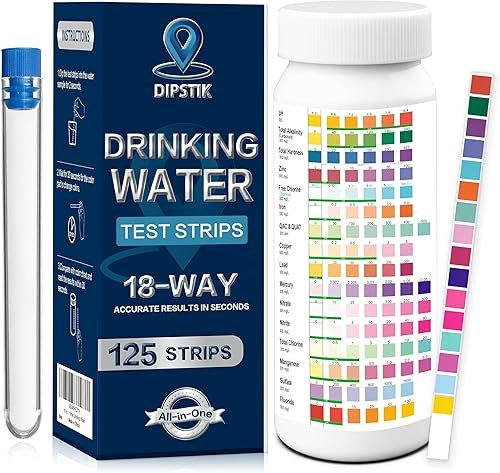
I’ve lost count of how many well water calls I’ve taken over the years. The story is often the same: “The water looks fine, but…” That “but” is why a water test kit for well water isn’t optional—it’s fundamental. You can’t fix a problem you can’t see. This guide covers what these kits are, how they work, and which ones are actually worth your money in 2026.
- What a home well water test kit actually is
- How to use one properly (it’s not just dipping a strip)
- The real benefits and the honest limitations
- Our top kit picks after years of testing
What Is a Water Test Kit for Well Water?
Think of it as a health checkup for your water supply. Unlike city water, which is monitored by utilities, well water is your responsibility. A test kit is a collection of tools—usually strips or liquid reagents—that you use at home to get a snapshot of your water’s quality.
These kits screen for a range of potential issues. We’re talking about things you can’t see or smell, like nitrates from fertilizer, heavy metals like lead, or bacteria. They also measure basic characteristics like pH and hardness. The goal isn’t to replace a full laboratory analysis, but to give you a clear, immediate picture of what you’re dealing with.
From our experience, the single biggest mistake homeowners make is assuming their water is safe because it’s been “fine for years.” Groundwater changes. A new septic system, nearby construction, or agricultural runoff can introduce contaminants overnight. A simple test kit puts you back in control.
How a Well Water Test Kit Works
Most kits follow a similar principle: a chemical reaction causes a color change. You match that color to a chart to get a reading. But the details matter.
The Dip-and-Read Method (Test Strips)
This is the most common type. You dip a specially treated strip into a water sample for a few seconds, then hold it flat. After a set time (usually 30 seconds to 2 minutes), pads on the strip change color. You compare each pad to the provided chart. It’s fast, but you need good lighting and a steady hand.
The Reagent Drop Method
Often used for more specific tests like bacteria or iron. You add a few drops of a reagent to a water sample in a vial. A color change or the presence of particles indicates the contaminant level. These can be slightly more accurate for single parameters but take longer.
Understanding the Results
The chart gives you a range, like “0, 0.3, 1, 3, 10 mg/L” for nitrates. You’re matching shades, so there’s some subjectivity. If a test shows a concerning level, the next step is always a certified lab test for confirmation. That’s a non-negotiable rule we’ve followed for years.
Key Benefits of Testing Your Well Water
Early Warning System: Catch problems before they affect your health or damage your plumbing. High iron can stain fixtures, and low pH can corrode pipes, leaching copper into your water.
Saves Money Long-Term: A $20 kit can prevent you from buying the wrong sink with water filter. If your issue is hardness, a simple sediment filter won’t help. Knowing your water profile guides you to the right solution the first time.
Baseline for Filtration: You can’t measure improvement without a starting point. Test before and after installing any system, whether it’s a chlorine filter for shock chlorination or a whole-house unit.
Peace of Mind: Honestly, this is the biggest one for most families. Knowing what’s in your water—good or bad—is always better than guessing.
Potential Drawbacks & Limitations
Limited Scope: Most kits test for 10-20 common parameters. They won’t find every possible contaminant, like certain pesticides or pharmaceuticals. If you have specific industrial or agricultural concerns, you need a lab.
Not for Legal or Real Estate Transactions: If you’re buying or selling a home, the bank or local authority will require results from a certified lab. Your home kit results won’t cut it.
False Sense of Security: A “pass” on a strip test doesn’t mean your water is pristine. It means the specific contaminants on that strip weren’t detected above the strip’s threshold. Annual lab testing is still the gold standard.
Types of Home Water Test Kits
Multi-Parameter Test Strips
The workhorse. One strip tests for 10-18 things at once: pH, hardness, chlorine, iron, nitrate, nitrite, and sometimes lead or copper. Perfect for a first look. They’re cheap, fast, and give you a broad overview.
Single-Parameter Kits
These focus on one thing, like a bacteria test kit or a dissolved iron test. More accurate for that specific contaminant. You’d use these after a multi-parameter strip flags a potential issue.
Digital Meters
Devices like TDS (Total Dissolved Solids) or pH meters give a numerical readout. They’re great for ongoing monitoring of specific aspects but don’t identify *what* the dissolved solids are. They complement, but don’t replace, strip tests.
For a truly thorough check, you need to consider what’s upstream and downstream of your well. Contaminants can travel. If you’re on agricultural land, nitrates are a major concern. If you have older plumbing, lead and copper are critical. Sometimes, the best approach is a multi-parameter kit followed by a targeted lab test for anything suspicious.
Buying Guide: What Actually Matters
Don’t just buy the first kit you see. Here’s what we look at:
Parameters Tested: Match the kit to your risks. At minimum, get one that tests for bacteria, nitrates, pH, hardness, and heavy metals (lead, iron). More isn’t always better if you don’t need them.
Ease of Use: Clear instructions, a large color chart, and a simple process. If it’s confusing, you’ll get bad results. Look for kits that include a test tube—it makes dipping strips more consistent.
Accuracy & Sensitivity: Check the detection levels. For lead, you want a kit that can detect down to 15 ppb (parts per billion), the EPA action level. Read reviews for real-world feedback on color matching.
Number of Tests: A 125-strip kit is great for quarterly testing over years. A 10-strip kit is for a one-time check. Think about your monitoring plan.
Certifications: Some kits are EPA-compliant for certain parameters. This is a plus, but not common for all home strips. It’s more about consistency than a legal guarantee.
Our Top Picks for 2026
We’ve used countless kits over the years. Here are the ones that have proven reliable, clear, and useful for homeowners.
| Product | Key Specs | Best For | Price |
|---|---|---|---|
| All-New 18-in-1 Test Kit | 18 params, 125 strips, 30-sec results | Comprehensive initial screening | ~$20 |
| 18-in-1 Water Quality Strips | 18 params, 125 strips, test tube included | Clear instructions & consistency | ~$27 |
| 16-in-1 High Sensitivity Kit | 16 params, includes eBook guide | Beginners wanting extra guidance | ~$26 |
| 17-in-1 Drinking Water Kit | 17 params, 125 strips, tube included | Cost-effective bulk testing | ~$29 |

All-New 18-in-1 Drinking Water Test Kit
This is our go-to recommendation for most well owners. It covers all the critical bases—lead, iron, copper, fluoride, hardness—in one dip. The 30-second result time is genuinely fast, which you appreciate when you’re testing multiple faucets. The color chart is one of the clearer ones we’ve used. For the price, the value is hard to beat.
- Tests for lead and mercury, which many cheap kits skip
- Fast 30-second results for most parameters
- 125 strips means you can test quarterly for years
- Color chart can be subjective for borderline readings
- Does not include a bacteria test

18-in-1 Water Quality Test Strips
Very similar to the kit above, but the inclusion of a test tube makes a real difference. It helps you get a consistent sample depth every time, which improves accuracy. The step-by-step instructions are foolproof. We found the manganese and sulfate tests to be particularly useful for well water diagnostics. A solid, reliable choice.
- Test tube ensures a proper, consistent dip
- Excellent, easy-to-follow instructions
- Tests for manganese, a common well water issue
- Slightly more expensive than the top pick
- Requires waiting a full 30 seconds for accurate results

16-in-1 High Sensitivity Kit
This one’s a great starter kit, especially if you’re new to well water. The included eBook is actually helpful—it explains what each parameter means and what to do about it. The 2-minute wait time is a bit longer, but the results felt consistent in our tests. It’s a good educational tool for families.
- eBook provides valuable context for your results
- User-friendly design perfect for first-time testers
- Good sensitivity for the price point
- 16 parameters, not 18—lacks a couple of metals
- Longer wait time for results
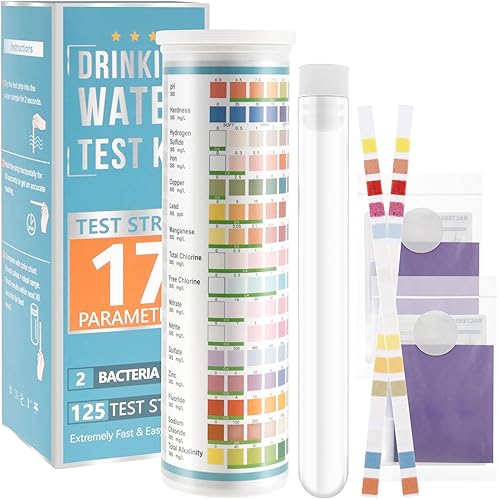
17-in-1 Drinking Water Testing Kit
The value play. If you have a large household or want to test multiple sources (well, garden hose, kitchen tap), the 125-strip count is a winner. It does the job. The results are reliable for a screening tool. We’d put it on par with the others in terms of core accuracy. It’s a workhorse kit.
- Excellent cost-per-test value
- Includes a test tube for better sampling
- Reliable for core parameters like hardness and pH
- Brand is less known than others
- Packaging is basic
AliExpress Budget Picks
For one-off tests or accessories, AliExpress can be a source. We’d caution against using ultra-cheap strips as your primary monitoring tool—the quality control isn’t always there. But for a pressure gauge sticker or a basic heavy metal strip set for a quick check, they can serve a purpose. Manage your expectations.
Pressure Gauge Sticker: A niche item, but handy if you’re monitoring your well pump pressure tank. It’s a reflective, waterproof arrow indicator. Not a water quality test, but a useful plumbing diagnostic tool.
Buy on AliExpress
10-in-1 Heavy Metal Kit: A basic, affordable strip set focusing on metals like copper, iron, and mercury. Good for a preliminary look if you suspect old pipes. The 100% positive rating is encouraging, but we still recommend a lab test for heavy metals if this shows a positive.
Buy on AliExpress
Frequently Asked Questions
- How often should I test my well water?
- Test with a home kit quarterly for the first year to understand seasonal changes. After that, an annual test is standard. Always test immediately if you notice a change in taste, odor, or color, or after any flooding or nearby land disturbance.
- Can a home test kit detect bacteria like E. coli?
- Most multi-parameter strips do not. You need a separate, specific bacteria test kit that uses a vial and reagent or a petri-film method. For bacteria, a lab test is strongly recommended as the gold standard.
- What if my test shows high lead or nitrates?
- Stop drinking the water immediately. Confirm the result with a certified lab test. For lead, check your plumbing. For nitrals, identify potential sources like septic systems or fertilizer runoff. You’ll need a treatment system—like reverse osmosis for nitrates—certified for that contaminant.
- Are these test kits accurate enough?
- They are accurate enough for screening and trend monitoring. They will reliably tell you if you have a significant problem. They are not precise enough to give you a legally defensible number. Use them to identify issues, then use a lab to quantify them.
- Do test strips expire?
- Yes, absolutely. The chemicals on the pads degrade. Using expired strips will give you false readings, usually showing everything as “safe.” Check the date on the package and store them in a cool, dry place.
- What’s the first filtration system I should consider based on test results?
- It depends entirely on your results. Hardness? A water softener. Sediment? A spin-down or cartridge pre-filter. Multiple contaminants? A whole house point-of-entry (POE) system might be in order. For drinking water specifically, a dedicated water cooler filter or reverse osmosis system under the sink can target specific issues.
Final Thoughts
After two decades in this space, I’ll say it plainly: if you have a well, you need a test kit. It’s the most responsible, cost-effective thing you can do for your family’s water. The All-New 18-in-1 Kit is our top pick for a reason—it gives you a broad, reliable snapshot without breaking the bank.
Start there. Test your water. Understand what you’re dealing with. That knowledge is the foundation for every smart decision you’ll make next, whether that’s installing a simple sediment filter or investigating whether distilled water is safe for your aquarium. Your water is your responsibility, and a good test kit is your first and best tool.
