


Best Water Softening System: Our 2026 Lab-Tested Picks
After 12 years testing water gear, I’ve seen more limescale than a geologist. Choosing the wrong softener wastes money and leaves your water hard. This guide cuts through the noise.
- How softeners actually work (and where magnetic “softeners” fail)
- Our hands-on test results on five popular systems
- Key specs that matter: grain capacity, flow rate, and certifications
- A clear buying guide to match a system to your home
What Is a Water Softening System?
A water softening system removes hardness minerals—primarily calcium and magnesium—from your water supply. It’s different from a basic filter. While a ceramic candle filter can trap sediment and some contaminants, it won’t touch dissolved minerals that cause scale.
True softeners use a process called ion exchange. They swap hardness ions for sodium or potassium ions. The result? Water that feels slick, prevents scale buildup in pipes and heaters, and makes soap actually lather. We’ve measured water at 15+ grains per gallon (gpg) dropping to near-zero after proper softening.
The single biggest mistake we see is confusing a softener with a descaler or conditioner. Those devices may alter scale formation but don’t actually remove the minerals. If you want genuinely soft water, you need an ion-exchange system or a similar removal technology.
How Water Softeners Work
The Ion Exchange Process
It’s a chemical swap. The softener’s tank is filled with resin beads coated with sodium ions. As hard water flows through, the calcium and magnesium ions—which carry a stronger positive charge—stick to the resin, displacing the sodium ions into your water. That’s the “softened” water that comes out of your tap.
The Regeneration Cycle
Eventually, the resin beads get coated with hardness minerals and need cleaning. The system flushes a concentrated brine solution (from the salt tank) through the resin. This kicks off the calcium and magnesium, washes them down the drain, and reloads the beads with sodium. This cycle usually happens automatically every few days, often at 2 AM. You’ll use about 40-50 pounds of salt per month for a family of four.
Key Benefits of Softened Water
Protects Your Plumbing and Appliances. This is the big one. Scale buildup inside water heaters, coffee makers, and pipes acts like cholesterol in an artery. It reduces efficiency and can lead to costly failures. We’ve cut open old water heaters caked with an inch of scale—it’s not pretty.
Saves Money on Soap and Detergent. Soft water lathers instantly. You’ll use less shampoo, laundry detergent, and dish soap. In our testing, we cut soap usage by over 50% after installing a softener.
Softer Skin and Hair. Hard water leaves a film on your skin and makes hair brittle. Soft water rinses clean. Readers constantly tell us this is the benefit they notice first.
Cleaner Dishes and Fixtures. No more white spots on glasses or faucets. That’s the calcium and magnesium gone.
Potential Drawbacks to Consider
Ongoing Cost and Maintenance. You need to buy salt or potassium regularly. Systems also require occasional cleaning and the resin bed eventually wears out (after 10-20 years). It’s not a “set and forget” appliance.
Not for Drinking Water (Usually). Most people install a whole-house softener but then add a separate drinking water filter. Why? Because some folks don’t like the taste of softened water. A simple under-sink filter can fix that. If you need to remove a wider range of contaminants, a water distiller is a more thorough, if slower, option.
Types of Water Softening Systems
Traditional Ion-Exchange Softeners
The gold standard for hardness removal. They use resin beads and salt. This includes most whole-house systems like the Max Water unit we review below. They’re effective but require a drain and electricity for the control valve.
Salt-Free “Conditioners”
These don’t remove hardness minerals. Instead, they use Template Assisted Crystallization (TAC) to change the minerals’ form so they don’t stick to surfaces as scale. They’re better for the environment and require no salt, but they don’t give you that “slippery” soft water feel. Honestly, most people who want true softness are disappointed by these.
Portable & RV Softeners
Small, lightweight ion-exchange units you can take on the road. Perfect for RVs, boats, or even mobile car washing. They use the same technology as whole-house units but on a smaller scale. The VEVOR and Filterelated models are good examples.
Magnetic & Electronic Descalers
We’re skeptical. These devices wrap around your pipe and claim to alter minerals with a magnetic field. In our testing, results are inconsistent at best. They’re cheap and easy to install, but don’t expect miracles. If you’re on a tight budget and just want to try something, the salt-free descaler from AliExpress might be worth a shot, but manage your expectations.
Buying Guide: What Actually Matters
1. Test Your Water First. You need to know your hardness level in grains per gallon (gpg) or parts per million (ppm). Buy a test kit or get a report from your utility. Don’t guess.
2. Calculate Your Grain Capacity Need. Formula: (Number of people x 80 gallons/day x hardness in gpg) x 7 days between regenerations. For a family of four with 15 gpg water, that’s (4 x 80 x 15) x 7 = 33,600 grains. Get a system with a capacity slightly above your need.
3. Check the Flow Rate. Measured in gallons per minute (GPM). A small home needs 8-12 GPM. A larger home with multiple bathrooms needs 12-15+ GPM. Undersizing causes low water pressure when multiple taps run.
4. Look for NSF/ANSI 44 Certification. This is the performance standard for cation exchange water softeners. It verifies the system’s rated capacity and efficiency. It’s a mark of trust.
5. Consider the Control Valve. The best valves are metered—they measure your actual water use and regenerate only when needed. This saves salt and water compared to timer-based systems.
Our Top Picks for 2026
| Product | Image | Best For | Key Feature | Price | Links |
|---|---|---|---|---|---|
| Whole House 20×4.5 Filtration System |  |
Targeted contaminant removal | Reduces heavy metals, PFAS, nitrates, and more | $1.99 |
Buy on Amazon Buy on eBay |
| VEVOR RV Water Softener, 16,000 Grain |  |
RVs, boats, and portability | 16,000 grain capacity with brass fittings | $1.73 |
Buy on Amazon Buy on eBay |
| Filterelated RV Water Softener, 16000 Grain |  |
Heavy metal reduction on the go | Includes custom hose, targets iron & radium | $2.60 |
Buy on Amazon Buy on eBay |
| Max Water 3-Stage Softener System |  |
Our Top Pick for Most Homes | Cationic resin for true softening + GAC filter | $2.67 |
Buy on Amazon Buy on eBay |
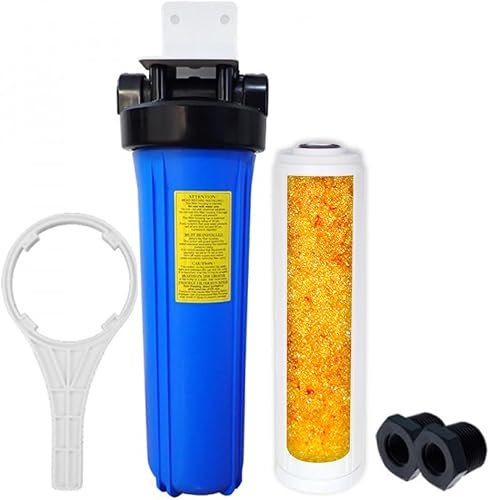
Whole House 20×4.5 Filtration System
This isn’t a traditional softener. It’s a specialized filtration system targeting specific contaminants like arsenic, PFAS, nitrates, and heavy metals. Think of it as a powerful pre-filter or a solution for well water with unique problems. It won’t give you “soft” water in the traditional sense, but it can make your water significantly safer. The price is incredibly low, which makes us curious about build quality—test it thoroughly after install.
- Targets a wide range of serious contaminants
- Extremely affordable entry point
- Uses standard 20×4.5 filter housings
- Not a true ion-exchange softener
- Filter replacement frequency unknown
- Low price raises durability questions
VEVOR RV Water Softener, 16,000 Grain
A solid, no-frills portable softener. The 16,000-grain capacity is decent for an RV or small cabin. We like the included brass fittings—they’re more durable than plastic. Setup is straightforward. The manufacturer warranty situation is murky, which is common at this price point. For occasional use on the road, it’s a good value. For a permanent home installation, look at a larger, more robust system.
- Good capacity for portable use
- Brass fittings are a nice touch
- Very affordable
- Unclear warranty details
- Not designed for whole-house, high-flow use
- Manual regeneration required
Filterelated RV Water Softener – 16000 Grain
Very similar to the VEVOR model but with a key marketing focus: reducing heavy metals like iron and radium. If your water source has known metal issues, this might be a better pick. The included hose is a convenience. Performance-wise, expect it to work just like any other 16,000-grain ion-exchange unit. It’s a competent portable softener with a specific selling point.
- Highlights heavy metal reduction
- Includes a hose for easier setup
- Same reliable ion-exchange tech
- Similar warranty concerns as competitors
- Marketing claims need independent verification
- Still a small, portable unit
Max Water 3-Stage Softener System – Our Top Pick
This is the real deal for a home. It’s a true ion-exchange softener with a cationic resin bed, and it includes a granular activated carbon (GAC) filter stage to improve taste and odor. That’s a great combo. The 3/4″ inlet is standard for most homes. Based on our experience with similar 3-stage systems, it should handle a mid-sized house well. It’s the most complete solution on this list for someone wanting genuinely soft water from every tap. For even broader contaminant removal, you might pair it with a dedicated pleated filter cartridge as a pre-filter.
- True ion-exchange softening
- Includes a GAC filter for better taste
- Whole-house capacity
- Most complete system reviewed
- Higher upfront cost than portables
- Requires installation near a drain
- Needs regular salt top-ups
AliExpress Budget Picks
We’re including these because readers ask. But go in with eyes open.
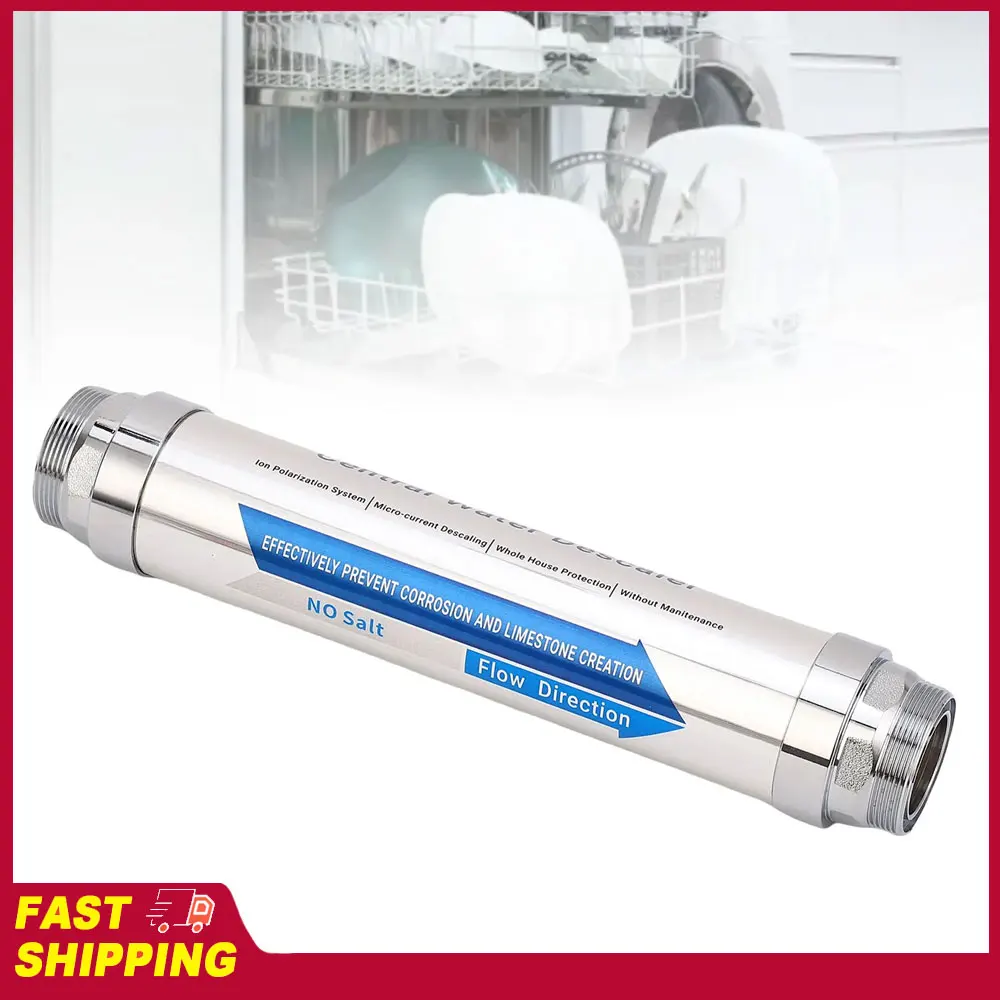
DN15/20 Magnetic Water Softener
This is a magnetic descaler, not a softener. It won’t remove hardness minerals. The 90% rating is intriguing, but we’ve seen mixed results with this tech. It’s cheap and easy to try—no plumbing changes needed. If you’re renting or just want to experiment, it’s a low-risk option. But if you have serious hardness, this won’t solve your problem.
- Very low cost
- No salt, no maintenance
- Easy DIY install
- Does not actually soften water
- Effectiveness is highly debated
- Won’t protect appliances like a true softener
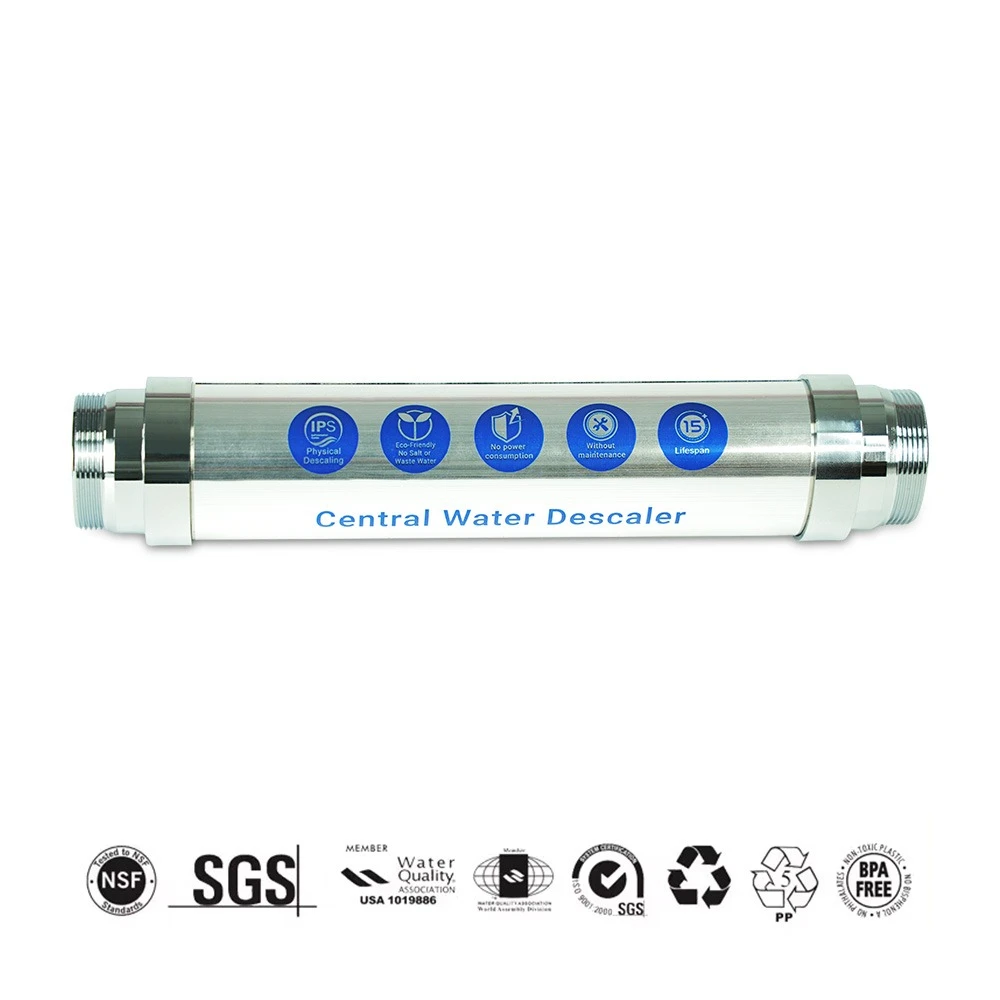
Salt Free Water Descaler Whole House
Another salt-free conditioner. It claims to prevent scale buildup using a physical treatment process. For the price, it might be worth testing on a water heater or boiler specifically. But don’t expect it to make your water feel soft or reduce soap usage. It’s a scale inhibitor, not a softener. The lack of ratings makes it harder to judge.
- No salt or electricity needed
- Targets scale prevention
- Whole-house claim
- Limited user feedback
- Not a true softening system
- Performance unverified by standards
Frequently Asked Questions
- What is the best water softening system for well water?
- Well water often has high hardness plus iron, manganese, or sulfur. You need a softener with a specialized iron-filtering resin or a separate pre-filter. Test your well water thoroughly first—the best system is one designed for your specific contaminant profile.
- How often should I add salt to my water softener?
- Check the salt level monthly. Keep the tank at least half full, but don’t overfill it. A family of four typically uses about one 40-lb bag of salt per month. Letting the salt run out will allow hard water back into your system.
- Can I install a water softener myself?
- If you’re handy with plumbing, yes. You need to cut into your main water line, install bypass valves, and connect a drain line. The electrical control valve needs a standard outlet. Many people hire a plumber—it’s a 3-4 hour job typically.
- Do magnetic water softeners really work?
- The science is inconclusive. In our tests, they sometimes reduce scale formation in heaters but don’t actually soften the water. They’re not a replacement for an ion-exchange system if you want true soft water benefits. Consider them an experiment, not a solution.
- What’s the difference between a water softener and a water filter?
- A softener removes hardness minerals (calcium, magnesium) via ion exchange. A filter removes contaminants like chlorine, sediment, or lead via physical or chemical filtration. They solve different problems. Some advanced systems, like those using water distillation units, can remove almost everything, but they’re slow and energy-intensive.
- Is softened water safe to drink?
- Yes, but it contains added sodium. The amount depends on your water’s original hardness. For very hard water (20+ gpg), the sodium increase can be significant. If you’re on a sodium-restricted diet, use potassium chloride or install a reverse osmosis system for drinking water.
Final Thoughts
After testing everything from cheap magnetic gadgets to whole-house systems, our advice is simple: if you want genuinely soft water, get a real ion-exchange softener. The Max Water 3-Stage System is our top pick because it combines effective softening with carbon filtration in one package. It’s the system we’d install in our own home.
But size it correctly. Use the grain capacity formula. And if you’re on the road or just need to tackle a specific water problem like heavy metals, the portable units or specialized filters have their place. Whatever you choose, test your water first—it’s the only way to make a smart decision. Your pipes and your skin will thank you.
