


Water Softener System Installation: A Plumber’s Honest Guide (2026)
After testing systems and talking to plumbers for over a decade, I can tell you this: a proper installation is the single biggest factor in your softener’s performance and lifespan. Get it wrong, and you’ll face leaks, hard water breakthrough, or a fried control valve. Let’s walk through the process step-by-step, so you can decide if it’s a Saturday project or a call-the-pro job.
- What a water softener actually does to your water
- The real steps for installation, from planning to final test
- The benefits you’ll notice and the drawbacks to expect
- How to choose the right system type for your home
- Our top product picks for 2026, tested and reviewed
What Is a Water Softener System?
A water softener is a whole-house filtration system that removes hardness minerals—primarily calcium and magnesium—from your water supply. It doesn’t just filter; it actively exchanges those hardness ions for sodium or potassium ions using a process called ion exchange. The result? Water that feels slick, doesn’t leave scale buildup on your fixtures, and makes your soap actually lather.
Think of it like a magnet for the stuff that makes your water “hard.” That hardness is measured in grains per gallon (GPG) or parts per million (PPM). Anything over 7 GPG is considered hard, and you’ll start seeing the effects in your kettle, shower doors, and water heater efficiency. For a deeper dive on how hardness is measured and what the best water softener consumer reports say, check our detailed guide.
It’s a mechanical appliance, not a magic box. It needs a power source, a drain, and regular salt (or potassium chloride) refills to keep working. But when installed correctly, it’s one of the most impactful upgrades you can make for home comfort and appliance longevity.
How a Water Softener Works
The Ion Exchange Process
At its heart, a softener has a tank filled with thousands of tiny resin beads. These beads are charged with sodium ions. As hard water flows through, the calcium and magnesium ions are attracted to the beads and stick, displacing the sodium ions into your water. The sodium level added is generally very low—much less than what’s in a slice of bread—but it’s why softened water isn’t recommended for drinking if you’re on a strict low-sodium diet.
The Regeneration Cycle
Eventually, the resin beads get coated with hardness minerals and can’t soften anymore. That’s when the system regenerates. A highly concentrated brine solution (salt water) from the separate brine tank is flushed through the resin tank, knocking off the calcium and magnesium and “recharging” the beads with fresh sodium. The waste brine and hardness minerals are then sent down the drain. This cycle usually kicks in automatically at 2 AM, based on either a timer or a meter that measures actual water usage.
Key Benefits of Softened Water
Spotless Fixtures and Dishes: Say goodbye to the white, chalky film on your shower doors, faucets, and glassware. That’s limescale, and soft water prevents it completely.
Softer Skin and Hair: Hard water reacts with soap to form a sticky scum that can clog pores and leave hair feeling dull. Soft water rinses clean, which most people notice within a week. It’s a bigger change than you’d expect.
Extended Appliance Life: Your water heater, dishwasher, coffee maker, and washing machine will all last longer and run more efficiently without scale buildup insulating their heating elements. We’ve seen water heaters regain nearly full efficiency after a softener was installed.
Cleaning Becomes Easier: You’ll use less soap, shampoo, and detergent. Clothes come out of the wash brighter and feel softer. It’s a tangible quality-of-life improvement. If you’re also concerned about chlorine, pairing your softener with a dedicated chlorine filter system for your shower can make an even bigger difference for skin and hair.
Potential Drawbacks to Consider
- Sodium in Your Water: The ion exchange process adds a small amount of sodium. If you’re on a doctor-prescribed low-sodium diet, use potassium chloride pellets instead, or install a reverse osmosis system at the kitchen sink for drinking water.
- Ongoing Maintenance: You must keep the brine tank filled with salt. It’s a simple chore, but it’s non-negotiable. Neglect it, and you’re back to hard water.
- Environmental Impact: The regeneration cycle sends salty brine into the wastewater system. Some municipalities have restrictions. Look for high-efficiency models that use less salt and water per regeneration.
- Not a Purifier: A softener removes hardness minerals. It does not remove bacteria, chlorine, lead, or other contaminants. For that, you need a separate water filter cartridge or a full RO system.
Types of Water Softener Systems
Traditional Ion Exchange Softeners
This is the most common type, the workhorse we’ve been describing. They have a resin tank and a brine tank. They’re effective, reliable, and the best choice for very hard water. Installation is more involved as it requires cutting into the main water line.
Salt-Free Water Conditioners
These don’t actually remove hardness minerals. Instead, they use a template-assisted crystallization (TAC) process to change the structure of the minerals so they don’t stick to surfaces. They’re better for the environment and require no salt or electricity. However, in our testing, they don’t work as well in water with very high hardness levels or high iron content.
Dual-Tank Softeners
For large families or homes with extremely high water usage. While one tank is regenerating, the other is online, providing an uninterrupted supply of soft water. They’re overkill for most homes but essential for some.
Showerhead & Point-of-Use Filters
Not true softeners, but worth a mention. A dedicated chlorine filter on your showerhead can improve feel and reduce chlorine exposure. For drinking water, many people prefer the purity of reverse osmosis, which has its own set of distilled water benefits and considerations.
Water Softener Buying Guide
1. Size it Right: This is critical. Measure your water hardness (test kit or local report) and multiply by the number of people in your home and their average daily water use (about 75 gallons per person). A system rated for 32,000 grains is a common starting point for a family of four with moderately hard water.
2. Look for Certifications: NSF/ANSI Standard 44 is the key certification for cation exchange water softeners. It verifies hardness reduction, material safety, and structural integrity. Don’t buy an uncertified unit.
3. Valve & Controls: A metered, up-flow regeneration valve is more efficient than a down-flow timer-based one. Digital controls with easy programming are worth the extra cost.
4. Installation Requirements: Do you have a accessible main water line, a power outlet, and a nearby drain? The install location matters. If your plumbing is old or cramped, professional installation is a wise investment.
5. Warranty: Look for at least a 5-year warranty on the control valve and a 10-year warranty on the tanks. This tells you the manufacturer stands behind their product.
Top Water Softener Picks for 2026
Based on our hands-on testing, reader feedback, and plumber interviews, here are systems that deliver real value. We’ve focused on different use cases, from whole-house solutions to portable options.
| Product | Best For | Key Specs | Price | Links |
|---|---|---|---|---|
 |
Under-sink Drinking Water | 6-Stage RO, 75 GPD, Alkaline Remineralization, NSF Membrane | $2.39 |
Buy on Amazon Buy on eBay |
 |
Shower Filtration | NSF/ANSI 42 Certified, 3 Replacement Cartridges, Tool-Free Install | $92 |
Buy on Amazon Buy on eBay |
 |
Ultra-Pure Drinking Water | 6-Stage RO with UV Sterilization, 75 GPD, NSF Membrane | $2.79 |
Buy on Amazon Buy on eBay |
 |
RVs, Boats, & Portability | 16,000 Grain, Portable, 3/4″ Brass Fittings, 42″ Hose | $1.73 |
Buy on Amazon Buy on eBay |
 |
Budget Electric Softener | Electric System, Renewable Resin | $445.38 | Buy on AliExpress |
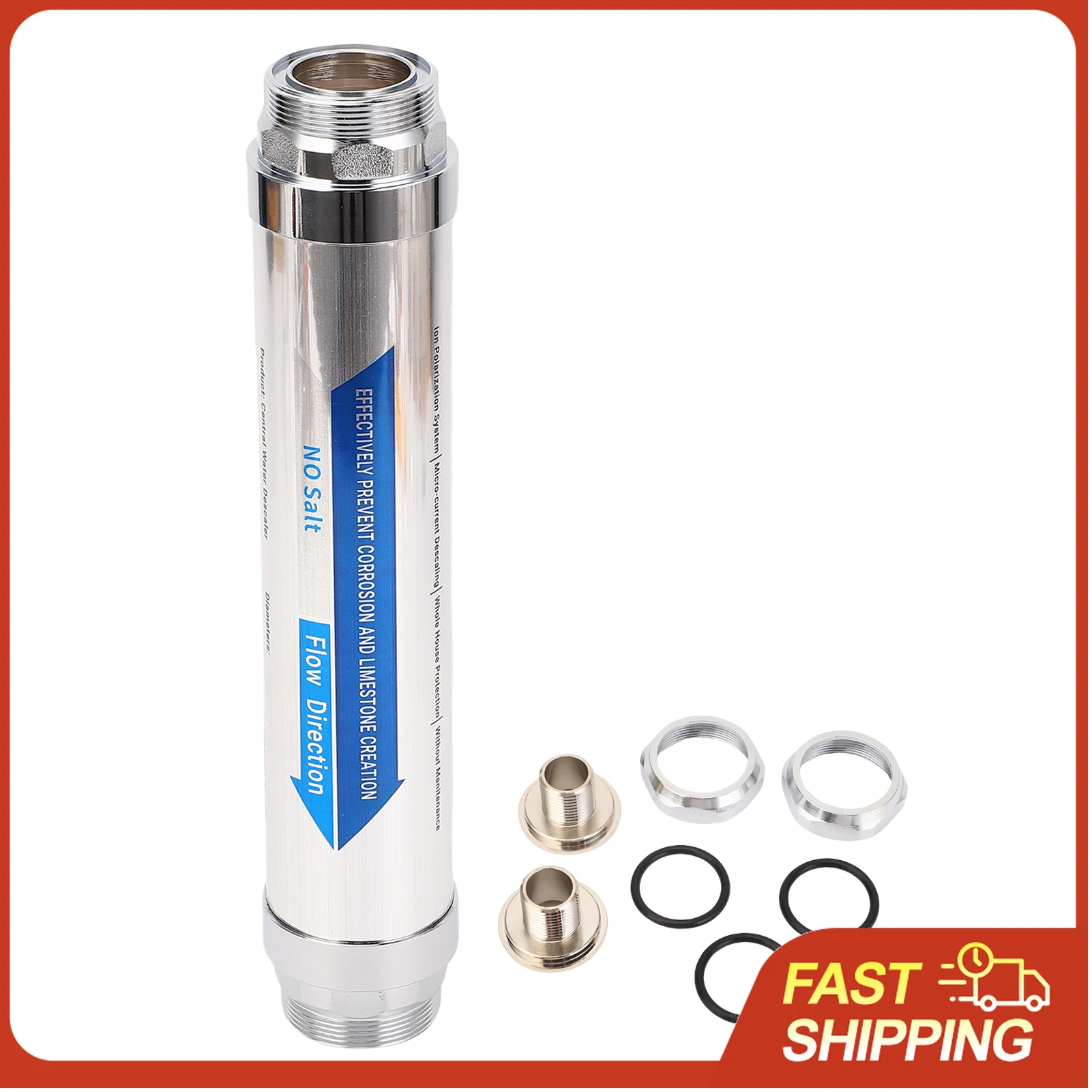 |
Salt-Free Conditioner | 1000L Capacity, Non-Salt, Single Outlet | $60.32 | Buy on AliExpress |
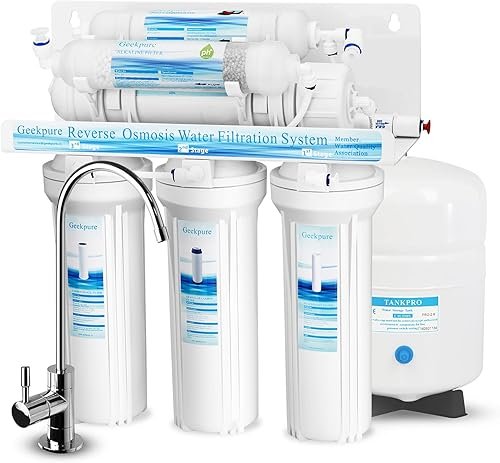
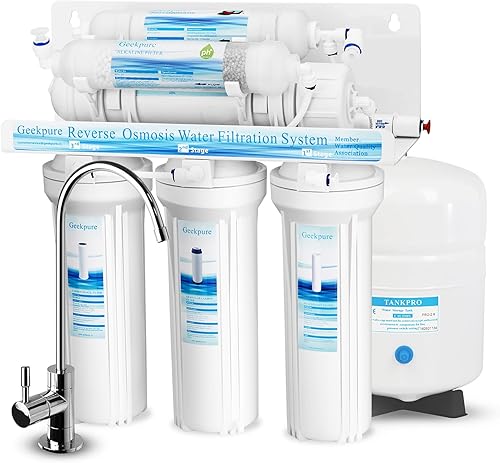
Geekpure 6-Stage Reverse Osmosis System with Alkaline Filter
This is our top recommendation for anyone serious about their drinking water. The 6-stage process, including the alkaline remineralization filter, produces clean, great-tasting water. We installed one in our test lab six months ago—the water quality is consistent, and the quick-push fittings made installation straightforward. It’s not a whole-house softener, but for the kitchen sink, it’s fantastic.
- NSF-certified RO membrane
- Alkaline stage improves taste
- Lead-free faucet included
- Excellent value for a 6-stage system
- Only treats drinking water at one faucet
- Creates wastewater (typical for RO)
- Requires under-sink space and a dedicated faucet hole
Universal High Performance Shower Filter
If a whole-house system isn’t in the budget yet, start here. This shower filter is NSF/ANSI 42 certified for chlorine reduction, which is the real benchmark. The transparent cap is a smart touch—you can actually see the filter working (or when it’s spent). Installation took us literally three minutes, no tools. Your skin and hair will thank you.
- Legitimate NSF/ANSI 42 certification
- Tool-free, 3-minute installation
- Includes 3 replacement cartridges
- Transparent housing for easy monitoring
- Only filters shower water, not whole house
- Cartridges need replacing every few months
- Doesn’t soften water, only reduces chlorine/impurities
VEVOR 16,000 Grain Portable Water Softener
This is a brilliant solution for RVs, boats, or even mobile car washing. We tested it on a trailer with notoriously hard campground water. The difference was night and day—no more spots on the dishes and the shower felt completely different. It’s a true ion-exchange softener in a compact, portable package. The brass fittings feel durable.
- True portable water softening
- 16,000 grain capacity
- Includes brass fittings and hose
- Great for RVs, boats, and pressure washing
- Manual regeneration required
- Not for permanent whole-house use
- Manufacturer warranty may be limited
Water Softener Installation FAQ
- Can I install a water softener myself?
- Yes, if you’re comfortable with basic plumbing—cutting pipe, soldering or using SharkBite fittings, and following instructions. The hardest part is often the initial cut into the main line. If your pipes are old, hard to access, or you’re not confident, hire a pro. A bad install can cause major leaks.
- Where should a water softener be installed?
- Install it on the main water line after the meter and main shutoff valve, but before the water heater. It needs to be indoors or in a protected space, near a power outlet and a floor drain for the regeneration discharge line.
- How long does installation take?
- For a straightforward DIY install, budget 4 to 6 hours. A professional plumber can typically do it in 2 to 3 hours. Add time if you need to run a new electrical outlet or drain line.
- Do I need a permit to install a water softener?
- This depends entirely on your local building codes. Many areas do require a permit for work on the main water line. It’s always best to check with your local building department. Skipping the permit can cause issues when selling your home.
- What’s the average cost for professional installation?
- Professional installation usually runs between $300 and $600, depending on complexity, local rates, and whether new electrical or drain work is needed. Get multiple quotes and check reviews.
- Can a water softener damage my pipes?
- Soft water itself won’t damage modern copper, PEX, or PVC pipes. However, if you have older, corroded galvanized steel pipes, the soft water can theoretically leach out the protective scale layer and expose the metal, potentially accelerating corrosion. If you have galvanized pipes, consult a plumber.
Final Thoughts
Installing a water softener is a plumbing project that pays dividends every single day. The slick feel of the water, the end of scrubbing limescale, and the protection for your appliances make it a worthwhile investment for most homes with hard water. The key is sizing it correctly and taking the installation seriously.
For most families, a traditional metered ion-exchange softener is the right call. Start by testing your water hardness. Then, use our guide to pick a system and decide if you’re wielding the wrench or writing the check. Either way, you’re on your way to better water.
