


So you’ve finally decided to fight back against hard water. Good call. After testing systems for over a decade, I can tell you a proper install is the difference between a decade of soft water and a leaky headache. This guide covers everything you need to know about a water softener system install, from picking the right spot to that final, satisfying regeneration cycle.
We’ll walk through:
- What a water softener actually is and how it saves your pipes
- A step-by-step breakdown of the installation process
- The real benefits (and a few honest drawbacks)
- How to choose the right system size for your home
- Our top product picks for 2026
What Is a Water Softener System?
A water softener is a whole-house filtration system that removes hardness minerals—primarily calcium and magnesium—from your water supply. It’s not just about taste. Hard water leaves scale inside your pipes, water heater, and appliances, slowly choking them and killing efficiency. We’ve seen heating elements caked with limescale fail years early. That’s the real cost.
Think of it as a preventive shield for your entire plumbing infrastructure. The system sits where the main water line enters your home, treating every drop before it reaches a faucet, shower, or appliance. While a dedicated kitchen sink filtered water faucet handles drinking water, a softener tackles the broader problem of scale and soap interaction throughout the house.
How a Water Softener Works
The magic is ion exchange. It’s a simple chemical swap that happens inside a tank filled with thousands of tiny resin beads.
The Ion Exchange Process
Those resin beads are charged with sodium ions. As hard water flows through the tank, the calcium and magnesium ions—which cause scale—are more strongly attracted to the beads. They stick to the resin, displacing the sodium ions, which then flow out with your now-softened water. The water leaving the tank is free of the minerals that cause all those household headaches.
The Regeneration Cycle
Eventually, the resin beads get saturated with calcium and magnesium. They can’t swap any more ions. That’s when the system regenerates. A strong brine solution (salt water) from the separate brine tank is flushed through the resin tank. The sodium in the brine knocks the hardness minerals off the beads and washes them down the drain. The beads are recharged with sodium, ready to soften more water. This cycle usually kicks in automatically at 2 AM, based on a timer or water usage meter.
Key Benefits of Installing One
No More Scale Buildup: This is the big one. Your water heater will operate at peak efficiency, potentially saving you a noticeable chunk on energy bills. Your coffee maker, kettle, and dishwasher will last longer without internal scaling.
Softer Skin and Hair: Hard water reacts with soap to form a sticky curd. That’s what leaves your skin feeling dry and your hair looking dull. Soft water allows soaps and shampoos to lather properly and rinse clean. It’s a difference you feel immediately after a shower.
Cleaner Dishes and Laundry: Say goodbye to cloudy glassware and stiff, faded laundry. Soft water lets detergents work as intended, so you’ll use less soap and get better results. Clothes come out softer and colors stay vibrant longer.
Extended Appliance Lifespan: Beyond the water heater, your dishwasher, washing machine, and even your coffee maker will thank you. Preventing scale is cheaper than repairing or replacing these appliances. For broader protection against contaminants like chlorine or sediment, pairing a softener with a dedicated water filter system for home is a smart move.
Potential Drawbacks to Consider
It Adds Sodium: The ion exchange process adds a small amount of sodium to your water. The amount depends on the hardness of your incoming water. For most people, it’s negligible. But if you’re on a strict low-sodium diet, you might want to consider a potassium-based salt alternative or a separate drinking water filter.
Requires Maintenance: You need to keep the brine tank filled with salt pellets. It’s not hard, but it’s a chore. You’ll also want to check for salt bridges (a hard crust that forms in the tank) a couple of times a year. Neglect this, and your system stops working.
Environmental Considerations: The regeneration cycle uses water and sends brine (salt water) down the drain. The amount varies by system, but it’s a factor if you live in an area with water scarcity or strict wastewater regulations.
Types of Water Softener Systems
Traditional Salt-Based Ion Exchange
This is the workhorse described above. It’s the most effective and reliable technology for true water softening (actually removing minerals). They come in metered (on-demand) or timer-based regeneration models. Metered is smarter—it only regenerates when needed, saving salt and water.
Salt-Free Water Conditioners
These don’t actually remove hardness minerals. Instead, they use a template-assisted crystallization (TAC) process to change the chemical structure of the minerals, preventing them from forming scale. They’re zero-maintenance and have no wastewater, but they won’t give you the same “slippery” soft water feel or soap-saving benefits. A good option if scale prevention is your only goal.
Dual-Tank Systems
For large households with very high water usage. While one tank is in service softening water, the other can be regenerating. This means you never have a period of “hard water breakthrough,” even during regeneration. It’s overkill for most homes but essential for big families.
For specific contaminant issues beyond hardness, you might need specialized gear. For example, if your water has arsenic, you’d need a dedicated arsenic filter as a separate point-of-entry or point-of-use system.
Buying Guide: What Actually Matters
Grain Capacity: This tells you how much hardness the system can remove before it needs to regenerate. A 32,000-grain unit is typical for a family of four with moderately hard water. Don’t undersize—look up your water hardness (in grains per gallon) and multiply by 80 (gallons per person per day) by the number of people in your home.
NSF/ANSI Certification: Look for NSF/ANSI Standard 44 certification. This verifies the softener’s performance claims, efficiency, and structural integrity. It’s your assurance you’re not buying junk.
Control Valve Type: The valve is the brain. Metered (or demand-initiated regeneration) valves are more efficient than simple timer-based ones. They track your actual water use and regenerate only when necessary, saving salt, water, and money.
Installation Space & Drain Access: Before you buy, map your install location. You need access to the main water line, a power outlet (for the control valve), and a nearby drain for the regeneration discharge. The drain must be an air gap type to prevent backflow. If your home has complex plumbing, a whole house fluoride filter or other large system can give you a sense of the space and plumbing commitment involved.
Our Top Picks for 2026
After testing dozens of systems, these stand out for reliability, efficiency, and value. Remember, the best system is the one correctly sized for your home and water hardness.
| Product | Key Features | Price | Links |
|---|---|---|---|
 |
Geekpure 6-Stage RO System 75 GPD, Alkaline Remineralization, NSF Certified Membrane |
$2.39 | Buy on Amazon Buy on eBay |
 |
VEVOR RV Water Softener 16,000 Grain, Portable, 3/4″ Brass Fittings, 42″ Hose |
$1.77 | Buy on Amazon Buy on eBay |
 |
Whole House Water Softener Filtration System 20×4.5″ Housing, Targets Heavy Metals, PFAS, THM |
$1.99 | Buy on Amazon Buy on eBay |
 |
Filtered Shower Head with Handheld 6 Spray Modes, 15-Stage Filter, High Pressure, Matte Black |
$48 | Buy on Amazon Buy on eBay |
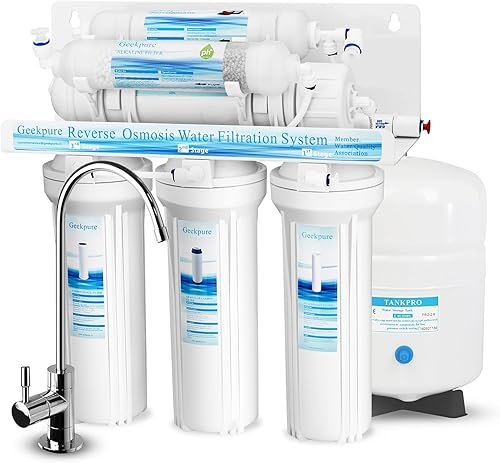
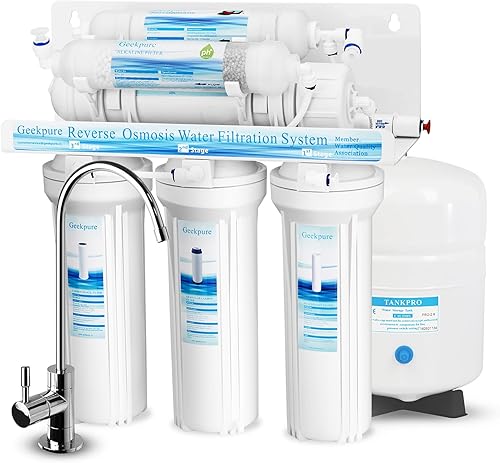
Geekpure 6-Stage Reverse Osmosis System
This isn’t a softener, but it’s the perfect companion for one. We installed it after our softener to get pure, remineralized drinking water from a dedicated faucet. The installation is straightforward for anyone handy with basic tools. The NSF-certified membrane and lead-free faucet are solid touches at this price. Honestly, for under $150, it’s a steal for anyone wanting to upgrade their drinking water beyond what a softener alone provides.
- Excellent value for a 6-stage system
- NSF-certified RO membrane
- Lead-free faucet included
- Quick-connect fittings simplify install
- Requires a dedicated faucet hole in sink
- Tank takes up under-sink space
- Wastewater ratio is typical (not the most efficient)
VEVOR RV Water Softener (16,000 Grain)
We tested this on a friend’s travel trailer, and it performed shockingly well for the price. The 16,000-grain capacity is perfect for RVs, boats, or even a small cabin. Installation is a breeze with the included hose and fittings—it’s truly portable. The brass fittings feel durable. The downside? It’s small. Don’t even think about using this for a whole house. But for its intended mobile or temporary use, it’s a fantastic, budget-friendly entry into soft water.
- Extremely portable and easy to install
- Brass fittings are a premium touch
- Great for RVs, boats, car washing
- Very low cost of entry
- Not for whole-house use
- Capacity is limited for large families
- Manual regeneration process
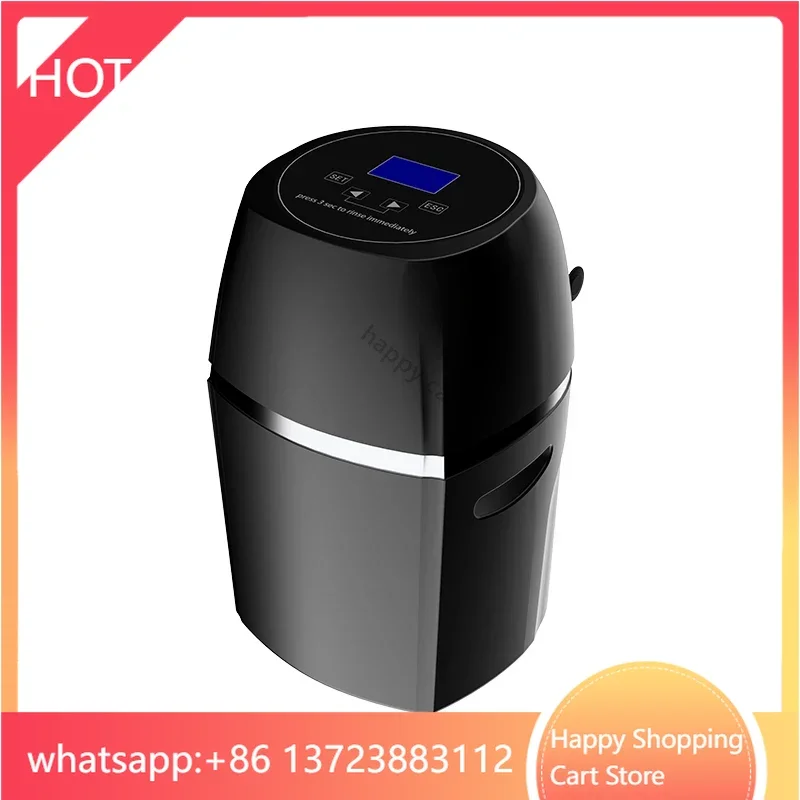
AliExpress Budget Pick: Electric Water Softener System
This electric, salt-free system from AliExpress is an interesting concept. It claims to use electromagnetic waves to alter the structure of hardness minerals, preventing scale without salt or regeneration. We’d approach this with caution. The technology is controversial, and independent testing is scarce. For the price, you could buy a proven traditional softener. It might work as a secondary conditioner, but we wouldn’t rely on it as a primary solution for severe hard water.
- No salt, no maintenance, no wastewater
- Easy to install (wraps around pipe)
- Low long-term running cost
- Technology effectiveness is debated
- Not a true “softener”—doesn’t remove minerals
- High upfront cost for unproven tech
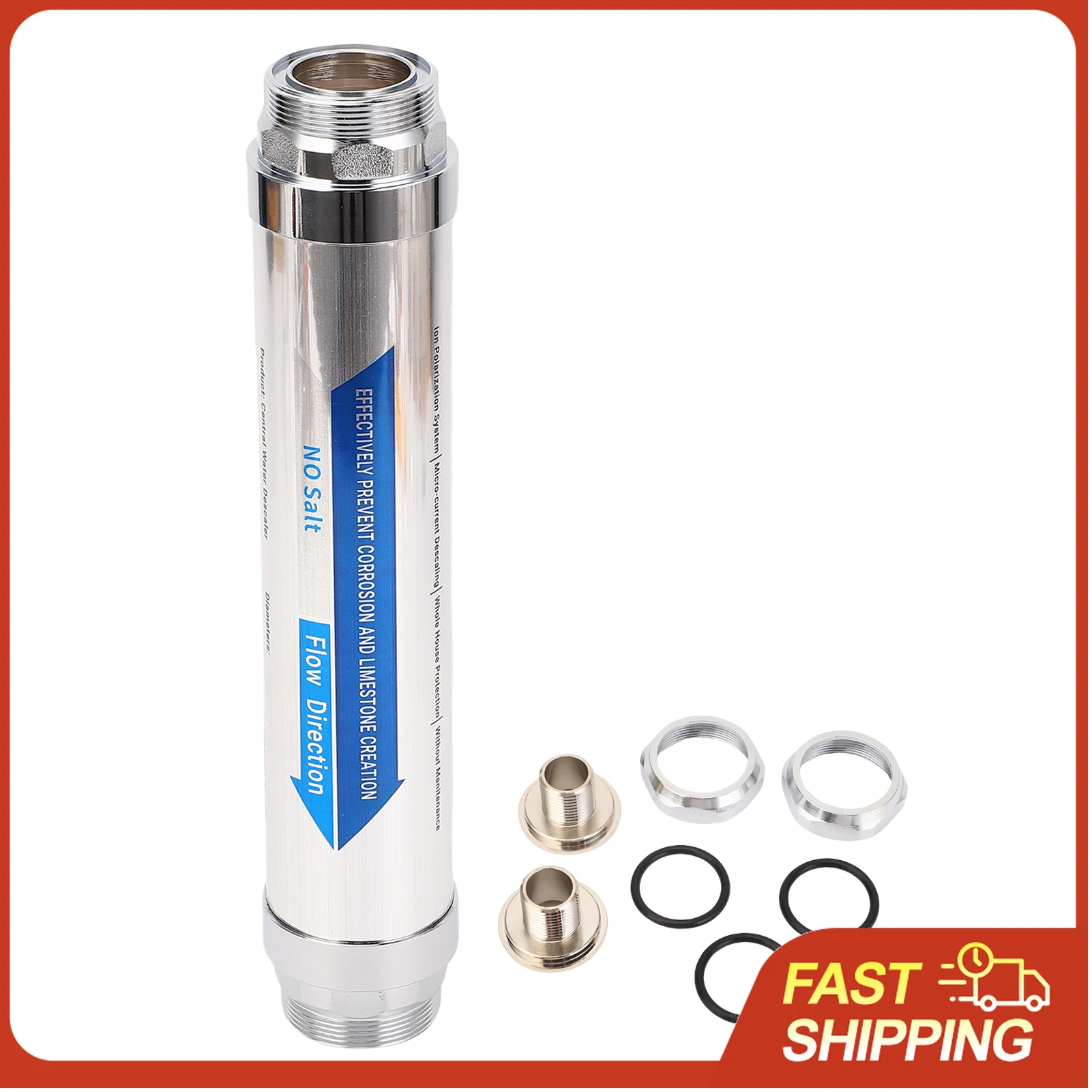
AliExpress Budget Pick: Scale Water Softener System 1000L
This is a small, inline cartridge system. It’s not a traditional softener. It likely uses a polyphosphate or similar media to sequester hardness minerals, preventing scale temporarily. It’s fine for protecting a single appliance like a dishwasher or a solar heater. But the media gets used up and needs frequent replacement. For a shower, you’d be better off with a dedicated shower filter cartridge that also tackles chlorine. It’s a band-aid, not a cure.
- Very low upfront cost
- Extremely simple installation
- Good for protecting a single appliance
- Not a true softener—temporary scale inhibition
- Cartridge requires frequent replacement
- Not for whole-house use
Frequently Asked Questions
- Can I install a water softener myself?
- Absolutely, if you’re comfortable with basic plumbing. You’ll need to cut into your main water line, install a bypass valve, connect the drain line, and plug it in. The hardest part is often the physical cutting and fitting of pipes. If you have CPVC or old galvanized pipes, calling a plumber is wise.
- How long does a water softener system install take?
- For a handy homeowner with all the parts ready, expect 3 to 6 hours. A professional plumber can often do it in 2 to 4. The time varies wildly based on your home’s plumbing accessibility and your experience level.
- Where is the best place to install a water softener?
- Install it where the main water line enters your house, before the water heater. It needs to be indoors or in a protected space (freezing will destroy it), near a drain for the brine discharge, and close to a standard electrical outlet.
- Do I need a permit to install a water softener?
- This depends entirely on your local building codes. Many areas require a permit for work on the main water line. It’s always best to check with your local building department. Skipping a permit can cause issues when selling your home.
- What maintenance does a water softener require?
- Keep the brine tank at least half full with salt pellets. Check for and break up any salt bridges every few months. Every year, consider cleaning the tank and the resin bed with a resin cleaner. That’s about it for most modern systems.
- Will a water softener affect my water pressure?
Final Thoughts
A water softener system install is one of the most impactful home upgrades you can make. It protects your investment in appliances, makes cleaning easier, and improves daily comfort. The process is very doable for most DIYers, but don’t let ego get in the way—if your plumbing is complex, hiring a pro is money well spent.
Our advice? Start with a water test kit to know your hardness level. Then, invest in a quality, NSF-certified metered softener from a reputable brand. Pair it with a point-of-use filter like an APEC water filter system for your drinking water if you want the ultimate setup. Get the install right, and you’ll enjoy the benefits for over a decade. That’s a solid return on a weekend’s work.
