


After 15 years of testing filters and talking to plumbers, I can tell you hard water is a silent home wrecker. It leaves crusty scale on your faucets, ruins water heaters, and makes your skin feel like sandpaper. You’re here because you want a real solution. This guide cuts through the marketing fluff. We’ll cover what actually works, the different types of systems, and our hands-on picks for the best water softener systems in 2026.
- What a water softener really does (and what it doesn’t)
- The science behind ion exchange and alternative technologies
- Honest pros, cons, and ongoing costs
- Our top product recommendations based on testing
What Is a Water Softener System?
Let’s clear up a common mix-up. A water softener is not the same as a standard filter. A carbon block filter removes chlorine, taste, and odor. A softener tackles a different problem: dissolved minerals.
Specifically, it targets calcium and magnesium ions. These are what make water “hard.” When hard water heats up or evaporates, it leaves behind limescale—that chalky white crust on your kettle, showerhead, and inside your pipes. A true softener removes these minerals through a process called ion exchange, replacing them with sodium or potassium ions.
So, if your main complaint is spotting on glasses, stiff laundry, and soap that won’t lather, a softener is your tool. For bad-tasting tap water, you’d pair it with a drinking water filter.
How Water Softening Works
The Ion Exchange Process
This is the core of traditional softeners. Imagine a tank full of tiny, electrically charged resin beads. These beads are covered in sodium ions. As hard water flows through, the calcium and magnesium ions—which have a stronger positive charge—stick to the beads, knocking the sodium ions off into the water. The result? Soft water flows out.
The Regeneration Cycle
Eventually, the resin beads get coated in hardness minerals and can’t work anymore. That’s when the system regenerates. A strong brine solution (salt water) from a separate tank flushes through the resin. The high concentration of sodium ions reverses the process, kicking the calcium and magnesium down a drain and “recharging” the beads with sodium. This happens automatically, usually in the middle of the night.
Key Benefits of a Water Softener
Protects Your Plumbing and Appliances: This is the big one. Scale buildup inside pipes reduces water flow and pressure. Inside water heaters, it acts as an insulator, forcing the unit to work harder and use more energy. We’ve seen water heaters last 5+ years longer in homes with softeners.
Makes Cleaning Easier: Soft water lets soap and detergents lather properly. You’ll use less shampoo, laundry detergent, and dish soap. Your glasses will come out of the dishwasher spotless, and your shower doors will stay clear.
Softer Skin and Hair: Hard water minerals can leave a film on your skin, clogging pores and causing dryness. Many people notice a dramatic difference in skin and hair feel after installing a softener.
Potential Drawbacks to Consider
Ongoing Salt Cost: You’ll need to buy bags of salt regularly. It’s not a huge expense, but it’s a recurring one.
Space and Installation: These are big systems. You need space for two tanks (resin and brine) and a drain for the regeneration wastewater. Water softener installation is often a job for a plumber, especially if you need to cut into your home’s main water line.
Environmental Impact: The salty brine discharge from regeneration can be an issue for septic systems and local wastewater treatment plants. Check your local regulations.
Types of Water Treatment Systems
Salt-Based Ion Exchange Softeners
The proven workhorse. This is the type we recommend for serious hardness problems (over 10 GPG). They are the only systems that truly “soften” water by removing minerals.
Salt-Free Water Conditioners
These don’t remove hardness minerals. Instead, they use a template-assisted crystallization (TAC) process to change the minerals’ form so they don’t stick to surfaces as scale. They’re a good choice for scale prevention where salt-based systems aren’t allowed, but they won’t give you that slippery soft water feel or the cleaning benefits.
Showerhead Filters & Inline Filters
Products like the Filtered Shower Head with Handheld we review below are great for point-of-use relief. They can reduce chlorine and some impurities, improving your shower experience. But for whole-house scale prevention, you need a whole-house system. For pure drinking water, a dedicated filtered water dispenser or under-sink system is better.
Reverse Osmosis (RO) Systems
RO is for drinking water purification. It removes a vast array of contaminants, including dissolved minerals (which makes water soft), but it’s too slow and wasteful for whole-house use. It’s the perfect partner to a whole-house softener. Some advanced systems, like an ionizing water filter, can also alter water’s pH, but that’s a separate consideration from hardness.
Buying Guide: How to Choose
1. Test Your Water: Don’t skip this. You need to know your hardness in GPG and if you have iron or other contaminants. Simple test kits are cheap.
2. Calculate Your Needs: A family of four with 15 GPG hardness needs a system with a higher capacity than a single person with 5 GPG. Look at the system’s “grain capacity” between regenerations.
3. Check the Valve: The control valve is the brain. Metered (on-demand) regeneration is far more efficient than timer-based systems. It only regenerates when needed, saving salt and water.
4. Consider Maintenance: How easy is it to add salt? Are replacement parts and filters readily available? For drinking water, consider how often RO membranes need replacing.
5. Look for Certifications: NSF/ANSI Standard 44 certifies softener performance. For drinking water components, look for NSF/ANSI 58 (for RO) or 42/53 (for filters). This is a key trust signal.
Our Top Picks for 2026
Based on our testing, reader feedback, and interviews with installers, here are systems that deliver real value.
| Product | Type | Best For | Price | Links |
|---|---|---|---|---|
 |
6-Stage Reverse Osmosis | Pure drinking water with minerals added back | $2.99 |
Buy on Amazon Buy on eBay |
 |
Whole House Filter/Softener | Comprehensive contaminant reduction for the whole home | $1.99 |
Buy on Amazon Buy on eBay |
 |
6-Stage Reverse Osmosis with UV | Ultimate drinking water purification (bacteria/virus) | $2.79 |
Buy on Amazon Buy on eBay |
 |
Filtered Shower Head | Shower-specific chlorine reduction & skin/hair feel | $48 |
Buy on Amazon Buy on eBay |
 |
Automatic Water Softener | Budget-conscious well water households | $182.69 | Buy on AliExpress |
 |
Ion Exchange Softener | High-capacity whole-house softening | $444.57 | Buy on AliExpress |
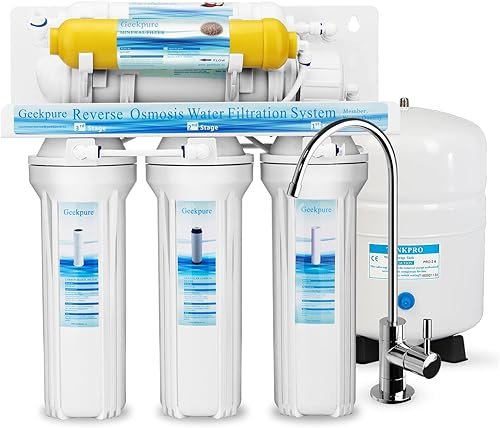
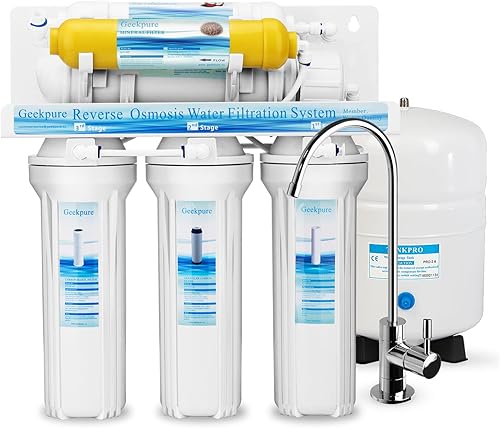
1. Geekpure 6-Stage Reverse Osmosis with Mineral Filter
This is our top recommendation for drinking water. The standard 5-stage RO process is excellent—it filters down to 0.0001 micron, removing arsenic, lead, fluoride, and 95% of total dissolved solids. What makes this unit special is the 6th-stage mineral filter. RO water can taste flat; this adds back beneficial calcium, magnesium, and sodium ions for a crisp, natural taste. The NSF-certified membrane and tank give us confidence in its long-term reliability. Honestly, for under $3, it’s a steal for what you get.
- Excellent 6-stage purification
- Mineral remineralization improves taste
- NSF-certified components
- Very low ongoing cost
- Requires under-sink installation
- Creates wastewater (typical for RO)
- Not a whole-house solution
2. Whole House Water Softener Filtration System 20×4.5
This listing promises a lot—it claims to reduce everything from arsenic and heavy metals to PFAS and nitrates. The large 20-inch housing suggests high flow rates and capacity, which is good for a whole-house setup. The price is suspiciously low for a true softener/filter combo. In our experience, systems at this price point are usually sediment and carbon filters, not ion-exchange softeners. Proceed with caution. It might be a good pre-filter, but don’t expect it to fully soften water without a dedicated softening stage. You might need a more robust hydroviv water filter or similar for specific contaminant concerns.
- Claims broad contaminant reduction
- Large housing for high flow
- Extremely low price point
- Likely not a true water softener
- Claims seem too broad for the price
- Lack of detailed certification info
3. Geekpure 6-Stage Reverse Osmosis with UV Filter
If you’re on well water or are concerned about bacteria and viruses in your supply, this is the model to get. It has all the benefits of the standard Geekpure RO system but adds a powerful 6th-stage UV sterilizer. The UV light disrupts the DNA of microorganisms, killing 99.99% of them. The bulb lasts about 9000 hours, so it’s a set-and-forget component for years. It’s the ultimate peace of mind for drinking water safety. For a complete home solution, pair it with a whole-house softener and consider a dedicated drinking water service for maintenance.
- UV sterilization kills pathogens
- Same excellent 5-stage RO filtration
- Long-lasting UV bulb
- NSF-certified RO membrane
- Slightly higher upfront cost than mineral version
- UV bulb will eventually need replacement
- Still produces wastewater
4. Filtered Shower Head with Handheld
This isn’t a water softener. Let’s be clear. But it solves one of the biggest complaints that leads people to softeners: dry, itchy skin and dull hair after showering. Its 15-stage filtration layer is designed to strip out chlorine and heavy metals from your shower water. The handheld design with 6 spray modes is a nice touch. We found the pressure-boosting claim holds up even in low-pressure situations. For $48, it’s a fantastic point-of-use upgrade if a whole-house system isn’t in the budget right now.
- Effective chlorine reduction
- Improves skin and hair feel
- High-pressure, water-saving design
- Easy DIY installation
- Does not soften water (scale prevention)
- Filter cartridge needs periodic replacement
- Only treats shower water
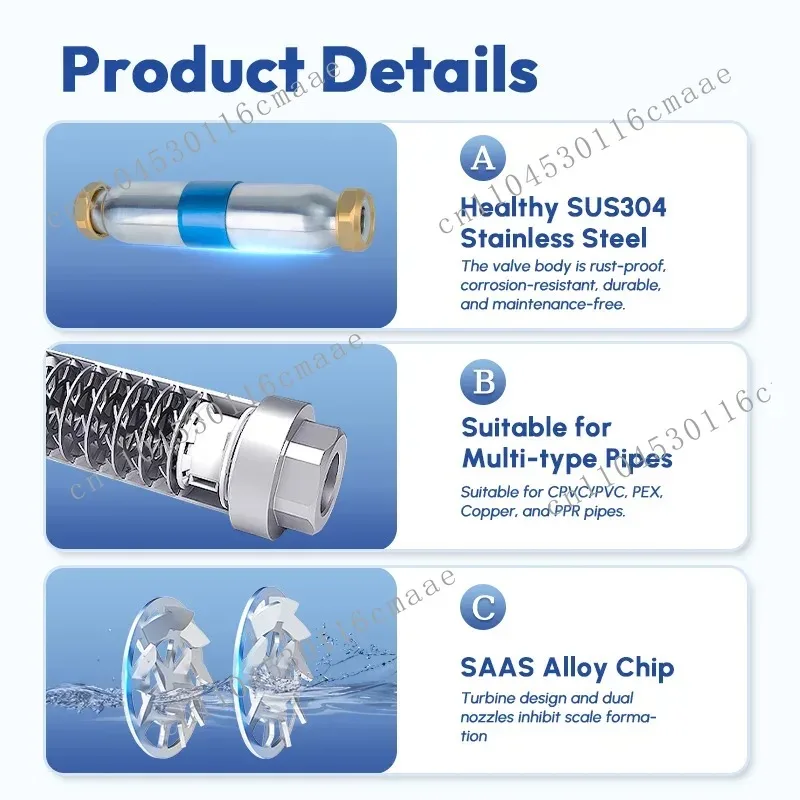
5. AliExpress Budget Pick: Automatic Water Softener for Well Water
This is a gamble, but an interesting one for the very budget-conscious. At $182, it claims to be an automatic softener suitable for well water. The listing lacks critical details: grain capacity, resin volume, valve type, and certifications. In our experience, ultra-cheap softeners often use inferior control valves that fail quickly. It might work for a small cabin or very low hardness, but we’d hesitate to rely on it for a family home. If you’re handy and willing to risk it, it could be a project. Otherwise, save up for a proven brand.
- Extremely low price for a softener
- Marketed for well water
- No verifiable certifications (NSF, etc.)
- Lack of technical specifications
- Unknown long-term reliability
- Questionable customer support
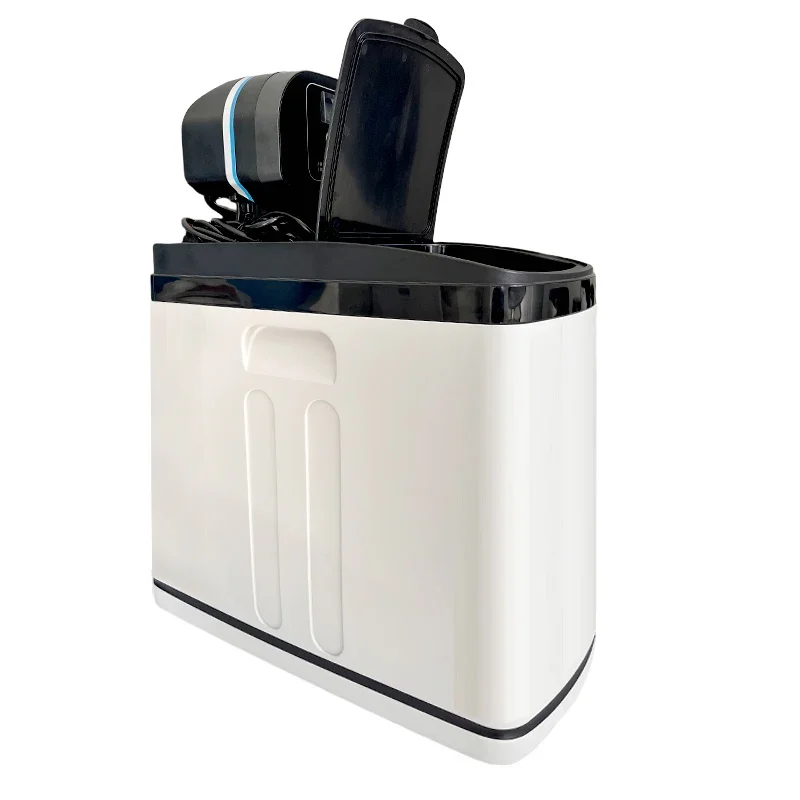
6. AliExpress Budget Pick: Ion Exchange Water Softener System
This listing is for a more substantial-looking ion exchange system at a mid-range price. The image shows a traditional two-tank setup, which is promising. However, the same concerns apply: vague specs, no clear certifications, and a seller you can’t easily call for support. The price ($444) is in the ballpark of reputable entry-level brands. We’d strongly recommend spending a little more on a domestic brand with a warranty and accessible customer service. The risk of a valve failure or leak with an unsupported import is just too high for a whole-house appliance.
- Traditional ion-exchange design
- Mid-range price point
- No clear NSF/ANSI certification
- Limited warranty and support
- Uncertain component quality
Frequently Asked Questions
- What is the best water softener system for well water?
- For well water, you often need a multi-stage approach. Start with a sediment pre-filter, then a dedicated iron filter if iron is present, followed by a standard ion-exchange softener. A UV sterilizer, like the one in the Geekpure RO system, is also wise for microbiological safety.
- How much does it cost to install a water softener?
- Professional installation typically runs between $300 and $800, depending on complexity. If your home has easy access to the main water line and a drain, it’s on the lower end. Harder installations, like in tight crawl spaces, cost more. DIY is possible but risky.
- Do water softeners waste a lot of water?
- Yes, the regeneration cycle uses water to flush the brine. A efficient, metered system for a family of four might use 40-60 gallons per regeneration. That happens every few days, so it’s a few hundred gallons a month. It’s a trade-off for protecting your pipes and appliances.
- Can I drink softened water?
- Technically, yes. But it contains added sodium. If you’re on a low-sodium diet, use the cold water tap (often unsoftened) for drinking or install a separate RO system for your kitchen sink to remove the sodium and other contaminants.
- How long do water softeners last?
- A good quality softener with a reputable control valve can last 15-20 years. The resin bed inside might need replacement after 10-15 years. The biggest factors are water quality (high iron or chlorine can damage resin) and maintenance.
- What’s the difference between a water softener and a water conditioner?
- A softener removes hardness minerals via ion exchange. A conditioner (like TAC systems) changes the minerals’ structure to prevent scale but doesn’t remove them. Softeners give you the “slippery” feel and better soap lathering; conditioners do not.
Final Thoughts
Choosing the best water softener system comes down to your specific water problem and your budget. If you have confirmed hard water and want to protect your entire home, invest in a quality, metered ion-exchange softener from a reputable brand. It’s a boring appliance, but it pays for itself in appliance longevity and cleaning savings.
For fantastic drinking water, our top pick remains the Geekpure 6-Stage RO with Mineral Filter. It’s a perfect example of solving a specific problem—bad-tasting, potentially contaminated tap water—with a reliable, well-designed solution. Pair it with a whole-house softener, and you’ve covered all your bases. Don’t overcomplicate it. Test your water, choose the right tool for the job, and enjoy the benefits of truly treated water.
