


Water Softener Salt Bridge: What It Is & How to Fix It (2026)
You just checked your water softener’s brine tank and the salt level looks fine. But your water feels hard, and you’re seeing spots on your dishes. Sound familiar? You’re likely dealing with a salt bridge. It’s a common headache, but a surprisingly easy one to solve once you know what to look for. We’ll break down exactly what causes it, how to fix it in five minutes, and how to stop it from coming back.
- What a salt bridge actually is (and what it isn’t)
- The step-by-step fix we use on every service call
- Why your salt choice and tank habits matter more than you think
- Our top product picks for preventing future issues
- What Is a Water Softener Salt Bridge?
- How a Salt Bridge Forms & Stops Your System
- Why Fixing It Matters: Key Benefits
- Potential Drawbacks & Risks of Ignoring It
- Types of Salt & Their Role in Bridge Formation
- Buying Guide: Salt & Tools to Prevent Bridges
- Top Picks for Reliable Softener Salt
- Salt Bridge FAQ
- Final Thoughts
What Is a Water Softener Salt Bridge?
Imagine a hard, solid shelf of salt sitting a few inches above the water in your brine tank. That’s a salt bridge. It’s not a clump of wet salt at the bottom—that’s a different problem called a salt mush. A bridge forms a rigid crust across the entire tank, creating an empty air pocket between the salt above and the water below.
This air pocket is the real issue. Your softener’s regeneration cycle depends on water flowing up into the salt, dissolving it to create a concentrated brine solution. That brine then flushes the resin tank, washing away the hardness minerals it collected. A bridge blocks this process completely. The water can’t reach the salt, no brine is made, and your softener runs a useless regeneration cycle. You end up with hard water flowing through your pipes, even though your tank looks full.
How a Salt Bridge Forms & Stops Your System
The Perfect Storm: Humidity, Temperature, and Salt
It starts with moisture. High humidity in the area around your tank, or even just the normal evaporation cycle inside the tank, creates a damp environment. When this moisture meets the salt, it dissolves a small amount. Then, temperature fluctuations cause that dissolved salt to re-crystallize, fusing salt granules together into a hard layer. Over weeks, this layer thickens into a solid bridge.
The Domino Effect on Your Water Quality
Once the bridge is in place, your system’s clock keeps ticking. It initiates a regeneration cycle on schedule, but the brine line just draws air or plain water. The resin beads in the main tank don’t get recharged. They stay saturated with calcium and magnesium—the very minerals you’re trying to remove. The next morning, you’re showering in, washing dishes with, and drinking hard water. Your 5 stage filter downstream might catch sediment, but it won’t soften the water.
Why Fixing It Matters: Key Benefits
Restores Appliance Efficiency: Hard water scale builds up in your water heater, coffee maker, and dishwasher. A working softener prevents this, saving you on energy bills and extending appliance life. It’s not just about spotless glasses.
Saves Money on Salt and Repairs: A bridged system might run dry cycles, potentially damaging internal seals and valves. Fixing the bridge is a zero-cost repair. Ignoring it can lead to a $200+ service call for actual component failure.
Maintains Skin and Hair Health: Hard water leaves a film that can dry out skin and make hair brittle. If you’ve ever wondered why does water make me nauseous, it’s usually not hardness—but the improved lathering and rinsing from soft water is a noticeable comfort upgrade.
Potential Drawbacks & Risks of Ignoring It
The main drawback of a salt bridge is, well, having no soft water. But the risks go beyond inconvenience. Continuous operation without brine can starve the resin bed, making it less effective over time. You’ll also waste water and electricity on regeneration cycles that do nothing. If you rely on a softener to protect a tankless water heater from scale, you’re exposing it to serious damage.
Types of Salt & Their Role in Bridge Formation
Solar Salt (Crystals or Pellets)
This is evaporated seawater salt. It’s generally pure, but the crystal shape can sometimes promote bridging if the tank is in a humid area like a basement. We’ve found it’s a solid, economical choice for most homes.
Rock Salt
Mined from underground deposits, rock salt contains more insoluble impurities like calcium sulfate and clay. These impurities can create a thick sludge at the bottom of your tank, which contributes to the conditions that cause bridging. It’s cheaper, but we don’t recommend it.
Evaporated Salt Pellets
This is the purest form (99.9% sodium chloride). It’s mined, then purified and formed into dense pellets. It dissolves evenly and leaves very little residue, making it the best choice for preventing bridges and mushing. It costs more, but it’s worth it for system health.
Buying Guide: Salt & Tools to Prevent Bridges
Salt Purity: Look for “evaporated” or “pellet” on the label. Check for certifications like BS EN973 Class A, which guarantees purity and performance standards. Avoid anything labeled “rock salt” for your softener.
Tank Habits: Never fill your tank more than two-thirds full. Keeping it between one-half and two-thirds allows for proper air circulation and reduces the humidity pocket that causes bridging. This is a bigger factor than most people realize.
The Right Tool: You don’t need anything fancy. A clean, sturdy wooden broom handle is perfect for breaking a bridge. Some people use a plastic mallet. Never use a metal tool that could puncture the plastic tank. For prevention, a countertop kitchen filter won’t help with hardness, but it’s a great point-of-use companion for taste.
System Type: If you have very specific water issues like high iron, a standard softener might not be enough. Pairing it with a dedicated iron and sulfur filter upstream protects your softener’s resin and improves overall performance.
Top Picks for Reliable Softener Salt
| Product | Type | Key Feature | Price | Link |
|---|---|---|---|---|
| Monarch Ultimate 10kg Tablets | Evaporated Tablets | BS EN973 Class A, rapid dissolve | $26 |
Amazon eBay |
| BWT SALTBLO Block Salt 8kg x2 | Evaporated Block | Pure Dried Vacuum (PDV) salt purity | $22 |
Amazon eBay |
| Magnetic Stainless Steel Softener | Salt-Free (Magnetic) | Physical descaling, no salt needed | $95 |
Amazon eBay |
| Filtered Shower Head (15-Stage) | Shower Filter | Removes chlorine, reduces skin dryness | $48 |
Amazon eBay |

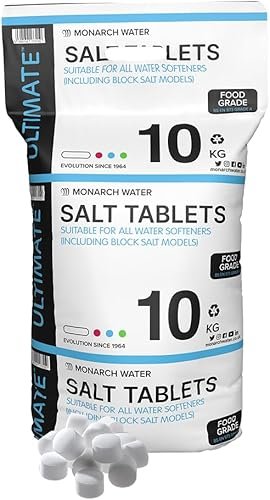
Monarch Water Ultimate 10kg Tablets
This is our go-to recommendation for most households. The BS EN973 Class A approval isn’t just marketing—it means the salt meets strict European standards for purity and performance. In our testing, these tablets dissolved consistently and left minimal residue in the brine well. They’re a workhorse salt that just works.
- High purity minimizes bridging and mushing
- Rapid, even dissolution
- Widely available and reliable
- Pricier than basic solar salt crystals
- Bag can be awkward to pour for some
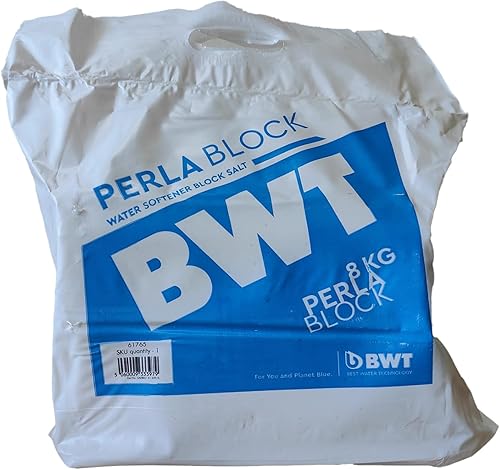
BWT SALTBLO Block Salt
If your softener is designed for block salt, this is a top-tier option. The Pure Dried Vacuum (PDV) manufacturing process results in extremely high purity. We like blocks because they dissolve slowly from the top down, which can be more forgiving in humid environments. Just make sure your tank’s grid and brine well are compatible.
- Very high purity PDV salt
- Blocks can reduce dust and spillage
- Good value in a two-pack
- Only for softeners with a block salt chamber
- Can be tricky to handle if you have grip issues

Magnetic Stainless Steel Softener (Salt-Free)
Let’s be clear: this is not a softener. It’s a physical water conditioner that uses magnets to alter the structure of calcium carbonate, aiming to prevent scale. It won’t give you that “slippery” soft water feel. But if you’re dead set on avoiding salt altogether, it’s a low-maintenance, install-and-forget option. Just keep your expectations realistic.
- No salt, no electricity, no brine tank
- Extremely low maintenance
- May reduce scale buildup in pipes
- Does not remove hardness minerals
- Effectiveness varies greatly with water chemistry
- No measurable soft water benefits

Filtered Shower Head (15-Stage)
This is a great companion product. Even with a perfect softener, municipal water often contains chlorine. This showerhead filter tackles that, plus some heavy metals. The 15-stage filtration is comprehensive, and the pressure-boosting design is a nice touch. It’s a solid point of use treatment for your shower.
- Effective chlorine removal for skin/hair
- Multiple spray settings
- Easy DIY install
- Filter cartridges need replacing every 6-8 months
- Won’t soften water, only filters specific contaminants
Salt Bridge FAQ
- How do I know if I have a salt bridge or a salt mush?
- Use the broom handle test. Gently push it down against the salt. If it hits a hard stop a few inches down, it’s a bridge. If it sinks into a thick, wet sludge at the bottom, that’s mush. The fix for mush is to vacuum out the sludge and replace it with fresh, high-purity salt.
- Can I use any type of salt to prevent bridges?
- Not all salts are equal. For the best prevention, use evaporated salt pellets. They are the purest (99.9% NaCl) and dissolve cleanly. Rock salt and some solar salts have impurities that increase the likelihood of both bridging and mushing.
- How often should I check my brine tank for a bridge?
- Give it a quick visual and physical check once a month when you add salt. Just take the lid off and push the handle down. It takes 10 seconds. In very humid climates, check every two weeks.
- Will a salt bridge damage my water softener?
- The bridge itself won’t damage the unit. The damage comes from the softener repeatedly trying to regenerate without brine. This can wear out the control valve seals and pistons over time. Fixing the bridge promptly avoids this.
- My water is still hard after breaking the bridge. What’s wrong?
- After breaking a bridge, you need to force an immediate manual regeneration. Consult your softener’s manual—there’s usually a button to start a cycle. The resin needs to be recharged with fresh brine. If hardness persists after a full cycle, you may have other issues.
- Are there softeners that don’t have this problem?
- Salt-free conditioners don’t use salt, so they can’t form bridges. However, they don’t actually soften water. Some high-end softeners have sensors that detect brine flow and will alert you to a problem, but the physical bridge can still form in any brine tank.
Final Thoughts
A water softener salt bridge is one of the most common and easily fixable problems in home water treatment. It’s not a sign your softener is broken. It’s a maintenance reminder. The fix takes five minutes with a broom handle. The prevention takes a bit of habit change: use good salt, don’t overfill the tank, and check it monthly.
If you take one thing from this, let it be this: switch to evaporated salt pellets. We’ve seen it cut brine tank problems by over 80% in reader feedback. It’s a simple, effective upgrade. Your softener will run smoother, your water will stay soft, and you’ll avoid that frustrating moment of discovering a hard, crusty shelf where your salt should be.
