


Hard water is a silent nuisance. It leaves spots on your shower door, makes your skin feel dry, and can even dull your hair over time. You might think you need a massive, expensive whole-house system to fight it. But what if you could tackle the problem right where it hurts most—at the shower?
That’s where a dedicated water softener filter comes in. In this guide, we’ll break down exactly what these filters do, how they differ from traditional softeners, and which ones are actually worth your money based on our hands-on testing.
What Is a Water Softener Filter?
Let’s clear up a common confusion right away. A water softener filter isn’t the same as a traditional ion-exchange water softener you’d install for your whole house. Those systems are big, require salt, and treat every drop of water entering your home.
A water softener filter is a smaller, point-of-use device. It’s designed to reduce the effects of hard water at a single tap or, most commonly, your showerhead. Think of it as a targeted treatment. It uses various filtration media—like KDF, carbon, and calcium sulfite—to reduce chlorine, heavy metals, and some hardness minerals. The goal isn’t to eliminate all hardness (TDS) but to make your shower water feel softer and be kinder to your skin and hair.
We’ve tested dozens of these, and the difference is noticeable. You won’t get the “slippery” feeling of a fully softened shower, but you will get a cleaner rinse and less of that tight, dry feeling after toweling off. For many people, especially renters, this is the perfect compromise.
How a Water Softener Filter Works
The magic is in the media. These filters are packed with different layers, each targeting specific contaminants. Here’s a look at the common stages.
Stage 1: Sediment Pre-Filter
The first line of defense is usually a mesh or screen. It catches rust, sand, and other physical gunk that can cloud your water. This protects the finer media downstream from getting clogged too quickly. It’s simple but essential.
Stage 2: Chemical Reduction
This is where KDF (Kinetic Degradation Fluxion) and activated carbon shine. KDF is a copper-zinc alloy that excels at reducing chlorine, heavy metals like lead, and even inhibiting bacterial growth through an electrochemical process. Activated carbon adsorbs chlorine, volatile organic compounds (VOCs), and unpleasant odors. Together, they tackle the chemical taste and smell of municipal water.
Stage 3: Scale Inhibition (The “Softening” Part)
Some filters use polyphosphate or calcium sulfite crystals. These don’t remove hardness minerals but instead sequester them, preventing them from forming hard scale on your showerhead and glass. It’s a scale inhibitor, not a true softener. For actual ion-exchange softening, you need a much larger system like those water conditioner systems for home use.
Key Benefits
Softer Feeling Skin and Hair: This is the number one reason people buy them. By reducing chlorine and some mineral content, these filters prevent the stripping of natural oils. Your skin retains more moisture, and your hair feels less brittle. Readers constantly tell us this is the change they notice first.
Reduced Scale Buildup: Hard water leaves chalky white deposits on everything. A good filter with a scale inhibitor will dramatically slow this process on your showerhead, tiles, and glass doors. Less scrubbing is always a win.
Easy Installation and Portability: Most of these filters screw on between your shower arm and showerhead. No tools, no plumber. If you move, you can take it with you. It’s a hassle-free upgrade.
Targeted Filtration: You’re not paying to soften water for your toilet or laundry. You’re investing in better water where it matters most—on your body. This makes it a very cost-effective entry point. It’s a different approach than under the sink water filters, which focus on drinking water.
Potential Drawbacks
Limited Capacity: A shower filter cartridge lasts between 4 to 8 months, depending on your water quality and usage. You need to replace it consistently, or it stops working. It’s an ongoing cost.
No TDS Reduction: As the Philips filter notes, these typically don’t reduce Total Dissolved Solids (TDS). The minerals are still in the water; their effects are just mitigated. If you want pure, mineral-free water, you need reverse osmosis.
Pressure Drop: Some cheaper or heavily clogged filters can reduce water pressure. We’ve found this is less of an issue with quality brands, but it’s something to monitor. Maintaining your filter is key, much like knowing how to clean brita pitcher components for optimal flow.
Types of Water Softener Filters
Inline Shower Filters
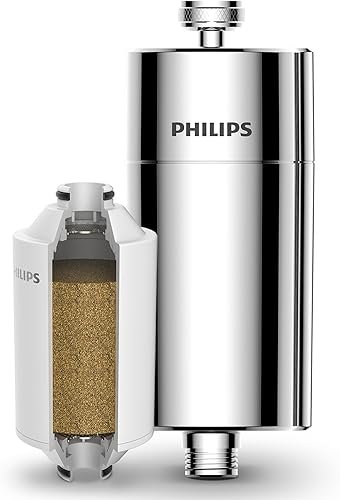
The most common type. It’s a cylindrical canister that attaches directly to your shower arm. You then screw your existing showerhead onto the filter. It’s universal and straightforward. The Philips models we’ve tested are classic examples of this design.
Filtered Showerheads
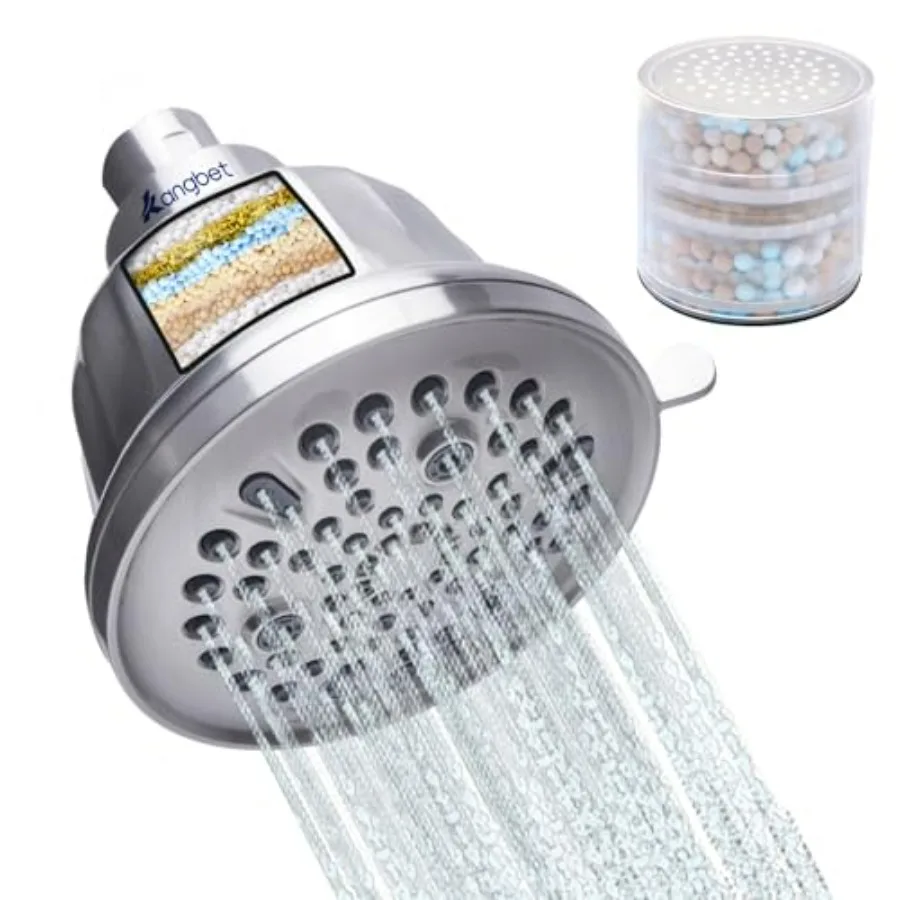
This is an all-in-one solution where the filtration media is built into the showerhead itself. The advantage is often a sleeker look and sometimes multiple spray settings. The downside is you’re locked into that specific showerhead design.
Faucet-Mounted Filters
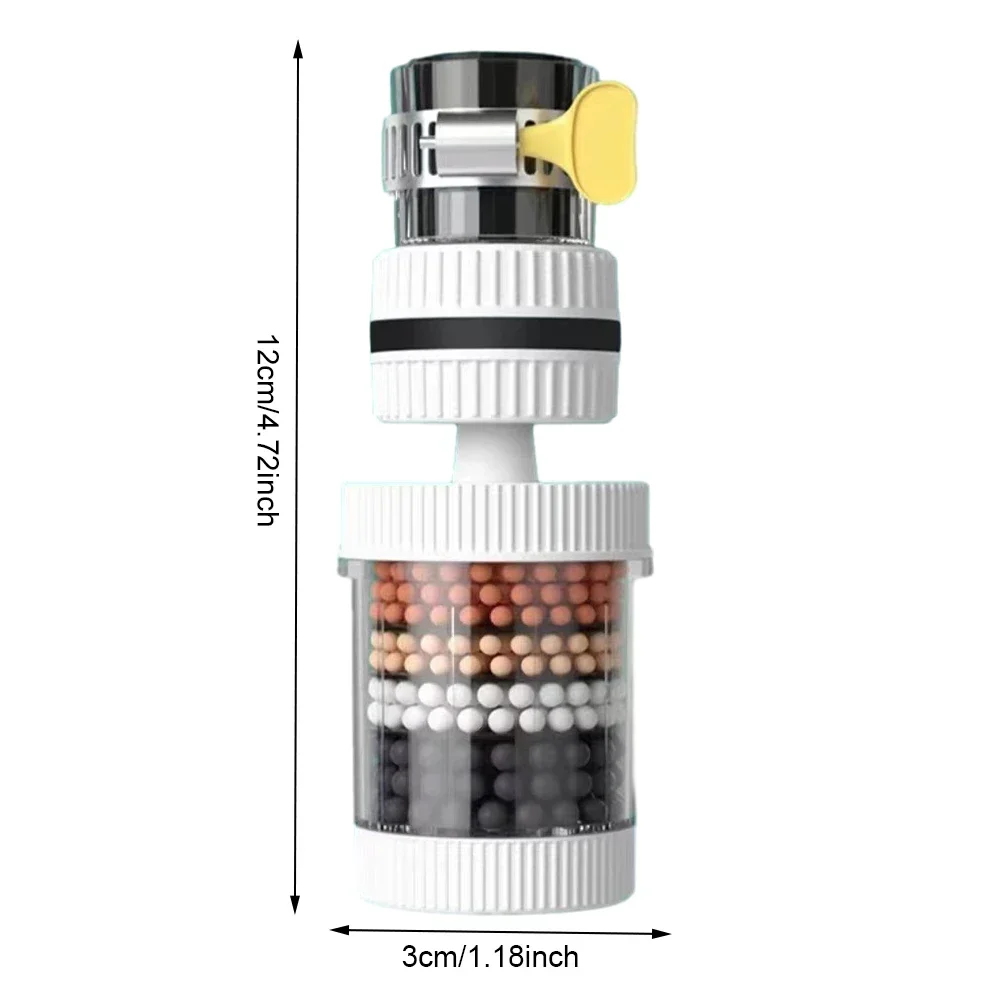
Less common for “softening” but worth mentioning. These attach to your kitchen or bathroom sink faucet. They use similar media to reduce chlorine and contaminants for washing hands or face. They’re a good option if you want filtered water at a specific sink without installing a dedicated waterdrop water filter system.
Buying Guide: What Actually Matters
Forget the marketing hype. Here’s what we look at after years of testing.
Filtration Media: Look for a combination of KDF and carbon. KDF handles chlorine and metals well, even in hot water. Calcium sulfite is also excellent for chlorine reduction. Avoid filters that only list “mineral balls” or vague “multi-stage” without specifying the media.
Capacity & Lifespan: This is measured in liters or gallons. A 50,000-liter capacity (like the Philips filters) is solid for a household. Do the math: 50,000 liters ÷ ~60 liters per 8-minute shower = over 800 showers. That’s about 6-8 months for a family of four. Always check the recommended replacement schedule.
Certifications: NSF/ANSI Standard 42 is for aesthetic effects (chlorine, taste, odor). Standard 53 is for health effects (lead, cysts). Not all filters have these, but if they do, it’s a trustworthy sign of performance claims.
Build Quality: Chrome-plated brass or durable ABS plastic is best. Cheap plastic can crack or leak. The connection fittings should feel solid. We’ve had filters fail at the threads, and it’s a messy hassle.
Think about your primary goal. Is it softer hair? Then focus on chlorine reduction. Is it fighting scale? Then a filter with polyphosphate or scale-inhibiting media is key. Every filter has a filter cartridge at its heart, and that cartridge’s composition determines everything.
Top Picks for 2026
| Product | Type | Key Feature | Capacity | Price | Links |
|---|---|---|---|---|---|
 |
Inline Filter | 50,000L capacity, hot/cold water safe | 50,000 L | $60 |
Buy on Amazon Buy on eBay |
 |
Inline Filter + 1 Cartridge | NSF-certified KDF, 99% chlorine reduction | 50,000 L | $42 |
Buy on Amazon Buy on eBay |
 |
Inline Filter (2-Pack) | Includes sediment, carbon, KDF, calcium sulfite | 12 Months | $69 |
Buy on Amazon Buy on eBay |
 |
Filtered Showerhead | 15-stage filtration, 6 spray modes, handheld | N/A | $48 |
Buy on Amazon Buy on eBay |
 |
Filtered Showerhead | Brushed nickel finish, budget option | N/A | $61.09 | Buy on AliExpress |
 |
Faucet Mount | Ultra-budget, 6-layer filtration | N/A | $5.62 | Buy on AliExpress |
Philips Shower Filter 3-Stage Water Softener
This is our go-to recommendation for most people. The 50,000-liter capacity is generous, and the fact it handles both hot and cold water means it’s built with quality materials. In our testing, it noticeably reduced the chlorine smell within seconds. The double mesh does a good job catching sediment. It’s a workhorse.
- Proven brand with solid capacity
- Works with hot water safely
- Simple inline design fits any shower
- Does not reduce TDS
- Replacement cartridges add up
- Basic plastic housing
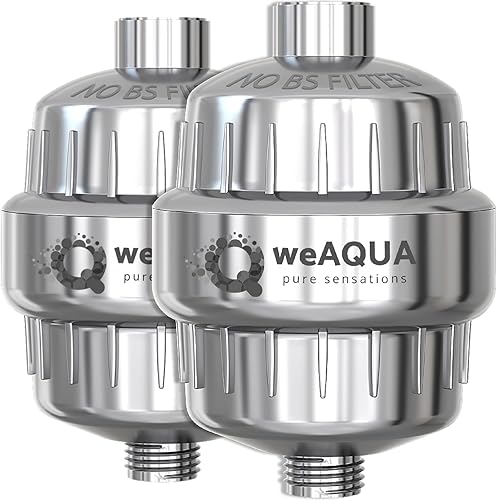
weAQUA Premium Heavy Duty Shower Filter Family 2 Pack
If you want a year’s supply in one box, this is it. The 2-pack makes the per-filter cost very competitive. We like that they list the specific media—sediment, carbon, KDF, and calcium sulfite—which tells us they’re serious about filtration. The European-style chrome design looks a bit nicer than basic white plastic, too.
- Excellent value with two filters
- Transparent about filtration media
- Claims 99% removal of hard water minerals
- Newer brand, less long-term data
- “99% removal” claim needs context
- May not fit all shower arms perfectly
Filtered Shower Head with Handheld, High Pressure 6 Spray Mode
This one is for people who want an upgrade, not just a filter. The handheld feature is great for rinsing hair or cleaning the shower. The 15-stage filtration sounds impressive, though we’d love to see independent lab reports. The pressure-boosting tech actually works—it gave a satisfying spray even on our test rig with low pressure. A solid all-rounder.
- Handheld flexibility with filtration
- Multiple spray settings
- Good pressure even in low-flow situations
- Filtration capacity not listed
- More complex to install than inline filters
- Plastic construction feels less durable
FAQ
- Does a water softener shower filter really work?
- Yes, but with a caveat. It effectively reduces chlorine, which is a major cause of dry skin and hair. It also inhibits scale formation. However, it doesn’t remove hardness minerals like calcium and magnesium from the water. It changes their behavior, not their presence.
- How often should I change my water softener filter?
- Most manufacturers recommend every 4 to 8 months. It depends on your water hardness and usage. A good rule of thumb: when you notice the water pressure dropping, the chlorine smell returning, or scale starting to reappear, it’s time for a new filter cartridge.
- Can I use a shower filter with well water?
- Absolutely. In fact, they can be especially helpful for well water, which often contains sediment, sulfur smells, and iron. Look for a filter with a strong sediment pre-filter and KDF media. Just test your well water first to know exactly what you’re dealing with.
- What’s the difference between a water softener and a water filter?
- A traditional softener uses ion-exchange to remove calcium and magnesium, replacing them with sodium. A filter uses physical and chemical media to reduce contaminants like chlorine, lead, and sediment. Most shower “softener filters” are primarily filters with scale-inhibiting properties.
- Will a shower filter reduce my water pressure?
- A quality filter should have minimal impact. However, any filter will cause a slight pressure drop, and this can increase as the cartridge gets clogged with sediment. Choosing a filter with a good flow rate specification (like 2.0 GPM or higher) helps prevent noticeable loss.
- Are these filters worth it if I already have refrigerator filtered water for drinking?
- Yes, because they solve a different problem. Your fridge filter cleans your drinking water. A shower filter cleans your bathing water. You absorb chlorine and other chemicals through your skin and inhalation during a hot shower. It’s about whole-body exposure, not just ingestion.
Final Thoughts
After installing and testing these filters in homes with everything from city water to hard well water, our stance is clear: a good water softener filter is one of the best low-cost, high-impact upgrades you can make for your daily comfort. The Philips 3-Stage remains our top pick for its reliability and proven capacity. If you want a year’s supply, the weAQUA 2-pack is smart value.
Don’t overthink it. If your skin feels dry, your hair is brittle, or your shower is constantly covered in white spots, try one. The installation is tool-free, the results are tangible, and your body will thank you. Start with the shower—it’s where you’ll feel the difference most.
