


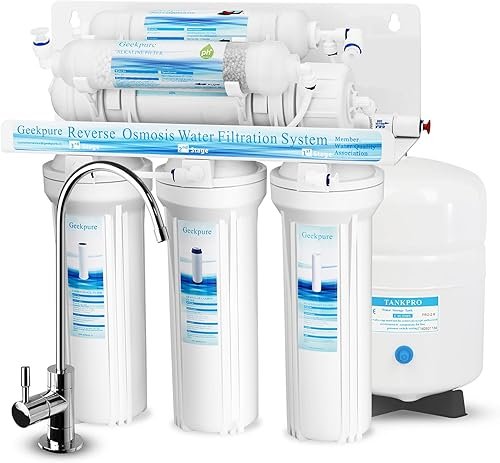
Your water is leaving spots on every glass. The shower door is a cloudy mess. And you’re not sure what’s actually in the stuff you’re drinking. Sound familiar? You’re probably dealing with both hard water and contaminants—a one-two punch that a single device can solve. We’ve spent years testing systems, talking to plumbers, and dealing with our own scale buildup. This guide covers what a combined softener-filter is, how it works, and which models actually deliver.
What Is a Water Softener and Filter System?
It’s exactly what it sounds like: a single appliance or a linked set of tanks that performs two critical jobs. First, it softens your water by removing the calcium and magnesium ions that cause limescale. Second, it filters out sediment, chlorine, volatile organic compounds (VOCs), and other impurities that affect taste, odor, and safety.
Think of it as a two-in-one solution. Instead of installing a separate water softener not using salt and a standalone drinking filter, you get both functions integrated. This is huge for space savings and often for cost. The system typically sits where your water line enters the house, treating every drop before it reaches a single faucet.
But here’s the catch—not all combos are created equal. Some are true integrated units. Others are just a standard softener paired with a separate filter housing system on the same water line. The distinction matters for performance, maintenance, and your wallet.
How a Combined System Works
The Softening Stage
This part uses a process called ion exchange. The water flows through a tank filled with resin beads. These beads are charged with sodium ions. As the hard water passes, the resin grabs the calcium and magnesium ions and releases its sodium in their place. That’s the “softening.” Eventually, the resin gets exhausted and needs a recharge.
That recharge is a backwash cycle where a brine solution (salt water) flushes through the tank, knocking the hardness ions off the resin and replacing them with fresh sodium. The dirty water goes down the drain. If you’re curious about alternatives, some newer systems use Template Assisted Crystallization (TAC) which doesn’t add sodium—it just changes the mineral structure so it can’t stick as scale.
The Filtration Stage
This is where the water gets cleaned for taste and safety. The most common setup uses an activated carbon filter—either a granular (GAC) or solid block (CTO) type. Carbon is fantastic at adsorbing chlorine, which is why your water will taste and smell better instantly. It also traps many organic chemicals and some heavy metals.
For tougher jobs, you might see a multi-stage setup. A sediment pre-filter catches dirt and rust first. Then the carbon filter does its work. Some high-end systems add a third stage, like a KDF filter for heavy metals or a UV light for microbiological safety. The key is that this filtered water is what you drink and cook with. For a deeper dive on the final stage, our guide to filtered water breaks down what “pure” really means.
Key Benefits of a Combined System
Complete Water Treatment: You solve two major water problems with one decision. No more scale building up in your water heater and coffee maker. No more chlorine taste in your drinking water. It’s a full-home solution.
Space and Cost Efficiency: Installing two separate systems means two tanks, two sets of plumbing, two installation bills. A combined system or a tightly integrated pair takes up less space and usually costs less than buying each component separately.
Simplified Maintenance: You’re dealing with one system to schedule, not two. While the softener and filter have different service intervals, having them together makes it easier to remember. It’s one less thing to track.
Protects Appliances and Plumbing: This is the big one. Soft water prevents scale buildup inside your pipes, water heater, dishwasher, and washing machine. That means better efficiency and a longer lifespan for everything. The filter part protects you, the softener part protects your home.
Potential Drawbacks to Consider
Higher Initial Cost: The upfront price tag is steeper than a basic pitcher filter or even a standalone softener. You’re paying for two technologies in one package.
Complexity of Installation: This isn’t a simple under-sink job. It requires cutting into your main water line, proper drainage for the softener’s backwash, and often an electrical outlet. Most people hire a plumber.
Sodium in Softened Water: The ion exchange process adds a small amount of sodium to your water. If you’re on a strict low-sodium diet, you’ll want to keep a separate drinking water tap unsoftened or use a reverse osmosis system for drinking. Speaking of which, if you want ultra-pure drinking water, an AO Smith water filter or an RO system can be added as a point-of-use device after the softener.
Types of Combined Systems
Traditional Salt-Based Softener + Carbon Filter
The most common and reliable combo. You get proven ion-exchange softening and effective chlorine reduction. It’s the workhorse solution. Maintenance involves refilling the salt tank and replacing the filter cartridge every 6-12 months.
Salt-Free Softener (Conditioner) + Multi-Stage Filter
Uses TAC or similar technology to condition water without adding sodium. Paired with a multi-stage filter (sediment, carbon, maybe KDF). Great for people concerned about sodium intake or where salt-based systems are restricted. A key component here is the filter housing, which determines what cartridges you can use.
Whole House Reverse Osmosis + Softener
The nuclear option. A softener protects the RO membrane from scale, and the RO system removes virtually everything—99% of contaminants. Extremely effective but very expensive, wastes water, and is overkill for most municipal water supplies. Best for well water with serious contamination issues.
Buying Guide: What Actually Matters
Don’t get lost in marketing jargon. Here’s what to focus on.
Grain Capacity: This tells you how hard your water the softener can handle before needing a recharge. A 32,000-grain unit is fine for a small family with moderately hard water. A family of five with very hard water might need 48,000 grains or more. Bigger is often better to avoid frequent regenerations.
Flow Rate (GPM): Measured in Gallons Per Minute. This is critical. Your system needs to handle your home’s peak demand without a pressure drop. Add up the flow rates of all fixtures that might run at once (showers, faucets, dishwasher). A 10-15 GPM system is typical for a 3-bathroom home.
Filter Micron Rating & Type: For chlorine and taste, a 5-micron carbon block is excellent. For sediment, you might want a 20-micron pre-filter. Look for NSF/ANSI 42 certification for aesthetic effects (taste, odor) and NSF/ANSI 53 for health claims (lead, cysts). Don’t fall for “1-micron” claims on a carbon filter—it’ll clog in a week on whole-house duty.
Control Head: The brain of the softener. Timer-based heads regenerate on a fixed schedule, which is wasteful. Demand-initiated regeneration (DIR) or metered heads are far superior—they only regenerate when you’ve actually used a set amount of water. Saves salt and water.
Our Top Picks for 2026
We’ve looked at systems from budget to premium. Here’s a comparison of some strong contenders, from dedicated drinking water filters to whole-house solutions.
| Product | Type | Key Feature | Price |
|---|---|---|---|
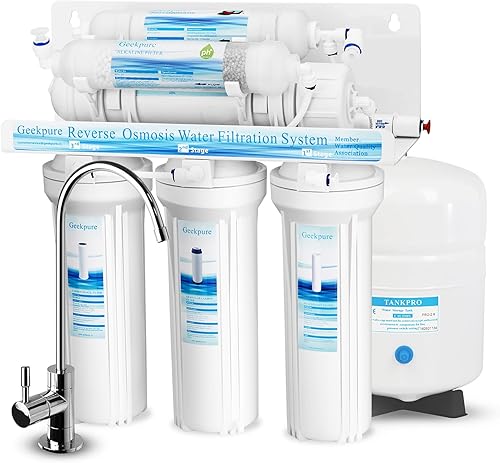 Geekpure 6-Stage RO + Alkaline |
Under-Sink RO | 6-stage with remineralization, 75 GPD | $239 |
 Geekpure 5-Stage RO |
Under-Sink RO | 5-stage, includes 2 years of filters | $239 |
 Geekpure 6-Stage RO + UV |
Under-Sink RO | 6-stage with UV sterilization, 75 GPD | $279 |
 Whole House Softener Filter 20×4.5 |
Whole House Filter | Targets PFAS, heavy metals, arsenic | $199 |
Geekpure 6-Stage Reverse Osmosis System with Alkaline Filter
This is a solid pick if your main goal is pristine drinking water from a dedicated tap. The 6-stage process, including a remineralization filter, adds back healthy minerals that RO strips out, giving the water a more balanced taste. We like that the RO membrane is NSF-certified. For a small household, it’s a reliable workhorse.
- Comprehensive 6-stage filtration
- Alkaline filter improves taste
- NSF-certified RO membrane
- Lead-free faucet included
- Only treats drinking water at one faucet
- Requires under-sink installation and drain
- Wastes some water (typical for RO)
Geekpure 5-Stage Reverse Osmosis System with 2 Years of Filters
Honestly, most people don’t need more than five stages. This system gets the job done—removes arsenic, lead, fluoride, you name it. The killer feature here is the included extra filters. You’re set for two years right out of the box. That’s value. The 0.0001-micron membrane is as good as it gets for home use.
- Includes 2 years of replacement filters
- Proven 5-stage, 0.0001-micron filtration
- Universal standard filter sizes
- Great long-term value
- No remineralization stage
- Basic faucet may need upgrading
- Still produces wastewater
Geekpure 6-Stage RO System with UV Sterilization
This is for the cautious. The added UV light is a beast—it kills 99.99% of bacteria and viruses without chemicals. If you have well water or are just paranoid about microbiological contaminants (no judgment), this gives serious peace of mind. The UV bulb lasts about 9000 hours, so you’re not replacing it often.
- UV sterilization for microbiological safety
- 6-stage comprehensive filtration
- 24/7 continuous protection
- NSF-certified components
- Higher upfront cost
- UV bulb adds a replacement cost
- Electricity required for UV
Whole House Water Softener Filtration System 20×4.5
This big-bore system is about whole-house protection. The 20-inch tall by 4.5-inch diameter housings allow for high flow rates and longer filter life. It’s designed to tackle a nasty list of contaminants—PFAS, arsenic, heavy metals, and disinfection byproducts. This isn’t a softener, but a serious chemical filter. Pair it with a softener for a complete solution.
- High-capacity 20″ x 4.5″ housings
- Targets emerging contaminants like PFAS
- Suitable for whole-house installation
- Heavy-duty construction
- Does not soften water
- Requires separate softener for hardness
- Large size needs dedicated space
Frequently Asked Questions
- Can I install a water softener and filter system myself?
- It’s possible if you’re very handy with plumbing—cutting and soldering copper or working with PEX. But for most people, we recommend professional installation. A bad install can cause leaks, water damage, or improper drainage for the softener’s backwash cycle. It’s not worth the risk.
- Does a water softener filter remove chlorine?
- No, a standard softener does not remove chlorine. In fact, chlorine can damage the softener resin over time. That’s why the filter component in a combined system is so important. The carbon filter handles chlorine, while the softener handles hardness minerals.
- How often do I need to add salt?
- This depends on your water hardness and usage. For a typical family, check the salt tank monthly. You’ll want to keep it at least half full. The system will use roughly one bag (40 lbs) of salt every 4-8 weeks. Use solar salt or evaporated salt pellets—avoid rock salt.
- Will a combined system lower my water pressure?
- A properly sized system will not noticeably affect your water pressure. The key is matching the system’s flow rate (GPM) to your home’s peak demand. An undersized system will definitely cause a pressure drop when multiple fixtures are running.
- Is softened water safe to drink?
- Yes, for the vast majority of people. The amount of sodium added is relatively small and depends on your water’s initial hardness. If you’re on a doctor-restricted, very low sodium diet, you might want a separate unsoftened line for drinking water or use a reverse osmosis filter for drinking.
- What’s the difference between a whole-house filter and a drinking water system?
- A whole-house filter (point-of-entry) treats all water entering your home—for showers, laundry, and toilets. A drinking water system (point-of-use) like an RO unit treats water only at one specific faucet. The best setup is often a whole-house softener/filter combo for general use, plus an RO system at the kitchen sink for pure drinking water.
Final Thoughts
After testing dozens of systems, our stance is clear: for homes with hard water and municipal supply, a combined salt-based softener and carbon filter system is the most practical upgrade you can make. It protects your plumbing, makes cleaning easier, and gives you better-tasting water from every tap. Don’t overcomplicate it.
Start with a water test. Know your hardness level in grains per gallon (GPG) and get a basic contaminant report. Then match the system’s capacity to your home. And if you’re only worried about drinking water, a solid under-sink RO system like the Geekpure models we reviewed will solve that problem completely without touching your whole house. Whatever you choose, just stop ignoring your water quality. Your pipes, your skin, and your coffee maker will thank you.
