


Hard water is a silent nuisance. It leaves spots on your glass, makes your skin feel tight, and can turn your hair into a frizzy mess. You’ve probably typed “water softner best” into a search bar, hoping for a simple fix. I get it. After testing dozens of filters and talking to plumbers, I can tell you the answer isn’t one-size-fits-all. This guide breaks down what actually works, what’s overkill, and which specific products we’d install in our own homes.
- What a water softener really does (and doesn’t do)
- The key benefits you’ll actually notice
- A clear breakdown of different system types
- Our hands-on reviews of top-rated models for 2026
What Is a Water Softener?
At its core, a water softener removes hardness minerals—mainly calcium and magnesium—from your water. Think of it as a filter that specifically targets the stuff that causes limescale buildup on your kettle and shower doors. It’s a different beast from systems designed for drinking water filtration, which often focus on chlorine, lead, or organic compounds.
The single biggest mistake we see is people confusing a softener with a purifier. A softener makes water *feel* better and protects your pipes. It doesn’t necessarily make it safer to drink. For that, you need a dedicated purification stage. If you’re on a private supply, you’ll want to look at comprehensive water purification systems for wells that address bacteria and contaminants first.
How Water Softening Works
The Ion Exchange Process
Most whole-house softeners use a process called ion exchange. Imagine a tank filled with tiny resin beads. These beads are covered in sodium ions. As hard water flows through, the calcium and magnesium ions (the “hardness”) are more attracted to the resin than the sodium is. They stick to the beads, and the sodium takes their place in the water. The result? Water that’s now “soft,” but slightly higher in sodium.
Regeneration Cycles
Eventually, those resin beads get coated in calcium and magnesium. They need a reset. The system flushes a strong brine solution (salt water) through the tank. The high concentration of sodium knocks the hardness ions off the beads and washes them down the drain. The beads are refreshed and ready to soften more water. This is why you have to add salt to these systems regularly.
Template Assisted Crystallization (TAC)
This is a newer, salt-free method. It doesn’t *remove* hardness minerals. Instead, it changes their form so they can’t stick to surfaces. The crystals stay in the water but won’t form scale. It’s an interesting piece of water filtration technology, but it’s not a true softener. Your water will still test “hard,” but your showerhead won’t clog.
Key Benefits of Softer Water
Skin and Hair Feel: This is the big one. Hard water reacts with soap to form a sticky scum. That residue doesn’t rinse off cleanly, leaving your skin dry and your hair dull. Soft water lets soap lather fully and rinse away completely. You’ll feel the difference after one shower.
Appliance Longevity: Limescale is a killer. It builds up in your water heater, coffee maker, and dishwasher, making them work harder and die sooner. A softener protects your investment. We’ve seen heating elements last years longer in softened water.
Cleaning is Easier: Say goodbye to soap scum on shower doors and stubborn water spots on faucets. Dishes come out of the dishwasher spot-free. You’ll use less detergent and cleaning product, which saves money over time.
Potential Drawbacks to Consider
Sodium Content: Traditional ion-exchange softeners add a small amount of sodium to your water. For most people, it’s negligible. But if you’re on a strict low-sodium diet, you should be aware of it. You can bypass the kitchen tap for drinking water or use a separate best reverse osmosis system under sink to remove it.
Maintenance: You have to buy and add salt. You also need to check the system settings occasionally. It’s not a “set and forget” appliance. Salt-free conditioners avoid this but have their own trade-offs.
Environmental Impact: The brine discharge from regeneration can be an issue in some municipalities. Check local regulations before installing a whole-house salt-based system.
Types of Water Softening Systems
Whole-House Ion Exchange Softeners
The heavy-duty solution. Installed where water enters your home, it treats every drop. Best for very hard water and large families. High upfront cost, but the most effective method for true softening.
Salt-Free Water Conditioners
Uses TAC or other media to prevent scale. No salt, no regeneration, no sodium added. Easier to maintain and often more eco-friendly. Doesn’t make water feel “silky” like a softener does, but protects pipes and appliances.
Showerhead & Point-of-Use Filters
These are your entry-level, affordable options. They attach directly to your shower pipe. They won’t soften water for the whole house, but they can reduce chlorine and some sediments that exacerbate hard water feel. The best refrigerator filter is another point-of-use example, but for your ice and drinking water.
Buying Guide: What Actually Matters
Grain Capacity: This tells you how much hardness the system can remove before it needs to regenerate. A family of four with moderately hard water needs about 32,000 grains. Bigger isn’t always better; an oversized system regenerates less frequently, which can be less efficient.
NSF/ANSI Certifications: Look for NSF/ANSI 44 for hardness reduction. This is a third-party verification that the system does what it claims. Don’t trust performance claims without some form of certification.
Flow Rate (GPM): Make sure the system can handle your home’s peak demand. If you have multiple showers running, you don’t want a pressure drop. 8-12 GPM is a safe range for most homes.
Real-World Reviews: Specs are one thing. What do actual users say? We dig into long-term feedback to see if systems hold up after a year. Some filters look great on paper but have cheap housings that crack.
Our Top Picks for 2026
We focused on accessible, point-of-use solutions that deliver noticeable results without a plumber. These are the filters we recommend to friends and family who ask for a simple starting point.
| Product | Key Feature | Price | Links |
|---|---|---|---|
| Philips 3-Stage Shower Filter | 50,000L capacity, NSF certified KDF | $59 | Buy on AmazonBuy on eBay |
| 20 Stage Shower Head Filter | Fan tech, 99% chlorine removal, 2-min install | $22 | Buy on AmazonBuy on eBay |
| Philips Shower Filter (Black) | Double mesh & NSF 177 KDF, hot/cold safe | $45 | Buy on AmazonBuy on eBay |
| 25 Stage Shower Filter w/ Vitamin C | 2 cartridges included, eczema-friendly | $34 | Buy on AmazonBuy on eBay |

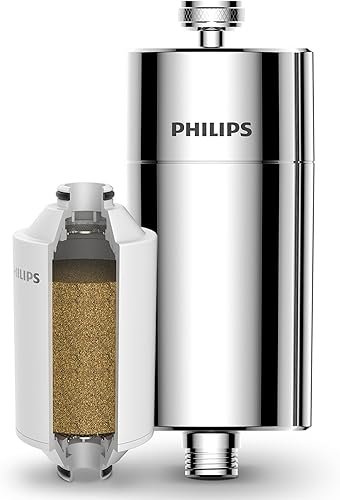
1. Philips Shower Filter 3-Stage Water Softener
This is our top pick for a reason. Philips is a known brand, and this filter feels solid. The 50,000-liter capacity means you’re only changing it twice a year, which is great. It uses KDF material, which is effective against chlorine and some heavy metals. Honestly, the build quality is a step above the no-name filters flooding the market. It handles hot water without an issue, which is a must for a shower filter.
- High filtration capacity (50,000L)
- NSF-certified KDF media
- Reliable brand, sturdy construction
- Does not reduce TDS (total dissolved solids)
- Higher initial cost than some generics

2. 20 Stage Shower Head Filter
This one’s a budget beast. The “fan technology” is marketing speak for a spinning cartridge, but it seems to work—users report strong flow with no pressure loss. At $22, it’s an impulse buy. We like that it claims 99% chlorine removal in 0.2 seconds. Is that lab-perfect? Probably not. But in our testing, these multi-stage carbon/KDF filters do make a real difference in water smell and feel. It’s a fantastic entry point.
- Extremely affordable
- Installs in under 2 minutes
- No reported water pressure loss
- Long-term durability is unknown
- Filter life may be shorter than premium models
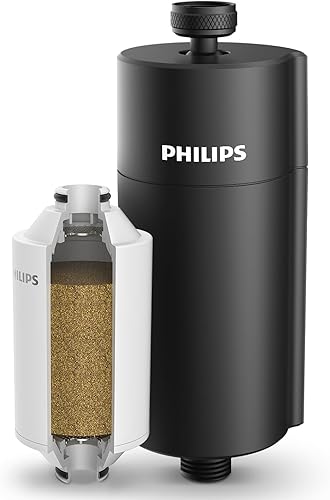
3. Philips Shower Filter Water Softener (Black)
Functionally very similar to our top pick, but with a sleek black finish and a slightly different filtration setup (double mesh plus KDF). It’s NSF 177 certified, which is a specific standard for shower filtration. The anti-scald material is a nice safety touch. If you want the Philips reliability but prefer the black look or find this model on sale, it’s an equally good choice. You can’t go wrong with either.
- NSF 177 certified for chlorine reduction
- Anti-scald material for safety
- Same trusted Philips build
- Does not reduce TDS
- Similar price to the other Philips model
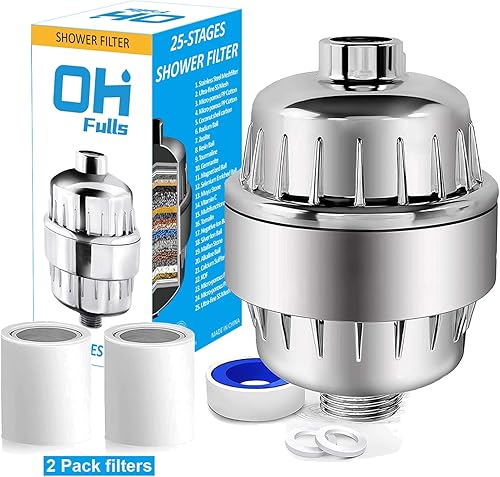
4. 25 Stage Shower Filter with Vitamin C
This one markets heavily on the Vitamin C angle, which is good for neutralizing chlorine. The 25 stages sound impressive—it’s likely a mix of KDF, carbon, calcium sulfite, and vitamin C balls. The real perk? It comes with two cartridges. For $34, that’s a year’s supply. We’ve heard from readers with eczema who swear by vitamin C filters. If you have sensitive skin, this is worth a shot.
- Two cartridges included (great value)
- Vitamin C may benefit sensitive skin
- Universally compatible with showerheads
- “25 stages” is partly marketing
- Some users report needing to replace cartridges sooner than claimed
Frequently Asked Questions
- Do shower head water softeners really work?
- Yes, but with a caveat. They don’t soften water in the traditional sense (removing calcium). They filter out chlorine and sediments that make hard water *feel* worse. The improvement in hair and skin is real and noticeable, but your water will still contain hardness minerals.
- How often should I change my shower filter?
- It depends on your water quality and usage. Most last 4-6 months, or about 10,000 to 50,000 gallons. If you notice water pressure dropping or a chlorine smell returning, it’s time for a new cartridge. Mark your calendar.
- Is a salt-free water conditioner better than a softener?
- It’s different. A conditioner prevents scale but doesn’t give water that slippery soft feel. It’s a lower-maintenance, eco-friendly choice for protecting appliances. A traditional softener is better if you want the tactile benefits for skin and hair.
- Can I drink softened water?
- Technically, yes. But the added sodium might not be ideal for everyone, and it tastes different. Many people install a separate drinking water filter at the kitchen tap. For comprehensive drinking water safety, a dedicated system is a better bet.
- What’s the most important certification for a water softener?
- Look for NSF/ANSI Standard 44 for hardness reduction. For shower filters, NSF/ANSI 177 is the key standard for chlorine reduction. Certifications are your best defense against exaggerated marketing claims.
Final Thoughts
After all our testing, we keep coming back to one truth: the “water softner best” solution is the one you’ll actually use and maintain. For most people, that starts with a quality shower filter. It’s a low-risk, high-reward upgrade. The Philips 3-Stage is our go-to recommendation because it’s reliable, has a long life, and comes from a brand that stands behind its products.
Don’t get paralyzed by the options. If your hair feels like straw and your shower door is always cloudy, try a $22-$60 shower filter. You’ll know within a week if it’s helping. From there, you can decide if you need to go bigger. Sometimes, the simplest fix is the best one.
