


You turn on the tap. The water looks clear. But is it safe? After testing water for over a decade—from lab-certified methods to simple dip strips—I can tell you looks are deceiving. A good water quality testing kit cuts through the guesswork. This guide covers what they are, how they work, and which ones are actually worth your money in 2026.
**What we’ll cover:**
– What a water quality testing kit actually is and what it can (and can’t) do.
– How different test types work, from strips to digital meters.
– The real benefits and honest limitations of home testing.
– Our top kit picks, tested and compared side-by-side.
What Is a Water Quality Testing Kit?
Think of it as a health checkup for your water. It’s a collection of tools—usually strips, reagents, or digital sensors—designed to measure specific contaminants or properties in a water sample. You’re not getting a full, lab-certified analysis. What you are getting is a fast, affordable screening.
These kits answer basic but critical questions. Is there lead in my water? How hard is it? Is the chlorine level too high? They give you a snapshot, a starting point. Based on that snapshot, you might decide your water is fine, or you might need to investigate further with a professional lab test. The goal is empowerment. You stop wondering and start knowing. For anyone concerned about their drinking water quality, it’s the logical first step before investing in any filtration system.
How Water Quality Testing Kits Work
The science is simpler than you’d think. Most kits rely on a chemical reaction that produces a color change. The intensity of that color corresponds to the concentration of a contaminant.
The Color-Comparison Method (Test Strips)
This is the most common type. You dip a treated strip into your water for a few seconds. The pads on the strip react with specific ions or molecules. After a set time (usually 30-60 seconds), you compare the color of each pad to a chart provided in the kit. Match the shades, read the corresponding number. It’s not lab-grade precision, but for screening purposes, it’s surprisingly effective.
The Titration Method (Liquid Reagents)
You’ll find this in kits testing for hardness or chlorine. You add drops of a reagent to a measured water sample. The water changes color at a specific point. You count the drops needed to cause that permanent color change. Each drop equals a specific concentration (e.g., 1 drop = 1 grain per gallon of hardness). It’s more hands-on but can be more accurate than strips for certain parameters.
Digital Meters
These use electrical conductivity or specific electrodes to measure things like Total Dissolved Solids (TDS) or pH. You stick the probe in the water, and a number appears on the screen. They’re great for quick, repeatable checks but only measure what the sensor is designed for. A TDS meter won’t tell you if lead is present, only if total solids are high.
Key Benefits of Testing Your Water
Peace of Mind is Priceless. The biggest benefit? You stop worrying about the unknown. Knowing your water’s basic profile lets you make informed decisions for your family’s health.
Pinpoint Problems Before They Get Expensive. High hardness? You’ll see scale buildup in your kettle and on fixtures. Testing early lets you address it with a softener before it damages your water heater or dishwasher. It’s preventative maintenance for your plumbing.
Verify Your Filter is Working. You installed an under-sink system. Great. But is it still doing its job six months later? A quick test before and after the filter confirms its performance. This is crucial for systems targeting specific contaminants like lead or chlorine. If you have a Everpure water filtration system, a simple chlorine test can tell you when the cartridge needs replacing.
Save Money on Unnecessary Gear. Don’t buy a $500 whole-house system if your only issue is a bit of chlorine taste. A $20 test kit can save you hundreds by showing you exactly what you need—and what you don’t.
Potential Drawbacks & Limitations
They Don’t Test for Everything. Most kits cover 10-20 common parameters. They won’t find pharmaceuticals, pesticides, or many industrial chemicals. Those require sophisticated lab equipment.
Accuracy Has a Range. That color chart? Your interpretation matters. Is that pad “light green” or “yellow-green”? In low light, it’s even harder. Results are semi-quantitative at best. A lab gives you a precise number in parts per billion.
A Snapshot in Time. Water quality can fluctuate. A test on Monday might differ from Friday, especially with well water influenced by rain or seasonal changes. One test doesn’t tell the whole story.
Types of Water Testing Kits
Multi-Parameter Test Strips
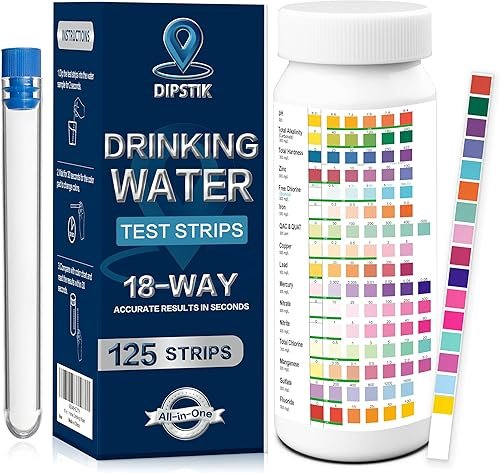
The workhorse. Dip one strip, get readings for hardness, pH, chlorine, nitrate, and more in under a minute. Perfect for a first look. The 18-in-1 strips are the most popular for a reason—they cover the basics you need to know.
Single-Parameter Kits
These focus on one thing, like lead or bacteria. They’re often more accurate for that specific test. The lead swab tests, for example, are great for checking faucet fixtures or old pipes. A must if you suspect a specific problem.
Digital TDS/EC Meters
Cheap and cheerful. They measure Total Dissolved Solids, giving you a general sense of water purity. Useful for checking reverse osmosis system performance. But remember, TDS doesn’t equal safety. Low TDS water can still have lead.
Professional Lab Mail-In Kits
The gold standard. You collect samples and mail them to a certified lab. They provide a detailed report with exact contaminant levels. More expensive ($100-$300), but necessary for comprehensive analysis, especially for well water or real estate transactions.
Buying Guide: What Actually Matters
1. Know What You’re Testing For. City water? Focus on chlorine, lead (from pipes), and hardness. Well water? You need bacteria, nitrates, and hardness at a minimum. Don’t buy a 16-parameter kit if you only care about lead.
2. Check the Parameter List, Not Just the Number. An “18-in-1” kit is useless if it doesn’t test for the one contaminant you’re worried about. Read the fine print. Does it include lead? Bacteria? Nitrate?
3. Consider Usability. Are the instructions clear? Is the color chart easy to read? Some kits include a test tube, which makes dipping strips cleaner and more consistent. It’s the little things that make the process less messy.
4. Look for Certifications (If Available). Some kits, especially lab-based ones, carry EPA approval or certifications from bodies like the Water Quality Association (WQA). It adds a layer of trust.
5. Price Per Test. A $20 kit with 125 strips is a better long-term value than a $15 kit with 50 strips, especially if you want to test periodically. You’ll use more strips than you think.
Our Top Water Quality Testing Kit Picks (2026)
| Product | Key Specs | Best For | Price |
|---|---|---|---|
| All-New 18 in 1 Drinking Water Test Kit | 125 strips, 18 parameters, 30-second results | Overall best value for a first test | ~$20 |
| 18-in-1 Water Quality Test Strips (125ct) | 125 strips, 18 parameters, includes test tube | Well water & tap water screening | ~$27 |
| 16 in 1 Water Testing Kits (SJWAVE) | 16 parameters, includes eBook, 2-min results | Beginners who want guidance | ~$26 |
| Safe Home® Ultimate DIY Kit | 302 tests, 14 parameters, includes lead & bacteria | Comprehensive screening, especially for wells | ~$62 |
| 50pcs Chlorine/pH Test Strips (AliExpress) | 50 strips, tests chlorine, pH, alkalinity | Pool/spa owners on a tight budget | ~$6 |
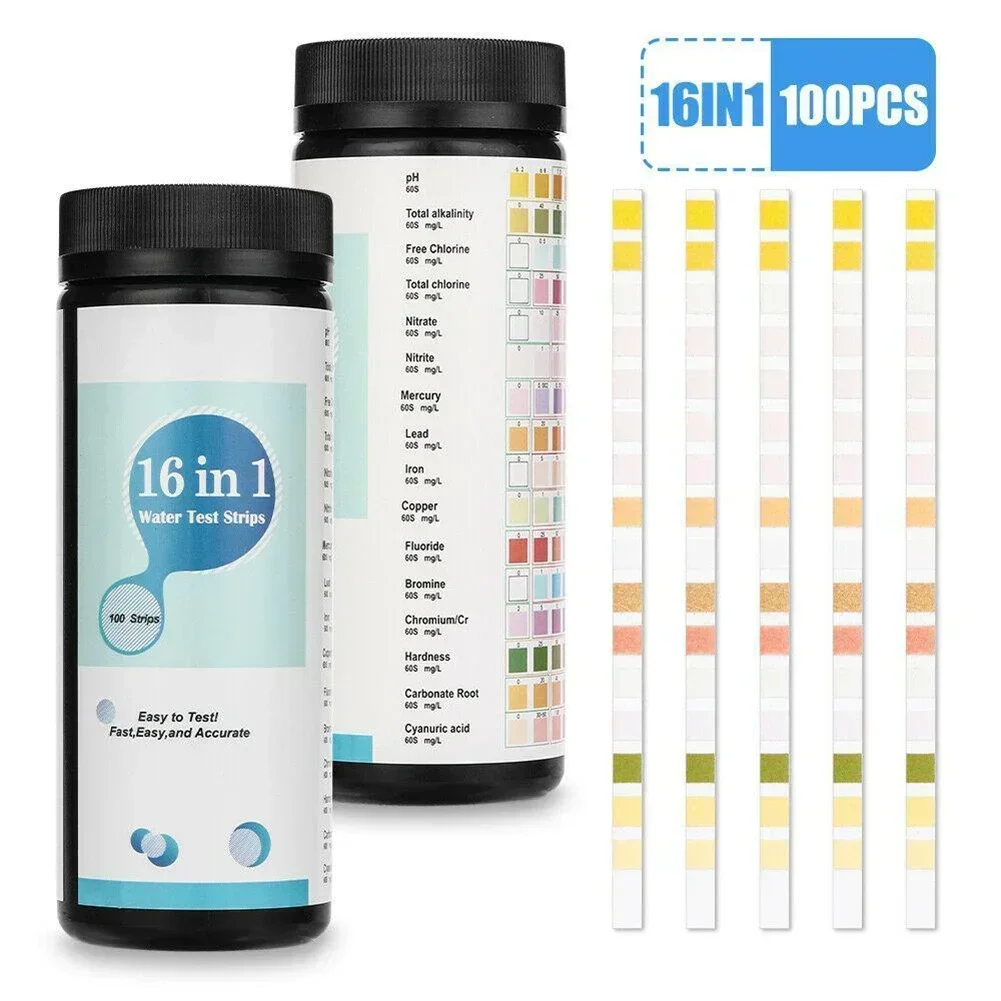
| 16 In 1 Drinking Water Test Kit (AliExpress) | 16 parameters, broad contaminant list | Budget-conscious multi-parameter testing | ~$16 |

1. All-New 18 in 1 Drinking Water Test Kit
This is the kit we recommend to friends and family who ask, “Where do I start?” It’s dead simple. Dip the strip, wait 30 seconds, and compare. In our testing, the color charts were among the easiest to read. It covers all the basics you need for a city or well water snapshot: hardness, pH, chlorine, lead, iron, and nitrates. The 125-strip count means you can test your tap, your fridge filter, and your garden hose without worrying about running out.
- Incredibly fast and easy to use
- Tests for lead, which many cheap kits skip
- Great value with 125 tests per box
- Not as precise as a lab or titration kit
- Color interpretation can be subjective in dim light

2. 18-in-1 Water Quality Test Strips (125ct)
This kit is a workhorse, very similar to our top pick but with a slightly different parameter mix. It includes manganese and zinc, which can be useful for well owners noticing orange or black stains. The included test tube is a small but nice touch—it keeps your fingers dry and makes the dipping process more consistent. We found the results reliable for screening purposes, matching up well with our more expensive meter checks on key parameters like pH and hardness.
- Includes a test tube for cleaner testing
- Tests for manganese and zinc
- Solid, reliable color reactions
- Slightly more expensive than the top pick
- Chart can be tricky for the “total chlorine” pad

3. 16 in 1 Water Testing Kits (SJWAVE)
If you’re feeling a bit overwhelmed, this is a good kit. The instructions are crystal clear, and the included eBook actually provides useful context about what your results mean. It tests for 16 key parameters. In our side-by-side tests, it performed identically to the 18-parameter kits for the core contaminants most people care about: lead, chlorine, hardness, and pH. The 2-minute wait time is a bit longer, but that can sometimes allow for a more stable color development.
- Excellent instructions and educational eBook
- Very beginner-friendly
- Reliable for core contaminants
- Longer wait time (2 minutes) than some strips
- Fewer total strips per box for the price

4. Safe Home® Ultimate DIY Drinking Water Test Kit
This is the most serious DIY kit on our list. It’s not just strips. You get separate tests for bacteria (you incubate a vial) and a more precise titration kit for hardness and chlorine. The 302-test count is misleading—it’s really 27 different test mechanisms across 14 parameters. But the lead and bacteria tests are particularly valuable for well owners or those in older homes. It’s what you buy when you’ve done a strip test and want to dig deeper without the full lab cost.
- Includes a legitimate bacteria presence/absence test
- More accurate hardness test via titration
- Comprehensive parameter list for DIY
- Much more expensive upfront
- More complex process than simple dip strips

5. AliExpress Budget Pick: Chlorine & pH Strips
Let’s be honest: this is a pool and spa kit. It’s fantastic for checking chlorine and pH in your hot tub or swimming pool, which you should do weekly. For drinking water? It’s too limited. It won’t test for lead, hardness, or nitrates. But if your main concern is “is my shower water too chlorinated?” or you need to balance your pool, it’s dirt cheap and does that one job well. Don’t expect it to be a home water safety kit.
- Extremely low cost
- Perfect for pool/spa maintenance
- Fast, simple chlorine and pH check
- Not a drinking water safety test
- Quality control can be inconsistent
6. AliExpress Budget Pick: 16-in-1 Water Test Strips
This is the wildcard. It promises 16 parameters for the price of a fancy coffee. In our testing, the results were… mixed. Some pads reacted as expected, others were hard to interpret. The color chart felt generic. It might give you a rough idea if your water is extremely hard or has obvious chlorine. But for critical tests like lead, we wouldn’t trust it. It’s a gamble—sometimes you get a decent batch, sometimes not. For serious screening, spend the extra $10 on a name-brand kit.
- Very low price for multi-parameter testing
- Ships globally
- Inconsistent quality and accuracy
- Color charts can be misleading
- Not reliable for critical contaminants
Water Quality Testing Kit FAQ
- How often should I test my home water?
- For city water, test annually or if you notice a change in taste, odor, or color. For well water, test annually for bacteria and nitrates, and every 3-5 years for a broader panel. Test immediately after flooding or nearby construction.
- Can these kits test for bacteria like E. coli?
- Most strip kits cannot. Bacteria testing requires a sterile sample and incubation, which is only found in specific lab mail-in kits or the Safe Home DIY kit mentioned above. A strip claiming to test for “bacteria” is likely measuring a proxy like nitrates, not the bacteria itself.
- My test strip shows “safe” levels. Am I good to go?
- Probably, for the parameters tested. But remember, “safe” on a home kit means below the detection limit of that test, not necessarily zero. It also doesn’t cover contaminants the kit doesn’t test for. It’s a good sign, but not a guarantee of absolute safety from all possible contaminants.
- What’s the most important test for city water?
- Lead. Hands down. It leaches from old pipes and solder, and you can’t see, taste, or smell it. A kit that includes a lead test is worth its weight in gold. After that, check hardness and chlorine residual.
- Do I need a different kit for well water?
- Yes, your priorities shift. Well water isn’t chlorinated, so bacteria and nitrate (from agricultural runoff or septic systems) become critical. You absolutely need a kit that includes a bacteria test. Hardness and iron are also common well water issues that cause staining and scaling.
- Are more expensive kits always better?
- Not always. A $60 kit is better if it tests for the specific contaminant you’re worried about, like bacteria. But for a general screening of hardness, pH, and chlorine, a reliable $20 strip kit is perfectly adequate. Match the kit to your goal.
Final Thoughts
After years of testing water from apartments, houses, and wells, here’s my take: ignorance isn’t bliss, it’s risk. A water quality testing kit is the cheapest insurance you can buy for your household’s health. Don’t get paralyzed by choices. Start with a solid 18-in-1 strip kit like our top pick. It will answer 80% of your questions in five minutes.
If the results are all clear, fantastic. You’ve gained peace of mind for twenty bucks. If something flags—high hardness, a lead positive, weird nitrate levels—you now have the data you need. You can choose the right water filtration system for whole home use, or a targeted portable water filter for your kitchen tap. You’re not guessing; you’re acting on information. That’s the real value. Test your water. Know what you’re drinking.
