


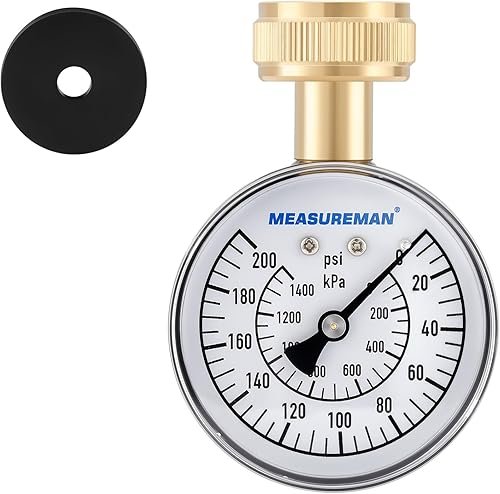
Is your shower weak? Does your washing machine take forever to fill? Before you blame the pipes or call a plumber, grab a water pressure tester. It’s the one tool that gives you a hard number—no guessing, no assumptions. We’ve used these on everything from old farmhouses to new builds, and the data always tells a story.
- What a water pressure tester actually is and why you need one
- How to use it correctly (it’s easy, but there’s a trick)
- The real benefits beyond just “checking pressure”
- Our hands-on reviews of the best gauges for 2026
What Is a Water Pressure Tester?
It’s a pressure gauge with a hose-thread adapter. That’s it. No batteries, no apps, no fuss. You screw it onto an outdoor faucet, a washing machine hookup, or a utility sink, turn on the water, and read the dial. The number you see is your static water pressure, measured in pounds per square inch (PSI).
Why does this matter? Your home’s water pressure is the force pushing water through your pipes. Too low (under 40 PSI), and fixtures dribble. Too high (over 80 PSI), and you’re stressing pipes, joints, and appliances. It’s the baseline for everything—from choosing a filter to deciding if you need a pressure regulator. Think of it like checking your tire pressure before a road trip. Simple, quick, and critical.
How a Water Pressure Tester Works
The Basic Mechanism
Inside the gauge is a small, curved tube called a Bourdon tube. When water pressure enters, it tries to straighten this tube. A mechanical linkage converts that movement into the rotation of a needle on the dial. It’s purely mechanical and incredibly reliable.
The Testing Process
Find a faucet with no other water running in the house. Screw the gauge on hand-tight. Turn the faucet on fully. Wait 10-15 seconds for the needle to settle. That’s your reading. We always test at the hose bib closest to where the water line enters the house—that’s your true incoming pressure. Test a few locations to spot drops, which can indicate clogged pipes.
Key Benefits of Testing Your Water Pressure
Diagnose Problems Fast. Low pressure at one faucet? Could be a clogged aerator. Low pressure everywhere? You’ve got a bigger issue. A gauge turns symptoms into data. It’s the difference between guessing and knowing.
Protect Your Investment. High pressure is a silent killer of water heaters, dishwashers, and ice makers. If your reading is consistently above 75 PSI, you need a pressure reducing valve. This simple test can prevent thousands in damage. Understanding your pressure is step one in choosing the best house water filtration system for your home.
Optimize Filter Performance. Every filter and softener has a recommended pressure range. Too low, and flow slows to a trickle. Too high, and you can damage the unit’s internal seals. Testing ensures your system works as designed.
Verify Repairs. Had a plumber install a new regulator? Test it yourself. We’ve seen “fixed” systems still running at 100 PSI. A $25 gauge holds everyone accountable.
Potential Drawbacks & Limitations
They won’t tell you what is TDS water or about contaminants. Pressure is about force, not purity. You need separate tests for that. The gauge also can’t diagnose the cause of pressure issues—just the symptom. That still takes some sleuthing.
Types of Water Pressure Testers
Standard Analog Gauges
This is what you need. A 2-1/2″ dial, 0-200 or 0-300 PSI range, with a 3/4″ female hose thread (FHT). They’re durable, accurate enough for homeowners, and last for decades. The Watts and MEASUREMAN models are classic examples.
Liquid-Filled Gauges
The dial is filled with glycerin or silicone oil. This dampens needle vibration from water hammer or pump pulses, giving a steadier read. They’re great for well systems but cost a bit more. The one drawback? You can’t let them freeze.
Digital Pressure Testers
Overkill for most. They’re pricier, need batteries, and are more fragile. Their main advantage is recording min/max pressure over time. We only recommend them for professional diagnostics or very specific troubleshooting.
Buying Guide: What Actually Matters
Accuracy: Look for “ASME Type B” accuracy. It’s the standard for residential gauges. Our top picks meet this.
Range: 0-200 PSI is perfect. 0-300 is fine too. You’ll never see residential pressure over 150 PSI.
Build Quality: A brass connection won’t corrode. A metal case protects the dial. Avoid all-plastic models.
Extras: A lazy hand (a second needle that tracks the highest reading) is handy. Some gauges have a built-in pressure relief valve for safety.
Don’t overthink it. For 95% of homeowners, a basic, reliable analog gauge is all you need. It’s a tool you’ll use once or twice a year, but the information it provides is priceless.
Our Top Picks for 2026
| Product | Key Specs | Price | Links |
|---|---|---|---|
MEASUREMAN Gauge |
0-200 PSI, 2.5″ dial, brass adapter | ~$23 | Buy on Amazon Buy on eBay |
Watts 0950200 Gauge |
0-300 PSI, ASME Type B, white case | ~$29 | Buy on Amazon Buy on eBay |
Liquid-Filled Gauge |
0-200 PSI, dual scale (PSI/bar), aluminum body | ~$22 | Buy on Amazon Buy on eBay |
18-in-1 Test Strips |
Tests hardness, chlorine, lead, nitrates, pH & more | ~$27 | Buy on Amazon Buy on eBay |
1. MEASUREMAN 2-1/2″ Water Pressure Test Gauge
This is our go-to recommendation for most people. It’s the one we keep in our own testing kit. The build is solid brass and steel, the dial is easy to read, and it just works. We’ve used the same one for over five years across dozens of homes without a hiccup. The 0-200 PSI range is perfect for residential use.
- Excellent value for the price
- Durable brass construction
- Clear, easy-to-read dial
- No lazy hand to track max pressure
- Basic plastic lens (avoid dropping it)
2. Watts 0950200 Water Pressure Test Gauge
Watts is a trusted name in plumbing components, and this gauge shows why. It meets ASME Type B accuracy standards, which is a step above most consumer models. The 0-300 PSI range is overkill for homes but makes it useful for light commercial work or well systems with pressure tanks. It’s a bit more expensive, but you’re paying for certified accuracy.
- ASME Type B accuracy certification
- Higher pressure range for versatility
- Reputable brand in plumbing
- Slightly higher cost for similar basic function
- The white case shows dirt easily
3. Liquid Filled Aluminum Pressure Gauge
Get this one if you have a well pump or your pipes hammer. The liquid filling smooths out the needle jitter, giving you a calm, steady read. We like the dual-scale dial (PSI and bar) and the aluminum body feels tough. Just remember: don’t let it freeze, or the case can crack. A great choice for more demanding situations.
- Liquid damping for a steady needle
- Dual PSI/bar scale is convenient
- Rugged aluminum construction
- Must not be exposed to freezing temps
- Slightly heavier than standard gauges
4. 18-in-1 Water Quality Test Strips (Bonus)
Okay, this isn’t a pressure tester. But if you’re checking your water, you should know more than just the pressure. These strips are a cheap, fast way to get a snapshot of what’s actually in your water—hardness, chlorine, nitrates, and even lead. Use them alongside your pressure gauge for a complete picture. They pair perfectly with other systems like a uv water sterilizer or a water purifier ultraviolet unit, helping you understand if you need them.
- Tests 18 different parameters
- Results in about 30 seconds
- Great for initial screening
- Not as precise as lab testing
- Color matching can be subjective
Frequently Asked Questions
- What is normal water pressure for a house?
- Normal residential water pressure typically falls between 40 and 80 PSI. The sweet spot for most homes is 50-60 PSI. Below 40 PSI, you’ll notice weak flow. Above 80 PSI, you risk damaging pipes and appliances, and a pressure regulator is recommended.
- How do I test my home water pressure?
- Screw a water pressure tester onto an outdoor hose bib or washing machine hookup. Ensure all other faucets and water-using appliances are off. Turn the faucet on fully and read the gauge. That number is your static water pressure in PSI.
- Can a water pressure tester check for leaks?
- Not directly. However, if you test your pressure, then turn off the main water valve to your house and the pressure on the gauge slowly drops, that indicates a leak somewhere in your system. It’s a useful diagnostic trick.
- Why is my water pressure high at night?
- Municipal water pressure often increases at night when demand across the neighborhood is low. This is common. If your daytime pressure is 60 PSI but jumps to 90 PSI at night, you definitely need a pressure reducing valve to protect your home.
- Do I need a professional to test my water pressure?
- No. This is one of the easiest and safest DIY plumbing tests you can do. The tool is inexpensive and the process is straightforward. Save your money for the actual repair if the gauge reveals a problem.
Final Thoughts
After testing water systems for years, we can say this: not knowing your water pressure is like driving without a speedometer. It’s a fundamental piece of data. The MEASUREMAN gauge is our top pick for its reliability and value. It’s the one we recommend to friends and family.
Once you know your pressure, you can make smarter decisions about filters, softeners, and appliances. It’s the first step toward better water. Whether you’re on city water or a well, whether you have the kinetico water conditioning system or a simple pitcher filter, everything starts with this one simple test. And while you’re at it, you might be curious about best tap water in the us—pressure is part of that story too.
