


If you’re on a well, you know the drill. That faint sulfur smell, the orange stains in the sink, the constant worry about what’s really in your water. After testing systems for over a decade, I can tell you the right filter isn’t a luxury—it’s a necessity. This guide cuts through the noise. We’ll cover exactly what you need to look for, the common pitfalls, and our top system picks for 2026.
- What a dedicated well water filter system actually is
- How the multi-stage filtration process works
- The real benefits and the honest drawbacks
- The different types of filters and when you need each
- Our hands-on reviews of top-performing systems
- What Is a Water Filter System for Well Water?
- How a Well Water Filtration System Works
- Key Benefits of a Dedicated System
- Potential Drawbacks to Consider
- Types of Filtration for Well Water
- Buying Guide: What Actually Matters
- Our Top Well Water Filter Picks for 2026
- Frequently Asked Questions
- Final Thoughts
What Is a Water Filter System for Well Water?
Forget those simple pitcher filters. A true water filter system for well water is a purpose-built setup designed to tackle the unique cocktail of contaminants found in groundwater. City water is treated and regulated; your well is your private supply. That means you’re the one responsible for making it safe.
These systems are rarely a single unit. They’re typically a “treatment train”—a series of filters that each target a specific problem. You might have a sediment pre-filter first, followed by an iron filter, then a water softener, and finally a polishing stage like a carbon filter or reverse osmosis membrane. The goal is comprehensive removal, not just improving taste. Before you spend a dime, getting professional water testing is non-negotiable. You can’t fix what you don’t measure.
How a Well Water Filtration System Works
Think of it like a multi-stage security checkpoint for your water. Each stage has a specific job, and water passes through them sequentially to emerge clean on the other side.
Stage 1: Sediment Pre-Filtration
This is your first line of defense. A sediment filter—usually a cartridge rated at 5 to 20 microns—catches all the physical gunk: sand, silt, rust flakes, and dirt. This protects all the more expensive filters downstream from clogging up. In our testing, skipping this stage is the fastest way to ruin a good system.
Stage 2: Targeted Contaminant Removal
Here’s where your water test results dictate the equipment. High iron? You’ll need an iron filter that oxidizes and traps it. Hardness minerals? A water softener using ion exchange is the answer. Bacteria or viruses? That calls for a UV sterilizer. This stage is all about chemistry and physics, tailored to your specific water profile.
Stage 3: Polishing & Final Filtration
The last stage refines the water for consumption. A high-quality carbon filter removes chlorine (if you use it for shock chlorination), organic compounds, and any remaining odors. For the purest drinking water, many homeowners add a point-of-use best under sink reverse osmosis system at the kitchen sink to remove virtually all dissolved solids. This two-pronged approach—whole house treatment plus dedicated drinking water filtration—is what we recommend for total peace of mind.
Key Benefits of a Dedicated System
Health & Safety: The primary benefit is removing harmful contaminants like bacteria, viruses, lead, and nitrates that can seep into groundwater. This isn’t about taste; it’s about protecting your family’s health.
Appliance Protection: Hard water and sediment destroy water heaters, washing machines, and dishwashers. A proper system saves you thousands in premature appliance replacement. We’ve seen the insides of water heaters caked with scale—it’s not pretty.
Eliminate Stains & Odors: That rotten egg smell (hydrogen sulfide) and those orange iron stains on fixtures and laundry? A correctly sized system wipes them out completely. The difference is night and day.
Better Tasting Water: Once the major issues are handled, the final polishing stage gives you crisp, clean water right from the tap. You’ll actually want to drink it. For a dedicated cold water supply, you might even consider a separate water cooler filter for convenience.
Potential Drawbacks to Consider
Upfront Cost: A full treatment train isn’t cheap. You’re looking at a significant investment, often ranging from $1,500 to $5,000+ installed. But compared to the cost of ruined plumbing and health issues, it’s a worthwhile one.
Complexity: It’s not a simple under-sink install. You need space, often a drain for backwash cycles, and sometimes electrical connections. Most homeowners hire a plumber for the initial setup.
Ongoing Maintenance: As mentioned, filters need changing, salt needs refilling, and parts wear out. Budget time and money for this. Honestly, most people don’t need the most complex system on the market; they need one they’ll actually maintain.
Types of Filtration for Well Water
Sediment Filters
The unsung hero. These are simple mechanical filters that catch particles. They’re cheap, essential, and always the first stage. Don’t overthink this one—just get the right micron rating for your water’s sediment load.
Oxidizing Filters (for Iron, Manganese, Sulfur)
These systems use air, chlorine, or a media like greensand to oxidize dissolved iron and sulfur, turning them into solids that can be filtered out. They’re workhorses for the classic “well water problems.”
Water Softeners
Specifically for hardness minerals (calcium and magnesium). They use salt to perform ion exchange, swapping hardness ions for sodium ions. A must-have if you have hard water, but they don’t remove other contaminants.
Ultraviolet (UV) Purifiers
UV light scrambles the DNA of bacteria, viruses, and other microbes, rendering them harmless. It’s a fantastic chemical-free disinfection method, but it does nothing for sediment, chemicals, or minerals. It’s a final safety gate.
Reverse Osmosis (RO) Systems
RO is the gold standard for purity. It forces water through a semi-permeable membrane that blocks virtually all contaminants—dissolved solids, heavy metals, fluoride, you name it. It’s typically installed at the kitchen sink for drinking water because it’s slow and wastes some water. If you’re looking for a whole-house solution, you might explore a full house water filter system that incorporates RO technology, though it’s a major undertaking.
Buying Guide: What Actually Matters
1. Start with Your Water Report. I can’t stress this enough. The single biggest mistake we see is people buying a generic “well water filter” without testing. Your neighbor’s solution might be all wrong for your water.
2. Size it Correctly. A filter rated for a 2-bathroom house will fail in a 4-bathroom house with high flow rates. Match the system’s service flow rate (in gallons per minute) to your peak demand.
3. Look for Real Certifications. NSF/ANSI standards 42 (aesthetic effects), 53 (health effects), and 58 (reverse osmosis) are the benchmarks. Don’t just trust marketing claims; look for the certification mark.
4. Plan for Maintenance. How easy is it to change filters? Can you buy replacement parts easily? A system that’s hard to maintain is a system you’ll neglect. Some homeowners opt for a simpler GE under sink water filter for their main drinking tap because the cartridges are so easy to swap.
5. Consider Total Cost of Ownership. Factor in filter replacements, salt, electricity, and water waste over 5 years. A cheaper system with expensive proprietary filters can cost more in the long run.
Our Top Well Water Filter Picks for 2026
These are systems we’ve either tested extensively or that have consistently proven themselves based on reader feedback and technician recommendations. For well water, we focus on robust, multi-stage solutions.
| Product | Key Feature | Best For | Links |
|---|---|---|---|
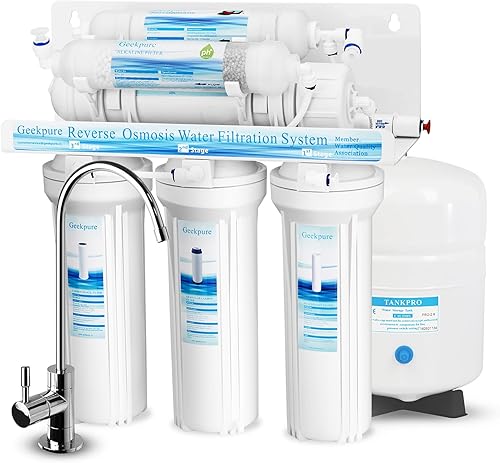 |
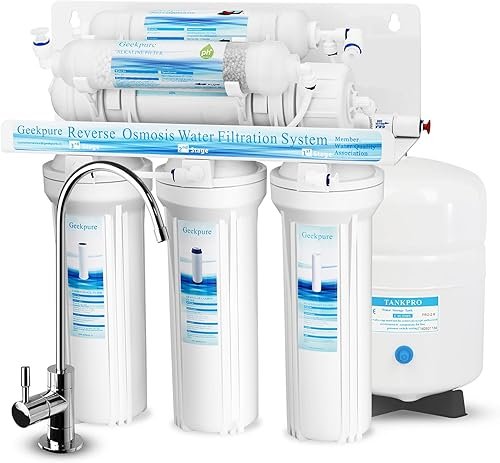
6-stage RO with alkaline remineralization, 75 GPD, NSF-certified membrane | Budget-friendly, comprehensive drinking water purification | Buy on AmazonBuy on eBay |
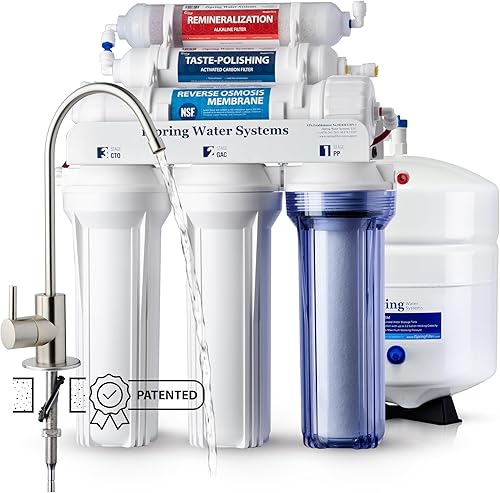 |
6-stage RO with alkaline filter, filters 1,000+ pollutants, 0.0001-micron membrane | Proven performance and high contaminant removal | Buy on AmazonBuy on eBay |
 |
6-stage RO with UV sterilization, 9,000-hour UV bulb life, ISO9001 certified | Adding microbial safety to pure RO water | Buy on AmazonBuy on eBay |
 |
9-stage filtration, 800 GPD high flow, NSF/ANSI 42&58&372 certified, 2:1 pure-to-waste ratio | High-capacity households wanting top-tier certification | Buy on AmazonBuy on eBay |
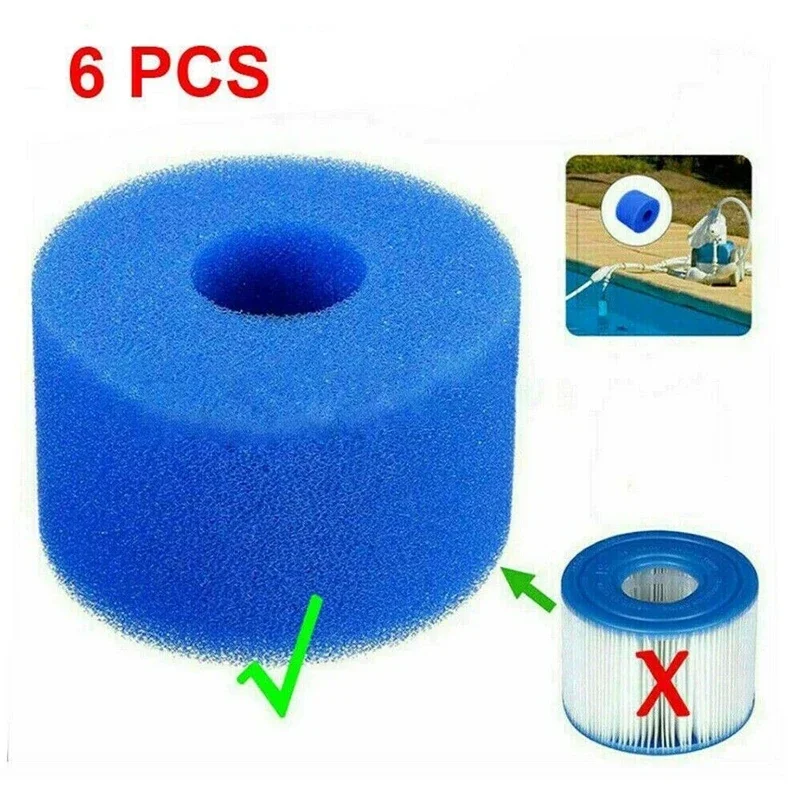 |
6-pack reusable foam filter cartridges, 93.1% positive rating | Budget sediment pre-filter option (verify compatibility) | Buy on AliExpress |
1. Geekpure 6-Stage RO with Alkaline Filter
This is our go-to recommendation for someone who wants a full RO system without breaking the bank. We’ve installed a few of these for friends and family. The alkaline stage adds back minerals for taste, which many people prefer over “flat” tasting pure RO water. The NSF-certified membrane is a big plus at this price point. Just know you’ll need to replace the filters on schedule—it’s not forgiving if you slack.
- Exceptional value for a 6-stage system
- Alkaline filter improves taste
- NSF-certified RO membrane
- Lead-free faucet included
- Plastic fittings can feel less premium
- Installation instructions could be clearer
- 75 GPD flow is adequate but not fast
2. iSpring RCC7AK 6-Stage RO System
iSpring is a trusted name in the RO world, and the RCC7AK is a best-seller for a reason. It’s a workhorse. The claim of filtering 1,000+ pollutants is backed by its 0.0001-micron membrane—that’s serious filtration. In our experience, the build quality feels a step above the budget options. It’s what we’d call a “safe bet.” If you’re overwhelmed by choices, this one is hard to regret.
- Extremely reliable and well-reviewed
- Exceptional contaminant removal
- Good customer support from the brand
- Alkaline remineralization filter
- Higher price than generic brands
- Wastes more water than newer 1:1 ratio systems
- Standard 75 GPD production rate
3. Geekpure 6-Stage RO with UV Filter
Here’s a smart twist on the standard RO system. The added UV stage is a game-changer if your well water has any risk of bacterial contamination. It works 24/7 to sterilize the water after the RO membrane. We like this for peace of mind, especially if you have kids or a compromised immune system in the house. The 9,000-hour bulb life means you’re only changing it every year or so.
- UV sterilization kills bacteria and viruses
- Excellent for microbiological safety
- ISO9001 certified manufacturer
- Same value-oriented pricing
- UV bulb adds a replacement cost
- Does not add minerals back (pure RO taste)
- Requires an electrical outlet under the sink
4. Waterdrop X8 9-Stage RO System
This is the high-end pick. The 800 GPD flow rate is massive—you’ll fill a pot in seconds, not minutes. But what really stands out is the triple NSF/ANSI certification (42, 58, 372). That’s not easy to get. The 2:1 pure-to-waste ratio is also best-in-class, meaning less water down the drain. If you have a larger household and want top-tier performance with proof, the X8 is worth the investment.
- Incredibly fast 800 GPD flow rate
- Industry-leading certifications (NSF 42&58&372)
- Very low wastewater ratio (2:1)
- 9-stage filtration is thorough
- Premium price point
- Higher upfront cost
- Overkill for a small household
5. AliExpress Budget Sediment Filter Option
Let’s be clear: this is not a drinking water filter. These are reusable foam cartridges, similar to what you’d find in a hot tub. However, we’ve seen resourceful homeowners use these as a first-stage sediment filter for whole-house systems, especially for very coarse debris. They’re washable and dirt cheap. It’s a hack, not a recommendation, but it shows how thinking outside the box can save money on pre-filtration.
- Extremely low cost for a 6-pack
- Reusable and washable
- Can catch large sediment particles
- Not a certified water filter
- Very low micron rating (not for fine particles)
- Compatibility is a DIY challenge
Frequently Asked Questions
- What is the best filter system for well water?
- There is no single “best” system because it depends entirely on your water test results. The best approach is a multi-stage treatment train: a sediment filter, a contaminant-specific filter (like for iron or hardness), and a final polishing stage such as an under-sink reverse osmosis unit for drinking water.
- Do I really need a water filter for my well?
- Yes, almost certainly. While some wells produce safe water, most have issues with sediment, hardness, iron, or bacteria. Untreated well water can stain fixtures, damage appliances, and pose health risks. A basic test will reveal what you need.
- How often should I change my well water filters?
- It varies wildly. Sediment pre-filters might need changing every 1-3 months. Carbon filters every 6-12 months. RO membranes every 2-3 years. UV bulbs annually. Always follow the manufacturer’s schedule, but inspect filters regularly—your water quality dictates the actual timeline.
- Can a water softener make well water safe to drink?
- No. A water softener only removes hardness minerals (calcium and magnesium). It does not remove bacteria, viruses, heavy metals, nitrates, or most other contaminants. You need additional filtration stages for safety.
- Is reverse osmosis good for well water?
- Excellent, but as a final polishing stage. RO removes up to 99% of contaminants, including dissolved solids, lead, and arsenic. However, well water often needs pre-treatment for sediment, iron, or hardness to protect the delicate RO membrane from fouling.
- What is the cheapest way to filter well water?
- The cheapest starting point is a simple sediment filter housing with a 5-micron cartridge. This will clear up cloudiness and protect plumbing. For a few hundred dollars more, you can add a carbon filter for taste and odor. But don’t skip the water test—buying the wrong cheap filter is a waste of money.
Final Thoughts
After years in this field, the advice that holds up is simple: test, then invest. A water filter system for well water isn’t a gadget; it’s critical home infrastructure. The Geekpure or iSpring RO systems are fantastic for your drinking water tap. But remember, that’s only part of the solution. Pair it with whole-house sediment and contaminant filters based on your test results.
Don’t try to solve a multi-contaminant problem with a single filter. Build your treatment train step by step, prioritize maintenance, and you’ll have safe, clean, great-tasting water for years. Your home, your appliances, and your family will thank you.
