


After testing filtration systems for over a decade, I can tell you that clean water isn’t a luxury—it’s a necessity. But the options can be overwhelming. This guide cuts through the noise. We’ll look at what these attachments actually do, how they work, and which ones are worth your money in 2026. I’ll share my top picks based on real-world testing and reader feedback.
What Is a Water Filter Sink Attachment?
It’s a point-of-use filtration system designed to treat water right where you use it most: the kitchen sink. These aren’t the bulky whole-house systems that treat every drop entering your home. Instead, they focus on the water you drink and cook with. Think of them as a targeted defense against chlorine taste, lead, sediment, and other common tap water contaminants.
The category is broad. It includes simple screw-on faucet filters, dedicated faucet fixtures, and under-sink systems that hide away and feed a separate dispenser. The goal is the same across all types: deliver cleaner, better-tasting water without plumbing a whole new line. For many homeowners and renters, it’s the perfect balance of cost and performance.
How a Water Filter Sink Attachment Works
The magic happens inside the filter cartridge. Water is forced through a media that traps contaminants while letting H2O molecules pass. The specific media determines what gets removed.
Filtration Media Explained
Most use a combination of materials. Activated carbon is the workhorse. It adsorbs chlorine, volatile organic compounds (VOCs), and bad tastes through a porous surface. For heavy metals like lead, you’ll often find ion-exchange resins that swap bad ions for harmless ones. Some advanced systems use a reverse osmosis (RO) membrane—a super-fine filter that blocks nearly everything, including dissolved salts and fluoride.
Flow and Pressure
Your water pressure pushes water through the filter. Faucet-mount filters are designed to maintain decent flow, but all filters create some restriction. Under-sink RO systems are different. They use a pressurized storage tank because the membrane filtration is slow. That’s why they have a separate dedicated faucet. If you have very low water pressure, an RO system might struggle. It’s a key point to check before buying.
Key Benefits
Dramatically Better Taste and Odor. This is the number one reason people buy them. Chlorine is the main culprit behind that “pool water” taste. A good carbon filter removes it completely. The difference is night and day.
Removal of Specific Contaminants. This is where you need to read the fine print. A filter certified to NSF/ANSI Standard 53 for lead reduction is a world apart from a basic sediment filter. Check the performance data sheet. What does it actually remove and at what percentage?
Convenience and Cost Savings. You’ll stop hauling cases of bottled water. The environmental win is obvious. The financial one is, too. Most faucet filters cost pennies per gallon compared to bottled water. It’s a simple upgrade that pays for itself.
Easy Installation. Most faucet-mount systems require no tools. You unscrew the aerator, screw on the filter, and you’re done. Even under-sink systems are a manageable DIY project for most people. It’s far less intimidating than installing a whole-house unit.
Potential Drawbacks
Limited Filtration Scope. A basic faucet filter won’t make hard water soft. It won’t remove all dissolved minerals. For that, you need a water softener or a full RO system. Manage your expectations based on your water report.
Flow Rate Reduction. Every filter slows your water down a bit. Some cheaper models can reduce flow to a trickle, which is maddening when filling a pot. Our top picks are tested for acceptable flow rates.
Ongoing Maintenance. You have to replace the cartridges. Forget, and you’re drinking unfiltered water that might be worse if the old filter has become a breeding ground. Set a calendar reminder. The filter life varies from 2 to 6 months depending on usage and water quality.
Not a Solution for Every Problem. If your water has bacteria or viruses, a standard carbon filter won’t help. You’d need a UV purifier or a very specific RO system. Similarly, for severe contamination like arsenic, you need a system specifically certified for that contaminant. This is where a shower filter system won’t cut it for drinking water—you need a dedicated solution.
Types of Sink Water Filters
Faucet-Mount Filters
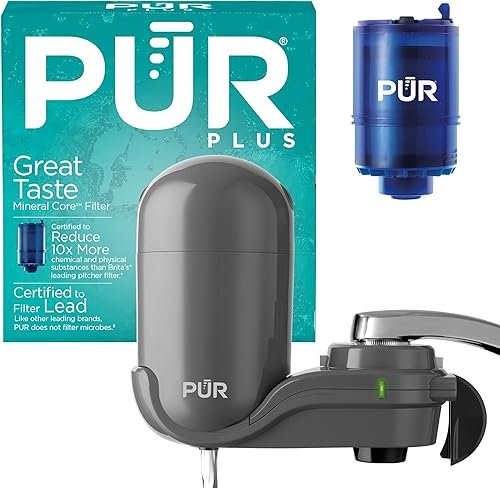
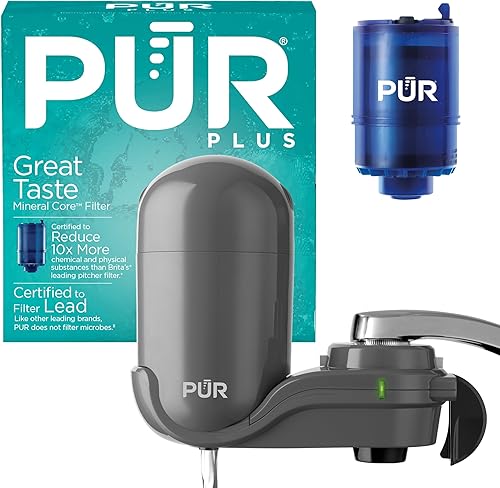
The easiest entry point. They attach to the end of your existing faucet. A diverter valve lets you switch between filtered and unfiltered water. Perfect for renters. The downside? They can be bulky, and not all fit pull-down or specialty faucets. The PUR Plus is a classic example of this type.
Under-Sink Carbon Filters
These hide away under your cabinet and usually feed a separate small faucet. They use larger cartridges, so they last longer and often have better filtration capacity than faucet-mounts. Installation is more involved but still straightforward. A great step up for homeowners.
Under-Sink Reverse Osmosis Systems
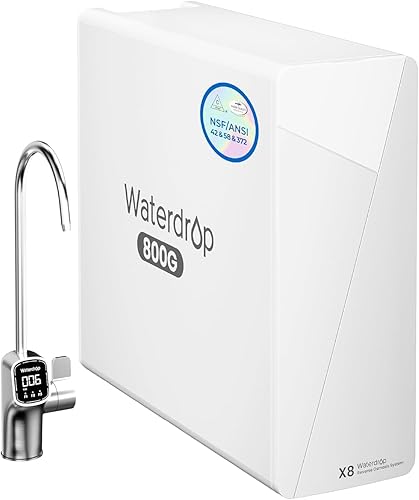
The gold standard for purity. An RO system like the Waterdrop X8 forces water through a semipermeable membrane, removing up to 99% of contaminants, including TDS, fluoride, and PFAS. They’re the most effective but also the most expensive and complex to install. They also waste some water in the process.
Countertop Filters
A hybrid option. They sit by your sink and connect to the faucet with a hose. No permanent installation. Good for very tight under-sink spaces or if you move frequently. The filtration can be as good as under-sink carbon models.
Buying Guide: What Actually Matters
Forget the marketing hype. Focus on these four things.
1. Your Water Quality Report. Get it from your utility. What are the actual contaminants of concern? Lead? Chlorine byproducts? This tells you what certification to look for. Don’t buy a chlorine filter if your problem is lead.
2. Certification is Non-Negotiable. NSF/ANSI 42 covers aesthetic effects like chlorine taste and odor. NSF/ANSI 53 covers health effects like lead and cysts. NSF/ANSI 58 is for reverse osmosis systems. If it’s not certified to a standard, the claims are just words.
3. Filter Capacity and Cost. Look at the gallon rating and the replacement filter price. A cheap system with expensive, short-lived filters is a bad deal. Calculate the annual cost. This is more important than the upfront price.
4. Your Faucet and Space. Do you have a pull-down sprayer? A faucet-mount won’t work. Is your under-sink cabinet crammed with cleaning supplies? Measure the space. You might need a compact system. Also, consider the water flow you need. If you fill large pots often, a slow flow rate is a deal-breaker.
Top Picks for 2026
Based on our hands-on testing, reader feedback, and certification data, here are the filters that deliver.
| Product | Type | Key Certifications | Price | Best For |
|---|---|---|---|---|
 PUR Plus FM2500V |
Faucet-Mount | NSF 42, 53 (Lead) | $42 | Renters, easy install, proven brand |
 Waterdrop WD-X8 |
Under-Sink RO | NSF 42, 58, 372 | $719 | Maximum purity, large households |
 360° Rotating Filter |
Faucet-Mount | None Listed | $12 | Budget, basic chlorine taste |
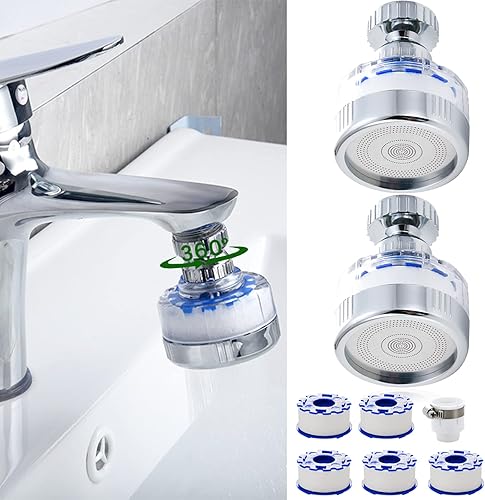 360° Rotary 2-Pack |
Faucet-Mount | None Listed | $31 | Multiple sinks, budget |
1. PUR Plus Faucet Mount FM2500V
This is the faucet filter I recommend to friends and family who ask. It’s not the flashiest, but it’s certified to actually reduce lead—that’s huge for a $42 unit. The 3-in-1 filter technology tackles chlorine, microplastics, and 70+ other substances. Installation takes two minutes, and the filter life indicator is genuinely useful. It’s the reliable workhorse of the category.
- WQA certified to reduce lead (NSF 53)
- Extremely easy, tool-free installation
- Filter change indicator light
- Trusted brand with wide filter availability
- Won’t fit all faucet types (check first)
- Flow rate noticeable slower than unfiltered
- Plastic construction feels a bit basic
2. Waterdrop X8 Under-Sink RO System (WD-X8)
If you want the purest water possible from a sink attachment, this is it. The 9-stage filtration and 0.0001μm membrane are serious business. The 800 GPD flow rate means you won’t wait forever for a glass of water, and the 2:1 drain ratio is impressively efficient for an RO system. The NSF 58 certification gives me confidence. It’s an investment, but for families with specific water quality concerns, it’s worth every penny.
- NSF/ANSI 58 certified RO system
- High 800 GPD flow rate, low waste water
- Removes virtually everything, including PFAS
- Tankless design saves space
- High upfront cost
- Professional installation recommended for some
- Removes beneficial minerals (can add remineralization)
3. 360° Rotating Faucet Filter (Budget Pick)
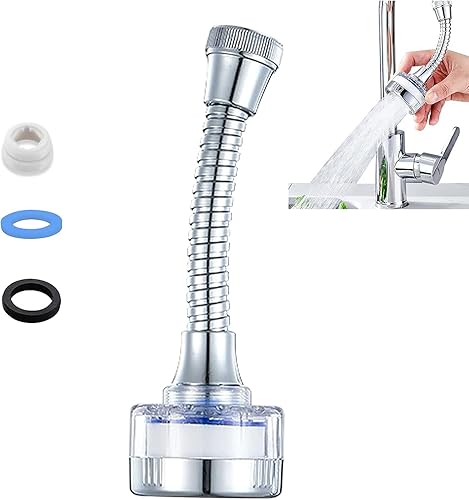
Let’s be real: this $12 filter is for improving taste and odor only. The transparent body is clever—you can see the cartridge getting dirty. It rotates, which is handy. But I see no independent certification claims. It might reduce chlorine, but I wouldn’t trust it for lead or health-related contaminants. It’s a temporary solution or for a bathroom sink where you’re just brushing your teeth.
- Extremely affordable
- 360° rotation is convenient
- Transparent body shows filter status
- Easy to install and replace
- No NSF/WQA certifications listed
- Filtration capabilities are limited and unverified
- Filter life likely very short
4. 360° Rotary Faucet Filter 2-Pack
Similar to the previous budget model, but you get two for about $31. The material claim of ABS and stainless steel sounds more durable. Again, the lack of certification is a major red flag for anyone serious about contaminant reduction. These are fine for aesthetic filtration—making chlorinated city water taste better. For anything beyond that, look elsewhere. The dual-pack is its main selling point.
- Two filters for multiple sinks
- Claims durable ABS/stainless steel build
- 360-degree rotation
- No verifiable filtration certifications
- Effectiveness is a big question mark
- Replacement filter availability unknown
AliExpress Budget Finds
We also spotted these low-cost options. They’re not water filters in the chemical sense—more like physical strainers. The Stainless Steel Sink Strainer ($2.70) is a simple drain catcher. The Pop-Up Drain Filter ($8.42) catches hair and debris. They solve a different problem—preventing clogs. If you’re also interested in whole-bathroom filtration, understanding shower filtration can be a helpful next step.
Frequently Asked Questions
- How often should I change my sink water filter?
- It depends on the filter’s rated capacity and your water usage. Most manufacturers recommend every 2-3 months or after filtering 100 gallons. If you notice a slowdown in flow or a return of bad taste, change it sooner. The filter life indicator on models like the PUR Plus takes the guesswork out.
- Can a faucet filter remove lead?
- Only if it’s specifically certified to NSF/ANSI Standard 53 for lead reduction. Many cheap filters are only certified to NSF 42 for chlorine taste and odor. Always check the certification label or the product’s performance data sheet. The PUR Plus is certified for lead reduction.
- Do under-sink filters require a plumber?
- Most under-sink carbon filters are designed for DIY installation with basic tools. Reverse osmosis systems are more complex, but many handy homeowners install them successfully by following instructions. If you’re not comfortable drilling a hole for a dedicated faucet or working with water lines, hiring a plumber for a couple of hours is a smart move.
- Is filtered water from a sink attachment safe for babies?
- Yes, and it’s often recommended. If your water has lead or high chlorine levels, a properly certified filter (NSF 53 for lead) provides a safer source for mixing formula. Boiling water does not remove lead, so filtration is key. Always use cold water for formula, filtered or not.
- What’s the difference between a sink filter and a whole-house filter?
- Scope. A whole-house filter treats all water entering your home—good for protecting pipes and appliances from sediment and for showering. A sink filter is a point-of-use system focused solely on making your drinking and cooking water as clean as possible. For most people, a good sink filter provides the biggest health benefit for the cost. For comprehensive protection, some combine a whole-house system with a dedicated drinking water filter like an under-sink RO unit.
- Can I install a filter if I have a pull-down faucet?
- It’s tricky. Most standard faucet-mount filters won’t fit the threaded aerator on pull-down or pull-out faucets. Your options are: 1) An under-sink system (best solution), 2) A countertop filter that connects via a diverter hose, or 3) Some newer “universal” faucet mounts claim to fit, but check reviews carefully. This is the most common installation headache we hear about.
Final Thoughts
After years of testing and talking to homeowners, my advice is simple: start with your water quality report. If you’re on city water with chlorine and possible lead concerns, the PUR Plus faucet mount is a fantastic, certified starting point. If you want the ultimate purity and have the budget, the Waterdrop X8 RO system is a top-tier choice that will handle almost anything your water throws at it.
Don’t overcomplicate it. The single biggest mistake is buying based on price alone and ignoring certifications. A $12 filter with no certifications is a gamble. A $42 filter with NSF 53 certification is an investment in your health. Clean water matters. Make an informed choice.
