


You’ve picked the perfect water filter cartridge. But if you slap it into a cheap, leaky housing, you’re wasting your money. We’ve seen it happen too many times. The housing is the backbone. This guide breaks down what actually matters.
What Is a Water Filter Housing?
Think of it as a pressure vessel. It’s a sealed canister, usually made of plastic or stainless steel, that screws onto a mounting bracket. Your filter cartridge sits inside it. Unfiltered water enters one port, is forced through the cartridge media, and exits the other port as clean water.
It’s not just a tube. The housing creates the seal. It manages the pressure. It gives you a place to install a faucet filter cartridge or a big blue jumbo for your whole house. Without it, your cartridge is just a fancy paperweight.
How a Water Filter Housing Works
The Basic Mechanics
Water enters the inlet port under pressure from your mains line. It fills the chamber around the cartridge. The pressure forces the water through the filter media—be it a sediment pleat, a carbon block, or a specialized membrane. Clean water flows into the center core of the cartridge and out the outlet port to your faucet or pipes.
The Critical Seal
The magic is in the seals, usually rubber O-rings. The lid screws down, compressing the O-ring against the housing body. This creates a watertight seal. If that O-ring is dry, cracked, or misaligned, you get leaks. We always keep a spare set.
Key Benefits of a Quality Housing
Protection for Your Investment. A sturdy housing shields your delicate filter cartridge from physical damage and pressure spikes. It’s the armor.
Versatility and Customization. You can swap cartridges in minutes. Want to switch from a sediment filter to a carbon water filter? Just unscrew the housing and drop in the new one. No plumbing changes needed.
Easy Maintenance. Seeing when to change your filter is simple. With a clear sump model, you can visually inspect cartridge gunk buildup. Opaque models require you to track time or taste.
Potential Drawbacks to Consider
Space is another issue. A standard 10-inch housing needs about 18 inches of vertical clearance for cartridge changes. Measure your under-sink area twice. And remember, every housing adds a slight pressure drop to your system.
Types of Water Filter Housings
Standard Size Housings (10″ x 2.5″)
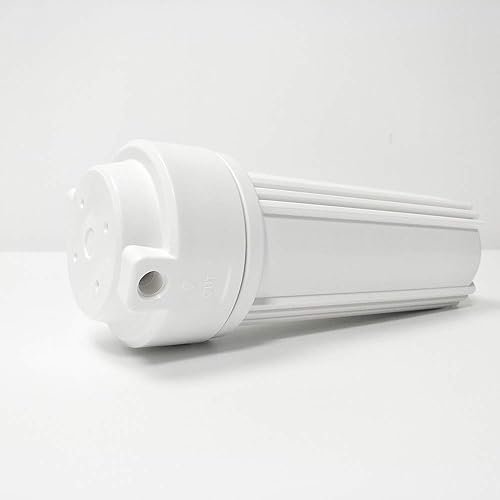
The absolute standard. Fits 95% of cartridges sold. Perfect for under-sink systems and light-duty whole house setups. Our go-to for most homeowners.
Jumbo Size Housings (10″ x 4.5″ or 20″ x 4.5″)
These “Big Blue” or “Big White” housings hold much larger cartridges. They offer higher flow rates and longer service life. Ideal for whole house filtration or homes with high water usage.
Specialty & Stainless Steel Housings
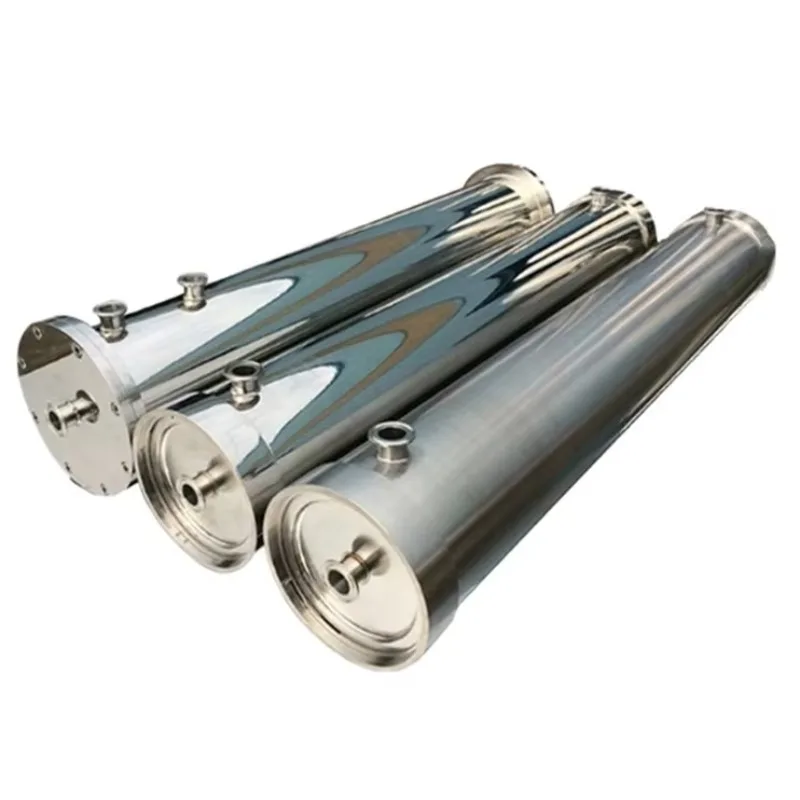
You’ll find housings for specific applications, like high-temperature or high-purity systems. A distilled water benefits setup might use a stainless steel housing for ultimate durability. They cost more but last decades.
How to Choose the Right Housing
1. Size is Everything. Match the housing to your cartridge. A 10″ x 2.5″ housing won’t fit a 10″ x 4.5″ cartridge. Check the label on your old filter.
2. Port Size and Type. Common sizes are 1/4″, 3/8″, or 3/4″ for whole house. Brass ports are more durable than plastic. Get the right fittings for your existing tubing.
3. Material and Certification. Look for NSF/ANSI 42 or 58 certified housings. This ensures the materials are safe for potable water. Polypropylene is standard. For high heat, consider stainless.
4. Pressure Rating. Your home water pressure is likely 40-80 PSI. Choose a housing rated for at least 100 PSI for a safety margin.
Our Top Water Filter Housing Picks for 2026
| Product | Best For | Key Feature | Price |
|---|---|---|---|
 Standard 10″ White Housing |
Basic under-sink setups | Simple, reliable, 1/4″ ports | $46 |
 Transparent 10″ Housing |
Visual filter inspection | See-through sump, eco-friendly | $46 |
 Twin Whole House System |
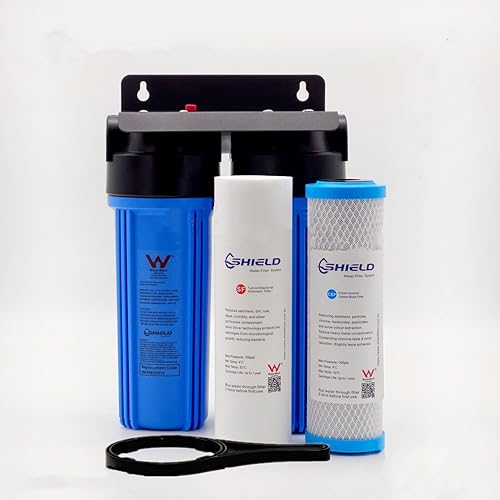
Whole house filtration | 2-stage, 99.99% chlorine removal | $99 |
 Waterdrop RO System |
High-purity drinking water | 9-stage, 800 GPD, NSF certified | $7.19 |
 Stainless Steel Housing |
Durability & high purity | Ultrafiltration membrane ready | $72.20 |
Standard 10″ x 2.5″ Water Filter Housing
This is the workhorse. We’ve installed dozens of these in test rigs. It’s nothing fancy, but the white opaque plastic is sturdy, and the 1/4″ inlet/outlet ports are perfect for most under-sink applications. If you just need a reliable home for your carbon filter, this is it.
- Extremely affordable
- Simple, proven design
- Widely available cartridges
- Opaque—you can’t see the filter
- Basic plastic construction
10in Transparent Water Filter Housing
The clear sump is a game-changer for maintenance. You can actually see the sediment building up on your filter. No more guessing. This model uses eco-friendly AS+PET material and has a solid sealing lid. It’s great for pre-filtration to protect appliances.
- See-through for easy monitoring
- Eco-friendly materials
- Good seal performance
- Clear plastic can stain over time
- Not for high-temperature use
Twin Whole House Water Filter System
If you’re on municipal water and hate the chlorine taste and smell, this twin system is a solid entry point. The first stage is sediment, the second is a carbon block that tackles chlorine, pesticides, and odors. It’s a complete package with cartridges included.
- Complete 2-stage system
- Removes 99.99% of chlorine
- Protects appliances and your skin
- Requires more installation space
- Higher initial cost than single units
Waterdrop WD-X8 Reverse Osmosis System
This isn’t just a housing—it’s a full, high-performance RO system. But the core of it is a brilliantly engineered filter housing array. The 9-stage filtration, NSF/ANSI 42&58 certification, and massive 800 GPD flow rate make it a top contender for anyone serious about purity. The 2:1 pure-to-drain ratio is excellent.
- NSF/ANSI certified performance
- High flow rate, low waste water
- Reduces PFAS, lead, TDS
- Requires under-sink installation
- Higher price point for full system
High Quality Stainless Steel Filter Housing
For the DIY enthusiast or a specialized application, this stainless steel housing is built like a tank. It’s designed for ultrafiltration membranes, making it ideal for creating a point-of-use system with very high purity. It’s overkill for most homes, but if you need durability, this is it.
- Extremely durable stainless steel
- Suitable for high-purity applications
- Long lifespan
- Significantly more expensive
- Heavier, may need stronger mounting
Frequently Asked Questions
- Can I use any brand of filter cartridge in my housing?
- Yes, as long as it’s the correct physical size (e.g., 10″ x 2.5″). Standardization is your friend here. You’re not locked into one brand.
- How often should I replace the O-ring?
- Inspect it every filter change. Replace it if it’s cracked, flattened, or stiff. A good silicone O-ring can last 2-3 years with proper lubrication.
- Why is my housing leaking from the top?
- It’s almost always the O-ring. It might be pinched, dirty, or dry. Take it apart, clean the groove, lubricate the ring, and reassemble. Hand-tighten only.
- What’s the difference between a “filter housing” and a “filter system”?
- A housing is just the empty canister. A system includes the housing, mounting bracket, filter cartridge, and often tubing and fittings. You’re buying a complete solution.
- Do I need a housing for a countertop water distiller?
- No. Distillers are standalone appliances that boil and condense water. They don’t use replaceable filter cartridges that need a separate housing.
Final Thoughts
Don’t overthink it, but don’t under-buy it. For most people, a standard 10″ opaque or transparent housing is perfect. If you’re filtering water for your entire house, step up to a twin system or a jumbo housing. The housing itself is a one-time purchase that will outlast many cartridges.
Our clear recommendation for a basic, reliable setup is the Standard 10″ White Housing. It’s cheap, it works, and it lets you focus your budget on better filter cartridges—which is where the real magic happens.
