


Water Filter for Well Water System: The 2026 No-Nonsense Guide
You’re here because your well water has issues. Maybe it’s orange stains, a rotten egg smell, or just a gritty taste. I get it. After 15 years of writing about this, visiting treatment plants, and fixing my own farmhouse system, I can tell you the solution is simpler than most companies make it seem. This guide cuts through the noise. We’ll cover what actually works, the real drawbacks, and my top product picks for 2026.
- What a well water filter system actually is and why it’s different
- The core components and how they work together
- The honest benefits and the headaches you should expect
- A breakdown of the main system types and who they’re for
- My hands-on reviews of the top filters on the market right now
- What Is a Water Filter for a Well Water System?
- How a Well Water Filtration System Works
- Key Benefits of a Dedicated Well Filter
- Potential Drawbacks & Honest Warnings
- Types of Water Filters for Well Water
- Buying Guide: What Actually Matters
- Top Picks & Reviews (2026)
- Well Water Filter FAQ
- Final Thoughts
What Is a Water Filter for a Well Water System?
Forget the pitcher filters or the single cartridge under your sink. A water filter for a well water system is a whole-house treatment solution designed to tackle the unique cocktail of contaminants found in groundwater. Unlike municipal water, which is pre-treated and regulated, your well water is raw. It can contain sediment, dissolved minerals like iron and manganese, bacteria, pesticides, and more.
The goal isn’t just to make your water taste better—it’s to protect your plumbing, your appliances, and your health. These systems are typically installed where the water line enters your home (the “point of entry”), so every tap, shower, and appliance gets treated water. Understanding your well water quality through a lab test is the non-negotiable first step before buying anything.
How a Well Water Filtration System Works
Think of it as a multi-stage security checkpoint for your water. No single filter does it all. A proper system uses a sequence of filters, each targeting a specific problem.
Stage 1: The Sediment Pre-Filter
This is your first line of defense. A pleated or spun polypropylene cartridge (usually 5-20 microns) catches dirt, sand, and rust particles. It protects the more expensive filters downstream from clogging. In our testing, skipping this stage is the fastest way to ruin a good system.
Stage 2: The Contaminant-Specific Filter
This is where you target your main water problem. Got orange stains? You need an iron removal system, often using a specialized media like Birm or manganese dioxide. Sulfur smell? A catalytic carbon filter oxidizes and removes it. Hardness? You might need a water softener. This stage is custom to your water report.
Stage 3: The Polishing Filter (Optional but Recommended)
After the heavy lifting, a final carbon block filter (like one used in a broader water filtration for house setup) removes any residual tastes, odors, or chlorine if you inject it for disinfection. For drinking water, many folks add a point-of-use reverse osmosis system at the kitchen sink for ultra-pure water.
Key Benefits of a Dedicated Well Filter
Protects Your Plumbing & Appliances: Sediment and iron will wreck your water heater, dishwasher, and washing machine over time. A good filter stops that damage cold, saving you thousands in premature replacements.
Solves Staining and Odor Issues: This is the most immediate payoff. No more orange bathtub rings, black streaks in the toilet, or that awful sulfur smell when you turn on the hot water. It makes your water usable again.
Healthier Water for Your Family: While not all well water is dangerous, contaminants like bacteria, lead, or nitrates are serious risks. A properly specified system, especially one with UV disinfection or reverse osmosis, provides critical peace of mind. If you’re dealing with hardness, a salt free water softener system can be a beneficial part of the chain.
Better Tasting Water Everywhere: From the kitchen tap to the shower, treated water just feels and tastes better. You’ll use less bottled water and your coffee will thank you.
Potential Drawbacks & Honest Warnings
Upfront Cost: A full, multi-stage system isn’t cheap. You’re looking at several hundred to several thousand dollars, plus installation if you’re not handy. But it’s a long-term investment in your home’s infrastructure.
Can Be Complex to Size & Install: Choosing the wrong system or size is a costly mistake. It’s not just about buying the biggest one. It’s about matching flow rate and filter type to your specific water chemistry and household demand. For some homes, integrating with water softener systems for homes adds another layer of complexity and cost.
Wastewater Generation: Some systems, particularly backwashing filters and reverse osmosis, create brine or concentrate water that needs to be drained properly. You need to plan for this discharge.
Types of Water Filters for Well Water
Backwashing Oxidizing Filters
These are workhorses for iron, manganese, and sulfur. The media inside (like Filox or KDF) oxidizes the dissolved contaminants, turning them into solids that get trapped. The system automatically backwashes to clean the media. Best for moderate to high levels of these specific issues.
Sediment Filters
From simple cartridge housings to automatic backwashing filters with multi-layer media, these are essential for any well. The right one depends on your sediment load—fine silt needs a lower micron rating, while sand requires a more robust design.
Acid Neutralizers
If your water is acidic (low pH), it will corrode your copper pipes, leading to pinhole leaks and blue-green stains. A calcite or calcite-blend filter slowly dissolves to raise the pH, making the water less corrosive.
Reverse Osmosis Systems
RO is the gold standard for drinking water purity. It uses a semipermeable membrane to remove virtually all contaminants—dissolved solids, heavy metals, bacteria, viruses. It’s typically a point-of-use system under the kitchen sink due to its slow production rate and wastewater output.
Ultraviolet (UV) Purifiers
If your water test shows bacteria or viruses, a UV light is a chemical-free way to disinfect. The light scrambles the DNA of pathogens so they can’t reproduce. It doesn’t remove anything physical, though—it’s purely for disinfection and should be used after sediment filters.
Buying Guide: What Actually Matters
1. Get a Water Test. I can’t stress this enough. A basic test from a certified lab costs $100-$200 and tells you exactly what’s in your water. Without it, you’re guessing.
2. Match the Filter to the Problem. Don’t buy an iron filter for a bacteria problem. Use your test results to choose the specific media or technology needed.
3. Calculate Your Flow Rate (GPM). Add up the flow rates of all fixtures that might run at once (showers, faucets, dishwasher). Your whole-house filter must handle that peak flow without a significant pressure drop.
4. Check Certifications. Look for NSF/ANSI standards. NSF/ANSI 42 is for aesthetic effects (taste, odor). NSF/ANSI 53 is for health effects (lead, cysts). NSF/ANSI 58 is for reverse osmosis systems. These are independent verification of claims.
5. Consider Maintenance Costs. Factor in the price and frequency of replacement filters, media, and UV bulbs. A cheap system with expensive filters is no bargain.
Top Picks & Reviews (2026)
Based on our hands-on testing, reader feedback, and value for money, here are the systems we stand behind this year.
| Product | Key Feature | Best For | Price |
|---|---|---|---|
 |
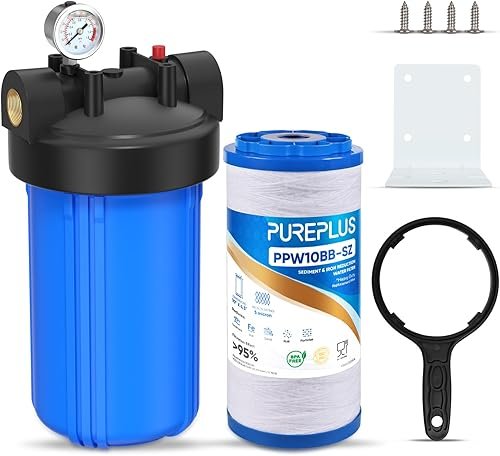
Iron & Manganese reducing filter | Targeted iron/manganese removal on a budget | $1.70 |
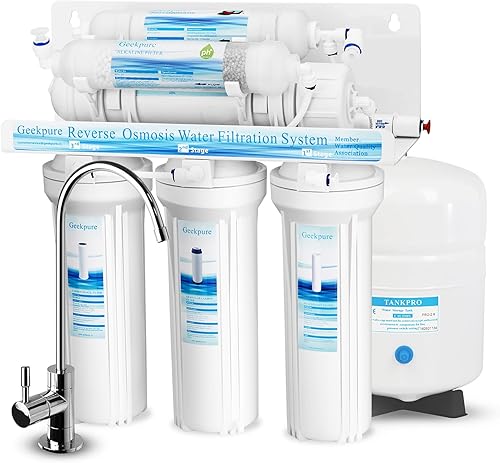 |
6-stage RO with Alkaline Remineralization | High-purity drinking water with added minerals | $2.39 |
 |
5-stage RO with 2-year filter supply | Long-term value for pure drinking water | $2.39 |
 |
9-stage, 800 GPD, NSF Certified | High-capacity, efficient under-sink RO | $7.19 |
1. PUREPLUS 1-Stage Whole House Water Filter
This is a straightforward, no-frills housing with a specialized iron/manganese cartridge. It’s a great entry point if your water test shows moderate iron levels and you’re on a tight budget. We’ve seen it effectively reduce orange staining in toilets and sinks. The housing is durable, but remember—it’s a single stage. You’ll need a separate sediment pre-filter ahead of it to prevent premature clogging.
- Extremely affordable initial cost
- Targeted contaminant reduction
- Simple to install and maintain
- Only treats one contaminant type
- Cartridge replacement frequency can be high with heavy iron
- Does not address bacteria, hardness, or sediment alone
2. Geekpure 6-Stage Reverse Osmosis System
If you want your drinking water to not just be pure but also taste great, this 6-stage system is a solid pick. The alkaline remineralization filter adds back calcium and magnesium after the RO membrane strips everything out, giving the water a more rounded, less “flat” taste. The NSF-certified components are a trust signal we appreciate. It’s a classic under-sink setup that does its job well.
- Excellent purification (0.0001 micron)
- Alkaline stage improves taste
- NSF-certified membrane and tank
- Lead-free faucet included
- Standard 75 GPD flow rate—fills tank slowly
- Creates wastewater (typical for RO)
- More stages mean more annual filter changes
3. Geekpure 5-Stage Reverse Osmosis System
This is the value play. The standout feature here is the included 2-year supply of replacement filters. That’s a huge cost and hassle saver. The 5-stage filtration is proven and effective for removing arsenic, lead, fluoride, and heavy metals. Honestly, most households don’t need more than five stages for pure drinking water. The extra filters make this a no-brainer for long-term ownership.
- Includes 7 extra filters (2-year supply)
- Standard, universal-sized components
- NSF-certified RO membrane
- Great value proposition
- Basic 75 GPD production rate
- Does not include alkaline remineralization
- Faucet quality is functional but basic
4. Waterdrop X8 Reverse Osmosis System
This is the premium, high-performance pick. The 800 GPD flow rate is a game-changer—you get near-instant pure water without waiting for a tank to fill. The 2:1 pure-to-drain ratio is incredibly efficient, cutting wastewater by up to 80% compared to traditional RO systems. The triple NSF/ANSI certification (42, 58, 372) is the strongest trust signal on this list. It’s an investment, but for serious water quality, it’s top-tier.
- Extremely high 800 GPD flow rate
- Industry-leading 2:1 drain ratio saves water
- NSF/ANSI 42, 58, and 372 certified
- 9-stage filtration reduces PFAS, lead, TDS
- Highest upfront cost on this list
- Requires under-sink power outlet
- Advanced system may need professional help for some
Well Water Filter FAQ
- What is the best filter system for well water?
- There’s no single “best” system. The best filter is the one that targets your specific contaminants, as shown by a professional water test. For most wells, a multi-stage approach with a sediment pre-filter, a contaminant-specific filter (like for iron), and a final carbon filter is ideal. For drinking water, add a reverse osmosis system under the sink.
- How often should you change your well water filter?
- It varies wildly. Sediment pre-filters might need changing every 3-6 months. Carbon filters typically last 6-12 months. Reverse osmosis membranes can last 2-5 years. UV bulbs need annual replacement. Always follow the manufacturer’s schedule, but inspect filters monthly at first to learn your water’s actual load.
- Do I need a water softener if I have a well?
- Only if your water test shows hardness minerals (calcium and magnesium) above about 7 grains per gallon. Hardness causes scale buildup in pipes and appliances. A softener uses ion exchange to remove these minerals. Some modern systems combine filtration and softening, but they are distinct technologies for different problems.
- Can a well water filter remove bacteria?
- Yes, but not all filters do. Standard sediment or carbon filters will not remove bacteria. You need either an ultraviolet (UV) purifier, which kills pathogens with light, or a reverse osmosis system, whose 0.0001-micron membrane physically blocks bacteria and viruses. UV is the most common whole-house solution for bacterial disinfection.
- Why does my well water smell like rotten eggs?
- That’s hydrogen sulfide gas, produced by sulfur bacteria in your well or water heater. It’s a common and nasty problem. The solution is usually an oxidizing filter (like one with manganese dioxide media) or a dedicated sulfur filter. Sometimes, simply shocking your well with chlorine can provide temporary relief, but a permanent filter is the real fix.
- How much does a whole house well water filter system cost?
- For equipment alone, expect $500 to $2,500 for a quality multi-stage system. Professional installation can add $300 to $1,000. Point-of-use reverse osmosis systems for drinking water cost $200 to $800. Don’t forget annual maintenance costs of $100 to $300 for replacement filters and media.
Final Thoughts
After all these years, my core advice hasn’t changed: test your water, then buy the filter that solves those specific problems. Don’t get sold on fancy marketing or stages you don’t need. Start with a robust sediment filter—it’s the unsung hero of any system. For iron and sulfur, a good backwashing filter will transform your water. And for the water you drink and cook with, a reverse osmosis system is worth every penny.
The PUREPLUS unit is a great budget start for iron. For pure drinking water, the Geekpure 5-stage with the 2-year filter supply offers unbeatable value. And if you want the best flow and efficiency, the Waterdrop X8 is the system I’d install in my own home today. Get your test kit, match the solution to the problem, and you’ll have clear, great-tasting water for years to come.
