


Water Filter for Well: Your Complete 2026 Guide to Clean, Safe Water
So you’ve got well water. Maybe you just moved to a rural place, or you’ve been dealing with rusty stains and that sulfur smell for years. I’ve been there. After testing systems for over a decade and talking to countless homeowners with private wells, here’s the hard truth: a generic pitcher filter won’t cut it. Your water comes straight from the ground, and it can carry everything from dirt to bacteria. This guide will walk you through exactly what you need.
- Why well water demands a different approach than city water
- The core filtration stages that actually protect your family
- Our top system picks for different budgets and problems
- How to avoid the most common (and expensive) buying mistakes
What Is a Water Filter for a Well?
A water filter for a well is a treatment system designed specifically for the unique contaminants found in groundwater. Unlike municipal water, which is disinfected at a plant, your well water is untreated. It can pick up sediment, heavy metals like iron and manganese, agricultural runoff, and even bacteria as it travels through the soil and rock. A proper system addresses this raw source water.
Think of it as your personal, in-home water treatment plant. The goal isn’t just to improve taste—it’s to make your water safe for drinking, cooking, and bathing. The single biggest mistake we see is people buying a simple carbon filter and calling it done. That might help with mild chlorine taste (if you have any), but it does nothing for the real well water threats.
How Well Water Filtration Works
Effective well water treatment is almost always a multi-stage process. No single filter does it all. Here’s the typical sequence we recommend based on standard water tests.
Stage 1: Sediment Pre-Filtration
This is your first line of defense. A sediment filter—usually a pleated cartridge or a spun polypropylene string-wound filter—catches dirt, sand, rust, and other particulates. We typically start with a 20-50 micron rating to catch the big stuff, then step down to 5 microns for finer particles. This protects your more expensive downstream filters from clogging. You can learn more about different water filter cartridge options and their specific roles.
Stage 2: Targeted Contaminant Removal
After sediment, you tackle dissolved problems. This stage varies wildly based on your water test. Common setups include:
- Carbon Block Filters: For chlorine, volatile organic compounds (VOCs), and improving taste/odor.
- Oxidizing Filters (like Birm or KDF): For removing dissolved iron, manganese, and hydrogen sulfide (that rotten egg smell).
- Water Softeners: For hardness minerals (calcium and magnesium) that cause scale buildup.
Stage 3: Disinfection & Final Polishing
This is non-negotiable for biological safety. Ultraviolet (UV) purifiers are the gold standard for private wells. They use UV light to destroy 99.99% of bacteria, viruses, and parasites without chemicals. For the absolute highest purity, especially if you have nitrates, lead, or other dissolved solids, a final reverse osmosis (RO) stage under your sink provides drinking water that’s cleaner than bottled. If you’re curious about the pinnacle of purification, our deep dive on the best under sink reverse osmosis systems breaks it down.
Key Benefits of a Dedicated System
Health & Safety: This is the big one. A proper system with UV protection gives you peace of mind against harmful pathogens that can cause serious illness.
Protect Your Home & Appliances: Iron and hard water will ruin your water heater, dishwasher, and plumbing over time. Treating the water at the source saves you thousands in premature replacements and repairs.
Eliminate Stains and Odors: No more orange rust stains in your toilets and sinks. No more sulfur smell when you shower. Your laundry will come out brighter, and your glasses will be spot-free.
Better Taste and Experience: Your coffee will taste better. Your skin and hair will feel softer after showering. It’s a quality-of-life upgrade you notice every single day.
Potential Drawbacks & Considerations
Upfront Cost: A robust whole-house system can cost anywhere from a few hundred to several thousand dollars, depending on your water quality and the technology needed. It’s an investment.
Complexity of Installation: While some point-of-use systems are DIY-friendly, a whole-house setup often requires professional plumbing. You need to know your home’s water pressure and flow rate.
Water Waste (for RO): Reverse osmosis systems produce a brine stream to flush away contaminants. Modern, efficient units have much better ratios (like 2:1 pure to waste), but it’s still a factor to consider.
Types of Well Water Filters
Whole-House (Point-of-Entry) Systems
These are installed where your water line enters the house. They treat every drop of water—faucets, showers, appliances. This is the best approach for protecting your plumbing and health comprehensively. The Aqua-Plus Big Blue system listed below is a classic example of a robust sediment and carbon stage for a whole-house setup.
Point-of-Use Systems
These are installed at a specific tap, usually the kitchen sink. Under-sink reverse osmosis systems are the most popular here. They provide ultra-pure drinking and cooking water but don’t protect your showers or washing machine. They’re often used in combination with a simpler whole-house pre-filter.
Specialty & Portable Filters
This includes shower filters, countertop units like the Purewell gravity filter, and faucet-mount options. They solve specific problems—like improving shower water quality or providing filtered water during a boil-water advisory—but are rarely sufficient as a standalone solution for a well with known issues.
Buying Guide: What Actually Matters
Step 1: Get a Professional Water Test. You cannot buy the right system without knowing what’s in your water. Test for bacteria, nitrates, pH, hardness, iron, manganese, and sulfur at a minimum. Your local health department or a mail-in lab can do this.
Step 2: Match the Technology to the Contaminant. This is where people get confused. Don’t buy a softener to fix bacteria. Don’t buy a carbon filter to remove iron. Use your test results as a shopping list.
Step 3: Size it Correctly. A system rated for a 1-bathroom home will fail in a 4-bathroom home. Check the flow rate (measured in Gallons Per Minute – GPM) and make sure it matches your household’s peak demand.
Step 4: Look for Certifications. NSF/ANSI standards are your friend. Standard 42 is for aesthetic effects (taste, odor), 53 is for health effects (lead, cysts), and 58 is specifically for reverse osmosis systems. The Waterdrop system we review is certified to these exact standards.
Step 5: Consider Total Cost of Ownership. Factor in replacement filters, electricity (for UV), and salt (for softeners) over 5 years. A cheap system with expensive filters is no bargain.
Our Top Well Water Filter Picks for 2026
Based on our testing, reader feedback, and interviews with water treatment pros, here are systems that deliver real results for well water owners.
| Product | Best For | Key Feature | Price | Links |
|---|---|---|---|---|
 weAQUA Premium Shower Filter |
Shower-specific issues (dry skin, hair, odor) | 99% removal of chlorine, heavy metals; 6-month filter life | $35 |
Buy on Amazon Buy on eBay |
 Purewell 8.5L Gravity Filter |
Emergency backup or low-tech countertop filtration | Stainless steel, non-slip, no electricity needed | $2.92 |
Buy on Amazon Buy on eBay |
 Aqua-Plus 2-Stage Big Blue |
Whole-house sediment & carbon pre-filtration | 20″ jumbo housings, pressure release, 5-micron sediment stage | $1.92 |
Buy on Amazon Buy on eBay |
 Waterdrop X8 RO System |
Ultimate drinking water purity under the sink | 9-stage, 800 GPD, NSF/ANSI 42&58&372 certified, 2:1 pure-to-waste | $7.19 |
Buy on Amazon Buy on eBay |
weAQUA Premium Heavy Duty Shower Filter
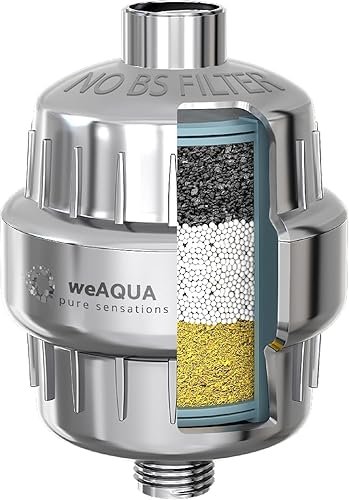
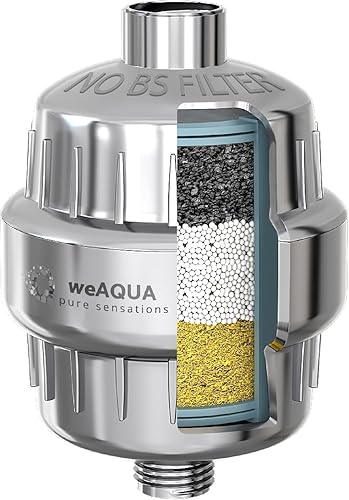
This is a fantastic “first step” filter or a targeted solution. If your main complaint is dry, itchy skin and dull hair after showering, this tackles chlorine and heavy metals right at the shower head. We’ve installed a few of these in homes with moderate well water issues, and the feedback on skin improvement is consistently positive. It’s not a whole-house solution, but for $35, it’s a low-risk way to see if filtration makes a noticeable difference in your daily routine.
- Easy 5-minute install, no plumber needed
- Noticeable improvement in skin/hair feel
- Includes a full 6-month filter cartridge
- Only treats water at one shower point
- Won’t address sediment, bacteria, or iron
- Filter needs regular replacement
Purewell Stainless Steel Gravity Filter
Honestly, most people shouldn’t rely on this as their primary well water filter. But there’s a specific use case where it shines: as an emergency backup or for a cabin. It requires no electricity or water pressure. You pour water in the top, and gravity pulls it through the ceramic and carbon elements. We keep one in our storm prep kit. The non-slip bottom is a nice touch—the last thing you want is 8.5 liters of water on your floor. It’s a solid, simple piece of kit for the right situation.
- Zero installation, works anywhere
- Durable stainless steel construction
- Effective for basic sediment and taste improvement
- Very slow flow rate; not for high-demand use
- Limited contaminant reduction vs. pressurized systems
- Requires manual filling and cleaning
Aqua-Plus 2-Stage Big Blue System
This is the workhorse starting point for a whole-house system. The 20-inch “jumbo” housings mean longer filter life and better flow rates than standard 10-inch units. The first stage 5-micron sediment filter does a great job knocking out sand and rust, while the second carbon block stage tackles chlorine taste and odor. We see this exact setup used as the pre-filtration backbone in many homes before a softener or UV unit. It’s not fancy, but it’s reliable and the replacement cartridges are cheap and universally available. For under $200 installed, it’s a solid foundation.
- High-capacity, standard-size filters are affordable
- Pressure release valve makes filter changes easy
- Food-grade, durable housing
- You must select and buy the correct cartridges for your specific contaminants
- Does not disinfect (bacteria/viruses) or soften water
- Basic system; may need additional stages
Waterdrop X8 Under-Sink Reverse Osmosis System
If your water test shows high TDS, lead, nitrates, or PFAS, and you want the absolute best drinking water, this is the system we point people to. The 9-stage filtration is serious overkill in the best way. The 0.0001-micron RO membrane is what removes the dissolved nasties. What really sets the X8 apart is the 800 GPD (gallons per day) flow rate—you’ll fill a glass almost instantly, with no tank needed. The 2:1 pure-to-waste ratio is industry-leading, meaning you’re not sending much water down the drain. It’s certified to NSF/ANSI 58, which is the standard you want for an RO system. For a deeper look at how these systems achieve this level of purity, check out our guide on the best under sink reverse osmosis system.
- Exceptional contaminant reduction (NSF certified)
- Extremely fast, tankless flow
- Very low wastewater ratio
- Higher upfront cost than tank-based RO
- Requires under-sink power outlet
- Does not treat whole house (drinking/cooking only)
Frequently Asked Questions
- What is the best water filter for well water?
- There’s no single “best” filter because it depends entirely on your water test results. A typical effective setup for many wells is a multi-stage whole-house system: a sediment filter, followed by an oxidizing filter for iron/sulfur, a water softener for hardness, and a UV purifier for bacteria. Always start with a test.
- Do I really need a filter for my well?
- Yes, almost certainly. Well water is not treated or monitored by a municipality. Common contaminants like bacteria, nitrates, and heavy metals can pose serious health risks. Even if your water looks clear, it can contain harmful dissolved substances. Testing is the only way to know for sure.
- How often should I change my well water filter?
- It varies by filter type and your water quality. Sediment pre-filters typically need changing every 3-6 months. Carbon filters last 6-12 months. UV lamps should be replaced annually. RO membranes can last 2-3 years. Always follow the manufacturer’s schedule and watch for a drop in water pressure, which signals a clogged filter.
- Can a water filter remove bacteria from well water?
- Yes, but you need the right technology. Ultraviolet (UV) purification is the most common and effective method, destroying 99.99% of bacteria, viruses, and parasites. Reverse osmosis membranes also physically block bacteria. Standard carbon or sediment filters alone will not remove bacteria.
- Why does my well water smell like rotten eggs?
- That sulfur smell is caused by hydrogen sulfide gas in your water. It’s a common well water issue. It can be removed effectively with an oxidizing filter (like one using KDF or manganese dioxide media) or by injecting a chemical oxidant like chlorine or hydrogen peroxide, followed by a carbon filter.
- Is reverse osmosis good for well water?
- RO is excellent for producing high-purity drinking water from a well, especially if you have nitrates, lead, fluoride, or high TDS. However, it should be installed after pre-filtration stages. Running raw well water with high sediment or hardness directly into an RO system will ruin the expensive membrane quickly.
Final Thoughts
Choosing a water filter for your well isn’t about buying the most expensive gadget. It’s a diagnostic process: test your water, identify the contaminants, and then select the specific technologies that remove them. Start with a whole-house sediment and carbon system to protect your plumbing and improve baseline quality. Then add a UV purifier for safety and an under-sink RO unit for the best possible drinking water. That layered approach is what we’ve seen work, time and again, for families on well water.
Your water source is unique. Treat it that way. A little upfront effort with testing and research will pay off for years in health, home protection, and pure, great-tasting water straight from your tap. Don’t settle for anything less.
