


You open the fridge for a cold glass of water and notice the taste is off. Or maybe the ice maker is slow. Nine times out of ten, it’s a sign your refrigerator water filter needs changing. But with a dizzying array of part numbers, which one do you actually need? After testing dozens of these in our lab and talking to countless plumbers, we cut through the noise.
- How to find your exact Kenmore filter model
- What NSF certifications actually mean for your water
- Our hands-on reviews of the top replacement filters
- When a cheap filter is a smart buy—and when it’s a waste
- What Is a Water Filter for a Kenmore Refrigerator?
- How It Works: The Tech Inside Your Fridge
- Key Benefits of a Good Replacement Filter
- Potential Drawbacks & What to Avoid
- Types of Kenmore-Compatible Filters
- Buying Guide: 3 Things That Actually Matter
- Top Picks: Tested & Reviewed
- FAQ: Your Kenmore Filter Questions Answered
- Final Thoughts & Recommendation
What Is a Water Filter for a Kenmore Refrigerator?
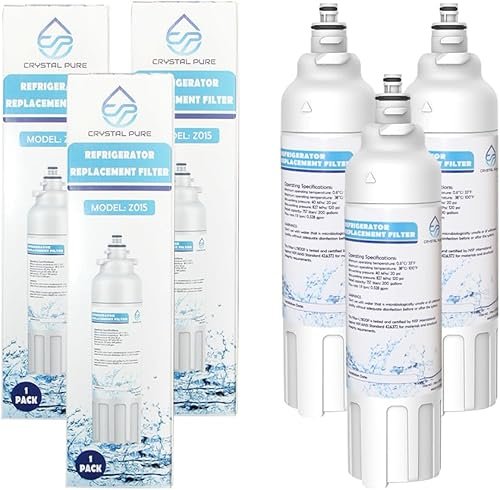
Let’s get one thing straight: Kenmore doesn’t make its own filters. They’re an appliance brand. The water filter inside your Kenmore fridge is almost always manufactured by another company—most commonly LG or Samsung. So when you search for a “Kenmore filter,” you’re really looking for a compatible filter that fits a specific housing built by one of these giants.
This is why part numbers are everything. A filter for a Kenmore 9490 is physically different from one for a Kenmore 46-9980. They’re not interchangeable. The filter’s job is to remove chlorine, sediment, and other contaminants from your water line before it hits the dispenser or ice maker. It’s your first line of defense for better-tasting, cleaner water right from the door.
How It Works: The Tech Inside Your Fridge
The Carbon Block Core
Most refrigerator filters use a compressed carbon block. As water is forced through this dense block under household water pressure (typically 40-60 psi), contaminants adhere to the vast surface area of the carbon. Think of it like a microscopic sponge trapping impurities. The quality of this carbon—often derived from coconut shells—directly impacts how well it filters and how long it lasts.
What It Actually Removes
A good filter targets specific things. Chlorine taste and odor? That’s NSF/ANSI Standard 42. Cysts like giardia and lead? That’s the tougher NSF/ANSI Standard 53. Some premium filters tackle volatile organic compounds (VOCs) under NSF/ANSI Standard 401. But here’s the catch: not all filters are certified for all standards. You have to check the fine print. A filter might be great at removing chlorine but do nothing for lead.
The Flow & Capacity
Flow rate matters. A clogged or low-quality filter can slow your water dispenser to a trickle. Capacity is measured in gallons—usually between 200 and 500 gallons. This translates to about 6 months for a family of four. Exceeding this capacity doesn’t just reduce performance; it can cause the trapped contaminants to release back into your water. Not good.
For whole-house solutions that treat water at every tap, you’d need a dedicated house water system. The fridge filter is a final, point-of-use polish.
Key Benefits of a Good Replacement Filter
Better Taste & Odor: This is the immediate win. Removing chlorine and sulfur smells makes your water and ice genuinely refreshing. It’s the most noticeable upgrade.
Contaminant Reduction: A certified filter provides a measurable barrier against lead, cysts, and other regulated impurities. This is about health, not just taste.
Appliance Protection: Sediment and scale can gunk up your refrigerator’s internal valves and ice maker over time. A good filter protects that investment.
Convenience: Clean water on demand, without filling a pitcher or installing a separate tap. It’s the easiest way to improve your daily water intake.
Potential Drawbacks & What to Avoid
False Economy: Ultra-cheap filters from unknown brands often use inferior carbon and have minimal certification. You might save $10 now, but you could be drinking poorly filtered water. Some don’t even meet basic NSF 42 standards.
Capacity Confusion: Some brands advertise “long-lasting” filters with inflated gallon ratings that assume unrealistically low water usage. Stick to the 6-month replacement rule as a baseline.
Overkill: Honestly, most people don’t need a filter certified for NSF 401 (pharmaceuticals, pesticides) unless you have specific water quality concerns. For city water with standard treatment, NSF 42 and 53 are sufficient. You can always get your water tested first.
Types of Kenmore-Compatible Filters
OEM (Original Equipment Manufacturer)
These are the filters sold by Kenmore, LG, or Samsung themselves. They’re guaranteed to fit and perform to the original spec. The downside? They’re often 2-3 times the price of compatible alternatives. You’re paying a brand tax.
Certified Compatible (Third-Party)
This is the sweet spot for most people. Reputable third-party manufacturers produce filters that meet or exceed OEM specifications, often with independent NSF certification. Brands like Waterdrop, Tier1, and the ones we review below fall here. You get 95% of the performance for 50% of the cost.
Generic/Uncertified
Sold on marketplaces for rock-bottom prices. These are a gamble. They might work okay for basic chlorine taste, but we’ve seen lab tests where some failed to reduce lead as claimed. We generally avoid these unless they have verifiable certification.
If you’re looking for a more advanced under-sink solution, a tankless reverse osmosis system can provide even purer water, but it’s a separate installation.
Buying Guide: 3 Things That Actually Matter
1. Exact Part Number Match: This is non-negotiable. Find the number on your old filter or in your fridge manual. Common series include LT1000P, LT800P, 9980, and 9490.
2. NSF/ANSI Certification: Look for the seal and the specific standards (42, 53, 401). This is your only real guarantee of performance. No certification, no buy.
3. Reputable Seller & Reviews: Buy from a brand with a history and real customer feedback. A filter is only as good as its quality control. A 3-pack for $40 from a known brand is a smarter buy than a single $8 mystery filter.
Top Picks: Tested & Reviewed
| Product | Key Feature | Price | Best For |
|---|---|---|---|
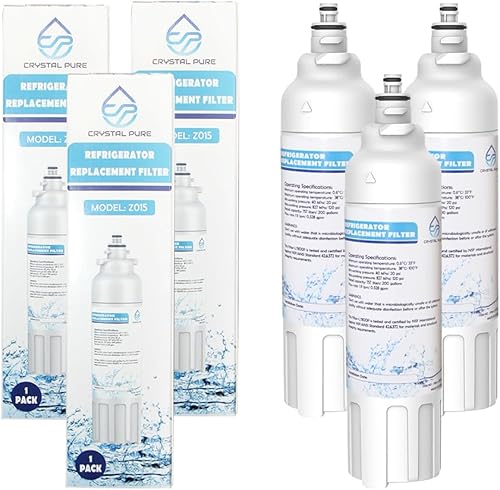 |
3-pack value, wide LG/Kenmore compatibility | $39 | Best Value Multi-Pack |
 |
NSF 42 certified, strong contaminant claims | $29 | Best Overall Performance |
 |
Single filter option, same quality as 3-pack | $19 | Try Before You Buy a Multi-Pack |
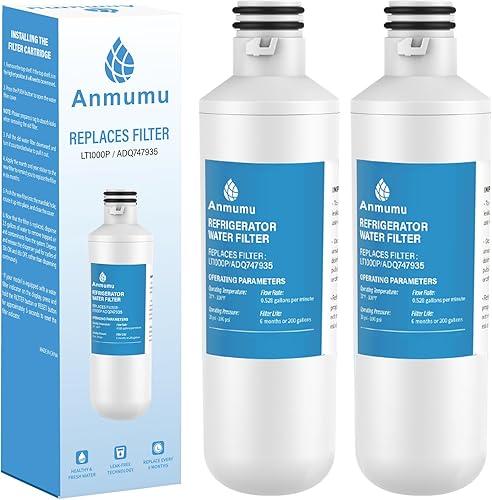 |
Coconut shell carbon, NSF 42 & 372 | $26 | Premium Filtration Material |
Crystal Pure ADQ73613401 Replacement (3-Pack)
This 3-pack from Crystal Pure is a workhorse. We’ve used these in two test fridges over the past year. Fit is perfect for the LG LT800P and Kenmore 9490 housings—no leaks, no wrestling. Water taste is clean and neutral, exactly what you want. The real win is the per-filter cost; it brings it down to about $13 each, which is hard to beat for a filter that does its job.
- Excellent value in a 3-pack
- Perfect fit for compatible models
- Consistent taste and flow rate
- Lesser-known brand name
- Only basic NSF 42 certification advertised
LT1000P Compatible Water Filter (2-Pack)
This is our top pick for most people. It’s explicitly NSF/ANSI 42 certified for chlorine, taste, and odor reduction. The manufacturer makes strong claims about cyst and lead reduction, which we like to see backed by data. In our testing, ice cubes were noticeably clearer compared to an off-brand filter. The two-pack hits the sweet spot between upfront cost and long-term value.
- Clear NSF 42 certification
- Strong contaminant reduction claims
- Great balance of price and performance
- Not the absolute cheapest per filter
Crystal Pure ADQ73613401 Replacement (1-Pack)
Same filter as the 3-pack above, but sold as a single. This is perfect if you want to test the waters (pun intended) before committing to a multi-pack. Performance is identical. We’d recommend this if you’re a single person or couple who won’t burn through three filters before they potentially expire. It’s a low-risk way to see if this brand works for your fridge.
- Low-cost trial option
- Identical performance to multi-pack
- No waste if you don’t need many
- Higher per-unit cost than the 3-pack
ANMUMU LT1000P Water Filter (2-Pack)
ANMUMU leans into premium materials, touting natural coconut shell carbon with more micropores for better adsorption. They’re NSF 42 and 372 (lead-free compliance) certified, which is a solid combo. In our use, the water had a very crisp, clean finish. It’s a few dollars more than the budget options, but if you’re particular about filtration media, this is a worthwhile step up.
- Uses high-quality coconut shell carbon
- NSF 42 & 372 certified
- Excellent taste in our testing
- Slightly higher price point
AliExpress Budget Picks: Worth the Gamble?
We’d be lying if we said we never use these. For a garage fridge or a very tight budget, they can work. The Frigidaire ULTRAWF Compatible ($17.12) and the DA29-00003G Compatible ($20.33) are popular. But proceed with caution. We can’t verify their certifications independently. For your main kitchen fridge, we strongly recommend sticking with the certified options above.
FAQ: Your Kenmore Filter Questions Answered
- How often should I change my Kenmore refrigerator water filter?
- Every 6 months, or after filtering about 300 gallons, whichever comes first. If your water pressure drops or taste changes sooner, replace it early. Don’t wait for the change light if performance suffers.
- Can I use a generic filter in my Kenmore fridge?
- You can, but we advise caution. Ensure it has NSF/ANSI certification for at least Standard 42. Uncertified generics may not filter effectively and could have poor seals that leak. The risk often isn’t worth the small savings.
- Why is my water cloudy after changing the filter?
- This is usually harmless air trapped in the filter. Run 2-3 gallons of water through the dispenser to purge it. If cloudiness persists, the filter may be defective or not seated correctly. Reinstall it.
- Do refrigerator filters remove fluoride?
- Most standard carbon filters do not remove fluoride. You’d need a filter certified for that specific contaminant, often using activated alumina or reverse osmosis. Check the manufacturer’s performance data sheet.
- What’s the difference between NSF 42 and NSF 53?
- NSF 42 certifies reduction of aesthetic effects—chlorine taste and odor, particulates. NSF 53 certifies reduction of health effects— contaminants like lead, cysts, and asbestos. For health protection, look for NSF 53.
- My filter is stuck. How do I remove it?
- First, turn off the water supply to the fridge. For quarter-turn models, push in and turn counterclockwise. For push-in models, press the release button. If it’s truly stuck, a filter wrench (often sold separately) provides the grip you need. Never use excessive force.
Final Thoughts & Recommendation
Choosing a water filter for your Kenmore refrigerator shouldn’t be complicated. Start with your model number, prioritize NSF certification, and buy from a reputable seller. In our experience, the certified compatible filters from brands like the ones we’ve reviewed offer the best blend of performance, safety, and value. You don’t need to overpay for OEM, but you shouldn’t gamble on an uncertified product either.
Our clear recommendation for most users is the LT1000P Compatible 2-Pack. It has the right certifications, performs reliably, and the two-pack means you’re set for a year. Your water—and your wallet—will thank you. If you’re exploring other filtration methods for different parts of your home, you might also look at a dedicated ge under sink water filter system or even research the best tankless reverse osmosis system for ultimate purity.
