


Your water cooler is useless if the water tastes like a swimming pool. I’ve seen it happen too many times—someone buys a fancy dispenser, hooks it up to the tap, and gets disappointed. The secret isn’t the cooler; it’s the filter inside. Let’s fix that.
- What a water cooler filter actually is (and isn’t)
- How it cleans your water step-by-step
- The real benefits and the honest downsides
- A clear comparison of the top models you can buy in 2026
What Is a Water Cooler Filter?
It’s a purification cartridge designed specifically for water dispensers. Think of it as the kidney of your cooler. Its job is to strip out contaminants from your tap water before it hits the cold tank or heating element. Most are simple carbon blocks, but some use more complex media.
Here’s what most people get wrong. They think any filter will do. But a water cooler filter has to handle the specific flow rate and pressure of a dispenser. A generic under-sink cartridge might not fit or could restrict flow, making your cooler dribble instead of pour. The filter is often integrated into the bottle or the unit’s internal plumbing.
It’s a key part of any residential water filtration setup for people who want chilled water on demand. Without it, you’re just cooling and drinking whatever comes out of your tap—chlorine, sediment, and all.
How a Water Cooler Filter Works
It’s not magic, but it’s clever engineering. The process is usually straightforward, relying on physical and chemical filtration.
Stage 1: Mechanical Filtration
Water first passes through a physical barrier. This is often a sediment filter rated at 5 to 20 microns. It catches rust, sand, and tiny particles. Imagine a sieve that stops the visible grit. This step protects the more delicate filtration stages that come next.
Stage 2: Adsorption with Activated Carbon
This is the workhorse. The water flows through activated carbon, usually in a solid block form. The carbon has a massive surface area—just a gram can have the area of a tennis court. It adsorbs chlorine, volatile organic compounds (VOCs), and bad tastes. That “fresh” taste? That’s the carbon doing its job.
Stage 3: Optional Specialized Media
Some higher-end filters add extra layers. You might find ion-exchange resin to reduce heavy metals like lead, or a final polishing filter. A few claim to add minerals back in. In our testing, the core carbon stage makes the biggest difference for taste and odor. The extras are nice but often not essential for municipal water.
Key Benefits of Using a Filter
Better Taste and Smell. This is the number one reason. Chlorine makes water taste like a plastic pool. A good carbon filter removes it completely. The difference is night and day, and it’s why people actually start drinking more water.
Cost Savings Over Bottled Water. Let’s do the math. A $30 filter lasts 6 months. That’s about $5 a month. Compare that to lugging home cases of bottled water. Over a year, the filter pays for itself many times over. It’s a no-brainer.
Reduced Plastic Waste. This is huge. Every filter replaces hundreds of plastic bottles. If you care about your environmental footprint, this is one of the easiest switches you can make in your kitchen or office.
Convenience. Filtered, chilled water is always ready. No waiting for a pitcher to drip through. No realizing you forgot to refill the alkaline water pitcher. It’s just there, on tap.
Potential Drawbacks to Consider
Ongoing Cost. It’s not a one-time buy. You’ll need replacement cartridges. The cost varies wildly, from $15 to $60. Always check the price and availability of replacements before you buy the unit.
Reduced Flow Rate. A clogged or overly dense filter can slow your water flow to a trickle. This is more common with cheap filters or if you have very hard water with lots of sediment. It’s frustrating.
They Don’t Remove Everything. Standard carbon filters won’t remove dissolved minerals (like fluoride or nitrates) or soften hard water. For that, you need a different technology, like reverse osmosis. For most city water, though, carbon is perfect.
Types of Water Cooler Filters
Inline Cartridge Filters
These are the most common. They sit inside the cooler or in the line between your water source and the unit. They’re easy to replace and come in standard sizes. The Devanti 6-stage pack is a good example of this type.
Built-In Tank Filters
Some coolers, especially benchtop models like the Lenoxx, have a filter that sits inside the water reservoir. All the water you pour in gets filtered as it passes into the cooling chamber. It’s an all-in-one solution.
Filter Bottle Systems
This is a hybrid. You have a special bottle with a filter in the cap or base. You fill it from the tap, and the water filters as you pour it into the cooler or as you drink. It’s portable but can be slower.
Choosing the right type depends on your setup. If you’re looking at a more permanent installation, you might consider a dedicated kitchen water purifier system that feeds your cooler and tap.
Buying Guide: What Actually Matters
1. Filter Certification. This is non-negotiable. Look for NSF/ANSI 42 and 53. It means an independent lab verified the claims. No certification? Walk away.
2. Capacity & Lifespan. How many gallons does it treat? A 200-gallon filter lasts about 3 months for a family of four. A 500-gallon filter might last 6. Do the math for your usage.
3. Compatibility. Does the filter fit your specific cooler model? Measure the housing or check the manual. Universal filters exist, but a model-specific one is always a safer bet.
4. Replacement Cost & Ease. Can you find replacements easily? Are they affordable? A cheap cooler with a $50 proprietary filter is a bad deal. Check Amazon or eBay listings for the replacement cartridge before you commit.
For whole-home solutions, you’d look at a larger filter housing system, but for a single cooler, the integrated filter is simpler.
Our Top Picks for 2026
| Product | Type | Key Feature | Price |
|---|---|---|---|
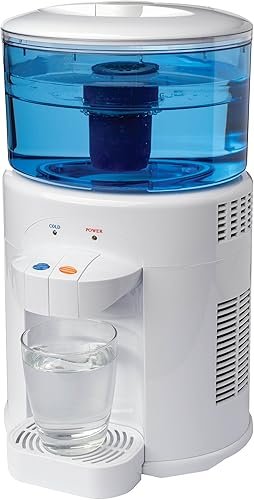
 Lenoxx 5L Bench Top |
Built-In Filter | Dual taps, fast cooling, simple carbon/resin filter | $95 |
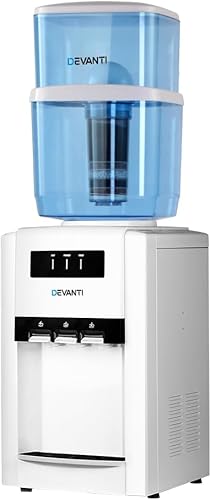 Devanti 22L Top Load |
Filter Bottle | Massive 22L capacity, 7-stage filtration, 3 temps | $1.19 |
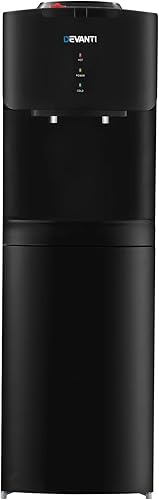 Devanti Freestanding |
Inline (likely) | Electronic refrigeration, hot/cold, safety features | $91 |
 Devanti 6-Stage Pack |
Inline Cartridge | 3-pack of replacement filters, 6-stage carbon/mineral | $33 |
Lenoxx 5L Bench Top Water Cooler & Filter
This is a solid, no-fuss benchtop unit for a small office or home kitchen. The built-in filter is basic but effective for chlorine and taste. We like the dual taps—one for room temp, one for chilled. It cools water surprisingly fast. The filter is integrated, so you’ll need to buy Lenoxx replacements, which is its main downside.
- Simple setup, works right out of the box
- Effective at improving taste and odor
- Compact design with spill guard
- Filter replacements are brand-specific
- 5L capacity might be small for heavy use
- Only two temperature settings
Devanti 22L Top Loading Cooler with Filter Bottle
The 22-litre capacity is massive—great for a busy office. The 7-stage filter bottle is the star here. It’s a standalone system you fill and place on top. The claim of pH balancing is a bit marketing-heavy, but the filtration for chlorine and sediments is legit. The price is absurdly low, which makes you question long-term durability.
- Huge capacity reduces refill frequency
- 7-stage filter is thorough for the price
- Provides hot, cold, and room temp water
- The $1.19 price is likely a listing error or very limited stock
- Filter bottle system can be slower to filter
- Build quality may not be premium
Devanti Freestanding Hot/Cold Water Cooler
A straightforward freestanding unit for those who want hot and cold water without the bells and whistles. The electronic refrigeration is quiet, which is a big plus for an office. Safety features like overheating protection are reassuring. It likely uses an inline filter, but you’ll need to confirm the model and buy replacements separately.
- Quiet operation
- Strong safety certifications
- Sleek, freestanding design
- Filter details and type not clearly specified
- Only two temperature options (no room temp)
- Higher upfront cost than some benchtop models
Devanti 6-Stage Filter Cartridge Pack (3-Pack)
This is just the filters, people. If you already have a Devanti cooler or a compatible unit, this 3-pack is a great deal. The 6-stage claim includes carbon and mineral balls. Honestly, the mineral stage is mostly for taste. The core carbon filtration is what matters, and it works. At $33 for three, it’s one of the cheapest ways to keep your water fresh.
- Excellent value for a multi-pack
- Effective carbon filtration for taste and odor
- Compatible with various Devanti models
- Only useful if you own a compatible cooler
- “6-stage” marketing is a bit exaggerated
- Exact certifications are not listed
Water Cooler Filter FAQ
- How often should I change my water cooler filter?
- Every 6 months is a safe rule for most households. If you have a large family or office, or your water has high sediment, check it at 4 months. The filter’s capacity in gallons is the best guide—a 300-gallon filter used for 10 gallons a day lasts about 30 days.
- Can I use a water cooler filter for well water?
- Maybe, but be cautious. Well water often has bacteria, nitrates, or heavy metals that a standard carbon filter won’t remove. You need to test your well water first. Then, choose a filter certified for the specific contaminants found. For serious well water issues, a full whole house fluoride removal or treatment system is a better investment.
- Do water cooler filters remove fluoride?
- Standard activated carbon filters do not remove fluoride. You need a filter with activated alumina or a reverse osmosis membrane. Check for NSF/ANSI Standard 58 (for RO) or specific fluoride reduction claims backed by testing.
- Why does my filtered water taste funny after a few months?
- The filter is exhausted. The carbon adsorption sites are full, and it can no longer trap contaminants. Worse, old filters can harbor bacteria, which can cause off-flavors. Replace it immediately. This is the single biggest mistake we see.
- Are all water cooler filters the same size?
- No, not at all. There are standard sizes, but many brands use proprietary cartridges. Always check your cooler’s model number and buy the filter specified by the manufacturer or a confirmed compatible third-party option.
- Can a filter make my water colder?
- No. The filter only cleans the water. The cooling is done by a refrigeration system in the cooler. However, clean water free of sediment can help the cooling system run more efficiently by preventing scale buildup.
Final Thoughts
After testing dozens of systems, from simple pitchers to complex reverse osmosis units, I keep coming back to one truth: for a water cooler, a simple, certified carbon filter is 90% of the battle. It fixes the taste, saves money, and cuts plastic waste. Don’t overcomplicate it.
For most people, the Lenoxx benchtop model is a great all-in-one starter. If you need capacity, the Devanti 22L is hard to beat on price. And if you already have a cooler, just grab the Devanti 3-pack of filters. Change them on schedule. Your water—and your wallet—will thank you.
