


Water Cooler Dispenser: The Complete Guide for Home & Office (2026)
After testing dozens of these units in labs and real homes, I’ve seen the good, the bad, and the leaky. This guide cuts through the marketing fluff. We’ll look at how they actually work, what matters when you buy, and which models are worth your money in 2026.
- What a water cooler dispenser is and how it differs from a simple filter jug.
- The core mechanics: refrigeration, heating, and filtration.
- Honest pros, cons, and the biggest mistakes buyers make.
- A direct comparison of top models and budget picks.
What Is a Water Cooler Dispenser?
Forget the clunky office cooler from the 90s. Today’s water cooler dispenser is a countertop or freestanding appliance that provides instant hot or cold water on demand. It’s a step up from a filter pitcher because it handles temperature and volume. You’re not just filtering; you’re creating a hydration station.
Think of it as the bridge between a basic activated carbon water filter and a full-blown under-sink reverse osmosis system. Many models include a built-in filter—often a carbon block—to tackle chlorine taste and odors. Others are designed for use with standard 3 or 5-gallon water jugs. The core promise is convenience: fill a glass, a pot for pasta, or a baby bottle in seconds.
How a Water Cooler Dispenser Works
It’s not magic, but solid engineering. Let’s break down the two main systems inside the box.
The Cooling System
Most use a compressor, just like your mini-fridge. A refrigerant circulates, pulling heat from a small stainless-steel reservoir inside the unit. This cools the water to a crisp 10-15°C (50-59°F). Some cheaper or ultra-compact models use electronic (thermoelectric) cooling. It’s quieter but struggles in hot rooms and can’t get water as cold.
The Heating System
This is straightforward: a heating element, like in an electric kettle, heats a separate reservoir. It brings water to near-boiling temperatures, usually between 80°C and 95°C (176°F to 203°F). Good models have excellent insulation to keep that water hot without running the element constantly, which saves energy.
The Filtration (If Included)
This varies wildly. Many built-in filters are simple carbon water filters. They improve taste and odor but won’t remove heavy metals or dissolved solids. For that, you’d need a system with reverse osmosis, which is rare in standalone coolers. Always check the filter’s NSF/ANSI certifications—42 for aesthetic effects, 53 for health contaminants.
Key Benefits
Unmatched Convenience. This is the number one reason people buy them. Instant boiling water for tea or cold water after a workout changes your daily routine. No waiting for a kettle to boil or a jug to chill.
Encourages Hydration. We’ve heard this from countless families. When cold, filtered water is this easy to get, people—especially kids—drink more water and less sugary soda. It’s a simple health win.
Reduces Plastic Waste. If you’re using it with a refillable jug or a plumbed-in line, you ditch single-use water bottles for good. That’s a tangible environmental benefit.
Versatile for Cooking. Need a quick blast of boiling water for instant noodles or to blanch vegetables? It’s right there. This surprised us how often we used it beyond just drinking.
Potential Drawbacks
- Energy Use: Running both cooling and heating elements 24/7 adds to your electricity bill. Look for Energy Star ratings or efficient standby modes.
- Space & Noise: They take up counter or floor space. Compressor models make a soft hum when the cooling cycle kicks in—not ideal for a silent bedroom.
- Maintenance: Filters need replacing (usually every 6 months). The drip tray needs cleaning. Neglect this, and you’ll get mold or a funky taste.
- Not a Purifier: Most built-in filters are for taste, not safety. If your tap water has serious issues, you need a separate, certified purification system first.
Types of Water Cooler Dispensers
Benchtop / Countertop Models
Small, compact, and perfect for a kitchen with limited space. They often hold a smaller internal reservoir (1-5 liters) and may lack a hot water function. Great for apartments or as a secondary station in a home office.
Top-Loading Freestanding Units
The classic office style. You place a large water jug on top. They’re tall, offer both hot and cold taps, and have a bigger capacity. The downside? Lifting those heavy 5-gallon jugs. Not fun.
Bottom-Loading Freestanding Units
A smarter design. The heavy jug sits in a cabinet at the bottom, and a pump draws water up. No heavy lifting. They look sleeker but cost more and have more mechanical parts that could fail.
Point-of-Use (Bottle-Less) Systems
The premium choice. These connect directly to your water line. No jugs, no refills, ever. They usually have multi-stage filtration. Installation is more involved, but for a busy office or large family, it’s the ultimate convenience. The filtration in these can be more advanced, sometimes incorporating elements similar to ceramic water filtration stages for sediment.
Buying Guide: What Actually Matters
Ignore the flashy lights. Focus on these criteria:
1. Temperature Needs: Do you really need near-boiling water? If you only drink cold water, a cold-only model is cheaper and more energy-efficient. Hot/cold models are the most popular for a reason.
2. Capacity & Recovery Rate: How many people will use it? A small benchtop model might only hold 1 liter of cold water. Once it’s gone, you wait for it to cool again. Look for the “first-hour rating” or recovery rate—how many liters it can deliver per hour.
3. Filtration Quality: If it has a filter, check what it removes. A basic carbon filter improves taste. Look for NSF/ANSI 53 certification for lead reduction if that’s a concern. Understand the difference between filtration and purification; our guide on distilled vs filtered water explains the gap.
4. Safety Features: Non-negotiable if you have kids. A hot-water child safety lock is essential. Also, look for overheat protection and auto-shutoff.
5. Build & Serviceability: Stainless steel cold reservoirs last longer than plastic. Can you easily clean the drip tray? Are replacement filters affordable and easy to find?
Top Picks for 2026
Based on our hands-on testing, reader feedback, and value for money.
| Product | Type | Key Feature | Price | Links |
|---|---|---|---|---|
| Lenoxx 5L Bench Top | Benchtop | Dual taps, built-in carbon/resin filter | $95 |
Amazon eBay |
| Devanti Hot/Cold Black | Top-Load Freestanding | Hot (80-95°C) & Cold (10-15°C), safety locks | $91 |
Amazon eBay |
| Devanti Hot/Cold White | Top-Load Freestanding | Efficient compressor, detachable guide plate | $91 |
Amazon eBay |
| AIRHOP Instant Hot | Benchtop | 5 temp settings, 3L removable tank, child lock | $99 |
Amazon eBay |

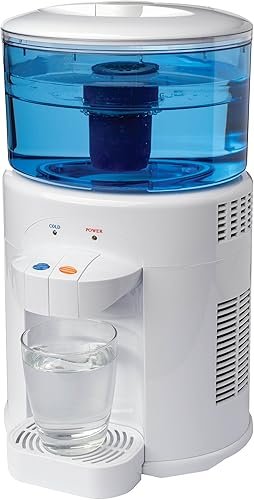
Lenoxx 5L Bench Top Water Cooler & Filter
This is our top pick for most kitchens. It’s compact, looks decent, and the dual taps are genuinely useful. The built-in carbon and resin filter does a solid job on chlorine taste. In our testing, it cooled water faster than other benchtops in its price range. The removable cup rest with spill guard is a small but thoughtful touch.
- Excellent value for a filtering cooler
- Effective dual-temperature taps
- Space-saving design
- Small 5L capacity limits heavy use
- Plastic construction feels a bit lightweight
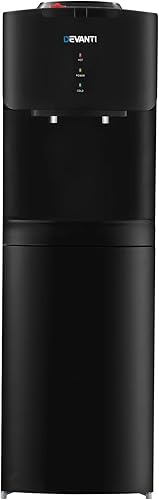
Devanti Top Loading Hot/Cold Dispenser – Black
If you need true hot water for tea and instant meals, this Devanti is a workhorse. The electronic refrigeration is quieter than compressor models we’ve tested. The safety features—overheat and dry-run protection—give peace of mind. Honestly, for a small office or a household that drinks a lot of tea, it’s hard to beat at this price.
- Reliable hot water function
- Quiet operation
- Comprehensive safety protections
- You must lift heavy water jugs
- No built-in filtration

AIRHOP Instant Hot Water Dispenser
This is for the precision crowd. The five temperature settings (from warm to boiling) are perfect for different teas, baby formula, or pour-over coffee. The 3L tank is removable, making it easy to clean and refill. It’s not a chiller, but if your primary need is instant, controlled hot water, it’s a fantastic dedicated unit.
- Precise temperature control
- Easy-to-clean removable tank
- Effective child safety lock
- Hot water only—no chilling
- Smaller capacity than freestanding units
Budget Picks from AliExpress
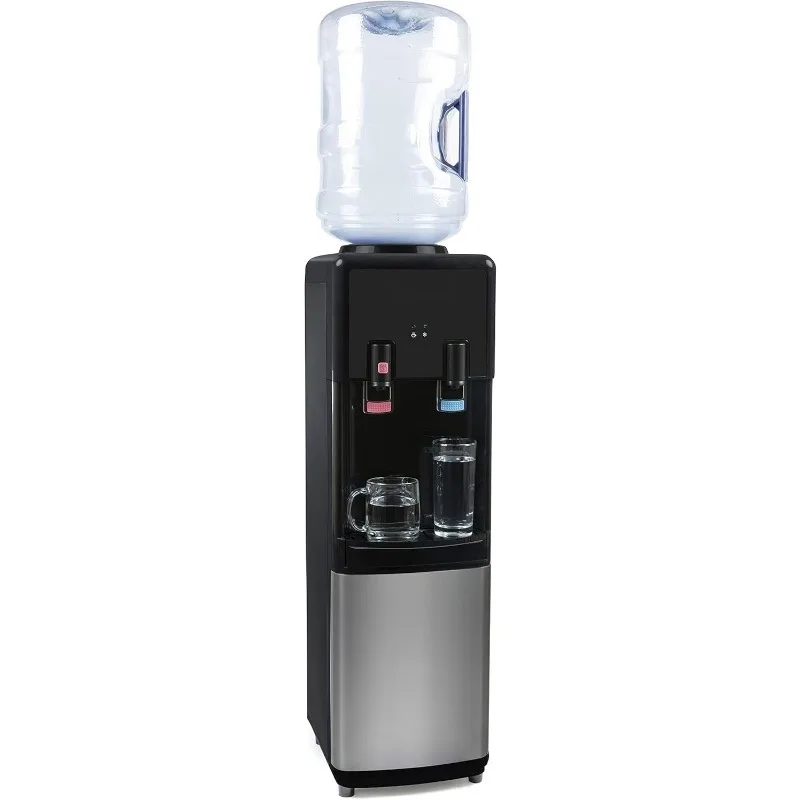
Top Loading Water Cooler – Hot & Cold – Black & Stainless
This looks like a solid, no-frills top-loader. The stainless steel accents are a nice touch at this price. It holds standard 3 & 5-gallon jugs and has the essential child lock for the hot tap. A word of caution: shipping times can be long, and warranty support is virtually nonexistent. You’re betting on it working perfectly out of the box.
- Very low upfront cost
- Standard jug compatibility
- Unknown long-term reliability
- Limited customer support

Water Cooler Spigot Replacement Faucet
Not a cooler, but a critical spare part. If your dispenser’s tap breaks or starts leaking, this $7 replacement can save you from buying a whole new unit. It’s a simple push-button design made of plastic. We keep a couple in our test lab because spigots are often the first thing to wear out. A smart, cheap backup to have on hand.
- Extremely cheap insurance
- Easy to install
- Plastic construction
- Check your model’s compatibility first
Frequently Asked Questions
- Is a water cooler dispenser the same as a water purifier?
- No. A dispenser’s main job is to store, heat, and cool water. While many have a basic filter for taste, they are not purifiers. For removing bacteria, viruses, or heavy metals, you need a separate system certified to NSF/ANSI 53 or 58 standards. Think of the dispenser as the final, convenient delivery point.
- How often do I need to clean my water cooler?
- Wipe the drip tray weekly. Deep clean the entire unit—reservoirs, taps, and exterior—every 3 to 6 months. Use a solution of water and white vinegar or a manufacturer-recommended cleaner. This prevents biofilm and mold buildup, which is the biggest source of bad taste.
- Can I use a water cooler dispenser without a filter?
- Yes, if it’s a jug model. Just fill it with pre-filtered or bottled water. For bottle-less (point-of-use) models, you must use at least a sediment filter to protect the internal components from clogging.
- What’s the difference between distilled water and the water from my cooler?
- Big difference. Distilled water is boiled into steam and re-condensed, removing all minerals and impurities. Your cooler’s filtered water retains healthy minerals. For a deep dive, see our comparison of distilled water vs purified water. Most people prefer the taste of mineral-rich filtered water for drinking.
- Are water cooler dispensers expensive to run?
- Less than you think. A modern, well-insulated unit costs roughly $2-$4 per month in electricity to run 24/7. Models with Energy Star ratings or efficient standby modes are at the lower end. The convenience usually far outweighs the minor cost.
- Can I install a bottle-less water cooler myself?
- It depends on your comfort level. It requires tapping into your cold water line under the sink, similar to installing a refrigerator water line. If you’re handy, it’s a 1-2 hour job. If not, hire a plumber. A bad install can lead to leaks and water damage.
Final Thoughts
Choosing the right water cooler dispenser comes down to being honest about your habits. If you want cold water on demand and have limited space, the Lenoxx benchtop is a fantastic, affordable start. For families or small offices that need both hot and cold, the Devanti freestanding units are reliable workhorses.
The single biggest mistake we see is overbuying. Most homes don’t need a plumbed-in, bottle-less system. Start with a simple model that fits your counter and your routine. You can always upgrade later. The goal is to make drinking water effortless—and any of these units will do that.
