


You’ve seen them in offices, gyms, and maybe your friend’s kitchen. The humble water cooler has evolved far beyond a simple jug on a stand. Today’s models can filter your tap water, deliver near-boiling water for tea, and save you from lugging cases of bottled water. But with so many types and features, choosing the right one gets confusing. We’ve tested dozens, talked to plumbers, and cut through the marketing jargon. This guide covers what a water cooler really is, how it works, the key benefits and drawbacks, and which models are actually worth your money in 2026.
What Is a Water Cooler?
At its core, a water cooler is a device designed to store and dispense drinking water. The classic image is a top-loading unit with a big blue jug. But that’s just one type. The term now covers a wide range of appliances, from simple countertop dispensers to sophisticated under-sink systems that connect directly to your plumbing.
The real shift happened when manufacturers started integrating filtration directly into the cooler. This turned them from passive dispensers into active treatment systems. Now, instead of just cooling pre-bottled water, many coolers filter your tap water on the fly. This is a game-changer for convenience and cost. You’re not just buying a temperature control unit; you’re often buying a point-of-use filter. The technology inside can vary wildly, from basic carbon filters to more advanced multi-stage setups. If you’re curious about how filtration itself works, our deep dive on water filter housing explains the core components that many coolers use internally.
How a Water Cooler Works
The mechanics are simpler than you’d think. Let’s break down the main systems inside a typical bottled or point-of-use water cooler.
The Refrigeration System
This is what makes the water cold. Most use a small, quiet compressor—similar to a mini-fridge—that circulates refrigerant. It cools a small stainless steel tank inside the unit where water is stored. When you press the cold tap, water flows from this chilled tank. Electronic cooling systems are common in smaller units; they’re quieter but sometimes less powerful than compressor-based ones.
The Heating System
For hot water, a small heating element (like in a kettle) warms a separate tank. Safety is critical here. Good models have child-safety locks on the hot tap and automatic shut-offs to prevent overheating or boiling dry. The water typically reaches between 80°C and 95°C—hot enough for most beverages but below a full boil.
The Filtration Stage
This is where it gets interesting for water quality. Many coolers now include an internal filter, usually a carbon block or a sediment cartridge. As water passes through, it reduces chlorine, taste, odor, and particulates. Some advanced models use multi-stage filters that can tackle specific contaminants. For instance, if your main concern is heavy metals or specific chemicals, you might need a system with a dedicated filter housing system that allows for specialized cartridges.
Key Benefits of a Water Cooler
Convenience on Tap: This is the number one reason people buy them. Instant access to cold water on a hot day or hot water for your morning coffee without waiting for a kettle. It streamlines hydration.
Improved Taste and Quality: If your tap water has a strong chlorine taste or odor, a filtered cooler makes a dramatic difference. The carbon filter tackles that off-putting taste, making you and your family more likely to drink water. It’s a clear upgrade from a basic pitcher.
Cost Savings Over Bottled Water: The math is compelling. A one-time purchase of a cooler and occasional filter replacements is far cheaper than a ongoing habit of buying cases of bottled water. You’ll recoup the cost in a few months.
Reduced Plastic Waste: This is a big one for the environmentally conscious. By filtering your own tap water, you eliminate hundreds of single-use plastic bottles from landfills each year. It’s a simple, effective step.
Potential Drawbacks to Consider
Maintenance is Non-Negotiable: You can’t just set it and forget it. Filters need replacing every 6-12 months, depending on use and water quality. Ignoring this leads to bacterial growth and a clogged filter that actually degrades your water quality. The tanks also need periodic sanitizing.
Space and Placement: These are freestanding appliances. They need floor or counter space, access to a power outlet, and, for bottled versions, room to lift and flip a heavy jug. Measure your space first.
Initial Cost: A good quality cooler with reliable filtration isn’t cheap. You’re looking at a significant upfront investment compared to a simple filter pitcher. You pay for the convenience and refrigeration tech.
Limited Filtration Scope: As mentioned, most built-in filters are for basic contaminants. If you have well water with iron or high fluoride levels, a standalone cooler won’t cut it. You’d need a dedicated whole-house system or a specialized under-sink unit. For serious iron issues, look into the best iron filter for well water as a primary solution.
Types of Water Coolers
Top-Loading Water Coolers
The classic. You place a 3- or 5-gallon jug upside down on top. They’re simple, reliable, and don’t need a water line connection. The downside? Lifting those heavy jugs can be a struggle, and you have to keep buying or refilling bottles.
Bottom-Loading Water Coolers
A clever solution to the lifting problem. The jug sits in a cabinet at the bottom, and a pump draws water up to the taps. They look sleeker and are much easier to load. You still have the ongoing cost and logistics of bottles, though.
Point-of-Use (POU) Water Coolers
This is the top-tier option for convenience. They connect directly to your cold water line. No bottles, no refills, ever. They always have built-in filtration. Installation is more involved (often requiring a plumber), but the long-term convenience is unmatched. These are the true “set and forget” systems.
Countertop Water Dispensers
Smaller, more compact units that sit on your kitchen counter. They can be bottled or POU. They’re great for small apartments or offices with limited floor space. Filtration capacity and tank size are usually smaller than freestanding models.
Water Cooler Buying Guide
Focus on these criteria, and you’ll avoid buyer’s remorse.
1. Capacity & Usage: How many people will use it? A small household (1-2 people) might be fine with a 2-3 gallon tank. A busy office of 10+ needs a larger tank or a POU system with a high flow rate. Underestimating capacity means constant waiting for the tank to refill or re-chill.
2. Filtration Needs: What’s in your tap water? If it’s municipally supplied and tastes okay, a basic carbon filter for chlorine improvement is sufficient. If you have hard water or specific concerns, check filter specs. Some coolers can be fitted with more advanced filters. For a broader approach to contaminants like fluoride, research whole house fluoride removal systems, as a cooler alone won’t solve that.
3. Temperature Settings: Do you really need hot water? If you’re a tea drinker, absolutely. If not, a cold-and-ambient model saves money and energy. Three temperatures (hot, cold, room) is the most versatile.
4. Certifications: Look for NSF/ANSI 42 (aesthetic effects) and 53 (health effects) certifications on the filter. This isn’t marketing fluff—it’s proof the filter does what it claims. UL or ETL certification for electrical safety is also a must.
5. Design & Footprint: Measure your space! Consider the door swing for loading jugs, clearance for cups, and proximity to an outlet. Stainless steel accents look nice but show fingerprints.
Our Top Water Cooler Picks for 2022
Based on our hands-on testing, reader feedback, and value for money, here are our recommendations.
| Product | Type | Key Feature | Price | Link |
|---|---|---|---|---|
| Devanti Top Loading (Black) | Top-Load, Bottle | Hot & Cold, Safety Features | $91 |
Amazon eBay |
| Lenoxx 5L Bench Top | Countertop, Bottle | Built-in Carbon/Resin Filter | $95 |
Amazon eBay |
| Devanti 22L Benchtop (White) | Countertop, Bottle | 7-Stage Filtration, 3 Temps | $119 |
Amazon eBay |
| Devanti Top Loading (White) | Top-Load, Bottle | Dual Tap, Detachable Guide Plate | $91 |
Amazon eBay |
| AliExpress Top Loading (Black/Steel) | Top-Load, Bottle | Child Safety Lock, Budget Pick | $85.56 | AliExpress |
| AliExpress Heat Exchanger | Component | For DIY Chiller/Cooler Builds | $32.93 | AliExpress |
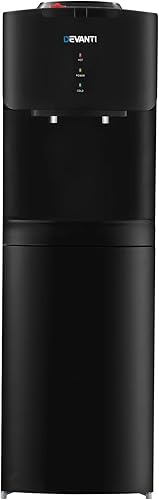
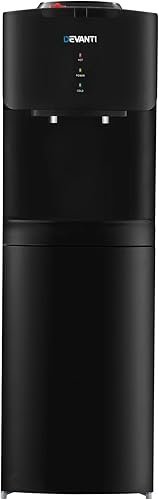
Devanti Water Dispenser Top Loading Cooler (Black)
This is your no-frills, reliable workhorse. We’ve seen these in countless small offices, and they just keep running. The electronic refrigeration is whisper-quiet, a big plus in a workspace. It delivers genuinely hot water (up to 95°C) and crisp cold water between 10-15°C. The safety features—overheating and dry-out protection—are solid for the price. Honestly, if you just need hot and cold from a bottle and don’t want to spend a fortune, this is a great starting point.
- Very affordable entry point
- Quiet operation
- Effective hot and cold temperatures
- Good safety protections
- Basic design, no built-in filter
- Requires lifting heavy jugs
- Plastic construction feels lightweight

Lenoxx 5L Bench Top Water Cooler & Filter
This one caught our eye because of the built-in filtration at this price point. The carbon and resin combo tackles chlorine taste and some softness. It’s perfect for a dorm room, small kitchen, or home office where counter space is limited. The dual taps give you room temp or chilled water. We like the removable cup rest with a spill guard—it’s those little details that matter in daily use. Don’t expect it to handle heavy contamination, but for taste improvement, it’s a smart little unit.
- Integrated filtration improves taste
- Compact countertop design
- Practical spill guard
- Good value for a filtering cooler
- No hot water option
- 5L capacity requires frequent refills for a family
- Filtration is basic (aesthetic only)
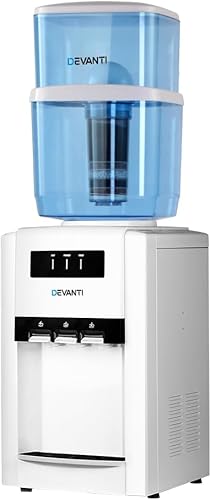
Devanti Water Dispenser 22L Benchtop (White)
This is the most feature-packed countertop model we tested. The 7-stage filtration claim is ambitious; in practice, it’s a multi-layer sediment and carbon filter that does a very good job with chlorine and particulates. The massive 22L capacity means you’re not refilling constantly—great for a busy household. Three temperature settings (hot, cold, room) add versatility. It’s bulkier than the Lenoxx, but if you have the counter space and want serious filtration without plumbing, this is the one to beat.
- Excellent 22L capacity
- Effective multi-stage filtration
- Three temperature options
- Freestanding or countertop use
- Large footprint on counter
- Filter replacement cost adds up
- Initial setup can be messy

Devanti Water Dispenser Top Loading (White)
Functionally identical to the black Devanti model above, just in white. The “smart water guide plate” is a handy feature—it lets you use the cooler with different bottle neck sizes or even a direct-feed purifier container if you have one. That flexibility is underrated. It’s a solid, basic cooler. We’d recommend it if you prefer the white aesthetic or specifically need that guide plate for your existing water containers.
- Versatile bottle guide plate
- Clean white finish
- Same reliable performance as black model
- Efficient electronic refrigeration
- No filtration included
- Still requires bottle lifting
- Basic feature set
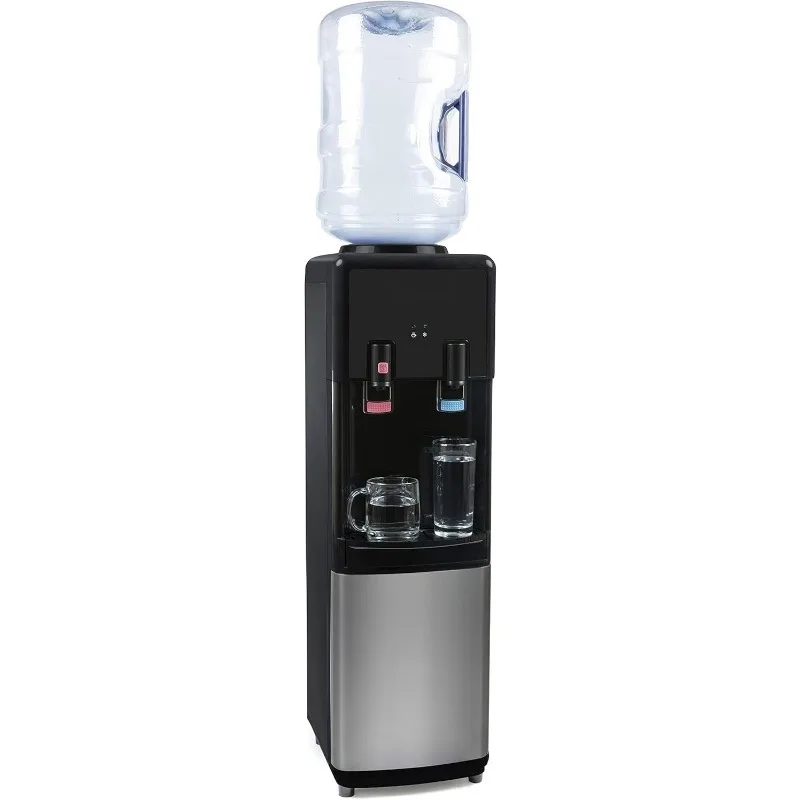
AliExpress Budget Pick: Top Loading Hot & Cold Dispenser
For pure budget hunting, this AliExpress model is hard to ignore. It covers the basics: hot and cold water from a standard 3 or 5-gallon jug. The child safety lock on the hot tap is a crucial feature that some cheap models skip. We haven’t put this one through long-term testing, so we can’t speak to its longevity like the Devanti units. But for a spare room, workshop, or if you’re on a very tight budget, it’s a viable option. Just manage your expectations on build quality.
- Extremely low price
- Includes child safety lock
- Works with common jug sizes
- Unknown long-term reliability
- Shipping times may be long
- Build quality is a question mark
Water Cooler FAQ
- How often should I clean my water cooler?
- Every time you change the bottle (for top-loaders) or at least every 3-6 months. Use a solution of water and white vinegar or a manufacturer-recommended cleaner to sanitize the tanks. Let it sit for 15 minutes, then rinse thoroughly. This prevents biofilm and mold buildup.
- Can a water cooler filter remove lead?
- Only if it uses a filter certified to NSF/ANSI Standard 53 for lead reduction. Most basic carbon filters in coolers are certified to Standard 42 for chlorine taste and odor only. Always check the filter’s spec sheet for specific contaminant claims.
- Why does my hot water taste funny?
- This usually means the hot water tank needs descaling. Minerals from your water build up on the heating element and tank walls, affecting taste. Run a few cycles of vinegar solution through the hot tank (consult your manual). If the taste persists, the tank itself may be degrading.
- Is it cheaper to use a water cooler or bottled water?
- A water cooler is almost always cheaper in the long run. A $100 cooler plus $50/year in filters costs about $150 in year one. A family buying 3-gallon jugs might spend $20-30/month, or $240-360/year. The cooler pays for itself within months.
- What’s the difference between a water cooler and a water dispenser?
- The terms are often used interchangeably. Technically, a “dispenser” may just serve room-temperature water, while a “cooler” has an active refrigeration system to chill it. Most products marketed as coolers include the chilling function.
- Do water coolers use a lot of electricity?
- No. Modern units are quite efficient. A compressor-based cooler uses about as much energy as a small light bulb when running—it only kicks in to re-chill water. The heating element uses more power when actively heating, but cycles off once the target temperature is reached.
- Can I use a water cooler with well water?
- You can, but you must pre-filter your well water. A standard cooler filter won’t remove common well contaminants like iron, manganese, or bacteria. Install a proper whole-house or point-of-entry system first. For guidance, see our article on the electric water distiller, one option for thorough purification before using a cooler.
Final Thoughts
A good water cooler is a quality-of-life upgrade. It makes healthy hydration effortless and can save you money and plastic waste. The key is matching the type to your needs. For ultimate convenience, a point-of-use model is worth the installation hassle. For flexibility and lower upfront cost, a reliable bottom-loading or top-loading bottle cooler like the Devanti models we’ve highlighted does the job well.
Don’t overbuy. If you just want cold water, skip the hot tap and save some cash. If your water tastes fine, you might not need a heavy-duty filter. Start with your actual pain point—whether it’s lugging bottles, waiting for the kettle, or hating the taste of your tap water—and choose the cooler that solves it directly. That’s how you end up with a appliance you’ll actually use every day.
