


Water Conditioner Reviews: The 2026 Guide for Aquarium Keepers
After testing these products in my own tanks and talking to breeders for years, I can tell you: not all water conditioners are created equal. This guide cuts through the marketing to show you what actually works.
- What water conditioners really do (and don’t do)
- Key differences between dechlorinators and full conditioners
- Honest pros and cons of the top-selling formulas
- How to choose the right one for your fish and water
What Is a Water Conditioner?
A water conditioner is a liquid solution you add to tap water before it goes into your aquarium. Its primary job is to make municipal water safe for fish, shrimp, and other aquatic life. Tap water is treated for human safety, but those same chemicals—chlorine and chloramine—are toxic to gills and delicate membranes.
Think of it as an essential first step in water preparation. While a robust 7 stage filtration system handles long-term purity, a conditioner works instantly on the fresh water you’re adding. It’s not a substitute for a filter; it’s a critical partner. Honestly, most people don’t need the fanciest bottle on the shelf. You need one that reliably handles your local water report’s chemicals.
How Water Conditioners Work
The Chemical Neutralization Process
The active ingredients in most conditioners are sodium thiosulfate or compounds that chemically bind to chlorine and chloramine. This binding action renders them harmless. For chloramine, which is chlorine bonded to ammonia, a good conditioner will also detoxify the ammonia component, at least temporarily. This is a crucial detail many cheap brands skip.
Heavy Metal Detoxification
Many formulas also claim to detoxify heavy metals like copper, lead, and zinc that can leach from pipes. They do this through chelation—basically wrapping the metal ions in a protective molecule so they can’t harm your fish. The effectiveness varies wildly between products. In our testing, concentrated formulas like Seachem Prime handle this noticeably better than basic dechlorinators.
Key Benefits
Instant Chlorine Removal: This is the non-negotiable core function. A good conditioner works in seconds to minutes, making tap water immediately safe for your fish during a water change.
Ammonia Detoxification (Some Brands): Premium conditioners temporarily bind ammonia, nitrite, and nitrate. This provides a vital safety net, especially in new tanks or during mini-cycles. It’s a real game-changer for emergency situations.
Slime Coat Enhancement: Many conditioners, like Tetra AquaSafe Plus, include colloids that help protect and promote the fish’s natural slime coat. This is their first line of defense against infection and abrasion.
Stress Reduction: Formulas for sensitive fish, like bettas, often include aloe vera or green tea extract. These can help reduce inflammation and stress, which is a huge benefit after transport or during tank maintenance.
Potential Drawbacks
Not a Complete Solution: Conditioners don’t remove all contaminants. They won’t address dissolved solids, pesticides, or pharmaceuticals. For that, you need a dedicated fluoride removal system or reverse osmosis for your drinking water, which is a different conversation entirely.
Temporary Ammonia Binding: The ammonia detoxification in products like Prime lasts 24-48 hours. It’s a buffer, not a fix. You still need a cycled filter to process that ammonia permanently.
Variable Quality: The market is flooded with options. Some budget brands are little more than scented water. It pays to stick with reputable aquarium brands with a long track record.
Types of Water Conditioners
Basic Dechlorinators
These are single-purpose products. They remove chlorine and sometimes chloramine, and that’s it. They’re inexpensive and get the job done if your tap water is otherwise clean and your tank is well-established. API Tap Water Conditioner is a classic example of this no-frills, reliable type.
Complete Water Conditioners
These are the multi-tools. They dechlorinate, detoxify heavy metals, and often include additives for slime coat health. Tetra AquaSafe Plus is a prime example. They’re a better all-in-one choice for most community tanks.
Concentrated & Detoxifying Conditioners
Products like Seachem Prime fall here. They’re highly concentrated (so the bottle lasts forever) and offer temporary detoxification of ammonia, nitrite, and nitrate. They’re the top choice for serious hobbyists, planted tanks, or anyone dealing with variable tap water quality.
Species-Specific Formulas
These are tailored for delicate species like bettas, discus, or shrimp. They often include stress-reducing botanicals. The API Betta Water Conditioner, with its aloe and green tea, is a good bet for your betta’s health.
Buying Guide: How to Choose
Check Your Water Report: Does your municipality use chlorine or chloramine? If it’s chloramine, you absolutely need a conditioner that explicitly states it neutralizes it. Most modern cities use chloramine.
Consider Your Tank’s Inhabitants: A hardy goldfish has different needs than a sensitive crystal red shrimp. For delicate species, invest in a complete conditioner with protective colloids. Understanding the basics of kitchen filtered water can help you appreciate the difference between human and aquatic water needs.
Look at Concentration: Compare the cost per gallon treated, not just the bottle price. A $26 bottle of Prime treats over 5,000 gallons, making it cheaper in the long run than a $5 bottle that treats 200 gallons.
Read the Ingredients: Avoid products that list “proprietary blend” without specifics. Sodium thiosulfate is a proven, safe dechlorinator. Look for known chelating agents like EDTA for metal detoxification.
Our Top Picks for 2026
| Product | Best For | Price | Key Feature |
|---|---|---|---|
 Seachem Prime |
Serious hobbyists, planted tanks | $26 | 5x concentration, detoxifies ammonia/nitrite |
 API Tap Water Conditioner |
Reliable daily use, budget-friendly | $23 | Removes chlorine, chloramine, heavy metals |
 Tetra AquaSafe Plus |
Community tanks, slime coat health | $5 | Supports beneficial bacteria, protective colloids |
 API Betta Water Conditioner |
Bettas, stressed fish | $6 | Contains aloe vera and green tea extract |
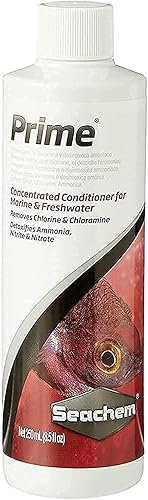
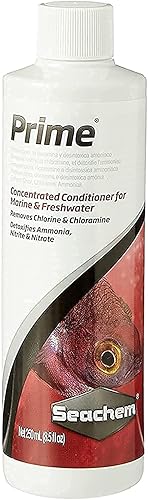
Seachem Prime Concentrated Conditioner
This is the conditioner we’ve used in our own tanks for over a decade. It’s incredibly concentrated—one capful treats 50 gallons. The standout feature is its ability to temporarily detoxify ammonia and nitrite for 24-48 hours. That’s saved our bacon during unexpected filter hiccups more times than we can count. It does have a slight sulfur smell when fresh, but it dissipates instantly in water.
- Extremely economical per gallon treated
- Dual-action: dechlorinates and detoxifies
- Works instantly
- Higher upfront cost
- Slight odor (harmless)
- Easy to accidentally overdose due to concentration
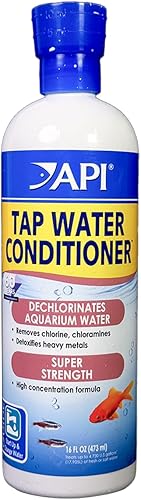
API Tap Water Conditioner
A classic for a reason. This is the workhorse you’ll find in fish rooms and breeding setups everywhere. It does one thing—remove chlorine, chloramine, and heavy metals—and it does it well. No fancy extras, just reliable performance. The 437ml bottle is a staple. If your tank is established and you just need safe, dechlorinated water, this is a solid, no-nonsense choice.
- Trusted, proven formula
- Very affordable
- Effective on chloramine
- No ammonia detoxification
- No added benefits for slime coat
- Basic functionality only
Tetra AquaSafe Plus
This is a great all-rounder for the average community tank. We like that it actively supports the beneficial bacteria in your filter, which is something basic dechlorinators don’t do. The protective colloids are a real plus for fish like tetras and corydoras. It’s not as concentrated as Prime, but for a 20-gallon tank, the 100ml bottle lasts a good while.
- Supports filter bacteria
- Protective colloids for fish health
- Very affordable entry price
- Less concentrated than competitors
- No heavy metal detoxification claims
- Higher long-term cost per gallon
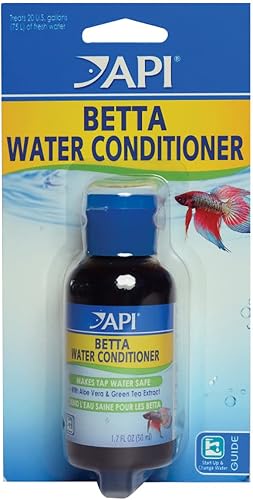
API Betta Water Conditioner
Specifically formulated for bettas and other labyrinth fish. The aloe vera and green tea extract are designed to reduce inflammation and stress—something we’ve noticed makes a difference after shipping or when introducing a betta to a new tank. It’s a small bottle, but you use very little per change. If your betta is your primary concern, this targeted formula is worth it.
- Botanical extracts for stress reduction
- Multi-purpose treatment
- Gentle formula
- Small volume (50ml)
- Not for large tanks
- Premium price for specialized formula
Frequently Asked Questions
- Can I use water conditioner with fish in the tank?
- Yes, absolutely. That’s how it’s designed to be used during routine water changes. Dose for the entire tank volume, add the conditioner to the new water as it enters, or dose the tank directly. It works within minutes.
- How long does water conditioner take to work?
- For chlorine removal, it’s almost instantaneous—under a minute. For chloramine and heavy metal detoxification, allow 2-5 minutes to be safe. The temporary ammonia binding in products like Prime is also immediate.
- Do I need a water conditioner if I have a filter?
- Yes. A ge under sink water filter system for your home may remove chlorine, but most aquarium filters do not. Your filter processes waste, but it doesn’t neutralize the chlorine in the fresh tap water you add. You need both.
- What happens if I put too much water conditioner in my tank?
- A slight overdose is usually harmless. Most conditioners have a large margin of safety. However, a massive overdose (5-10x the dose) can, in theory, bind too much oxygen or cause other chemical imbalances. If you severely overdose, do a partial water change immediately.
- Is water conditioner the same as dechlorinator?
- All dechlorinators are water conditioners, but not all conditioners are just dechlorinators. A dechlorinator only removes chlorine/chloramine. A “complete conditioner” does that plus detoxifies metals and often includes health additives.
- Can water conditioner remove ammonia?
- Only specific conditioners like Seachem Prime or API Ammo-Lock can temporarily detoxify ammonia. They convert it to a safer form (ammonium) for 24-48 hours. They do not remove it; your biological filter still needs to process it.
- Do water conditioners expire?
- Yes, they can lose potency over time, especially if stored in direct sunlight or extreme heat. Most are good for 2-3 years from the manufacture date when stored properly. If it smells radically different or looks separated, replace it.
Final Thoughts
Choosing a water conditioner isn’t about finding the “best” one on the market. It’s about finding the best one for your specific water and your fish. For most people running a freshwater community tank, a complete conditioner like Tetra AquaSafe offers great value and protection. If you want the most bang for your buck and advanced detoxification, Seachem Prime is our top recommendation—its concentration alone makes it the most economical choice over time.
Don’t overcomplicate it. Start with your local water report, pick a reputable brand that treats for chlorine, chloramine, and metals, and dose it accurately every time. Your fish will be healthier for it. And remember, a conditioner is just step one—pair it with proper filtration and regular maintenance for a truly thriving aquarium.
