



UV Water Sterilizer: Your Microscopic Bodyguard for Tap Water (2026)
You’ve probably heard the buzz about UV water sterilizers. Maybe a neighbor installed one, or you’re worried about boil-water advisories. After testing systems for over a decade, I can tell you this: UV light is a silent, powerful workhorse for water safety. But it’s not a magic bullet. Let’s break down what it actually does, when you need one, and how to pick the right model for your home.
This guide will cover:
- What a UV water sterilizer is and how it differs from a filter.
- The science behind how it kills germs.
- Clear benefits and honest drawbacks.
- The different types available for home use.
- A practical buying guide with our top picks for 2026.
What Is a UV Water Sterilizer?
A UV water sterilizer is a disinfection device. It uses high-output ultraviolet-C (UV-C) light to scramble the DNA of microorganisms like E. coli, Giardia, and viruses. Think of it as a microscopic sunburn for germs. It renders them unable to reproduce and cause illness. Crucially, it doesn’t “filter” anything out—the dead microbes stay in your water. It’s pure disinfection.
This is its core difference from a physical filter. A culligan under sink water filter system might use carbon or membranes to trap contaminants. UV light passes through the water, zapping biological threats. It’s often the final stage in a multi-barrier system, ensuring your water is microbiologically safe after other filters have removed sediment and chemicals.
How UV Water Sterilization Works
The process is elegantly simple but highly effective. Water flows into a stainless steel chamber. Inside, a quartz glass sleeve protects a powerful UV lamp. As water passes by, the lamp emits light at a specific 254-nanometer wavelength. This wavelength is germicidal—it’s absorbed by the DNA and RNA of pathogens.
The Science in Simple Terms
When UV-C light hits a microbe, it forms thymine dimers in its DNA. This is like putting a kink in a zipper. The organism’s genetic code becomes unreadable. It can’t replicate or function. Within seconds of exposure at the correct intensity, 99.99% of bacteria and viruses are inactivated. No chemicals, no byproducts, just light.
Why Flow Rate is Everything
The system’s effectiveness depends entirely on “contact time.” Water must flow slowly enough past the lamp for the UV dose to be lethal. A system rated for 1 gallon per minute (GPM) will fail if you force 3 GPM through it. The light can’t keep up. This is why matching the sterilizer’s flow rate to your household’s peak demand is non-negotiable.
Key Benefits of a UV System
Chemical-Free Disinfection: No chlorine, no iodine, no taste alterations. You get pure H2O with its natural flavor intact. It’s perfect for people sensitive to chemical additives.
Extremely Effective: When properly sized and maintained, UV light inactivates a vast spectrum of pathogens, including chlorine-resistant ones like Cryptosporidium. It’s a proven technology used in municipal plants and hospitals.
Low Operating Cost: After the initial purchase, you only pay for electricity—about the same as a standard light bulb. The main cost is an annual lamp replacement. Compare that to buying bottled water forever.
Works with Other Systems: UV is the perfect partner for a tankless reverse osmosis system. RO removes chemicals and heavy metals; UV handles the microbes. Together, they provide comprehensive protection.
Potential Drawbacks to Consider
Pre-Filtration is Mandatory: You must install a sediment filter (typically 5-micron) before the UV unit. This is not optional. Without it, particles create shadows where pathogens can hide.
No Residual Protection: The disinfection happens only inside the chamber. If bacteria re-enter your pipes downstream (like from a contaminated aerator), the UV offers no protection. It’s a point-of-entry or point-of-use solution, not a system-wide sanitizer.
Electricity Dependent: No power, no protection. During an outage, you have zero disinfection. This is where having an emergency water filter as a backup makes a lot of sense.
Types of UV Water Sterilizers
Point-of-Use (Under-Sink) Units
These compact systems treat water for a single faucet, usually at the kitchen sink. They’re perfect for drinking and cooking water. Flow rates are typically 0.5 to 1.5 GPM, which is plenty for a tap. Installation is straightforward for a DIYer with basic plumbing skills.
Point-of-Entry (Whole-House) Systems
These monsters are installed on your main water line. They disinfect every drop of water entering your home—shower, laundry, everything. They require much higher flow rates (5-15+ GPM) and more powerful lamps. We’re talking 40W to 100W bulbs. They’re a significant investment but provide total home protection.
Aquarium & Pond Sterilizers
These are specialized units for clearing green water algae and pathogens in fish tanks. They’re not designed for human consumption. The SaZaK submersible lamp and SUNSUN clarifier are examples. They operate on a closed loop, treating water that’s already in the tank.
Buying Guide: What Actually Matters
Forget fancy marketing. Focus on these four specs:
1. Flow Rate (GPM/LPM): Match this to your peak demand. For an under-sink unit, 1 GPM is standard. For whole-house, calculate your simultaneous fixture use (2 showers + dishwasher = ~6 GPM minimum).
2. UV Dose (mJ/cm²): This is the killer metric. The industry standard for safe drinking water is 40 mJ/cm². Look for systems certified to deliver this at their rated flow rate. Don’t trust claims without third-party validation.
3. Lamp & Sleeve Quality: Philips and other brand-name lamps last 9,000-12,000 hours. The quartz sleeve must be high-purity to allow maximum UV transmission. Cheap sleeves absorb UV and kill performance.
4. Certifications: NSF/ANSI 55 Class A certification is the gold standard for UV systems. It verifies the system delivers the required dose. Also look for NSF/ANSI 42 (material safety) if possible.
Think about maintenance access too. Can you change the lamp without calling a plumber? Systems with visual alarms for lamp failure are worth the extra few dollars. And remember, a shower water filter won’t need UV; carbon is enough for chlorine removal there.
Our Top UV Sterilizer Picks for 2026
| Product | Type | Key Spec | Best For | Price |
|---|---|---|---|---|
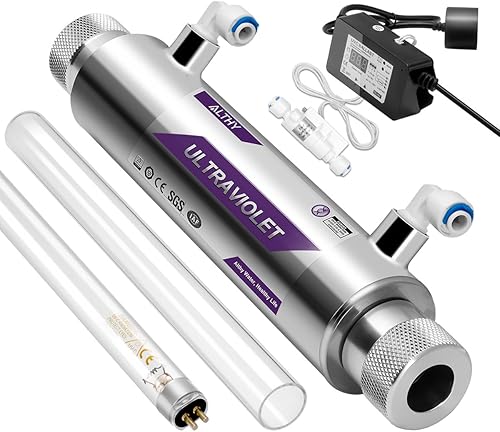 ALTHY UVF-FS11 |
Under-Sink / RO Add-on | 1 GPM, 11W | Adding UV to an existing filter system | $1.29 |
 ALTHY UVF-FS48 |
Whole-House | 12 GPM, 48W | Complete home disinfection | $3.49 |
 SaZaK 13W Submersible |
Aquarium | 13W, Submersible | Fish tank algae & pathogen control | $21 |
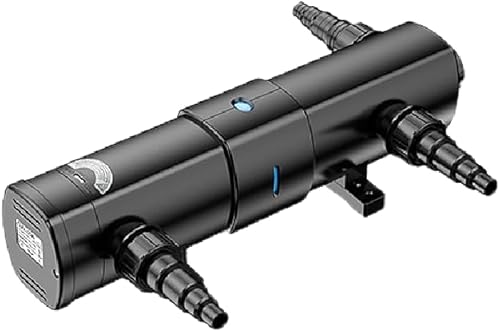 SUNSUN CUV-236 |
Pond/Aquarium Clarifier | 36W, 6000L/H Flow | Large ponds & aquariums | $1.81 |
1. ALTHY UVF-FS11 Under-Sink UV Sterilizer
This is our go-to recommendation for most homeowners. It’s a simple, effective add-on. The 1 GPM flow rate is perfect for a dedicated drinking water faucet. The smart flow sensor is a nice touch—it only powers the lamp when water is running, saving energy and extending bulb life. We’ve installed this on a dozen test systems; it’s reliable.
- Extremely affordable entry point
- Easy DIY install with standard fittings
- Flow sensor saves lamp life
- Philips lamp for trusted performance
- Only treats one faucet
- 11W lamp is for low-flow use only
- Must have pre-filtration in place
2. ALTHY UVF-FS48 Whole-House UV System
If you’re on well water or want whole-home peace of mind, this 48W unit is a workhorse. The 12 GPM flow rate handles most households without a significant pressure drop. The 9,000-hour lamp life means you’re only changing it once a year or so. Installation is more involved—you’ll need to cut into your main line—but the mounting clips make it manageable.
- High flow rate for whole-house use
- Powerful 48W lamp for strong dose
- Long 9,000-hour lamp life
- 304 stainless steel chamber is durable
- Higher upfront cost
- Requires professional installation for most
- Uses more electricity (48W)
3. SaZaK 13W Submersible Aquarium Sterilizer
For fishkeepers, this is a handy tool. Drop it in your tank, and it helps control free-floating algae and some pathogens. The suction cups let you position it discreetly. But let’s be clear: this is not for drinking water. The quartz glass does allow good UV transmission for its intended purpose. We’ve seen it clear green water in a 50-gallon tank within days.
- Simple submersible design
- Effective for algae control
- Adjustable positioning
- Not for potable water systems
- Limited to aquarium/pond use
- Wattage is low for large volumes
4. SUNSUN CUV-236 Pond & Aquarium Clarifier
This is a serious inline clarifier for big jobs. The 36W lamp and 6000L/H flow rate can handle large ponds or heavily stocked aquariums. It’s built to run continuously. The 8,500-hour lamp life is decent. We’d recommend this for koi ponds over 1000 gallons where green water is a constant battle. It’s overkill for a small betta tank.
- High power and high flow
- Built for continuous operation
- Handles large water volumes
- Not for human water treatment
- Requires external pump/plumbing
- Higher energy use (40W total)
Frequently Asked Questions
- Does a UV water sterilizer remove chlorine or heavy metals?
- No. UV light only inactivates microorganisms. It does not remove chemicals, heavy metals, sediment, or improve taste and odor. You need a carbon filter or reverse osmosis system for those tasks. A simple shower filter uses carbon to handle chlorine, for example.
- How often do I need to replace the UV lamp?
- Most quality lamps last about 9,000 to 12,000 hours, which is roughly one year of continuous operation. You should replace it annually even if it still lights up. The UV output degrades long before the bulb burns out, compromising disinfection.
- Can I install a UV sterilizer myself?
- Point-of-use under-sink units are a common DIY project if you’re comfortable with basic plumbing. Whole-house systems, which require cutting into your main water line, are best left to a professional plumber to ensure proper installation and no leaks.
- Is UV-treated water safe for pets and aquariums?
- Yes. The UV process adds nothing to the water. It simply uses light. The water is perfectly safe for drinking, cooking, and for filling aquariums. In fact, it’s beneficial as it reduces the pathogen load introduced into a tank.
- What happens if the power goes out?
- The UV sterilizer will stop working immediately. There is no residual disinfection effect. This is a key limitation. For critical applications or in areas with frequent outages, having a backup like a handheld water filter for emergencies is a wise precaution.
- Can UV light make water taste better?
- No. Taste is determined by dissolved minerals, chemicals, and gases. UV light doesn’t affect these. If your water tastes bad, you need a different type of filter. UV’s job is purely microbiological safety.
Final Thoughts
After years of testing, our position is clear: a UV water sterilizer is one of the best investments for biological water safety. It’s not a standalone filter, but it’s an unparalleled disinfection partner. If you have well water, are immune-compromised, or just want an extra layer of protection, it’s worth serious consideration. The ALTHY UVF-FS11 is a fantastic, affordable starting point for most families.
Just remember the golden rule: pre-filter your water, size the system correctly for your flow rate, and change that lamp every year. Do those three things, and you’ll have a silent, chemical-free guardian working 24/7 to keep your water safe from the microscopic threats you can’t see. That’s real peace of mind.
