


UV Water Purifier: The Complete 2026 Guide to How They Work & If You Need One
I’ve installed my fair share of these systems. And the single biggest mistake I see? People buying a UV purifier thinking it’s a magic fix for every water problem. It’s not. But for the right job, it’s incredibly effective. Let’s break down exactly what a uv water purifier does, when you need one, and how to pick a good unit.
- What UV purification is and its core function
- The science behind how it kills germs
- Clear benefits and honest drawbacks
- Different system types for different needs
- A practical buying guide and our top picks
What Is a UV Water Purifier?
A UV water purifier is a disinfection device that uses ultraviolet (UV-C) light to inactivate harmful microorganisms in water. Think of it as a high-tech security gate for your water line. Bacteria, viruses, and protozoa pass through a chamber where they’re exposed to a lethal dose of UV light. This damages their DNA, making them unable to reproduce and cause illness.
Here’s the critical distinction: UV purification is not filtration. It doesn’t remove anything from the water. The dead microbes remain in the water, but they’re harmless. Because of this, UV is almost always part of a multi-stage system. It’s the final, powerful step after sediment and carbon block filters have already removed dirt, chlorine, and chemicals.
So what does this mean for your tap water? If your source is microbiologically unsafe—like from a private well—a UV system is one of the most reliable ways to make it potable. For treated city water, it’s an extra layer of peace of mind, especially if you’re immune-compromised or just cautious.
How UV Water Purification Works
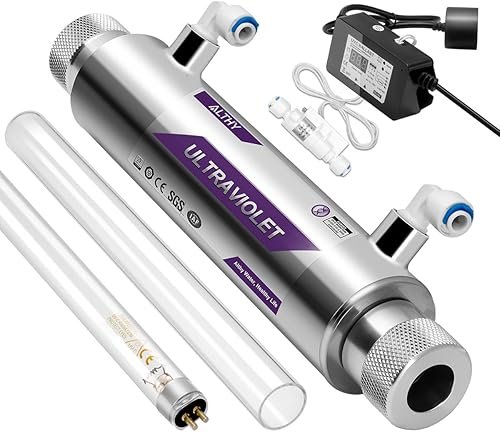
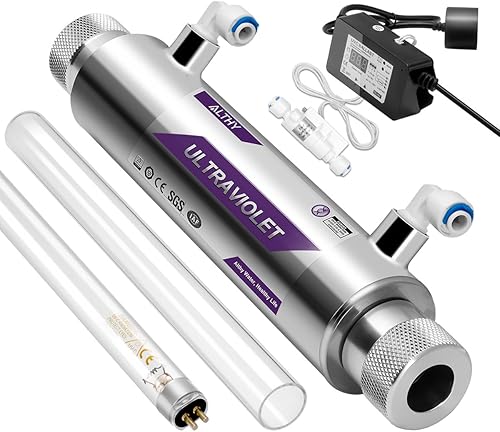
The process is straightforward but relies on precise engineering. Water flows into a stainless steel chamber. Inside, a quartz glass sleeve protects a UV-C lamp that emits light at a specific wavelength—typically 254 nanometers. This wavelength is germicidal, meaning it’s perfectly tuned to disrupt microbial DNA.
The Science of Destruction
When microorganisms absorb UV-C light, it causes a photochemical reaction. The energy forms bonds between adjacent nucleotides in their DNA, creating dimers. This genetic scrambling prevents the cells from replicating. They can’t cause an infection if they can’t multiply. The process is fast, effective, and adds no chemicals to your water.
Key Performance Factors
Three things determine if a UV system will work properly:
1. UV Transmittance (UVT): This measures how clear your water is to UV light. If your water has high turbidity (cloudiness) or color, the UV rays can’t penetrate effectively. That’s why pre-filtration is non-negotiable. A 5-micron sediment filter is usually the minimum requirement before the UV chamber.
2. Contact Time & Flow Rate: The water must be exposed to the UV light long enough for a lethal dose. Every system has a maximum flow rate (e.g., 1 GPM). Exceed this, and you’ll get untreated water. Always size your system for your peak household demand.
3. Lamp Intensity & Age: UV lamps lose intensity over time. Most need replacement annually or after about 9,000 hours of use, even if they still glow. That blue light doesn’t indicate germicidal power. A good system will have a timer or sensor to alert you.
Key Benefits of UV Purification
Extremely Effective Disinfection: UV light inactivates 99.99% of bacteria, viruses, and protozoa like Cryptosporidium and Giardia. It’s a proven technology used in municipal treatment plants worldwide. When properly installed and maintained, its reliability is hard to beat.
Chemical-Free Process: Unlike chlorination, UV adds no disinfection byproducts or taste to your water. It doesn’t alter the water’s chemistry. This makes it a great choice for people sensitive to chlorine or those seeking the purest-tasting water possible.
Low Operating Cost & Energy Use: A typical under-sink UV lamp uses about as much electricity as a small light bulb. Once installed, the only regular cost is an annual lamp replacement, which usually runs $30-$80. It’s far cheaper than buying bottled water.
Works on Resistant Pathogens: Some bugs, like Cryptosporidium, are highly resistant to chlorine. UV light handles them easily. If you’re on well water—which can be vulnerable to agricultural runoff—a UV system is a smart, proactive defense.
Potential Drawbacks to Consider
Requires Electricity: No power, no purification. If you live in an area with frequent outages, you’ll need a backup plan, like a battery unit or a point-of-use manual filter for emergencies.
Doesn’t Provide Residual Disinfection: The water is only disinfected at the point of UV exposure. Unlike chlorine, there’s no ongoing protection as water sits in your pipes or storage tank. Bacteria can potentially regrow downstream if the system isn’t used regularly.
Maintenance is Non-Negotiable: You must replace the lamp on schedule and clean the quartz sleeve. Neglect this, and you might as well not have the system. Based on reader feedback, this is the most common point of failure.
Types of UV Water Purifiers
Whole-House UV Systems
Installed at your home’s main water entry point. They treat every drop of water coming into the house—drinking, showers, laundry. These are larger units (higher GPM flow rates) and are the go-to choice for well water homes. They require professional installation and are a bigger upfront investment.
Point-of-Use (Under-Sink) UV Systems
These are the most common for homeowners on city water or those wanting purified water just at the kitchen tap. They’re installed under the sink, usually as the final stage after a sediment and carbon filter or a reverse osmosis system. Installation is a manageable DIY project for many. The Geekpure 6-Stage RO system below is a perfect example of UV as a final polishing stage.
Portable UV Purifiers
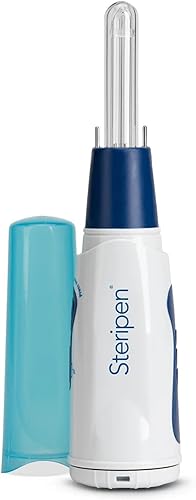
Handheld devices like the SteriPEN are designed for travelers, hikers, or emergency kits. You stir the device in a glass or bottle of water for 60-90 seconds. They’re great for their purpose but not a practical solution for daily home use.
Buying Guide: What Actually Matters
1. Flow Rate (GPM): Match this to your needs. For an under-sink drinking water system, 0.5 to 1 GPM is usually plenty. For a whole-house system, calculate your peak demand (how many showers, faucets, and appliances might run simultaneously) and buy accordingly.
2. Certification & Lamp Quality: Look for systems with NSF/ANSI 55 Class A certification (for disinfection). At a minimum, ensure the UV lamp is from a reputable brand like Philips or LightSources. Cheap, no-name lamps are a false economy.
3. Smart Features: A UV system with a timer, lamp-life indicator, or (better yet) a UV intensity monitor takes the guesswork out of maintenance. The ALTHY model below uses a flow sensor to activate the lamp only when water flows, saving energy and extending lamp life.
4. Pre-Filtration Needs: What does your water contain? If you have hard water, sediment, or iron, you need to address those first. For well water owners, a full treatment train might include a sediment filter, an iron filter for well water, a softener, and then the UV system.
5. Ease of Maintenance: Can you change the lamp and clean the sleeve yourself? Look for systems with simple bayonet-style mounts and clear instructions. A system that’s hard to service is a system that won’t get serviced.
Our Top UV Purifier Picks for 2026
| Product | Best For | Key Feature | Price |
|---|---|---|---|
 |
Adding UV to an existing filter system | Smart flow sensor, Philips lamp, 304 stainless steel | $1.29 |
 |
All-in-one faucet filter with monitoring | LED display, turbine-powered, ceramic filter | $59 |
 |
Travel and emergency preparedness | Portable, waterproof, improved LED indicators | $1.84 |
 |
Complete under-sink purification | 6-stage RO + UV, NSF-certified membrane | $2.45 |
1. ALTHY UVF-FS11 UV Ultraviolet Water Filter
This is a dedicated UV sterilizer, not a full filter. It’s designed to be added to your existing under-sink setup or RO system. We like the smart flow sensor—it only powers the lamp when water is actually running. The Philips 11W lamp and 304 stainless steel chamber are solid specs for the price. A great, simple upgrade for microbiological safety.
- Very affordable UV-only solution
- Flow sensor extends lamp life
- Easy DIY install with mounting clips
- Does not include any pre-filtration
- 1 GPM flow rate limits it to one faucet
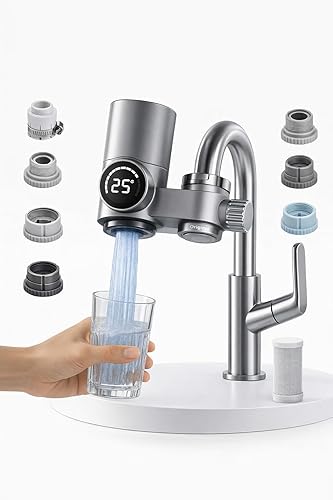
2. Smart Tap UV Water Purifier Faucet Filter
This one’s interesting. It’s a faucet-mounted unit that combines a ceramic filter cartridge with UV purification. The smart LED display shows water quality metrics, which is a neat feature for monitoring. It’s powered by water flow (turbine), so no batteries needed. Best for renters or those who want a non-permanent, all-in-one solution. Just manage your expectations—it’s not as powerful as a dedicated under-sink system.
- All-in-one filter and purifier
- No battery or plug required
- Real-time monitoring display
- Ceramic filter may clog faster with heavy sediment
- UV power may be limited by water flow speed
3. Steripen Classic 3 UV Pre-Filter Calibrator
This isn’t a home system—it’s a portable lifesaver. The Steripen is the gold standard for travel UV purifiers. The Classic 3 has improved LEDs that show treatment status and battery life. It’s waterproof, durable, and can treat a liter of water in 90 seconds. If you hike, travel internationally, or want a reliable emergency prep tool, this belongs in your kit. Remember, it only works on clear water, so use the pre-filter for cloudy sources.
- Highly portable and proven reliable
- Fast treatment time
- Clear status indicators
- Requires batteries (not included)
- Only practical for small volumes
4. Geekpure 6-Stage Reverse Osmosis System with UV
This is the full package. A 6-stage reverse osmosis system that ends with a UV sterilizer. It removes virtually everything—sediment, chlorine, heavy metals, TDS—and then the UV stage kills any potential bacteria or viruses. The NSF-certified RO membrane and lead-free faucet are quality touches. If you want the absolute purest water from your tap and have concerns about both chemical and microbiological contaminants, this type of system is what we recommend.
- Complete contaminant removal (RO) + disinfection (UV)
- NSF-certified components
- High 75 GPD production rate
- More complex installation
- Creates wastewater (brine)
UV Water Purifier FAQ
- Does a UV purifier remove chlorine or improve taste?
- No. UV light has no effect on chlorine, chemicals, or taste. For taste and odor improvement, you need an activated carbon filter. UV’s sole job is to disinfect by destroying microorganisms.
- How often do I need to change the UV lamp?
- Annually, or after about 9,000 hours of use. Even if the lamp still glows blue, its germicidal intensity drops below effective levels after this period. Always follow the manufacturer’s schedule.
- Can I use a UV purifier with well water?
- Yes, it’s highly recommended for well water. However, well water often has sediment, iron, or hardness that will foul the UV system. You must install proper pre-filtration. A sediment filter is mandatory, and an iron filter for well water is often needed too.
- Is UV purification better than boiling water?
- For disinfection, they are equally effective. UV is far more convenient for daily use—it’s instant, uses little energy, and doesn’t heat up your kitchen. Boiling is a great backup during power outages.
- What is the difference between NSF 55 Class A and Class B?
- Class A systems are designed to disinfect microbiologically unsafe water (e.g., from wells). Class B systems are for treating already-safe water to reduce the number of non-pathogenic organisms. For most homes, you want Class A.
- Can a UV system be used with a water softener?
- Absolutely. In fact, it’s a great combination. The softener removes hardness minerals that could scale on the UV sleeve, and the UV system provides disinfection. Install the softener before the UV unit. For more on treating hard water and its effects, our guide on alkaline water treatment has useful context.
Final Thoughts
So, do you need a uv water purifier? If you’re on a private well, it’s a near-essential piece of your treatment system. If you’re on city water but want an extra layer of protection against boil-water advisories or emerging pathogens, it’s a smart, low-cost addition. The key is understanding its role: it’s a disinfection specialist, not a filtration all-rounder.
Our take? For most homeowners, the best setup is a quality sediment and carbon block filter, followed by a UV purifier like the ALTHY unit for dedicated disinfection. If you want the ultimate in purity, pair a reverse osmosis system with a final UV stage. Whatever you choose, don’t skip the maintenance. A UV system only works if you keep that lamp fresh and that sleeve clean. It’s a simple trade-off for safe, chemical-free water straight from your tap.
