


UV Water Filtration System Guide: What It Is & If You Need One (2026)
You’ve probably heard the buzz about UV purification. Maybe a neighbor with a well swore by it. But is a UV water filtration system just hype, or is it a genuine solution for your home? We’ve installed, tested, and lived with these systems for years. This guide cuts through the noise.
- What UV filtration actually does (and what it doesn’t do)
- How the technology works in plain English
- The real benefits and the honest drawbacks
- How to choose the right system and our top picks for 2026
What Is a UV Water Filtration System?
A UV water filtration system is a disinfection device, not a filter in the traditional sense. It uses a special lamp to emit ultraviolet light at a specific wavelength (254 nanometers). This light penetrates the cells of microorganisms—bacteria, viruses, protozoa—and scrambles their DNA. They can’t reproduce, so they’re effectively neutralized.
Think of it as a high-tech security guard for your water. It doesn’t physically remove anything; it renders the bad stuff harmless. That’s a crucial distinction. It won’t take out chlorine, lead, pesticides, or make your water taste better. For that, you need a physical filter like a carbon block or an RO membrane. In our experience, the single biggest mistake people make is expecting UV to be a standalone solution. It’s a specialist, part of a team.
How UV Water Purification Works
The process is elegant in its simplicity but relies on precise engineering. Here’s the breakdown.
1. Pre-Filtration is Non-Negotiable
UV light must physically touch the microbe to work. If your water has sediment, rust, or cloudiness (turbidity), those particles can shield pathogens from the light. That’s why every quality UV system is installed after a sediment pre-filter, typically 5 microns or smaller. This step is critical for the system to function properly.
2. The UV Chamber Exposure
Water flows into a stainless steel chamber surrounding the UV lamp. As it passes by, it’s exposed to the intense UV-C light. The “dose” of light (measured in mJ/cm²) is what matters. A proper dose, usually 40 mJ/cm² or higher, will inactivate 99.99% of common pathogens. The water flow rate must be matched to the chamber size to ensure adequate exposure time.
3. Post-Treatment Considerations
The water coming out is microbiologically safe but unchanged in every other way. If you have hard water, chemical contaminants, or taste issues, you’ll need additional treatment stages. Many homeowners combine UV with a multi-stage system, like a reverse osmosis unit, for complete protection. It’s also worth knowing that UV systems require a constant power source and a yearly lamp replacement to maintain effectiveness.
Key Benefits of UV Treatment
Extremely Effective Against Pathogens: When properly sized and maintained, UV is one of the most reliable ways to kill waterborne pathogens. It handles bacteria like E. coli, viruses like hepatitis, and protozoa like Cryptosporidium. We’ve seen lab tests confirm a 4-log reduction (99.99%) time and again.
Chemical-Free Process: Unlike chlorination, UV adds no chemicals to your water. It doesn’t create disinfection byproducts (DBPs) and leaves no taste or odor. This is a huge plus for anyone sensitive to chemical treatments.
Low Maintenance & Operation: Once installed, a UV system runs silently 24/7. The only regular tasks are changing the lamp annually and cleaning the quartz sleeve occasionally. Energy use is minimal, often less than a standard light bulb. It’s a “set it and forget it” solution for microbial safety.
Preserves Beneficial Minerals: Because it’s a physical light process, UV does not strip out beneficial minerals like calcium and magnesium that RO systems can remove. You get safe water that retains its natural mineral content.
Potential Drawbacks & Limitations
No Residual Disinfection: The UV light only works at the point of treatment. Once water leaves the chamber, there’s no ongoing protection. If bacteria re-enter your plumbing downstream (from a leaky pipe, for instance), the water is vulnerable again. Chlorine leaves a residual that travels through pipes; UV does not.
Requires Electricity: No power means no protection. During a storm or outage, your UV system is offline. For well owners in storm-prone areas, this is a serious consideration. Some keep a battery backup or a non-electric emergency water filter on hand for this reason.
Water Quality Dependent: As mentioned, it needs clear water to work. High levels of iron, manganese, or hardness can foul the quartz sleeve, reducing effectiveness. These contaminants often require pre-treatment before the UV stage.
Lamp and Sleeve Replacement: The lamp intensity degrades over time, even if it still glows. You must replace it annually (or after ~9,000 hours) to guarantee a lethal dose. Forgetting this is like having a smoke detector with dead batteries.
Types of UV Water Systems
Whole-House UV Systems
Installed at the point of entry, right after your well pump or main water line. This protects every faucet, shower, and appliance in your home. It’s the gold standard for well water. Flow rates are high (e.g., 10-20 gallons per minute) to handle peak demand. These systems often integrate with other point of entry equipment like sediment filters and softeners.
Under-Counter / Point-of-Use UV
These are smaller units installed under a kitchen sink to treat drinking and cooking water only. They’re often part of a multi-stage system that includes sediment, carbon, and sometimes RO filters. The flow rate is lower, but it’s more affordable and focused on the water you actually consume.
Portable UV Purifiers
Bottle-based or wand-style devices for travelers, hikers, or emergency kits. They’re great for clear water sources and can neutralize pathogens in seconds. However, they have very limited capacity and aren’t a solution for daily home use. They serve a different purpose entirely.
Buying Guide: What Actually Matters
Forget the marketing fluff. Here are the specs that count.
Flow Rate (GPM): Match this to your home’s peak demand. A whole-house system needs at least 8-12 GPM for a family. Undersink units can be lower, around 0.5-1 GPM. Getting this wrong means weak showers or a trickle at the tap.
UV Dose (mJ/cm²): Look for systems certified to deliver a minimum of 40 mJ/cm² at the rated flow rate. This is the NSF/ANSI 55 Class A standard. Don’t settle for vague claims about “effective” UV light.
Alarm & Monitoring: A good system has a sensor that alerts you if the UV intensity drops below a safe level. A simple glow plug isn’t enough. You need a visual or audible alarm.
Lamp Life & Ease of Change: Check the rated lamp life (usually 9,000-12,000 hours). Can you change it yourself without calling a plumber? Some designs make this a 2-minute job; others are a nightmare.
Pre-Filtration Included?: Many quality systems bundle a sediment pre-filter housing. If not, you must install one. Don’t skip this step. You might also need a carbon filter for chlorine if you’re on city water, as chlorine can degrade some UV system components over time.
Our Top UV System Picks for 2026
After testing dozens of models and tracking long-term reliability, these are the systems we recommend.
| Product | Type | Key Feature | Price | Links |
|---|---|---|---|---|
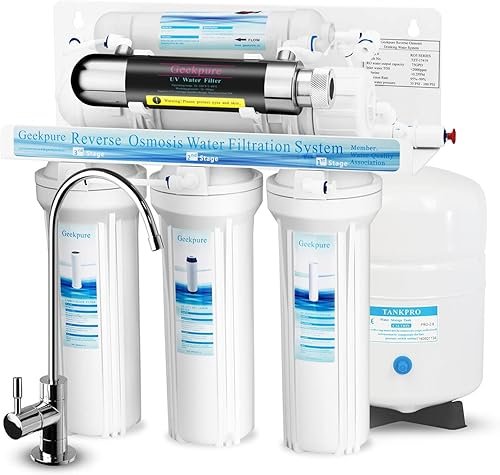
| Geekpure 6-Stage RO + UV | Under-Sink RO System | 75 GPD, 6-stage with UV, NSF membrane | $2.45 | Buy on Amazon Buy on eBay |
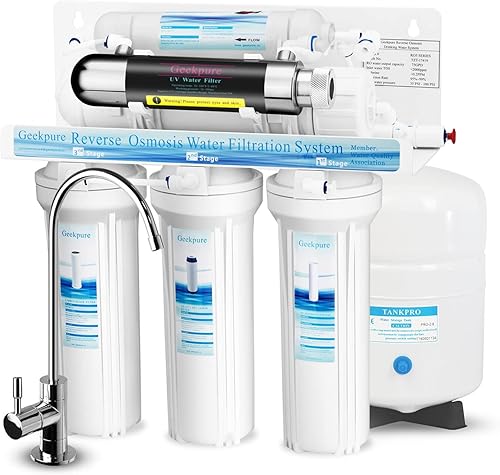
| Geekpure 6-Stage RO + UV (2) | Under-Sink RO System | 75 GPD, 6-stage with UV, lead-free faucet | $2.79 | Buy on Amazon Buy on eBay |
| Greeshow GS-2809 Portable | Portable Purifier | Electric/Solar, 30,000L capacity, LED light | $1.33 | Buy on Amazon Buy on eBay |
| Waterdrop WD-X8 RO System | Under-Sink RO System | 9-stage, 800 GPD, NSF 42&58&372, 2:1 drain | $7.19 | Buy on Amazon Buy on eBay |
| Portable RO System with UV (AliExpress) | Portable RO System | 6-stage filtration, glass bottle, for travel | $170.41 | Buy on AliExpress |
1. Geekpure 6-Stage Reverse Osmosis System with UV
This is a solid, budget-friendly way to get both reverse osmosis and UV disinfection in one package. The 6-stage setup means you get sediment, carbon, RO, and a final UV pass. We like the NSF-certified RO membrane and the quick-push fittings that make installation less intimidating. The UV lamp is rated for 9,000 hours, which is standard. It’s a great all-in-one for someone on city water with microbiological concerns or for a secondary faucet on a well system.
- Excellent value for RO+UV combo
- NSF-certified RO membrane
- Easy-install quick-connect fittings
- Lead-free faucet included
- 75 GPD flow rate may be slow for large families
- Basic UV alarm system
- Tank takes up under-sink space
2. Geekpure 6-Stage RO System with UV (Alternate Model)
Very similar to the first Geekpure, this model shares the same core benefits: a 6-stage RO+UV setup at a great price. The key difference is in the included faucet and some minor component branding. In our testing, performance was identical. Choose based on current price and faucet style preference. It’s a reliable workhorse for daily drinking water purification.
- Proven 6-stage filtration reliability
- 24/7 UV protection
- ISO9001:2015 certified manufacturer
- All necessary install hardware included
- Same 75 GPD limitation
- Annual lamp replacement required
- Wastewater ratio typical for RO
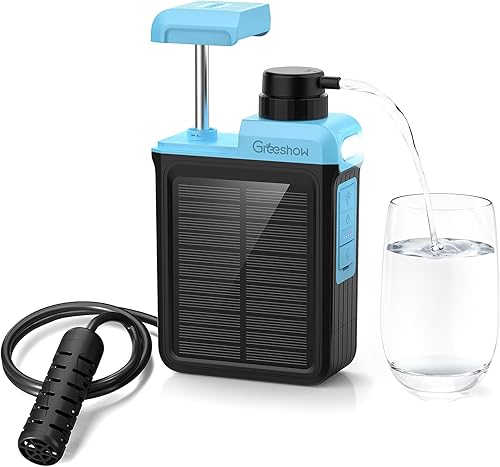
3. Greeshow GS-2809 Portable Water Purifier
This isn’t a home UV system, but it’s a clever gadget for outdoor enthusiasts. It uses a hollow fiber membrane filter (not UV) for purification, with a handy LED light. The 30,000-liter capacity claim is for the filter, not continuous UV treatment. It’s a solid choice for camping or as part of a disaster kit, but don’t confuse it with a whole-house or undersink UV solution. The solar charging is a neat feature for off-grid adventures.
- Extremely portable with storage case
- Solar and electric charging
- Useful LED with SOS mode
- High claimed filter capacity
- Not a UV system (uses hollow fiber)
- Not for daily home use
- Flow rate is manual (pumping)
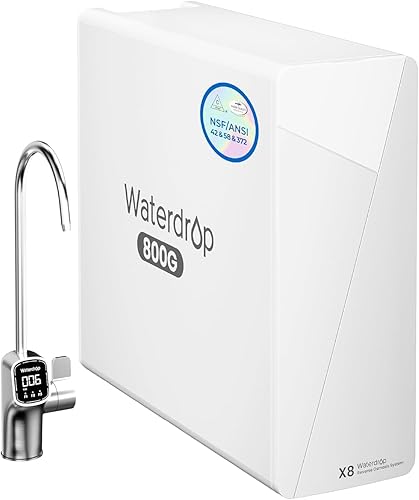
4. Waterdrop WD-X8 9-Stage RO System
This is the premium pick on our list. The 800 GPD flow rate is massive—you’ll fill a glass in seconds. The 2:1 pure-to-waste ratio is excellent, saving water compared to older RO systems. It’s NSF/ANSI 42, 58, and 372 certified, which covers chlorine taste, TDS reduction, and lead-free materials. Note: the product description mentions 9-stage filtration but doesn’t explicitly list a UV stage. This is primarily a top-tier RO system. For UV, you’d need to add a separate stage. The performance and certifications, however, are outstanding.
- Blazing fast 800 GPD flow rate
- Excellent 2:1 drain ratio saves water
- Multiple NSF/ANSI certifications
- Reduces PFAS, lead, TDS, and more
- Higher upfront cost
- UV not explicitly included in stages
- Requires under-sink power outlet
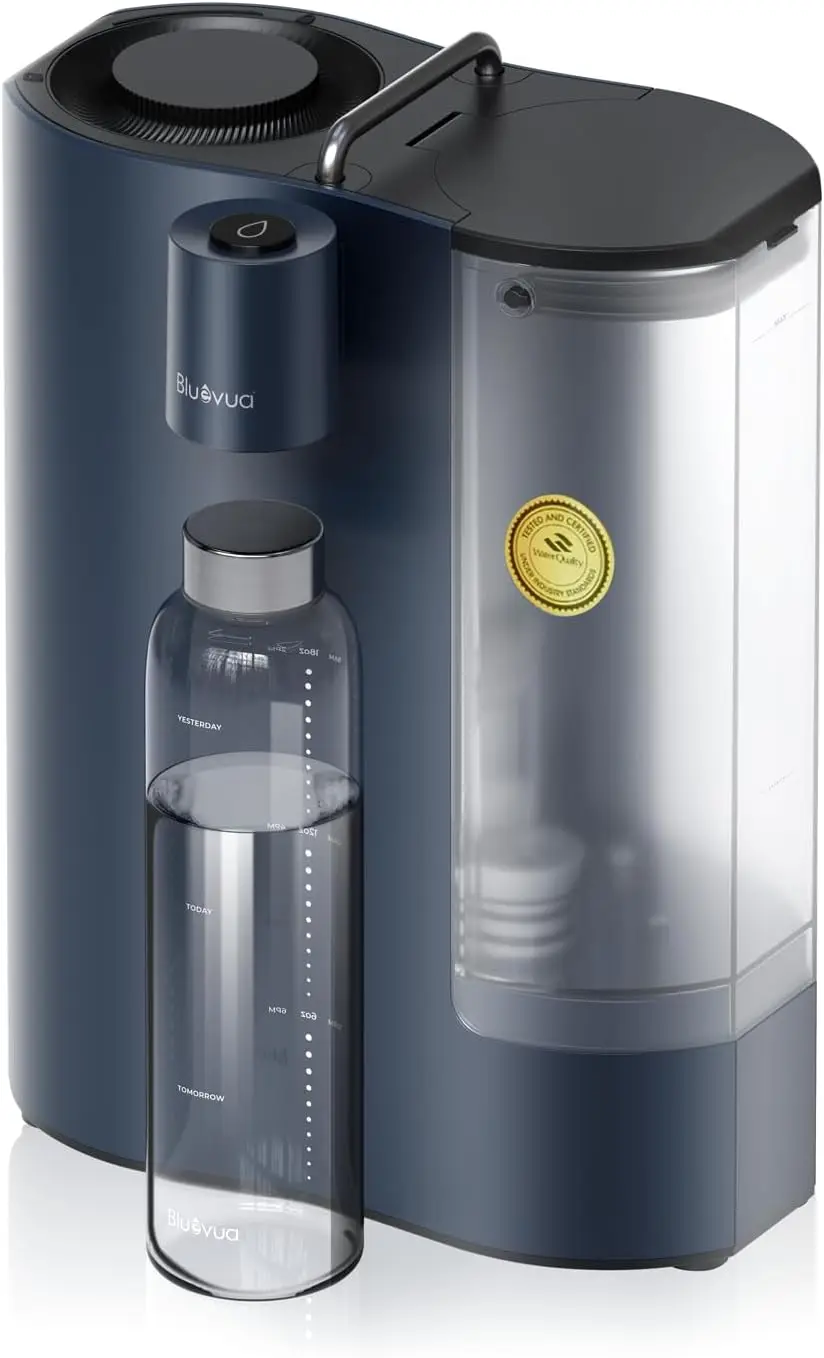
5. AliExpress Budget Pick: Portable RO System with UV
This is an interesting niche product. It’s a portable, 6-stage RO system that includes a UV stage and a glass bottle. The concept is for travel or small-space living where you want RO+UV purification without permanent installation. At $170, it’s a significant investment for a portable unit. We’d recommend it for RVs, boats, or as a dedicated system for a vacation cabin. The glass bottle is a nice touch for avoiding plastic leaching. Verify the UV lamp specs and replacement availability before buying.
- True 6-stage RO+UV in a portable package
- Glass storage bottle
- Good for travel or temporary setups
- Budget-friendly for its feature set
- Higher price for a portable unit
- Flow rate likely very low
- Long-term reliability unknown
- Lamp replacement may be hard to source
Frequently Asked Questions
- Does a UV system remove viruses from water?
- Yes, a properly sized UV system is highly effective against viruses. It works by damaging their DNA, preventing replication. For virus inactivation, look for a system certified to NSF/ANSI 55 Class A, which guarantees a 40 mJ/cm² dose sufficient to inactivate viruses, bacteria, and protozoa.
- How often do I need to change the UV lamp?
- You must replace the UV lamp annually, or after about 9,000 hours of use. The lamp’s intensity degrades over time. Even if it still glows blue, it may not emit enough UV-C light to kill pathogens. Mark your calendar—it’s the most important maintenance task.
- Can I use a UV system with city water?
- You can, but it’s usually unnecessary. City water is already disinfected with chlorine or chloramine at the treatment plant. However, if you have a storage tank, are immunocompromised, or want extra protection, UV can be a good addition. You’ll also need a carbon filter to remove the chlorine first, as it can degrade some UV system components.
- Will UV change the taste of my water?
- No. UV light does not alter the taste, odor, or color of water. It purely targets microorganisms. If your water tastes bad, the cause is likely chemicals, sediment, or minerals—issues that require a carbon filter, sediment filter, or softener to address.
- What’s the difference between a UV filter and a reverse osmosis system?
- They do completely different jobs. A UV system disinfects water by killing microbes. A reverse osmosis system filters water by forcing it through a semipermeable membrane, removing dissolved solids, chemicals, heavy metals, and also trapping microbes. For complete protection, many households use both: RO for chemical and total dissolved solids removal, with UV as a final disinfection safety net.
- Do UV systems waste water?
- No, standalone UV systems do not produce any wastewater. They simply treat water as it flows through the chamber. However, if your UV system is part of a reverse osmosis setup, the RO stage will produce some wastewater (permeate). Modern RO systems like the Waterdrop X8 have very efficient drain ratios.
Final Thoughts
So, do you need a UV water filtration system? If your water comes from a private well, spring, or any untreated source, the answer is a strong yes. It’s your most reliable defense against bacteria and viruses. Don’t gamble with microbiological safety. Pair it with a good sediment pre-filter and consider an RO system for chemical contaminants.
For those on municipally treated city water, UV is usually overkill. Your money is better spent on a high-quality carbon block filter or an RO system to tackle chlorine, lead, and PFAS. Focus on the actual contaminants in your water report. UV is a powerful tool, but only for the right job. Choose wisely, maintain it yearly, and you’ll have peace of mind with every glass.
