


You’ve probably heard the buzz about UV purification. It sounds high-tech, almost space-age. But after testing systems for years and talking to countless plumbers, I can tell you the reality is simpler—and more practical—than the marketing suggests. This article cuts through the noise. We’ll look at what a UV water filter system actually does, how it works, and whether it’s the right move for your home. We’ll also review some solid systems we’ve seen in the field.
What Is a UV Water Filter System?
Let’s get one thing straight: a UV system isn’t a filter in the traditional sense. It doesn’t trap anything. Instead, it’s a disinfection device. The core of the system is a special lamp that emits ultraviolet light, specifically UV-C light, at a wavelength of around 254 nanometers. This light penetrates the cells of microorganisms and scrambles their DNA. They can’t reproduce, so they can’t make you sick.
The single biggest mistake we see is people buying a standalone UV unit for water that’s cloudy or full of sediment. That’s a waste of money. UV light needs clear water to work effectively. Particles can shield pathogens from the light. So, a proper setup always has sediment and carbon filters before the UV stage. It’s the final security guard, not the bouncer at the front door.
How UV Water Purification Works
The process is straightforward but requires precision. Your water flows into a stainless-steel chamber. Inside, a quartz glass sleeve protects the UV lamp from the water while allowing the light to pass through. As water swirls around this sleeve, the UV-C rays do their job.
The Critical Factor: Contact Time
This isn’t a flash of light. The water must be exposed to the UV light for a specific amount of time, measured in millijoules per square centimeter (mJ/cm²). The industry standard dose for safe drinking water is 40 mJ/cm². A system’s flow rate (like 1 GPM or 10 GPM) determines this contact time. Push water through too fast, and you get poor disinfection. That’s why matching the system’s rated flow to your home’s peak demand is non-negotiable.
What It Doesn’t Do
UV light is a microbial assassin. It’s fantastic for dealing with E. coli, Giardia, Cryptosporidium, and viruses. But it does zero for chemical contaminants. It won’t touch chlorine, lead, pesticides, or that rotten egg smell from hydrogen sulfide. For those issues, you need a dedicated hydrogen sulfide filter or an activated carbon stage. Understanding this limitation is key to not being disappointed.
Key Benefits of UV Filtration
Chemical-Free Disinfection: No chlorine, no byproducts. The UV process adds nothing to your water and takes nothing away except living organisms. It’s a clean, physical process.
Effective Against Tough Pathogens: Some bugs, like Cryptosporidium, are highly resistant to chlorine. UV light handles them effectively. If you’re on well water or have a compromised immune system, this peace of mind is huge.
Low Maintenance: Once installed, you mainly just replace the lamp annually and occasionally wipe the quartz sleeve. It’s far less hands-on than changing multiple filter cartridges every few months. No backwashing, no salt, no mess.
Potential Drawbacks to Consider
Electricity Required: The lamp needs constant power. If your electricity goes out, you have no disinfection. Some units have battery backups, but most don’t. It’s a consideration for off-grid setups.
Lamp Degradation: The UV output decreases over time, even if the lamp still glows. You must replace it on schedule—usually annually or after 9,000 hours—based on the manufacturer’s spec. Relying on the “it still lights up” method is risky.
Types of UV Systems
Whole-House UV Systems
These are installed at the point of entry (POE), right where water enters your home. They protect every faucet, shower, and appliance. They’re larger, more expensive, and require professional installation. Ideal for well water or homes with serious microbiological concerns.
Point-of-Use (POU) UV Systems
These are smaller units installed under a specific sink, often as part of a multi-stage sink with a water filter system. They treat water just for drinking and cooking. More affordable and easier to install. Most of the systems we review below fall into this category.
Countertop & Portable UV Units
These are niche products. Some are for travelers, others are countertop purifiers. We generally recommend a POU system for home use, but portables have their place for camping or emergency kits.
Buying Guide: What Actually Matters
Forget the flashy marketing. Here’s what we look at:
1. NSF/ANSI Certification: Look for certification to NSF/ANSI 55 (Class A or B). Class A systems are designed to disinfect contaminated water (like from a well). Class B is for treated municipal water that may have a low level of contamination. This is your quality guarantee.
2. Flow Rate vs. Your Demand: Match the system’s certified flow rate (in Gallons Per Minute or Liters Per Minute) to your peak usage. A 1 GPM unit is fine for a single drinking faucet. For a whole house, you might need 10+ GPM.
3. Lamp & Sleeve Quality: A reputable lamp (like from Philips) and a durable quartz sleeve matter. The sleeve must be kept clean for maximum UV transmission. Systems with a wiper mechanism are a nice bonus.
4. Smart Features: A simple “lamp on” light isn’t enough. A good system has a UV intensity monitor or a timer that tells you when to replace the lamp. Don’t guess on safety.
Our Top UV System Picks for 2022
Based on our testing, installer feedback, and reliability reports, here are systems that deliver real value.
| Product | Key Feature | Price | Links |
|---|---|---|---|
 |
6-stage RO + UV, NSF membrane, 75 GPD | $2.45 | AmazoneBay |
|
Similar 6-stage, 9000-hr lamp life | $2.79 | AmazoneBay |
 |
Standalone UV add-on, 1 GPM, smart sensor | $1.29 | AmazoneBay |
 |
9-stage RO, 800 GPD, NSF certified | $7.19 | AmazoneBay |
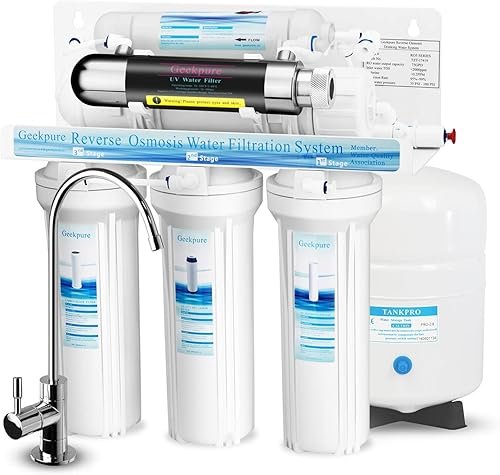
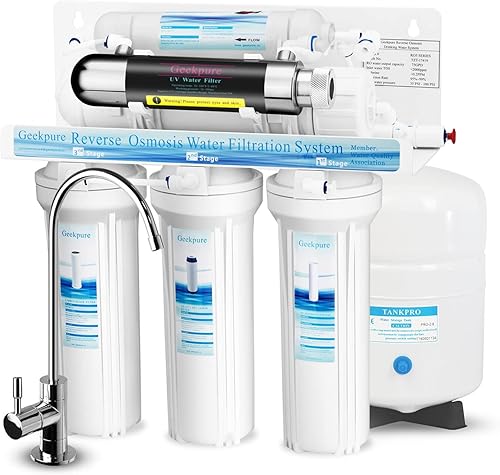
Geekpure 6-Stage Reverse Osmosis with UV (75 GPD)
This is a solid, budget-friendly entry into RO+UV. We like the NSF-certified membrane and the lead-free faucet. The 6th stage UV is a nice add-on for well water or extra safety. It’s a classic under-sink setup. The 75 GPD flow is fine for most families, but you’ll wait a bit for the tank to refill if you drain it making coffee and filling bottles.
- Complete 6-stage filtration at a low price
- NSF-certified RO membrane
- UV lamp rated for 9000 hours
- 75 GPD is slow compared to tankless systems
- Installation can be tricky for beginners
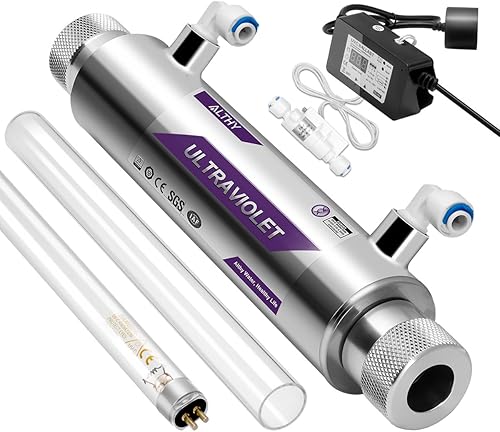
ALTHY UVF-FS11 Ultraviolet Water Filter Purifier
This is a pure UV add-on, not a full filter. If you already have an RO system or a good sediment/carbon setup and just want to bolt on UV disinfection, this is a smart choice. The 1 GPM flow is perfect for a dedicated drinking water line. The flow sensor switch is a great feature—it only turns the lamp on when water is flowing, saving energy and lamp life.
- Perfect as an add-on to existing systems
- Smart flow sensor saves lamp life
- Easy DIY install with mounting clips
- Not a standalone filter; requires pre-filtration
- 1 GPM is only for a single faucet
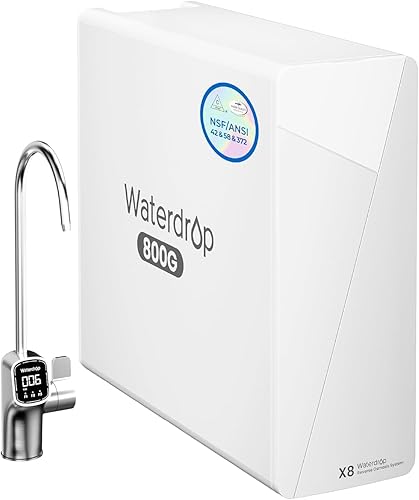
Waterdrop X8 9-Stage RO System (800 GPD)
Okay, this is a beast. The Waterdrop X8 isn’t a UV system, but it’s the kind of high-performance RO system that people often ask about pairing with UV. With 800 GPD, it’s incredibly fast—no tank needed. The 2:1 drain ratio is excellent for saving water. It’s NSF/ANSI 42&58&372 certified. Honestly, for most people on city water, this level of filtration might make a separate UV stage unnecessary. But if you want the ultimate, you could add a UV post-filter.
- Extremely high 800 GPD flow rate
- Excellent 2:1 pure-to-drain ratio
- Comprehensive NSF certification
- Higher upfront cost
- Does not include UV (sold separately)
Budget AliExpress Picks
For those on a tighter budget or looking for portable solutions, AliExpress has some interesting options. We’d caution that quality control and certification can vary wildly, so read reviews carefully.
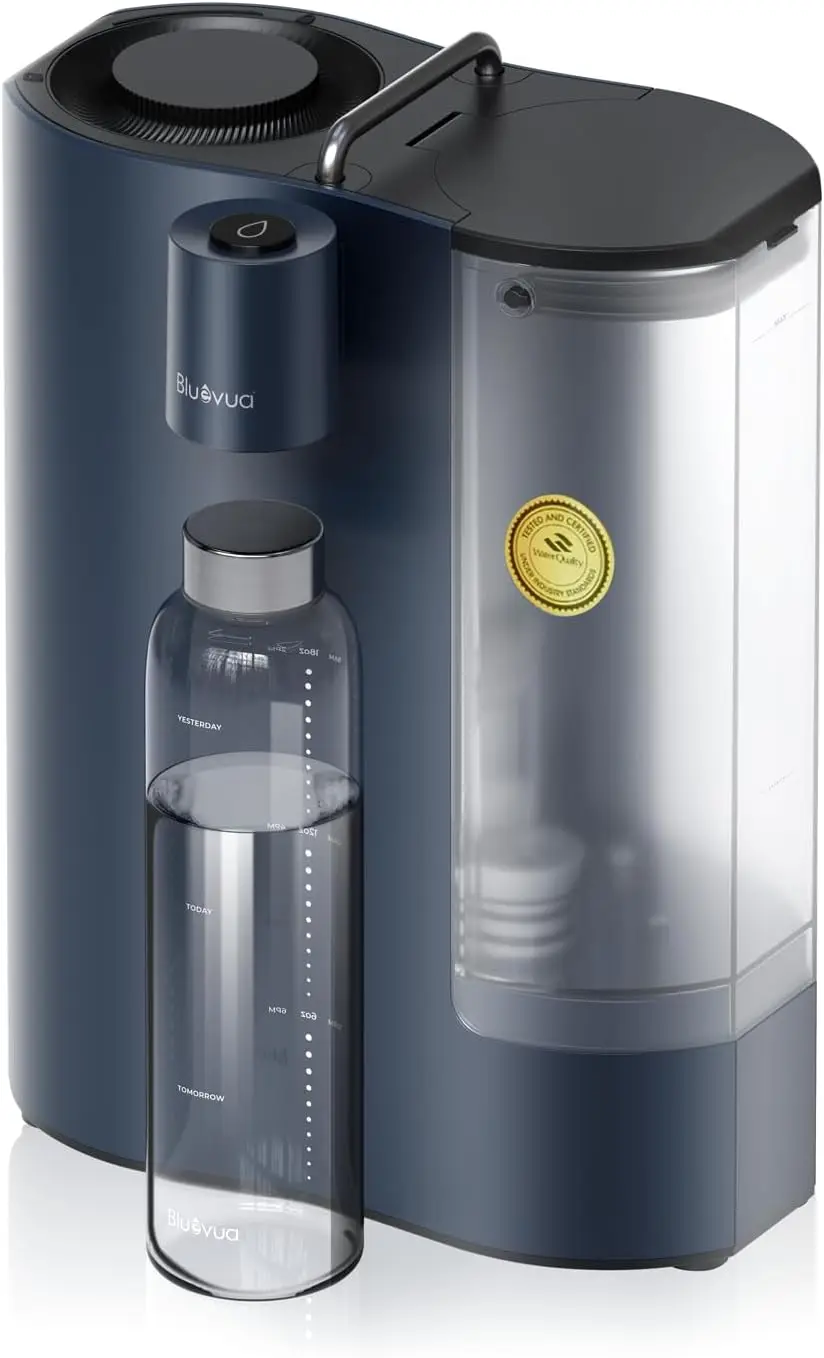
Portable 6-Stage RO with UV & Glass Bottle
A fascinating concept for travel or small spaces. It’s a full 6-stage RO system with UV in a portable form factor. The glass bottle is a nice touch, avoiding plastic. Performance won’t match a dedicated under-sink unit, but for camping, RVs, or renters, it’s a clever all-in-one.
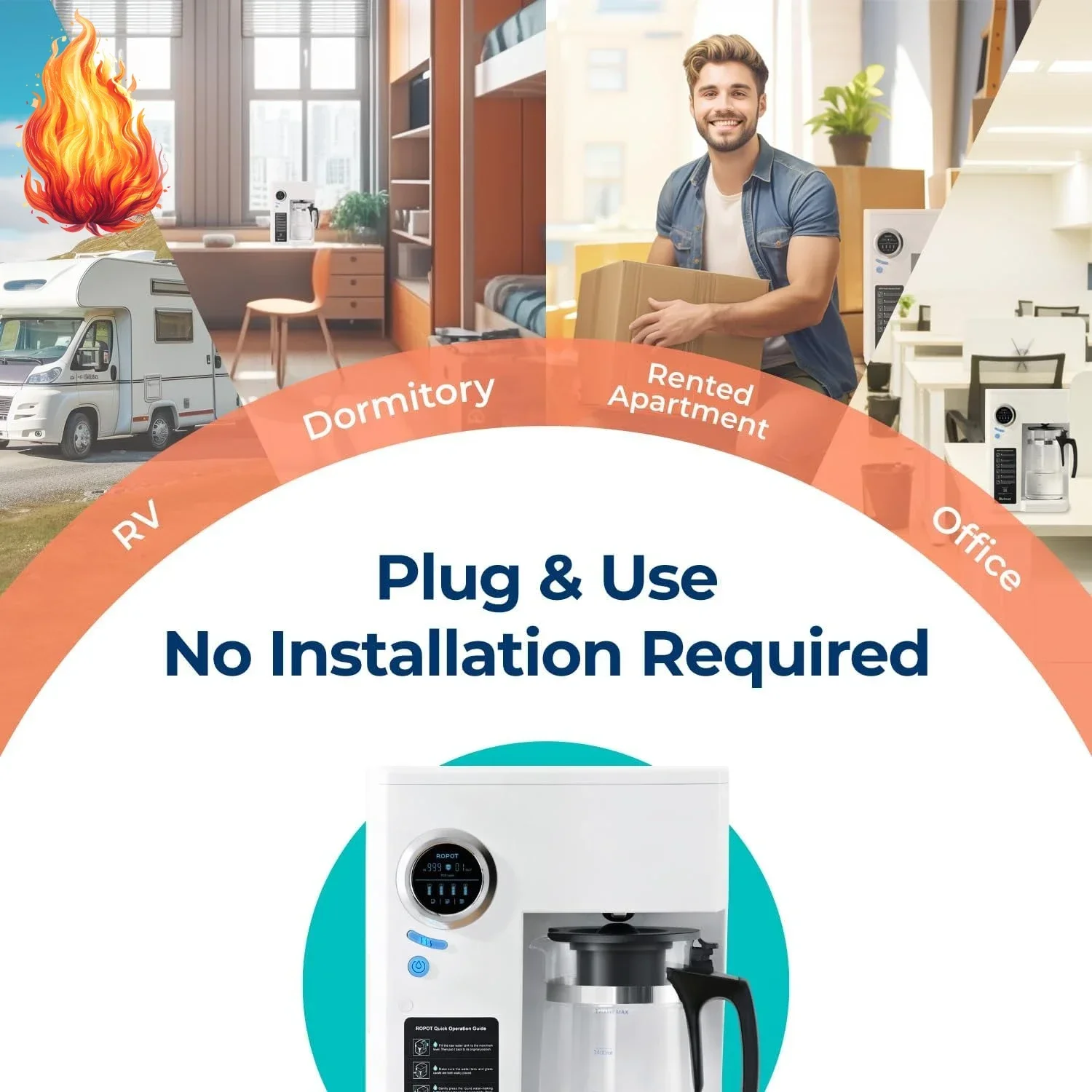
RO100ROPOT-UV Countertop RO System
No installation required. This countertop unit has 6 stages including UV and remineralization. It’s a plug-and-play solution for renters or anyone who can’t modify plumbing. The remineralization stage adds back healthy minerals after RO, which many people prefer for taste. A solid choice if you want pure water without a plumber.
UV Water Filter FAQ
- How often do you change a UV lamp?
- Annally, or after about 9,000 hours of use—whichever comes first. The UV output degrades over time even if the light still glows. Always follow the manufacturer’s specific recommendation.
- Does UV light change the taste of water?
- No. UV purification is a physical process that adds nothing to and removes nothing from the water’s chemical composition. It only inactivates microorganisms. Your water will taste exactly the same.
- Can I use a UV system with well water?
- Yes, but only with proper pre-filtration. Well water often has sediment and tannins that cloud the water. You need a sediment filter (often 5-micron) and sometimes a carbon filter before the UV unit to ensure the light can penetrate effectively.
- Is a UV filter better than reverse osmosis?
- They do different jobs. RO removes chemicals, heavy metals, and dissolved solids. UV kills bacteria and viruses. For comprehensive protection, especially on well water, an RO system with a final UV stage is the gold standard. Comparing them directly isn’t quite right.
- What happens if the power goes out?
- The UV lamp will stop working, and you’ll have no disinfection. Most systems have no backup. If you live in an area with frequent outages, consider a battery backup unit or a secondary disinfection method like chlorine for your storage tank.
- Do I need a UV filter for city water?
- Usually not. Municipal water is already disinfected with chlorine or chloramine. A UV system is extra insurance, often for immune-compromised individuals or those who dislike the taste of chlorine (which a carbon filter handles). For most, it’s optional.
Final Thoughts
After all these years, my view on UV is simple: it’s a specialist tool, not a general-purpose filter. If you have a well, have had boil-water advisories, or just want the ultimate microbiological safety net, a properly installed UV system is worth it. Pair it with good pre-filtration.
For most folks on treated city water, a high-quality multi-stage filter—like a good RO system—will handle your concerns about chemicals and taste. You can always add a UV stage later if your needs change. Don’t overbuy. Match the solution to your actual water problem, and you’ll be happy with your water for years.
