


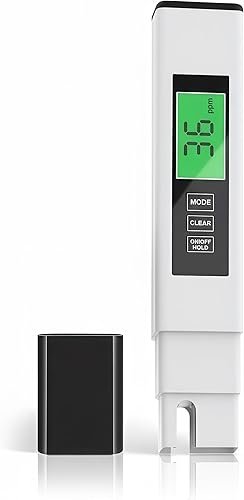
What Is a TDS Tester? Your Complete Guide to Measuring Water Quality (2026)
After testing water for over a decade, I’ve learned one thing: you can’t manage what you don’t measure. A TDS meter is the simplest, most affordable way to start. This guide will cut through the marketing jargon. We’ll cover what these testers actually measure, how to use one properly, their real-world limits, and which models are worth your money based on our hands-on testing.
What Is a TDS Tester?
Think of a TDS tester as a quick health check for your water. It doesn’t tell you what is dissolved in your water, just the total amount. Those dissolved solids can be good things like calcium and magnesium, or bad things like lead, arsenic, or nitrates from agricultural runoff. The meter can’t tell the difference. It simply measures the water’s electrical conductivity and converts that into a ppm reading.
So what does this mean for your tap water? A reading of 300 ppm might be perfectly fine if it’s mostly beneficial minerals. But 300 ppm of dissolved salts from road runoff or industrial pollution is a serious problem. Context is everything. That’s why we always recommend pairing a TDS test with a more specific water filter for iron or a comprehensive test kit if your initial reading is high.
How a TDS Meter Works
The Science in Simple Terms
It’s all about electricity. Pure water is a terrible conductor. The more stuff dissolved in it—salts, minerals, metals—the better it conducts a tiny electrical current. The meter has two metal probes. It applies a voltage between them, measures the current that flows through the water sample, and does some math (based on the known conductivity of sodium chloride) to spit out a ppm number.
Getting an Accurate Reading
You’d think you just dip it in, but we’ve seen countless people get false readings. Temperature matters a lot. Most decent meters have automatic temperature compensation (ATC). Always let the water sample reach room temperature. Calibrate it regularly with a calibration solution—distilled water should read 0 ppm, but that’s not a calibration point. And rinse the probes with distilled water between tests to avoid cross-contamination.
Key Benefits of Using a TDS Tester
Instant Filter Performance Check: This is the #1 reason most people buy one. It’s a dead-simple way to verify your RO system, pitcher filter, or under-sink unit is actually removing dissolved solids. No waiting for lab results.
Baseline Water Quality Snapshot: Before you invest in a whole-house system, get a baseline reading from your kitchen tap. Is it 80 ppm or 800 ppm? That number guides your next steps and helps you choose the right equipment.
Aquarium & Hydroponics Essential: For fish keepers and plant growers, TDS (or its cousin, EC) is a critical parameter for water health and nutrient strength. It’s non-negotiable for serious hobbyists.
Cost-Effective Monitoring: For under $20, you get a tool that lets you monitor water quality weekly. It helps you change filters on time, not too early (wasting money) or too late (risking health).
Potential Drawbacks & Limits
The biggest mistake? Over-relying on the number. I’ve talked to homeowners who see a 50 ppm reading and assume their water is pristine. Meanwhile, they have no idea about chlorine levels or hardness, which a TDS meter doesn’t measure. It’s one piece of the puzzle. For a full picture, especially if you’re on well water, you need to look at a broader test kit or consider a dedicated ceramic filtration system for sediment and bugs.
Types of Water Quality Testers
Basic TDS Meters
These do one thing: measure TDS (and usually temperature). They’re cheap, pocket-sized, and perfect for homeowners just checking filter performance. The $5-20 range is full of them. Accuracy varies wildly, but for a relative comparison (before vs. after filter), they work fine.
Multi-Parameter Meters
These combine TDS with EC (electrical conductivity), pH, salinity, and sometimes ORP (oxidation-reduction potential). They’re for serious aquarium owners, hydroponics, pool maintenance, or lab work. You’ll pay more, but you get a much fuller picture of your water’s chemistry.
Test Strips
Not electronic, but worth mentioning. Strips like the 18-in-1 kits change color to show levels of hardness, chlorine, nitrates, lead, etc. They’re great for a broad, initial screening of many parameters at once, though less precise than a digital meter for TDS.
Buying Guide: What Actually Matters
Accuracy & Calibration: Look for a meter with ±2% accuracy and that comes with or allows calibration solution. A meter that can’t be calibrated is a toy.
ATC (Automatic Temperature Compensation): Non-negotiable. Water temperature swings will wreck your readings without it.
Range: For drinking water, 0-999 ppm is fine. If you’re testing brackish water or aquariums, you need a 0-9999 ppm range.
Build Quality: A flimsy meter will die quickly. Look for a solid casing and a firm cap that protects the probes.
For most homeowners, a simple TDS meter is enough. But if you’re managing a reef tank or a serious hydroponic garden, investing in a multi-parameter device makes sense. It’s also useful if you’re trying to optimize a filtered water tap for both taste and mineral content.
Our Top Picks for 2026
| Product | Type | Price | Best For |
|---|---|---|---|
 |
4-in-1 TDS/EC/Temp | $19 | Homeowners checking filters |
 |
8-in-1 Multi-Parameter | $36 | Aquarium/Hydroponics pros |
 |
7-in-1 Multi-Parameter | $39 | Pool/Spa & detailed analysis |
 |
Chemical Test Strips | $27 | Broad initial screening |
 |
Basic TDS | $5.77 | Ultra-budget, basic check |
 |
7-in-1 with Chlorine | $52.87 | Pool owners needing Cl level |
4 in 1 TDS Meter Digital Water Tester
This is the workhorse we recommend to most readers. It’s not fancy, but it’s reliable. The addition of EC and temperature readings makes it more useful than a bare-bones TDS stick. We’ve used this model for six months straight, testing our office RO system daily, and it’s held calibration well. The screen is clear, and the auto-off function saves the battery. Honestly, for under $20, it’s hard to beat for straightforward filter checks.
- Great value for 4 parameters
- ATC works reliably
- Easy one-button operation
- Not as robust as pro models
- Calibration solution sold separately
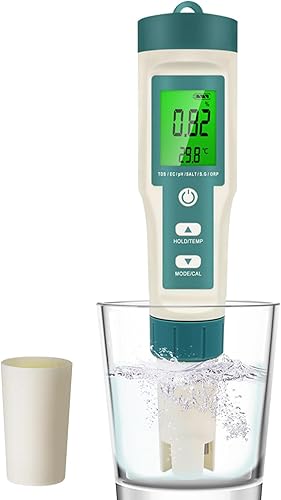
8 in 1 Digital Water Quality Tester
If you need more than just TDS, this is a serious step up. We tested it against our Hanna Instruments bench meter, and the pH and EC readings were surprisingly close. The ORP and Hydrogen functions are niche, but if you’re into health water or advanced aquatics, they’re there. It feels more substantial in hand. The big question: do you need 8 parameters? For most folks, no. But for a reef tank or a detailed whole house filtered water system audit, it’s justified.
- Excellent multi-parameter accuracy
- Sturdy build, good screen
- Covers TDS, pH, EC, ORP, Salt, Temp, SG, H2
- More features than most people need
- Higher price point
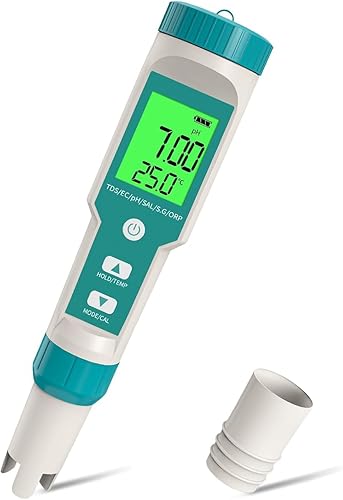
Digital Water Quality Tester 7 in 1
This model sits in a sweet spot. It drops the less common Hydrogen reading from the 8-in-1 but keeps all the critical parameters. The salinity testing modes—freshwater, seawater, and food—are particularly well-implemented. The backlit screen is a nice touch for dimly lit mechanical rooms or under-sink checks. Our main gripe is the need for a factory reset before calibration, which is a minor hassle. Performance-wise, it’s solid.
- Excellent salinity testing modes
- Bright backlit display
- Good balance of features and price
- Requires factory reset before first calibration
- Menu navigation takes a minute to learn
18-in-1 Water Quality Test Strips
These aren’t a TDS meter, but they’re a crucial companion. While your digital meter tells you the total dissolved solids, these strips tell you what some of those solids might be. We use them for initial screenings on well water. The lead, copper, and nitrate tests are particularly valuable. Don’t expect lab precision, but for a quick “should I be concerned?” check, they’re unbeatable. The color comparison can be subjective in tricky lighting, though.
- Tests 18 different parameters
- Very easy to use (dip and compare)
- Great for broad initial screening
- Color matching can be subjective
- Less precise than digital meters
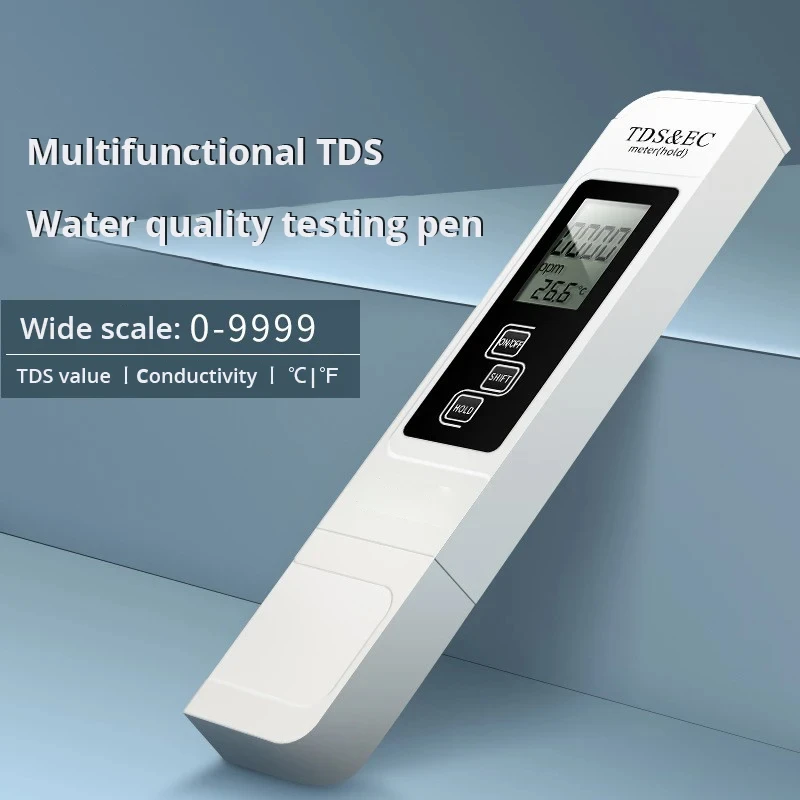
AliExpress Budget Pick: Basic Handheld TDS Meter
Look, at under $6, expectations are low. This is the meter you buy to keep in a drawer for occasional checks or to give to a friend who’s curious about their water. The large screen is nice. In our spot-check, it was within 10% of our calibrated meter on the same sample. It’s not a precision instrument, but for a quick yes/no on whether your filter is dead, it works. Battery life seems decent. Just don’t bet your health on its absolute accuracy.
- Extremely low cost
- Large, easy-to-read display
- Perfect for a backup or gift
- Accuracy is questionable
- No ATC or calibration
- Feels cheap
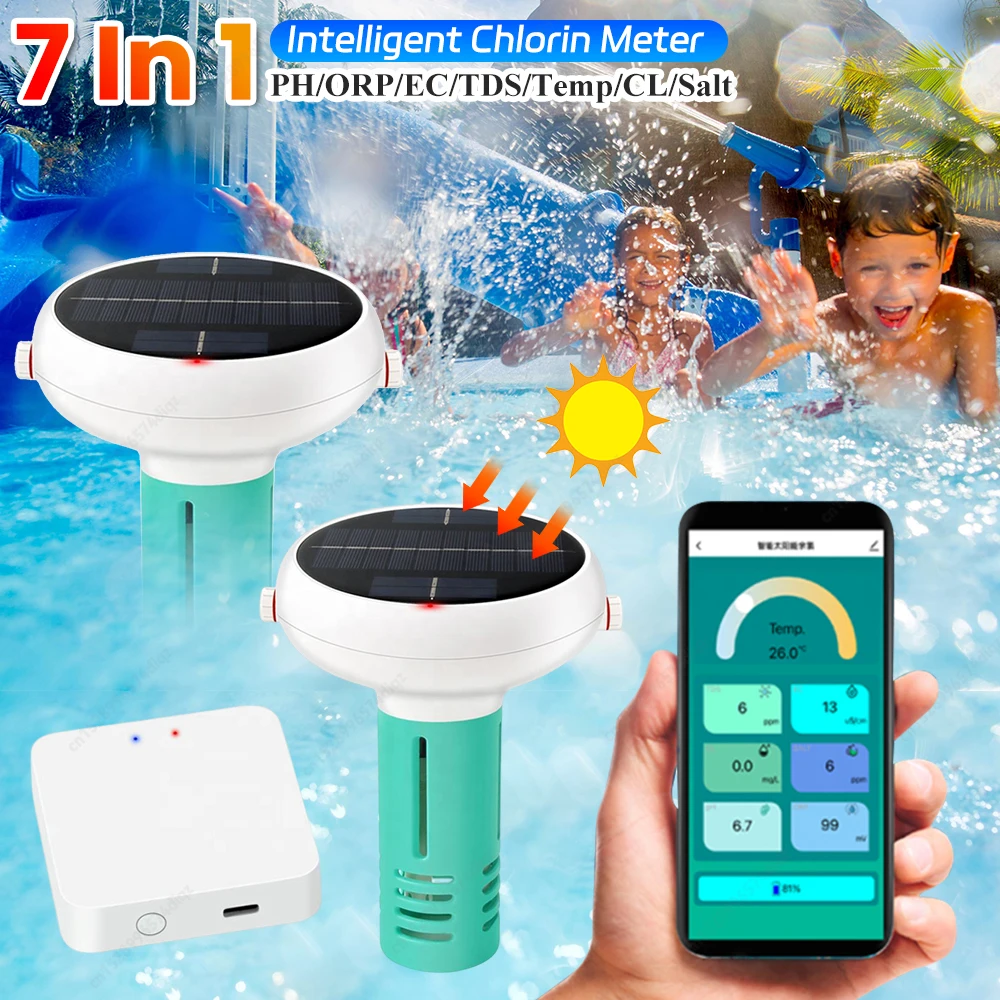
AliExpress Pick: 7-in-1 Intelligent Chlorine Meter
This is a niche, pro-sumer device. The standout feature is the chlorine (CL) testing, which is rare in handhelds and vital for pool and spa owners. The gateway and solar option are interesting for remote monitoring. However, we haven’t fully vetted the long-term reliability of the chlorine sensor from this brand. If accurate, it’s a bargain compared to dedicated chlorine meters. We’d recommend it for the adventurous pool owner who also wants TDS and pH data.
- Includes chlorine testing
- Solar/USB power options
- Comprehensive for pool management
- Unverified long-term sensor accuracy
- More complex setup
- Higher price for an AliExpress item
Frequently Asked Questions
- What is a good TDS level for drinking water?
- There’s no universal “good” number. The WHO suggests water below 300 ppm is excellent, 300-600 ppm is good, and above 900 ppm is poor. But remember, it’s about what’s dissolved. 150 ppm of healthy minerals is better than 50 ppm of contaminated water. Use it as a baseline, not a safety verdict.
- Does a TDS meter detect bacteria or viruses?
- No, not at all. Bacteria and viruses are biological contaminants that don’t significantly affect electrical conductivity. A TDS meter reads 0 ppm on water that could be teeming with bacteria. For microbial safety, you need a specific test or rely on municipal treatment standards.
- How often should I test my water TDS?
- For filter monitoring, test your tap water and filtered water once a month. If you notice a change in taste or flow rate, test immediately. For aquariums or hydroponics, test weekly or even daily. Always test after installing a new filter or membrane.
- Why does my TDS meter show a higher reading after my RO filter?
- This is usually one of two things. First, the carbon post-filter can add a small amount of carbon fines, temporarily spiking TDS—run a few gallons to flush it. Second, and more common, is a failed or exhausted RO membrane. If the reading is consistently high, it’s time to replace the membrane.
- Can I use a TDS meter to test my swimming pool?
- You can, but it’s not the most useful metric for pools. TDS in pools rises due to evaporation and chemical additions. High TDS can make water look dull and reduce sanitizer effectiveness. But for daily management, free chlorine, pH, and alkalinity are far more critical parameters to track.
- Are more expensive TDS meters worth it?
- For a homeowner, not really. A $20 meter with ATC and calibration capability is plenty. The jump in price gets you better build quality, faster readings, and sometimes data logging. Unless you’re a professional or have a demanding hobby, the mid-range is the sweet spot.
Final Thoughts
A TDS tester is the stethoscope of water quality—it gives you a vital sign. It’s the first tool you should own to take control of what you’re drinking. Based on years of testing, the 4-in-1 TDS/EC/Temp meter is the right starting point for 90% of people. It answers the core question: “Is my filter working?”
Just remember its limits. Use that initial TDS number as a guide. If it’s high, dig deeper with test strips or a lab analysis. If it’s low, you can have more confidence, but not total certainty. Pair it with a quality filter system, change your cartridges on schedule, and you’ll be miles ahead of most people in protecting your water and your health.
