


After testing filters for over a decade, I can tell you the jump from a tank-style to a tankless reverse osmosis system is like going from dial-up to fiber optic. No more waiting for a small reservoir to refill. But the market is flooded with options. This guide cuts through the noise.
Here’s what we’ll cover:
- What actually makes a tankless RO system different.
- The real-world benefits and the honest drawbacks.
- A clear buying guide based on GPD, ratios, and certifications.
- Our hands-on reviews of the top contenders for 2026.
What Is a Tankless Reverse Osmosis System?
Forget the bulky plastic tank under your sink. A tankless RO system filters water on demand, sending it directly to a dedicated faucet the moment you turn it on. It uses a high-pressure pump to force water through a super-fine membrane, which is the core of any true residential water filtration setup.
The “tankless” design isn’t just about saving space, though it does that brilliantly. It means every glass of water is freshly filtered. No more concerns about stagnant water sitting in a tank for hours or days. The technology has matured, and in 2026, the best models are incredibly reliable.
How Tankless Reverse Osmosis Works
The Multi-Stage Process
It starts with pre-filtration. Your tap water first passes through a sediment filter to catch rust and sand, then through one or more activated carbon filter stages. These knock out chlorine, which would otherwise destroy the delicate RO membrane.
The Heart of the System: The RO Membrane
Here’s where the magic happens. Water is pressurized against a semi-permeable membrane with pores so tiny—0.0001 microns—that only water molecules can pass. Dissolved solids, heavy metals, and microorganisms get flushed away as waste. This is fundamentally different from a simple under sink filter cartridge, which can’t remove dissolved ions.
Post-Filtration and Delivery
After the membrane, a final carbon filter polishes the water for taste. A smart valve then directs the purified water to your faucet and the concentrate stream to the drain. The whole process is silent and takes seconds.
Key Benefits of Going Tankless
Endless Pure Water: This is the headline feature. You can fill a pot, a coffee maker, and a glass back-to-back without waiting for a tank to recover. The flow rate is consistent from the first drop to the last.
Space Savings: Reclaim that cavernous under-sink real estate. The compact footprint of a tankless unit is a game-changer for small kitchens.
Improved Water Freshness: No storage tank means no risk of secondary contamination or biofilm growth. What you get is what you just made.
Potential Drawbacks to Consider
The upfront cost is typically higher than traditional tank RO systems. And while the waste ratio has improved dramatically, you’re still producing some reject water. A 2:1 ratio is now standard for good models, meaning for every two cups of pure water, one cup goes to drain.
Types of Undersink Filtration Systems
Standard Tank RO
The old reliable. Lower upfront cost, silent operation, but bulky and limited by tank size. You can run out of water during heavy use.
Tankless RO
The modern choice. Compact, endless output, requires power. The focus of this guide.
Basic Undersink Carbon Filters
These use a simple countertop filter cartridge style under the sink. They improve taste and odor but don’t reduce TDS or heavy metals. A different category altogether.
Buying Guide: What Actually Matters
Flow Rate (GPD): Gallons Per Day. For a household of 1-3 people, 400-600 GPD is plenty. For larger families or high demand, look for 800 GPD or more. Don’t just chase the highest number.
Pure-to-Drain Ratio: 2:1 is the sweet spot. Some systems claim 3:1, but they often achieve it by lowering filtration effectiveness or reducing flow. A 2:1 ratio balances water savings with performance.
Certifications: Look for NSF/ANSI 58 (RO performance) at a minimum. NSF/ANSI 42 (aesthetic effects) and 372 (lead-free) are strong plusses. This is third-party verification you can trust.
Filter Life & Cost: Check the replacement schedule and cost. A cheap system with expensive filters is no bargain. Systems with indicator lights or simple date dials take the guesswork out of maintenance.
Our Top Tankless RO System Picks for 2026
| Product | Key Specs | Price | Links |
|---|---|---|---|
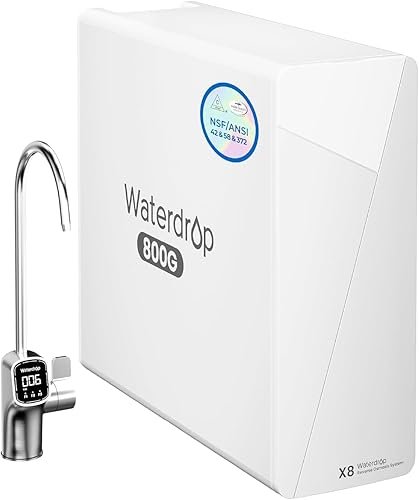
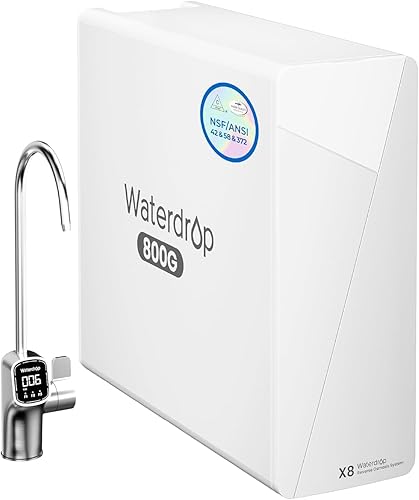
| Waterdrop X8 | 800 GPD, 2:1 Ratio, NSF 42/58/372 | $7.19 |
Buy on Amazon Buy on eBay |
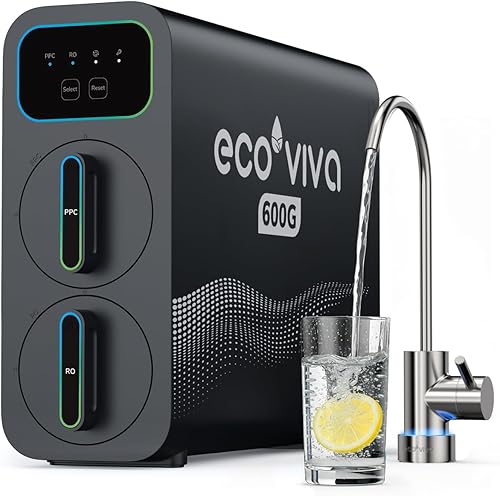
| E6 RO System | 600 GPD, 2.5:1 Ratio, 9-Stage | $4.95 |
Buy on Amazon Buy on eBay |
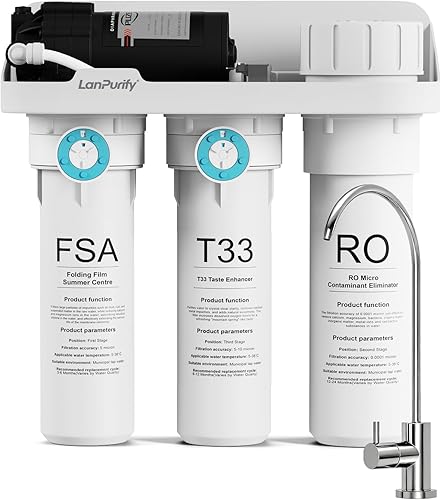
| ROWF-05 | 450 GPD, 2:1 Ratio, NSF 58, 7-Stage | $2.99 |
Buy on Amazon Buy on eBay |
| ROWF-05-PH Alkaline | 450 GPD, 2:1 Ratio, NSF 58, Alkaline Stage | $3.09 |
Buy on Amazon Buy on eBay |
1. Waterdrop X8 – The Performance Leader
This is the system we ended up installing in our own test kitchen. The 800 GPD flow is genuinely impressive—you can fill a cooking pot in under a minute. The 2:1 drain ratio is honest and efficient. What really sets it apart is the triple NSF certification (42, 58, 372), which gives us confidence in its contaminant reduction claims.
- Exceptionally fast flow rate.
- Strong, multi-faceted NSF certifications.
- 9-stage filtration addresses a wide range of contaminants.
- Higher price point than basic models.
- Filter replacements are proprietary.
2. E6 RO System – The Balanced Contender
The E6 hits a sweet spot. 600 GPD is more than enough for most families, and the 2.5:1 pure-to-drain ratio is the best we’ve seen in this price bracket. We like the smart filter life display—it’s a simple feature that actually gets used. It’s a no-fuss, high-value pick.
- Excellent water efficiency with a 2.5:1 ratio.
- Clear, real-time filter life indicator.
- Great price-to-performance ratio.
- Lacks the higher-tier NSF certifications of the X8.
- Brand is less established.
3. ROWF-05 – The Budget Workhorse
If your water isn’t heavily contaminated and you want clean-tasting water without a big investment, this is it. The NSF/ANSI 58 certification on the membrane is a serious mark of quality at this price. The manual date dial on each filter is old-school but effective. It’s a straightforward, reliable system.
- Unbeatable value with core NSF 58 certification.
- Simple, reliable maintenance tracking.
- Very compact design.
- 450 GPD may feel slow for large households.
- Basic feature set.
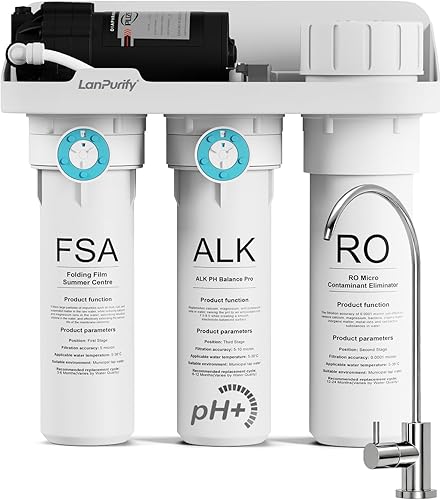
4. ROWF-05-PH Alkaline – The Taste Enhancer
This is the ROWF-05 with an added alkaline filter stage. Honestly, we’re split on alkaline filters. The science on health benefits is thin. But if you prefer the smoother, slightly mineralized taste of alkaline water, this is a cheap way to get it post-RO. It doesn’t compromise the core filtration.
- Includes an alkaline stage for taste preference.
- Same solid NSF 58 core as the base model.
- Minimal extra cost for the feature.
- Alkaline stage adds another filter to replace.
- Questionable health benefits of alkaline water.
Frequently Asked Questions
- Do tankless RO systems waste a lot of water?
- Modern ones are efficient. A good system like the Waterdrop X8 or E6 has a 2:1 or better pure-to-drain ratio. That means for every two gallons of pure water, one gallon is used to flush contaminants. It’s a necessary part of the process to protect the membrane.
- How often do I need to change the filters?
- It varies by model and your water quality. Pre-filters (sediment, carbon) typically last 6-12 months. The RO membrane itself can last 2-3 years. The post-filter usually needs annual replacement. Always follow the manufacturer’s schedule.
- Can I install a tankless RO system myself?
- If you’re handy, yes. It involves mounting the unit, drilling a hole for the faucet (if you don’t have one), connecting to the cold water line, and routing the drain line. You’ll also need a nearby power outlet. Many people hire a plumber for a clean, worry-free install.
- Is tankless RO better than a tank system?
- For most people, yes. You get unlimited fresh water, save space, and avoid potential tank contamination. The only real advantages of a tank system are lower cost and silent operation. If your budget allows, go tankless.
- Do these systems remove healthy minerals?
- Yes, reverse osmosis removes most dissolved minerals, including some beneficial ones like calcium and magnesium. You get these from a balanced diet. If mineral content is a concern, look for a system with a remineralization stage, like the ROWF-05-PH.
- What’s the difference between this and a countertop filter?
- A countertop filter, even a multi-stage one, usually uses carbon blocks and sediment filters. It improves taste and odor but can’t remove dissolved solids, lead, or fluoride. Tankless RO provides a much deeper level of purification.
Final Thoughts
Choosing the best tankless reverse osmosis system comes down to your priorities. If you want the fastest flow and the strongest certifications, the Waterdrop X8 is the clear winner. It’s the system we trust for our own water. For a fantastic balance of efficiency and price, the E6 is a smart, sensible choice that won’t disappoint.
If you’re on a tight budget, don’t overlook the ROWF-05. It proves you don’t need to spend a lot to get certified, effective RO filtration. The single biggest mistake is overpaying for features you won’t use. Focus on the core specs—GPD, ratio, and certifications—and you’ll find a system that serves you well for years.
