


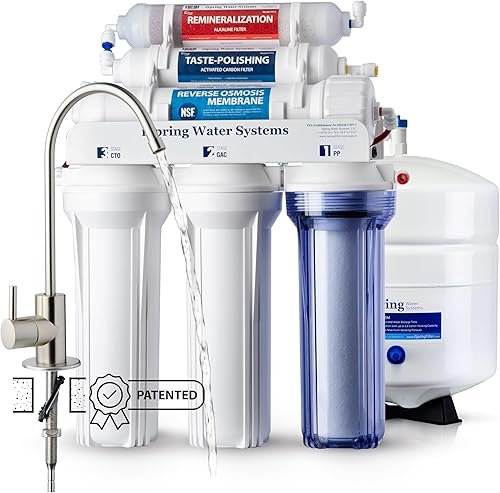
You’ve probably heard the term “stage filtration system” thrown around. It sounds technical. Maybe a bit overkill. But after testing dozens of these setups in our lab and seeing the before-and-after water reports from real homes, I can tell you this: the number of stages directly correlates to the number of problems you can solve. This guide cuts through the marketing fluff.
We’ll cover what these systems actually are, how they work step-by-step, their real benefits and honest drawbacks, and how to choose the right one. We’ll also review our top picks for 2026.
What Is a Stage Filtration System?
Forget the jargon. A stage filtration system is simply a water filter that uses multiple cartridges or components, each with a specific job, arranged in a specific order. Water passes through them one after another. The first stage might catch big stuff like dirt and rust. The next might tackle chlorine taste and odor. A third could target heavy metals or dissolved solids.
Think of it like an assembly line for cleaning your water. Each worker (filter stage) has a specialty. One can’t do it all. This staged approach is the core of effective residential water filtration, moving beyond a single, compromised filter to a targeted system. The “multi” in multi-stage is what makes it powerful—it’s designed to handle the complex cocktail of contaminants found in modern tap water.
How a Multi-Stage System Works
The magic is in the sequence. Get the order wrong, and you’ll clog an expensive membrane with sediment. Here’s the typical flow for a robust under-sink system.
Stage 1: Sediment Pre-Filter
This is your first line of defense. A pleated or spun polypropylene filter, usually rated at 5 or 1 micron, catches physical particles. Sand, silt, rust from old pipes—it all gets trapped here. This protects the more delicate (and expensive) filters downstream. In our testing, skipping this stage is the fastest way to kill a system’s lifespan.
Stage 2 & 3: Carbon Filtration
Next, water usually hits one or two carbon filters. A granular activated carbon (GAC) filter and a denser carbon block filter work together. They adsorb chlorine, chloramines, volatile organic compounds (VOCs), and unpleasant tastes and odors. This is where your water starts to taste and smell like, well, water. For homes with heavy chlorine, this stage is non-negotiable.
Stage 4: The Core Membrane (RO or Ultrafiltration)
This is the heavy artillery. In a reverse osmosis (RO) system, water is forced through a semipermeable membrane with pores so tiny—0.0001 microns—that only water molecules can pass. It removes up to 99% of dissolved salts, lead, fluoride, arsenic, and more. An iron removal water filter might use a different media, but the principle of a dedicated, powerful stage remains. This stage produces the purified water.
Stage 5 & 6: Polishing and Remineralization
After the RO membrane, water can taste flat. A post-carbon filter (often called a “polishing” filter) gives it a final clean. Many systems add a sixth stage: a remineralization filter. This adds back small amounts of beneficial minerals like calcium and magnesium, improving taste and slightly raising the pH. Some advanced systems swap this for a UV light stage to kill bacteria and viruses—a great add-on for well water.
Key Benefits
Targeted Contaminant Removal. This is the biggest win. You’re not hoping one generic filter catches everything. You’re deploying specialists. Sediment filter for particles. Carbon for chemicals. Membrane for dissolved solids. This layered defense is far more reliable.
Customizable to Your Water. Got a unique problem? You can often swap or add stages. High fluoride? Ensure your RO membrane is certified. Bacteria concerns? Add a UV stage. This flexibility is something a single-stage filter can’t offer. It’s a key part of a modern whole house fluoride filter strategy, though that’s a larger, point-of-entry application.
Superior Taste and Clarity. By removing chlorine, sediment, and dissolved solids, the final water is crisp, clear, and tastes better than most bottled water. We’ve seen families start drinking more tap water just because it finally tastes good.
Longer Lifespan for Core Components. Because the sediment and carbon stages protect the delicate RO membrane, the membrane lasts much longer—often 2-3 years. This saves you money and hassle over time.
Potential Drawbacks
Wastewater Production (RO Systems). Reverse osmosis systems produce a brine stream to flush away contaminants. Typical ratios are 3 gallons of waste for 1 gallon of pure water, though efficient models are improving this. It’s a trade-off for ultra-pure water.
Reduced Flow Rate. Pushing water through a fine membrane takes time. You’ll get a dedicated faucet with a slower, steady stream—not the full blast of your main tap. This is perfect for drinking and cooking but not for filling a pot in 5 seconds.
Installation Space. Under-sink cabinets can get crowded with multiple filter housings, a storage tank, and tubing. Measure your space first. A proper filter housing bracket is essential for a clean, secure install that doesn’t clutter your cabinet.
Types of Multi-Stage Systems
3-5 Stage Under-Sink RO Systems
The most popular choice for homes. Typically includes sediment, carbon, RO membrane, and a post-filter. Reliable, effective, and hides away neatly. The iSpring and Geekpure models we review below are classic examples.
6+ Stage Under-Sink RO Systems
These add stages like alkaline remineralization, UV sterilization, or additional carbon filters. They’re for users with specific water quality goals or concerns. The UV stage is particularly valuable for microbiological safety.
Countertop Multi-Stage Systems
No installation required. Great for renters or as a trial. They use similar multi-stage cartridges but sit on your counter. The Waterdrop CoreRO we feature is a smart example, offering hot water and portability.
Multi-Stage Ultrafiltration (UF) Systems
These use a hollow-fiber membrane (0.01-0.1 microns) instead of an RO membrane. They remove bacteria, viruses, and sediment but do not reduce TDS (dissolved minerals). No wastewater, no tank needed. Good for municipally supplied water that’s already low in heavy metals.
Buying Guide: What Actually Matters
Don’t just count the stages. Look at what each stage is made of.
1. Check Certifications. Look for NSF/ANSI 42 (aesthetic effects like chlorine), 53 (health effects like lead), and 58 (RO systems). This is your proof the system does what it claims. A system with an NSF-certified membrane is a must.
2. Know Your Water Report. Get your city’s annual water quality report or test your well water. Is your main problem chlorine? Sediment? Lead? Fluoride? Match the system’s strengths to your contaminants. Don’t pay for a UV stage if you’re on safe city water.
3. Consider Filter Cost & Lifespan. The upfront system price is just the start. Calculate the annual cost of replacement filters. Some brands lock you into proprietary cartridges. We prefer systems that use standard-sized filters for better long-term value.
4. Flow Rate and Tank Size. For RO, a larger storage tank (3.2 or 4 gallons) means you can draw more water before the system needs to refill. Check the production rate (GPD—gallons per day). 75 GPD is standard for homes.
5. Installation and Maintenance. Are you handy? Under-sink systems require drilling a hole for a dedicated faucet and connecting to your cold water line. Countertop models avoid this entirely. Be honest about your DIY comfort level.
Our Top Picks for 2026
| Product | Key Specs | Price | Links |
|---|---|---|---|
| iSpring RCC7AK 6-Stage | 75 GPD RO, Alkaline Remineralization, 0.0001μm membrane | $5.03 |
Amazon eBay |
| Geekpure 5-Stage RO | 75 GPD RO, Includes 7 extra filters (2-year supply) | $2.39 |
Amazon eBay |
| Geekpure 6-Stage RO w/ UV | 75 GPD RO, UV Sterilization Stage, Lead-Free Faucet | $2.45 |
Amazon eBay |
| Waterdrop CoreRO Countertop | 6-Stage RO, Instant Hot Water, No Installation, 3:1 Pure Ratio | $5.09 |
Amazon eBay |
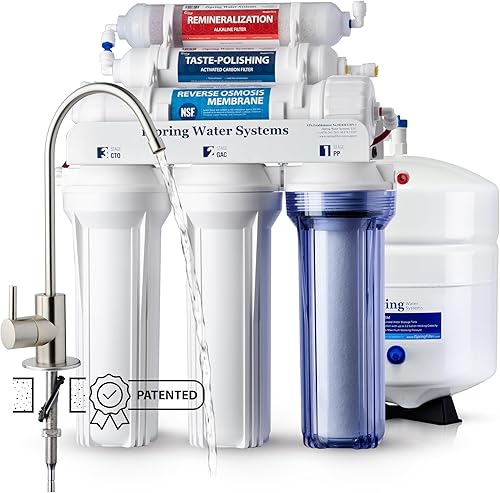
iSpring RCC7AK 6-Stage Under-Sink RO System
This is the workhorse we recommend to most homeowners. The six stages cover all the bases: sediment, carbon block, GAC, the RO membrane, a post-carbon filter, and finally an alkaline remineralizer. The added minerals give the water a smoother, more natural taste than pure RO water alone. It’s NSF-certified and has been a top seller for years for a reason—it just works reliably.
- Complete 6-stage process for comprehensive filtration
- Alkaline filter improves taste over standard RO
- Highly reliable with strong customer support
- Filters 1,000+ contaminants
- Requires under-sink installation and drilling for faucet
- Produces wastewater like all RO systems

Geekpure 5-Stage RO with 2-Year Filter Supply
This is the value play. You get a solid 5-stage RO system, but the kicker is the included bundle of seven extra replacement filters. That’s enough for about two years of use, depending on your water quality. The components are NSF-certified, and the standard sizing means you’re not locked into expensive proprietary filters later. It’s a smart buy for the budget-conscious who still want real filtration.
- Incredible value with 2 years of filters included
- Uses standard-size, non-proprietary filters
- NSF-certified membrane and tank
- 5 stages (no remineralization)
- Basic instructions; may require some DIY savvy

Geekpure 6-Stage RO with UV Sterilization
If you’re on well water or have any concerns about bacteria, viruses, or cysts, this is the system to look at. The sixth stage is a UV light that disrupts the DNA of microorganisms, killing 99.99% of them. It runs 24/7 and lasts about a year. The rest of the system is standard, reliable RO filtration. It’s a serious upgrade for water safety.
- UV stage provides microbiological safety
- Lead-free deluxe faucet included
- ISO9001:2015 certified manufacturer
- UV bulb needs annual replacement
- Slightly higher upfront cost than 5-stage models

Waterdrop CoreRO Countertop Hot & Ambient System
This is the future for renters or anyone who hates plumbing projects. No installation. Just plug it in. It delivers 6-stage RO filtration, plus instant hot water in 3 seconds—perfect for tea or baby formula. The detachable pitcher fits in your fridge door. The 3:1 pure-to-waste ratio is also better than many under-sink units. It’s clever, effective, and incredibly convenient.
- Zero installation; truly portable
- Instant hot water function is a game-changer
- Efficient 3:1 pure water ratio
- NSF/ANSI 372 certified lead-free
- Takes up counter space
- Higher upfront cost than basic under-sink RO
Frequently Asked Questions
- What is the difference between a 5-stage and 6-stage filtration system?
- The main difference is the added sixth stage. A 5-stage system typically has sediment, carbon, RO membrane, and post-filter. A 6-stage system adds either an alkaline remineralizer (to improve taste) or a UV sterilizer (to kill bacteria). Choose based on whether you want better-tasting water or microbiological safety.
- Do I really need a multi-stage system?
- It depends on your water. For city water with chlorine and sediment, a good 2-3 stage carbon/sediment system might suffice. But if you have concerns about lead, fluoride, arsenic, or other dissolved contaminants, a multi-stage RO system is the most reliable solution. Test your water first.
- How often do I change the filters?
- It varies by stage and water quality. Sediment and carbon pre-filters: every 6-12 months. RO membrane: every 2-3 years. Post-carbon filter: every 12 months. UV bulb: annually. Always follow the manufacturer’s schedule, but pre-filters in dirty water may need earlier changes.
- Does a multi-stage system waste a lot of water?
- Only if it’s an RO system. Reverse osmosis requires water to flush the membrane, creating a brine stream. Traditional systems waste 3-4 gallons per 1 gallon made. Look for high-efficiency models with 1:1 or 2:1 ratios. Ultrafiltration (UF) systems do not waste water.
- Can I install a multi-stage system myself?
- Many under-sink systems are designed for DIY installation with basic tools. You’ll need to connect to the cold water line, install a drain saddle for the wastewater, and drill a hole for the dedicated faucet. Countertop models require no installation. If you’re not comfortable, hire a plumber.
- What’s the best stage filtration system for well water?
- Well water varies wildly. At a minimum, you need sediment and carbon filtration. A UV stage is highly recommended for bacteria. If your well has high iron or manganese, you may need a dedicated pre-filter before the main system. Always get a comprehensive well water test first.
Final Thoughts
After years in this industry, the single biggest mistake I see is people buying a filter based on the number of stages alone. A 6-stage system with cheap, uncertified filters is worse than a 3-stage system with quality components. Focus on the certifications (NSF/ANSI), the quality of the membrane, and the reputation of the brand.
For most households, a 5 or 6-stage under-sink RO system like the iSpring RCC7AK hits the sweet spot of performance, reliability, and value. If you rent or want hot water on demand, the Waterdrop countertop unit is a brilliant, modern solution. Start by understanding your water, then choose the stages that target your specific problems. That’s how you get clean water that actually makes a difference.
