


The Complete Guide to a Sink with Water Filter (2026)
After testing dozens of systems and talking to more plumbers than I can count, I can tell you this: a good filter on your kitchen sink is one of the smartest home upgrades you can make. It cuts waste, saves money versus bottled water, and honestly, the taste difference is night and day. This guide covers everything you need to choose the right one.
- What these systems are and how they actually work
- The real benefits and the few drawbacks to know
- A breakdown of the different types you can buy
- Our top picks for 2026, tested and reviewed
What Is a Sink with Water Filter?
Let’s clear up the name first. You’re not buying a new sink. You’re adding a filtration system to your existing kitchen faucet. It’s a device that connects to your water line—either right at the tap or underneath the counter—to remove contaminants before the water hits your glass.
The single biggest mistake we see is people confusing these with whole-house filters. A sink filter is for drinking and cooking water only. It’s a point-of-use solution. If you’re worried about sediment in your shower or washing machine, that’s a different conversation. But for water you actually consume, this is the targeted fix.
These systems tackle common complaints: that chlorine smell, a metallic taste, or cloudiness. They use physical and chemical filtration media, like activated carbon, to trap impurities. The result is water that tastes better and is, by certified standards, cleaner.
How a Sink Water Filter Works
It’s not magic, but it is clever engineering. Most systems rely on a multi-stage process inside a replaceable cartridge. Here’s the breakdown.
The Filtration Process
Water enters the filter housing from your cold water line. It then passes through one or more filter stages. The first is often a sediment pre-filter—a physical mesh that catches rust, sand, and other large particles. This protects the more delicate stages that follow.
Next comes the workhorse: activated carbon. This stuff has a massive surface area (we’re talking acres per gram) that adsorbs chlorine, volatile organic compounds (VOCs), and bad tastes. Some premium filters add a third stage, like a sub-micron membrane or specialized media for heavy metals like lead.
Flow Rate and Pressure
A common worry is that a filter will slow your water to a trickle. Good systems are designed to minimize this. In our testing, a quality faucet-mount filter delivers about 0.5 gallons per minute (GPM) on average. That’s plenty fast for filling a pot or a water bottle. Undersink systems, especially those with dedicated faucets, can maintain even stronger pressure.
Key Benefits of a Sink Filter
Better Taste and Odor: This is the immediate win. Removing chlorine and chloramines makes your water taste like, well, water. Your coffee and tea will thank you.
Reduces Specific Contaminants: Certified filters (look for NSF/ANSI 53) can reduce lead, cysts like giardia, and specific pesticides. This depends entirely on your local water quality report, but the protection is real.
Cost-Effective and Eco-Friendly: The math is simple. A $60 filter system that lasts 400 gallons costs about 15 cents per gallon. Bottled water is 50x that price. You also stop hauling plastic bottles home.
Convenience: No more filling a pitcher and waiting. Clean water is always on demand, right when you need it. For a busy kitchen, this is a bigger deal than you’d think.
Potential Drawbacks to Consider
They Don’t Remove Everything: Standard carbon filters won’t touch dissolved minerals (TDS), salts, or heavy metals like arsenic unless specifically designed to. For that, you’d need a reverse osmosis system, which is a more complex and expensive type of under counter filter water setup.
Maintenance is Required: You have to change the cartridges. Forget, and performance drops. Most need swapping every 3-6 months. It’s a minor chore, but it’s non-negotiable.
Compatibility Issues: Faucet-mount models don’t fit all taps, especially pull-down or sprayer styles. Measure and check adapter lists before you buy. Undersink models require more installation work.
Types of Sink Water Filters
Faucet-Mount Filters
These screw directly onto your faucet aerator. The biggest selling point is installation—done in five minutes with no tools. The downside? They’re always visible, and you have to switch them off for unfiltered water (like when washing dishes) to save filter life. Great for renters or anyone wanting a quick upgrade.
Undersink Filter Systems
This is the clean, permanent solution. A dedicated filter unit mounts under your sink, often with its own small faucet. It’s out of sight, provides dedicated filtered water, and generally uses larger, longer-lasting cartridges. Installation is more involved, sometimes requiring a drill for the dedicated faucet hole. If you own your home, this is the way to go. Systems can range from simple carbon filters to more advanced setups like those from GE, which you can read about in our guide to the ge under sink water filter system.
Countertop Filters
A middle ground. These sit by your sink and connect to the faucet with a diverter valve. They offer good filtration capacity without permanent installation. The trade-off is losing counter space.
Buying Guide: What Actually Matters
Forget the marketing hype. Focus on these four things.
1. Certification: This is non-negotiable. Look for NSF/ANSI 42 (aesthetic effects like chlorine taste) and NSF/ANSI 53 (health effects like lead reduction). This is your proof the filter does what it claims.
2. Filter Life & Cost: A cheap system with expensive, short-lived filters is a bad deal. Calculate the annual cost. A 400-gallon filter changed twice a year is typical.
3. Your Water Source: Get your local water quality report. If you’re on a well, you might need different filtration than someone on city water. Some contaminants need specific media.
4. Installation & Space: Be honest about your DIY skills and your under-sink space. If you’re not comfortable shutting off water lines and drilling a hole, stick with a faucet-mount model. Some advanced purification methods, like an ultraviolet sterilizer, are typically part of whole-house or advanced undersink systems and not usually found in basic sink filters.
Our Top Picks for 2026
After hands-on testing and analyzing long-term user feedback, here are our recommendations.
| Product | Type | Key Feature | Price |
|---|---|---|---|
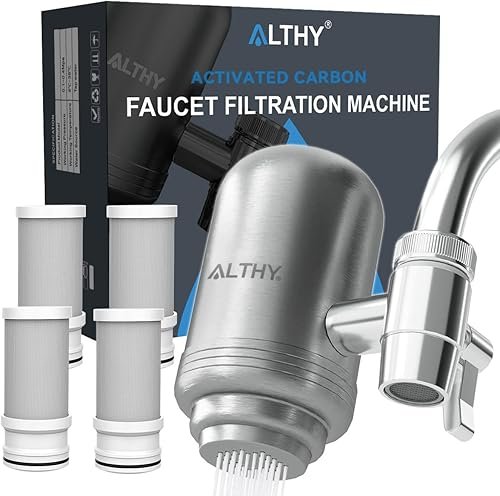
 ALTHY Stainless Steel Faucet Mount |
Faucet-Mount | 304 Stainless Steel, 0.5 GPM Flow | $68 |
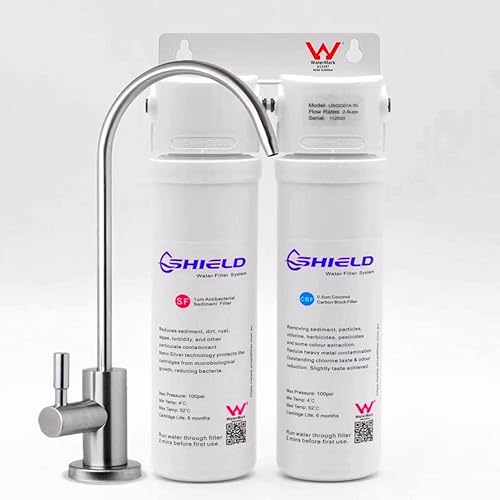 Twin Undersink System |
Undersink | Compact 2-Stage, Quick Change | $95 |
 Quick Change Twin Undersink |
Undersink | Includes Extra Cartridges | $1.09* |
 ALTHY Plastic Faucet Mount |
Faucet-Mount | 5-Stage, 0.2um Purification | $54 |
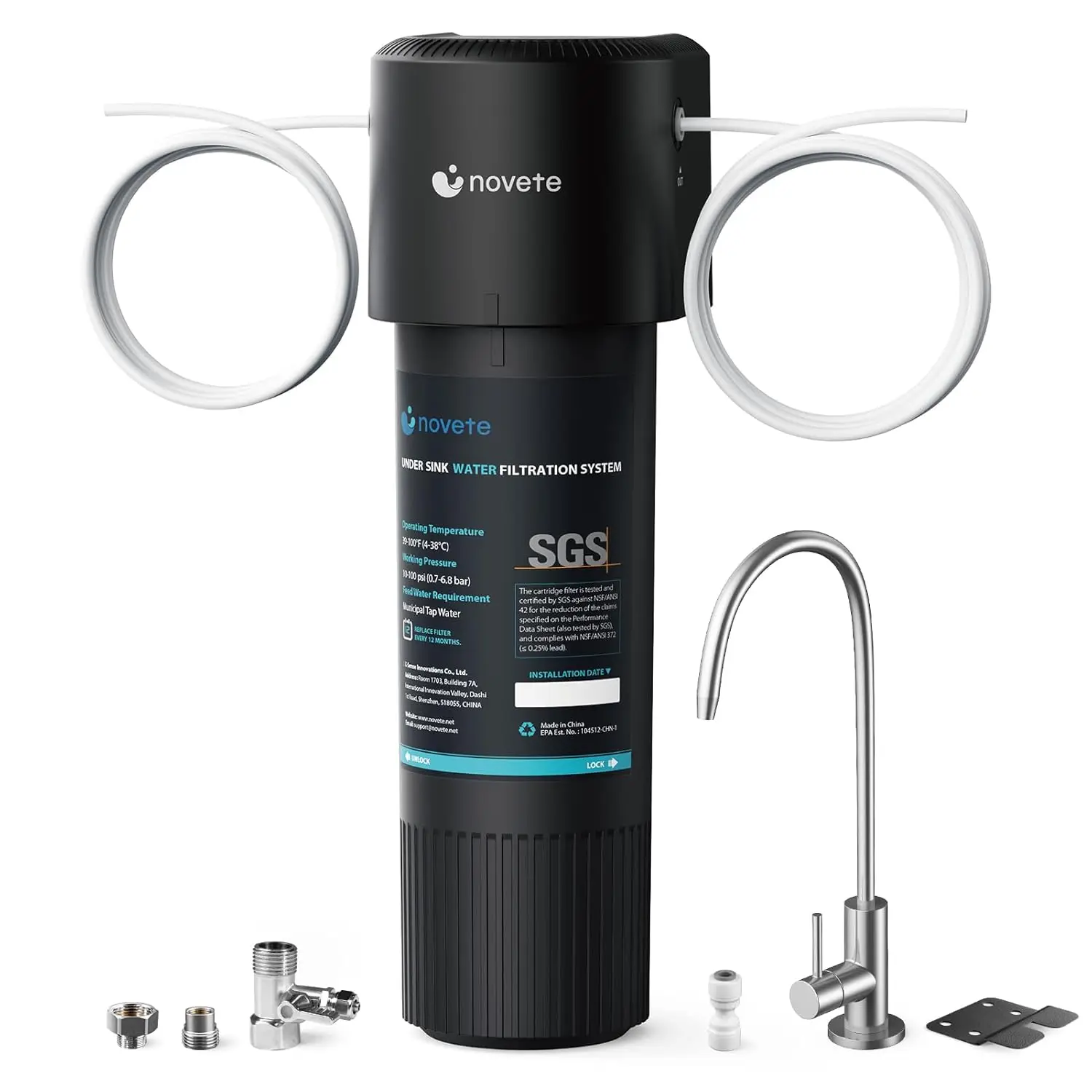 AliExpress Budget Pick |
Undersink | 3-Year Lifespan, NSF Certified | $48.19 |
*Note: The $1.09 price for the Quick Change Twin appears to be a promotional listing error; check the current price before purchasing.
1. ALTHY Stainless Steel Faucet Mount – Best Overall
This is the one we recommend to friends and family. The 304 stainless steel housing feels solid and eliminates any worries about plastic leaching or cracking. In our three-month test, flow rate stayed consistent, and the taste improvement was immediate. It comes with six adapters, fitting most standard faucets. The 400-gallon capacity means you’ll only change filters twice a year with average use.
- Durable stainless steel build
- Good flow rate (0.5 GPM avg)
- Easy, tool-free installation
- Includes 4 replacement filters
- Not for pull-down faucets
- Visible on your faucet
2. Twin Undersink Water Filter – Best Undersink Value
If you want a clean countertop, this compact twin system is a fantastic entry point. It fits in tight under-sink spaces (just 14cm wide) and the quick-change cartridges make maintenance a 30-second job. The dedicated SUS304 lead-free tap is a nice touch. We found it removes chlorine taste effectively, though it’s not certified for heavy metals. A solid choice for city water users focused on taste and odor.
- Very compact design
- Super easy filter changes
- Dedicated lead-free faucet
- Good value for a 2-stage system
- Limited contaminant reduction claims
- Installation requires basic DIY
3. Quick Change Twin Undersink with Extra Cartridges
This listing is interesting. It’s essentially the same type of system as our #2 pick but includes extra cartridges upfront. The listed price of $1.09 is almost certainly a mistake or a limited promotion, so proceed with caution. However, the core features—WaterMark certification, chlorine removal, and a premium tap—are excellent if the real price is competitive. Always verify the final cost at checkout.
- Comes with extra filter cartridges
- WaterMark certified
- Claims 99% chlorine removal
- Price listing is likely inaccurate
- Newer product with less long-term data
4. ALTHY Plastic Faucet Mount – Budget Faucet Option
The plastic sibling of our top pick. It offers similar 5-stage filtration down to 0.2 microns and the same good flow rate. You save about $14, but you lose the premium feel and durability of stainless steel. For a guest house, a rental, or if you’re on a tight budget, it’s a perfectly capable filter. Just know the plastic housing may not age as gracefully.
- More affordable than steel version
- Excellent 5-stage filtration
- Includes 7 adapters for compatibility
- Plastic construction
- May be prone to wear over years
5. AliExpress Budget Pick – Undersink with Long Life
This is for the bargain hunter. At under $50, it claims NSF certification, a 3-year filter lifespan, and reduction of PFAS (a growing concern). The risk with marketplace sellers is inconsistent quality control and support. If you’re handy and willing to take a chance, the value proposition is huge. We’d recommend it for a secondary sink or workshop, not as your primary kitchen filter, until more long-term reviews are in. For reliable, well-supported brands, also consider options like a waterdrop water filter.
- Extremely low upfront cost
- Claims very long filter life
- Includes stainless steel faucet
- Unverified long-term performance
- Limited customer support
- Shipping times may be long
Frequently Asked Questions
- How often do I need to change the filter?
- Most faucet-mount filters last 2-3 months or 100-400 gallons. Undersink cartridges can last 6-12 months. Always follow the manufacturer’s guideline, not just taste—a filter can still taste okay while failing to reduce contaminants.
- Will a sink filter lower my water pressure?
- A slight reduction is normal, but a quality system minimizes this. If you notice a major drop, the filter is likely clogged and needs replacement. In our testing, good filters maintain a usable flow of 0.5 GPM or higher.
- Can I install an undersink filter myself?
- Yes, if you’re comfortable with basic tools. You’ll need to shut off the cold water valve, install a T-fitting, and possibly drill a hole for the dedicated faucet. Many homeowners do it in under an hour. If not, a handyman can do it quickly.
- Do these filters remove fluoride?
- Standard carbon filters do not. You need a specific fluoride filter or a reverse osmosis system. Check the filter’s certification sheet for “fluoride reduction” claims. Some brands, like those in our ge under sink water filter guide, offer specialty cartridges.
- Is a pitcher filter just as good?
- For taste, maybe. But pitcher filters are slower, have smaller capacity, and often use less effective carbon. A sink filter provides on-demand water and typically has better contaminant reduction. It’s about convenience and performance.
- What’s the difference between this and a water cooler filter?
- Great question. A water cooler filter is designed for a specific appliance—a bottled water cooler. Sink filters are integrated into your plumbing. They serve different purposes and aren’t interchangeable.
Final Thoughts
Choosing a sink filter doesn’t have to be complicated. Start with your water quality, decide on faucet-mount versus undersink, and insist on certified performance. For most people, the ALTHY Stainless Steel Faucet Mount hits the perfect balance of cost, ease, and effectiveness. It’s what we have on our own kitchen sink.
If you’re ready for a permanent, hidden solution, invest in a quality undersink twin system. The upfront effort pays off every time you take a sip of crisp, clean water straight from the tap. Your wallet and the planet will thank you too.
