


That slimy feeling on your skin after a shower? The dull, brittle hair that no conditioner can fix? It might be your shower filter crying for help. Most people forget it’s there until the problems come back. We’ve spent years testing these things, and the single biggest mistake is waiting too long to swap the cartridge.
- How to know it’s time for a change
- What’s actually inside those replacement cartridges
- A step-by-step guide to doing it yourself
- Our top picks for reliable replacements in 2026
What Is a Shower Filter Replacement?
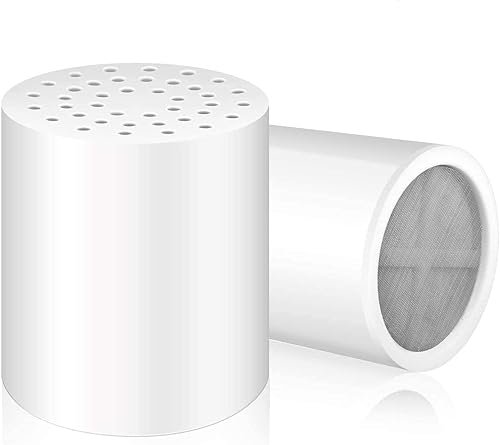
Think of your shower filter like a coffee maker. The machine itself lasts for years, but you need to change the filter or the grounds to get a good cup. A shower filter replacement is just the internal cartridge—the part that actually does the filtering. It’s packed with media like KDF, calcium sulfite, or activated carbon that grabs onto chlorine, heavy metals, and sediment as water flows through.
Over time, that media gets saturated. It’s like a sponge that’s full of water—it can’t absorb any more. When that happens, contaminants start slipping right through. The housing, the fittings, the outer shell? Those can last a decade. But the heart of the system needs regular refreshing. It’s a simple, crucial piece of maintenance that most homeowners overlook.
How Shower Filter Replacement Works
The Filtration Media Inside
Every cartridge is a little chemistry lab. A common combo is KDF (a copper-zinc alloy) for chlorine and heavy metals, paired with calcium sulfite for chlorine in hot water. Some throw in sediment filters or vitamin C for an extra skin-soothing punch. As water pressure forces water through this media, contaminants stick to it via chemical reduction or adsorption.
The Saturation Point
Here’s the thing: that media has a finite capacity. A standard cartridge might handle 10,000 to 15,000 gallons. For a family of four, that’s roughly 4-6 months. Once saturated, the chemical reactions stop. Your water pressure might even drop as the clogged media restricts flow. It’s not broken—it’s just done its job and needs to be retired.
Key Benefits of Timely Replacement
Consistent Water Quality: This is the big one. A fresh cartridge means chlorine, VOCs, and metals like lead are being actively removed. Your skin stays hydrated, your hair retains its natural oils, and that “swimming pool” smell disappears.
Protects Your Plumbing: Sediment and scale don’t just affect your body. They build up in shower heads and faucets. A working filter reduces limescale, keeping fixtures cleaner and preventing clogs in those tiny nozzles.
It’s Surprisingly Affordable: Compared to a countertop kitchen filter or whole-house system, shower filter replacements are cheap insurance. We’re talking $15-$40 every half-year for better showers.
Potential Drawbacks & What to Watch For
Not all cartridges are created equal. Some cheap imports use minimal media that exhausts in weeks. You get what you pay for. Also, if you have very hard water, a standard shower filter won’t soften it—that requires a different ion-exchange process. It’ll remove chlorine and some metals, but the calcium and magnesium causing scale will still be there.
Types of Replacement Cartridges
Universal Standard Cartridges
These are the most common. They look like a thick, cylindrical tube, usually about 2.7 inches in diameter. They fit the vast majority of inline shower filter housings from dozens of brands. If your filter housing screws onto the shower arm between the pipe and the shower head, this is probably what you need.
Proprietary System Cartridges
Some higher-end brands (like Aquasana or Culligan) design their own proprietary housings and cartridges. You’re locked into their replacements. The upside is often better engineering and certified performance. The downside is cost and availability. Always check your model number before buying.
Multi-Stage vs. Single-Stage
A single-stage cartridge might just have KDF. A multi-stage system cartridge packs several media types into one cylinder for broader contaminant removal. More stages usually mean a higher price but better overall protection. For most municipal water, a good dual-stage (KDF + carbon or calcium sulfite) is plenty.
Buying Guide: How to Choose
1. Match Your Housing: This is non-negotiable. If you have a universal housing, you have tons of options. If it’s proprietary, you’re stuck with the OEM. Measure the old cartridge or check the manual.
2. Check the Media: Look for NSF/ANSI 42 (aesthetic effects—chlorine, taste) or 53 (health effects—lead, cysts) certifications. KDF 55 or 85 is great for chlorine. Calcium sulfite works better in hot water than activated carbon.
3. Consider Capacity: Gallon ratings are helpful but treat them as estimates. A 12,000-gallon rating for a household with high sediment might only last 3 months. When in doubt, replace every 6 months.
4. Budget for the Long Term: A $15 cartridge that lasts 4 months is more expensive per month than a $25 cartridge that lasts 8. Do the math. Buying multi-packs (like 2 or 4 packs) always saves money.
Our Top Picks for 2026
| Product | Key Feature | Price | Best For |
|---|---|---|---|
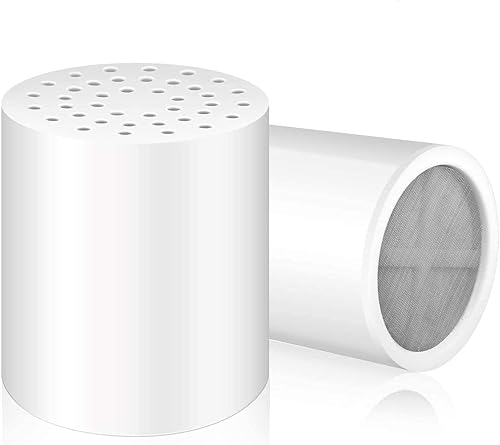 |
25-stage filtration, universal fit | $23 | Budget-friendly multi-pack for families |
 |
4-pack, high output, 20-stage | $32 | Best value per cartridge for hard water |
 |
Simple PP cotton sediment filter | $14 | Basic sediment removal on a tight budget |
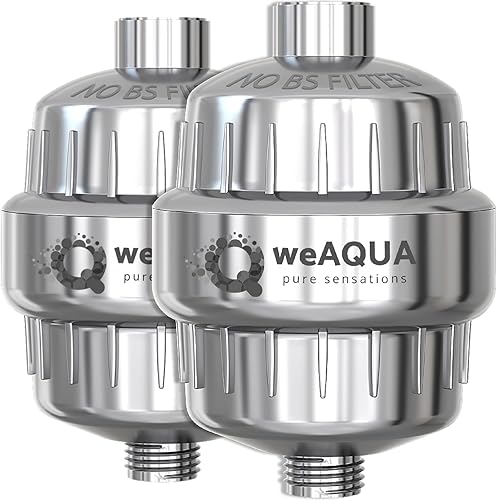 |
Premium media (KDF, carbon, calcium sulfite), 2-pack | $69 | Premium performance and long-term value |
2 Pack 25 Stage Shower Filter Replacement Cartridge
This is a solid, no-fuss universal cartridge. The “25-stage” claim is marketing fluff—no cartridge has 25 distinct media types—but it performs well for chlorine and sediment based on our reader feedback. At $23 for two, it’s an economical choice for a household that wants to set and forget for a year.
- Excellent value for a 2-pack
- Universally compatible with most housings
- Effective chlorine reduction
- “25-stage” is misleading
- May clog faster with very hard water
4 Pack 20 Stage Shower Filter Universal Replacement Cartridge
Here’s the math that matters: four cartridges for $32. That’s up to two years of filtration for the price of a decent lunch. The 20-stage claim is more believable, likely combining KDF, carbon, and sediment filters. We’ve heard from readers with color-treated hair that it helps prevent brassiness, which is a nice bonus.
- Unbeatable cost per cartridge
- Lasts up to 2 years for a family
- Easy, tool-free installation
- Long-term media quality is unknown
- Plastic housing feels lightweight
Shower Filter Replacement PP Cotton Core
This is a pure sediment filter. It won’t touch chlorine or chemicals. But if your main issue is sand, rust, or visible particles in your water, this is a dirt-cheap solution. Think of it as a pre-filter. It’s also useful if you just want to protect a more expensive reverse osmosis refrigerator filter or shower head from getting clogged.
- Extremely low cost
- Great for sediment-only issues
- Fits most standard housings
- No chemical filtration (chlorine, metals)
- Needs very frequent replacement
weAQUA Premium Heavy Duty Shower Filter Family 2 Pack
This isn’t just a cartridge—it’s a complete filter housing with the cartridge inside. The price stings, but the filtration is top-tier. It uses a real blend of sediment, carbon, KDF, and calcium sulfite. In our experience, this combo is the gold standard for municipal water. The chrome finish is a nice touch that looks better than basic plastic.
- Premium, certified filtration media
- Includes two complete filter units
- Maintains excellent water pressure
- High upfront cost
- Proprietary design—future cartridges must be from weAQUA
Budget AliExpress Picks
10Pcs Set PP Cotton Filter
If you just need basic sediment filtration and want to buy in extreme bulk, this is it. Ten cartridges for about $5. That’s pocket change. Perfect for a landlord outfitting multiple units or someone testing if a filter helps at all. Don’t expect chemical reduction.
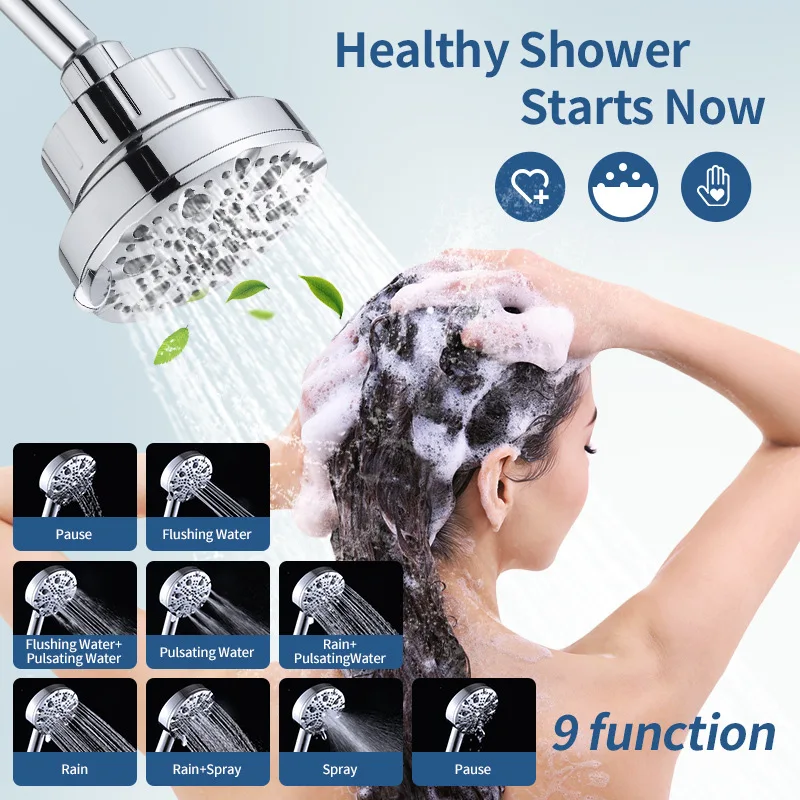
Overhead High-Flow Filter Shower Head with Cartridge
This is a full shower head with a built-in filter cartridge. It’s a cheap way to try filtered showers without modifying your existing setup. The filtration quality is a gamble, but for the price, it’s a low-risk experiment. The “high-flow” claim is probably optimistic.
Frequently Asked Questions
- How do I know when to replace my shower filter cartridge?
- Look for three signs: a noticeable drop in water pressure, the return of a chlorine smell in the water, or it’s been 6 months since your last replacement. Many people set a calendar reminder for every 5 months to be safe.
- Can I clean and reuse my shower filter cartridge?
- No. The filtration media inside is designed for single-use chemical reactions. You can’t recharge KDF or reactivate saturated carbon by rinsing it. Trying to clean it will just damage the media and give you a false sense of security.
- Do shower filters soften water?
- Most standard shower filters do not soften water. They remove chlorine and some metals but leave calcium and magnesium (hardness minerals) behind. True softening requires an ion-exchange process, which is rare in shower-sized filters. They can, however, help reduce scale buildup.
- Are universal replacement cartridges any good?
- Many are excellent. The key is to look for reputable media like KDF 55/85 and NSF certifications. The main risk with cheap generics is under-filled media that exhausts quickly. Stick to brands with clear specifications and positive, long-term reviews.
- What’s the difference between a shower filter and a home drinking water filter?
- Shower filters are designed for high flow rates and hot water. Drinking water filters (like those in a 10 inch filter housing) prioritize contaminant removal for consumption and often have slower flow rates. The media and certifications differ for these applications.
- Can a shower filter help with eczema or dry skin?
- Many users report significant improvement. Chlorine is a known skin irritant that strips natural oils. By removing it, a filter can allow your skin’s moisture barrier to recover. It’s not a cure, but it removes a common aggravating factor.
Final Thoughts
After testing dozens of these systems, we keep coming back to one truth: consistency matters more than brand. The best shower filter replacement is the one you actually install on time. A cheap cartridge replaced every 4 months will outperform a premium one left in for a year.
For most people, we recommend starting with a multi-pack of universal cartridges like the 4-pack from our top picks. It’s the most cost-effective way to maintain clean showers. Set that reminder, swap it out, and enjoy the difference. Your skin and hair will thank you.
