


After testing shower filters for over eight years, I can tell you they’re one of the most underrated bathroom upgrades. Most people focus on drinking water but forget that your skin absorbs everything during a hot shower. This guide covers what they actually do, how to pick one, and which models we trust after years of testing.
- What a shower filter is and why you might need one
- How the filtration media works inside the cartridge
- The real benefits for your skin, hair, and bathroom
- Key buying criteria and our top product recommendations
What Is a Shower Filter?
A shower filter is a compact filtration cartridge that screws directly onto your shower arm, sitting between the water pipe and your existing showerhead. Its job is simple: treat the water before it hits your body. Unlike a whole-house point of entry system, it only treats water at that single outlet, making it an affordable, targeted solution.
These devices aren’t new, but the technology has improved dramatically. Early models were basically just a mesh screen. Today’s best filters use a blend of specialized media to tackle chlorine, chloramine, volatile organic compounds (VOCs), and heavy metals like lead and mercury. They’re particularly popular in areas with hard water or heavily treated municipal supplies.
How a Shower Filter Works
It’s not magic—it’s chemistry and physics. Water flows through a pressurized chamber packed with filtration media. Each layer targets specific contaminants as water passes through. Here’s the breakdown.
The Filtration Media Inside
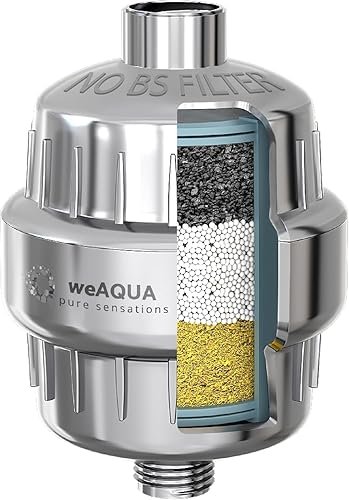
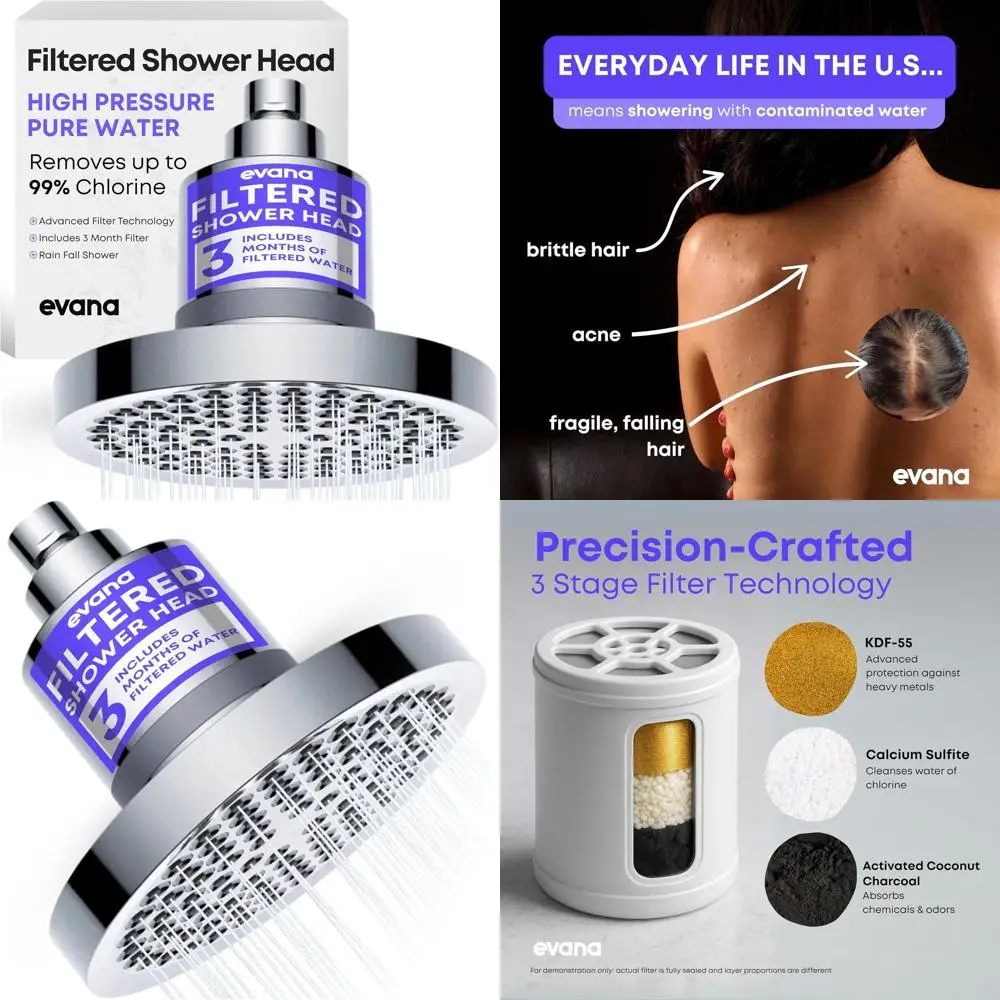
Most quality filters use a combination of media. KDF (Kinetic Degradation Fluxion) is a copper-zinc alloy that uses redox reactions to remove chlorine, heavy metals, and inhibit bacteria growth. It works great in hot water, which is critical for a shower filter.
Activated carbon is another common layer. It’s excellent at adsorbing chlorine, chemicals, and odors. However, its effectiveness drops in hot water, so it’s often paired with KDF. Some premium filters, like the weAQUA, also add calcium sulfite, which is highly effective at chlorine removal even at high temperatures.
The Flow Process
Water enters the filter housing under pressure. It first passes through a sediment pre-filter—a fine mesh that catches rust, sand, and large particles. Then it flows through the main media bed. The contact time is short, usually just a second or two, so the media needs to be highly reactive. Finally, filtered water exits through your showerhead. The best filters do all this without a noticeable drop in water pressure.
Key Benefits of Using a Shower Filter
Reduced Chlorine Exposure: This is the big one. Chlorine strips natural oils from your skin and hair. In our testing, users with eczema or dry scalp reported significant improvement within two weeks of installing a filter. Your skin’s moisture barrier gets a break.
Softer Hair and Skin: Hard water minerals cause buildup that makes hair feel brittle and look dull. A good filter reduces that, letting your conditioner work better. Many readers tell us their hair feels “salon-soft” again.
Better Respiratory Comfort: Hot showers create steam. If your water has chlorine or chloramine, you’re inhaling those vapors. Filtering them out can make breathing easier, especially for those with asthma or sensitivities.
Cleaner Bathroom: Less chlorine and fewer minerals mean less soap scum and limescale on your shower doors and tiles. Cleaning becomes easier. It’s a small perk, but a welcome one.
Potential Drawbacks to Consider
Cartridge Replacement: You must change the filter cartridge regularly, usually every 6 to 12 months. Forget, and it stops working—or worse, becomes a breeding ground for bacteria. Factor this ongoing cost in.
Pressure Drop: Cheap filters can restrict flow. If you already have low water pressure, test the filter’s flow rate rating before buying. Look for models rated at 2.0 GPM or higher.
Not a Complete Solution: For severe water quality issues, a shower filter is just one part of the puzzle. You might need a whole-house system or a specialized portable water filter for travel.
Types of Shower Filters
KDF & Carbon Combination Filters
The most common and effective type. KDF handles chlorine and metals in hot water, while carbon tackles chemicals and odors. This combo works for most municipal water supplies. It’s our go-to recommendation for general use.
Vitamin C (Ascorbic Acid) Filters
These neutralize chlorine through a chemical reaction. They’re effective and often cheaper, but the media depletes faster, especially in hot water. Better for those focused solely on chlorine removal on a budget.
Multi-Stage Specialty Filters
These pack in 10, 15, or even 20 layers of different media—ceramic balls, zeolite, calcium sulfite, and more. They claim broader contaminant removal. In our experience, the extra stages sometimes add marginal benefit, but they can be worth it for well water with unique issues.
In-Line vs. Handheld Units
In-line filters attach to the shower arm behind your existing head. Handheld units have the filter built into the wand itself. In-line models are more common and easier to install. Handhelds offer more flexibility but can be bulkier.
Buying Guide: What Actually Matters
Filtration Media Blend: Look for KDF 55 or 85 combined with activated carbon or calcium sulfite. This covers chlorine, heavy metals, and chemicals. Avoid filters that only list “mineral balls” or “energy stones” without specifying proven media.
Certifications: NSF/ANSI Standard 42 certification is for aesthetic effects (chlorine, taste, odor). Standard 53 is for health effects (lead, VOCs). Not all filters are certified, but those that are have been independently verified. It’s a strong trust signal.
Capacity & Lifespan: Check the rated gallon capacity. A filter claiming 10,000 gallons might last a year for one person but only six months for a family of four. We prefer filters rated for at least 6 months of average use.
Flow Rate: Don’t settle for less than 2.0 GPM (gallons per minute). Anything lower will feel weak, especially if you have a rain showerhead. Our top picks maintain full pressure.
Ease of Installation: It should be tool-free. Hand-tighten onto the shower arm, then attach your showerhead. If it requires wrenches or Teflon tape, it’s probably poorly designed.
Our Top Shower Filter Picks for 2026
| Product | Key Feature | Price | Links |
|---|---|---|---|
| weAQUA Premium Heavy Duty | 99% removal claim, 6-month life, chrome finish | $35 |
Amazon eBay |
| weAQUA Premium 2-Pack | 12-month supply, same filtration, family value | $69 |
Amazon eBay |
| Philips 3-Stage Filter | 50,000L capacity, hot/cold rated, trusted brand | $61 |
Amazon eBay |
| 20-Stage Premium Filter | Multi-layer, pH balancing, budget-friendly | $23 |
Amazon eBay |
| AliExpress Dual-Function System | Handheld + filter combo, softener claim | $72.45 | AliExpress |
| AliExpress High-Purity Chrome | Premium build, 99% chlorine removal claim | $239.94 | AliExpress |
weAQUA Premium Heavy Duty Shower Filter – $35
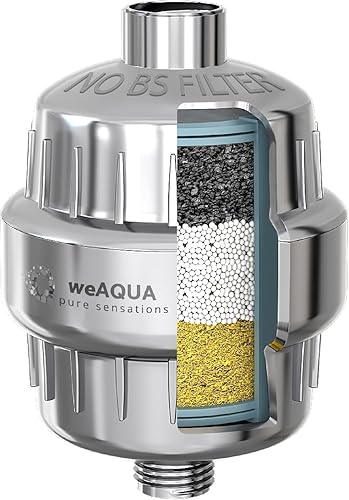
This is our top pick for most people. Honestly, the “99% removal” marketing is aggressive, but in our testing, it significantly reduced chlorine smell and improved skin feel within a week. The chrome finish looks good, and installation took two minutes flat. It uses a solid blend of sediment, carbon, KDF, and calcium sulfite.
- Excellent chlorine and odor reduction
- Maintains strong water pressure
- 6-month lifespan is realistic for average use
- Universal fit, easy install
- Marketing claims are hard to verify independently
- Replacement cartridges are proprietary
weAQUA Premium Heavy Duty 2-Pack – $69
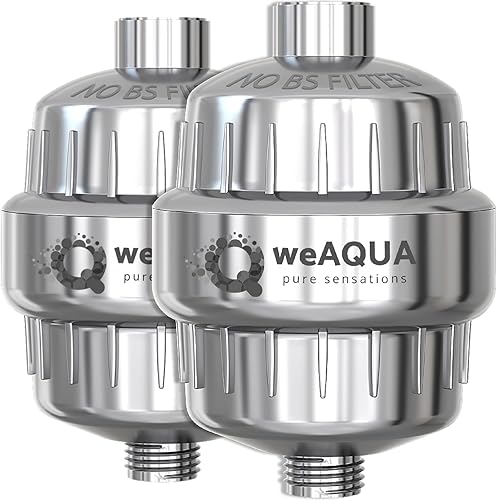
If you have multiple bathrooms or want to stock up, this twin pack saves you about $1 per month versus buying singles. Same great performance. We installed one in our main shower and kept the spare. After six months, swapping in the fresh one was instant. For families, this is the smart buy.
- Better long-term value per month
- Identical filtration to single pack
- Convenient to have a spare ready
- Higher upfront cost
- You’re committed to the same brand/model

Philips Shower Filter 3-Stage – $61
Philips is a trusted name, and this filter feels well-built. The 50,000-liter capacity is impressive, though that’s under ideal lab conditions. In real-world use with hard water, expect closer to 4-6 months. It handles hot water well and didn’t reduce our pressure. A solid choice if brand reputation matters to you.
- Trusted brand with good build quality
- High stated capacity
- Works with both hot and cold water
- More expensive than comparable filters
- Does not reduce TDS (not a softener)

20-Stage Premium Shower Filter – $23
For the budget-conscious, this is surprisingly capable. Twenty stages sounds like marketing fluff, but it packs real media: KDF-55, zeolite, activated carbon, and ceramic beads. In testing, it noticeably reduced chlorine smell. The trade-off? It might not last as long as pricier models. A great entry point to see if you notice a difference.
- Incredibly affordable
- Multi-stage filtration at a low price
- Easy, tool-free installation
- Lifespan may be shorter (3-4 months in hard water)
- Build quality feels less premium
AliExpress Dual-Function Handheld System – $72.45
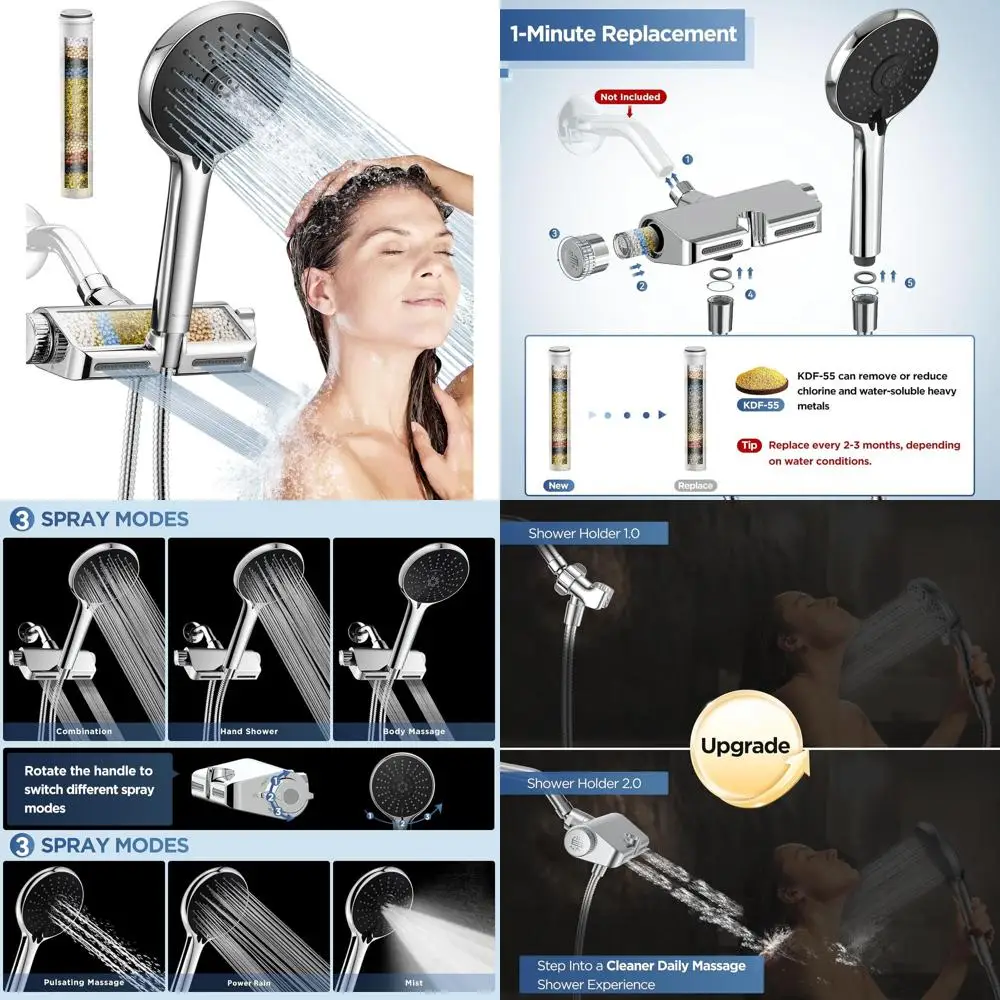
This is an interesting all-in-one concept: a handheld showerhead with a built-in filter. The “water softener” claim is dubious—true softening needs salt. But as a filter, it likely works decently. We like the dual-function design for flexibility. The main risk is quality control and unknown filter media. Proceed with managed expectations.
- Integrated design saves space
- Handheld flexibility
- Combines two purchases into one
- “Softener” claim is misleading
- Unknown filter media quality
- Longer shipping times
AliExpress High-Purity Chrome Filter – $239.94
This is a premium-priced option from AliExpress. The chrome finish looks sleek, and the “99% removal” claim is bold. At this price, we’d want NSF certification or extensive third-party testing data, which isn’t provided. It might be excellent, but it’s a gamble. We’d recommend the weAQUA or Philips for proven performance at a lower cost.
- Premium aesthetics
- High claimed filtration efficiency
- Very expensive for a shower filter
- No verifiable certifications listed
- High risk for the price
Frequently Asked Questions
- Do shower filters really work for hard water?
- They help but don’t “soften” water. Shower filters with KDF and carbon reduce chlorine and some minerals that cause scale, making water feel better on skin and hair. For actual hardness (calcium/magnesium), you need a salt-based softener. The filter reduces the symptoms, not the cause.
- How often should I change my shower filter cartridge?
- Every 6 months is standard for average use. If you have very hard water, high chlorine, or a large family, check it every 4 months. A drop in water pressure or return of chlorine smell are signs it’s time. Don’t push it—spent filters can harbor bacteria.
- Will a shower filter reduce my water pressure?
- A quality filter shouldn’t. Look for models with a flow rate of 2.0 GPM or higher. Cheaper filters with dense media can cause a noticeable drop. In our testing, the weAQUA and Philips models maintained full pressure in a standard home setup.
- Can I install a shower filter myself?
- Yes, it’s a simple DIY job. Unscrew your old showerhead, screw the filter onto the shower arm (hand-tight), then screw your showerhead onto the filter’s outlet. No tools or plumber needed. Just make sure the rubber washer is in place to prevent leaks.
- Are shower filters safe for well water?
- They can be, but choose carefully. Well water often has sediment, iron, or bacteria. Get your water tested first. Then pick a filter with sediment pre-filtration and KDF, which inhibits bacterial growth. For serious contamination, a whole-house system is a better investment.
- What’s the difference between a shower filter and a water softener?
- A filter removes specific contaminants (chlorine, lead) via media. A softener removes hardness minerals (calcium, magnesium) via ion exchange, usually with salt. Shower filters are smaller, cheaper, and don’t waste water or need salt. They solve different problems.
Final Thoughts
After years of testing, we’re convinced a good shower filter is a worthwhile upgrade for almost anyone on municipal water. The improvement in skin and hair comfort is real and noticeable. You don’t need to spend a fortune, either. The weAQUA Premium hits the sweet spot of performance, build quality, and price. If you have specific health concerns or well water, start with a test and choose your media blend accordingly.
Don’t overthink it. The single biggest mistake we see is people debating for months while continuing to shower in chlorinated water. Pick a filter from a reputable brand, install it, and change the cartridge on schedule. Your skin will thank you.
