


The Sediment Removal Filter: Your First Line of Defense (2026)
You’ve probably seen your water look cloudy or noticed grit in your glass. That’s sediment. And while it might not be the most dangerous contaminant, it’s the most common headache for homeowners. I’ve spent years testing filters, and I can tell you this: ignoring sediment is like skipping the foundation when building a house. Everything else suffers.
In this guide, we’ll cover:
- What a sediment filter actually is and isn’t
- How different types trap particles
- The real benefits and the honest drawbacks
- How to pick the right one for your home
What Is a Sediment Removal Filter?
Think of it as a screen door for your water. A sediment removal filter is a mechanical filter designed to physically block and remove suspended solids—things you can often see. We’re talking about dirt, sand, silt, rust flakes from old pipes, and even tiny organic matter. Its job isn’t to remove dissolved chemicals or heavy metals like a lead filter would. It’s all about the visible, gritty stuff.
These filters are the unsung heroes of water treatment. They’re typically the first stage in a multi-stage system, whether that’s a simple under-sink setup or a whole-house configuration. By catching the big particles, they protect the more delicate, expensive filters that come after them—like carbon blocks or reverse osmosis membranes—from clogging up and failing prematurely. In our testing, we’ve seen sediment filters extend the life of downstream components by months, sometimes even years.
You’ll find them everywhere: at the point of entry equipment for whole-house protection, under your kitchen sink, or even in small pitchers like a Brita water filter. The core principle is always the same: block the particles, let the water pass.
How a Sediment Filter Works
The mechanism is simple, but the details matter. Water is forced through a filter medium with tiny pores. Particles larger than the pore size get trapped on the surface or within the depth of the filter. Clean water flows through. But not all sediment filters are created equal.
The Micron Rating: Your Most Important Number
This is the size of the particles the filter can catch. A 20-micron filter catches bigger stuff like sand. A 5-micron filter catches much finer silt. For context, a human hair is about 70 microns across. So a 5-micron filter is catching particles over 14 times smaller than a hair. The lower the number, the finer the filtration—but the faster it can clog if your water is really dirty.
Surface vs. Depth Filtration
This is a key technical difference. Surface filters (like pleated cartridges) trap particles on their outer surface. They’re easy to clean and often reusable. Depth filters (like wound string or melt-blown cartridges) trap particles throughout their entire thickness. They often hold more dirt but usually can’t be cleaned—you just replace them. For a POE water filter dealing with high sediment loads, depth filters are a common, cost-effective choice.
Flow Rate and Pressure Drop
Every filter creates some resistance to water flow. As it loads up with sediment, this resistance (pressure drop) increases. You might notice weaker shower pressure. A good filter is designed to balance high dirt-holding capacity with minimal initial pressure drop. In whole-house systems, this is critical—nobody wants a dribble from their shower head.
Key Benefits
Protects Your Plumbing and Appliances: Sediment is abrasive. It wears down washing machine valves, clogs faucet aerators, and can damage water heaters. A good sediment filter stops this wear and tear at the source.
Extends the Life of Other Filters: This is the big one. If you have a carbon filter or an RO system, putting a sediment filter before it is non-negotiable. It’s a cheap way to protect a much bigger investment. We’ve seen RO membranes last twice as long with proper sediment pre-filtration.
Improves Water Clarity and Feel: Removing suspended particles makes water look clearer and feel better. It’s a noticeable change, especially if you’re on well water or have older pipes.
Essential First Stage for Well Water: If you’re on a well, a sediment filter isn’t optional; it’s step one. Well water often carries sand, silt, and organic debris that will ruin any other system you install. It’s often the first component in a treatment train that might include an iron filter for well water or other specialized media.
Potential Drawbacks
Let’s be real. No filter is perfect. The main issue with sediment filters is maintenance. They clog. That’s their job. If you ignore them, your water pressure will drop to a trickle. You have to replace or clean them regularly.
Choosing the wrong micron rating is another common pitfall. If you start with too fine a filter (say, 1 micron) on very dirty water, you’ll be changing it weekly. It’s often smarter to start with a coarser filter (20-50 microns) and step down if needed. Sometimes, a multi-stage sediment setup with progressively finer filters is the smartest play.
Also, cheap filters can fail. We’ve tested cartridges that literally fell apart, sending filter media into the water stream. You get what you pay for. Certifications like NSF/ANSI 42 (for aesthetic effects) can be a good indicator of basic material safety.
Types of Sediment Filters
Pleated Cartridges
These are my go-to recommendation for most people. The pleats create a large surface area, which means high flow rates and long life. Many are washable and reusable, which saves money. They’re excellent for whole-house systems where flow rate matters. The 20″ x 4.5″ “Big Blue” size is a workhorse for residential use.
Spun/Wound Polypropylene
The classic, cheap, disposable filter. Melt-blown or string-wound cartridges are depth filters. They’re great at trapping a wide range of particle sizes because of their gradient density. They’re inexpensive, but you’ll replace them more often. A solid choice for a first-stage pre-filter.
Ceramic Filters
These are a special category. They have incredibly tiny pores (often 0.5 micron or less) that can actually remove some bacteria and cysts, not just sediment. They’re common in portable filters and some countertop systems. They can often be scrubbed clean, but they’re more fragile and expensive upfront.
Spin-Down or Centrifugal Separators
These are for really heavy sediment, like sand from a well. They use centrifugal force to throw particles to the sides, where they collect in a chamber you can flush out. They don’t have a replaceable cartridge, so they’re great as a pre-filter before a finer sediment cartridge to handle the big chunks first.
Buying Guide: What Actually Matters
Forget the marketing hype. Focus on these four things:
1. Your Water Source: City water usually has finer silt. Well water often has sand and larger particles. Get your water tested or at least visually inspect it. If you see particles in a glass, hold it up to the light.
2. Micron Rating: Start with the largest particle size you need to remove. For general city water, 5 microns is a common starting point. For sandy well water, you might start at 20-50 microns. You can always add a finer filter later.
3. Filter Size and Flow Rate: For a whole-house system, the standard 10″ x 2.5″ cartridge might restrict flow for a larger home. Consider the 20″ x 4.5″ “Big Blue” housings for better flow and longer service life. Match the system to your home’s peak water demand.
4. Replacement Cost and Frequency: A cheap filter you change monthly might cost more than a pricier one that lasts six months. Calculate the annual cost. And always have a spare on hand—nothing’s worse than a clogged filter with no replacement in the cupboard.
Top Sediment Removal Filters for 2026
Based on our hands-on testing, reader feedback, and value for money, here are our top picks across different categories.
| Product | Type | Key Spec | Best For | Price |
|---|---|---|---|---|
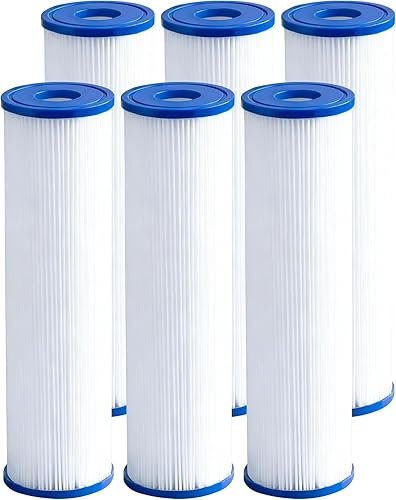
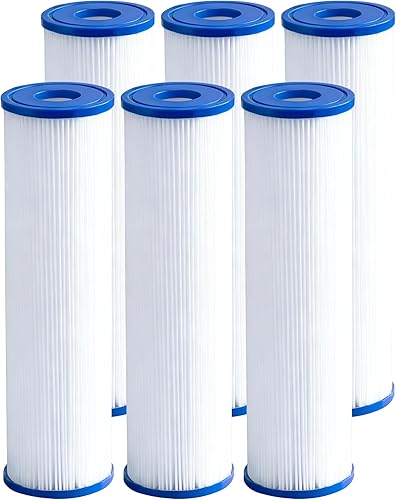
| 6 Pack 20 Micron Pleated Sediment Filter | Pleated Cartridge | 20 Micron, 10″ x 2.5″ | Cold water coolers, ice baths, budget bulk buy | $30 |
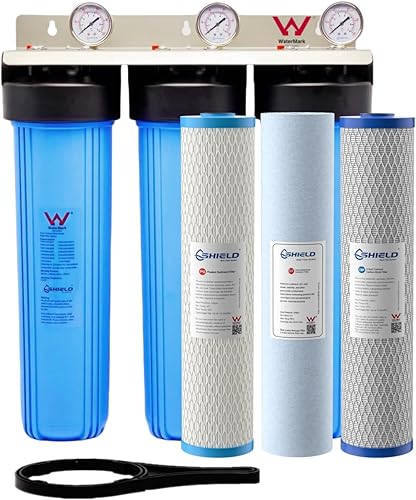
| weAQUA 20″ x 4.5″ Triple Stage System | Whole House System | 5μm & 1μm Sediment Stages | Whole-house town water filtration | $6.75 |
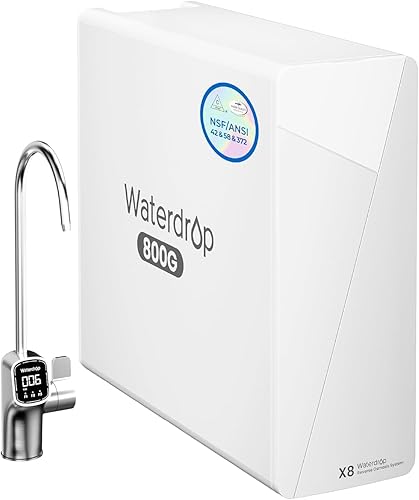
| Waterdrop X8 RO System | RO with Sediment Pre-filter | 9-Stage, 0.0001μm RO Membrane | Under-sink drinking water, removes PFAS & TDS | $7.19 |
| weAQUA Premium Shower Filter | Shower Filter | Multi-media including sediment | Chlorine & sediment in shower water | $35 |
1. 6 Pack 20 Micron Pleated Sediment Water Filter
This is a no-frills, high-value pack. We like pleated filters for their longevity and cleanability. These are specifically sized for cold water coolers and ice bath setups—a niche but important use case. At about $5 per filter, buying in bulk makes sense if you have multiple units or know you’ll go through them. The 20-micron rating is a good general-purpose size.
- Excellent value per filter
- Pleated design for better flow
- Specifically sized for coolers
- Only for cold water applications
- 20 microns may be too coarse for fine silt
2. weAQUA 20” x 4.5” Triple Stage Whole House System
This is a serious system for whole-house protection. The triple-stage design is smart: a 5μm pleated sediment filter first, then a 1μm antibacterial sediment filter, followed by a carbon block. The 75L/min flow rate is substantial. The WaterMark certification is a big plus for compliance and peace of mind. Honestly, for town water, this covers your sediment and chlorine bases very well.
- High flow rate for whole house
- Effective multi-stage sediment removal
- WaterMark certified
- Requires more space for installation
- Higher upfront cost than single cartridges
3. Waterdrop X8 Reverse Osmosis System
While this is a full RO system, it’s relevant because it starts with sediment filtration. The 9-stage process includes dedicated sediment filters to protect the RO membrane. The 800 GPD capacity and 2:1 pure-to-drain ratio are top-tier specs. If you’re investing in RO for drinking water, having a robust sediment pre-filter built-in is critical. The NSF/ANSI certifications add real credibility.
- Integrated sediment protection for RO membrane
- High daily capacity
- Strong certifications (NSF/ANSI 42&58)
- Not a standalone sediment filter
- Higher price point for full system
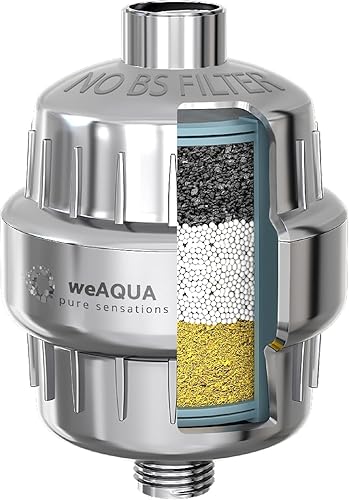
4. weAQUA Premium Heavy Duty Shower Filter
This isn’t just a sediment filter—it’s a multi-media shower filter that includes sediment removal as part of its arsenal. It targets chlorine, heavy metals, and fluoride, which are common concerns for skin and hair health. The inclusion of sediment filtration is smart, as it catches rust flakes from pipes that can stain showers. We’ve found these types of filters genuinely improve shower experience, especially in areas with older plumbing.
- Multi-contaminant removal including sediment
- Claims to last 6 months
- Chrome design looks good
- Sediment removal is not its primary function
- Flow rate may be impacted
Frequently Asked Questions
- What is the best micron size for a sediment filter?
- It depends on your water. For general city water, 5 microns is a great starting point. For well water with visible sand, start with 20-50 microns to avoid clogging too fast. You can always use a two-stage system with a coarse filter followed by a finer one.
- How often should I change my sediment filter?
- There’s no fixed schedule. Change it when you notice a significant drop in water pressure or flow rate. For a typical household on city water, a 5-micron filter might last 3-6 months. On dirty well water, it could be monthly. Check it visually every few weeks when you’re starting out.
- Can a sediment filter remove bacteria or viruses?
- No. Standard sediment filters only remove particles based on size. Bacteria and viruses are far too small (typically 0.2-2 microns for bacteria, much smaller for viruses). You’d need a filter rated at 0.2 microns or smaller, like an absolute-rated ceramic filter, or a different technology like UV or distillation.
- Do I need a sediment filter if I have city water?
- Almost certainly yes. City treatment plants do a great job, but sediment can enter your water from aging pipes in the distribution system or even from your own home’s plumbing. It’s a cheap insurance policy for your appliances and other filters.
- What’s the difference between a “nominal” and “absolute” micron rating?
- This is important. A nominal rating (e.g., “5 micron nominal”) means the filter catches most particles of that size—maybe 85-95%. An absolute rating means it catches 99.9% of particles at that size. Absolute ratings are more precise and usually more expensive. For most residential sediment pre-filtration, nominal is sufficient.
- Can I clean and reuse a sediment filter?
- It depends on the type. Pleated polyester cartridges can often be rinsed with a hose and reused several times. Spun polypropylene or string-wound cartridges are usually disposable—cleaning them doesn’t work well and can damage the filter structure. Always check the manufacturer’s instructions.
Final Thoughts
After years in this industry, I see the same mistake over and over: people skip the sediment filter to save a few bucks, then wonder why their expensive reverse osmosis membrane died in six months. Don’t be that person. A sediment removal filter is the cheapest, most effective way to protect your water-using equipment and improve your water quality at a basic level.
For most homes, a simple 5-micron pleated cartridge in a standard housing is a fantastic starting point. If you’re on well water, invest in a proper whole-house system with multiple sediment stages. It’s not glamorous, but it’s foundational. Get this right, and everything downstream will perform better and last longer. Start with the sediment. It’s that simple.
